
Saturday, 2 April 2022


Friday, 1 April 2022
%201.jpg)
%201.jpg)
%202.jpg)
%203.jpg)
%205.jpg)
%206.jpg)
%2014.jpg)
%2020.jpg)
%20%201.jpg)
%20%202.jpg)
%20%204.jpg)


Thursday, 31 March 2022
20-5-2019 BUMI HILLS, ZIMBABWE - SOUTHERN RED BILLED HORNBILL (Tockus rufirostris)
%2010.jpg)
The Southern red-billed hornbill, Tockus rufirostris, is a distinguished member of the Bucerotidae family, gracing the savannas and drier bushlands of southern Africa with its presence. This bird is characterized by its striking red bill and the streaks of blackish plumage that extend from its ear coverts down the side of its neck.
Upon observing this species, one will note the sexual dimorphism where males are generally larger with slightly longer bills. The male's lower mandible may exhibit varying degrees of black pigmentation. Both sexes boast a yellow iris surrounded by pale orbital skin, ranging from pink to greyish hues. The throat is a pristine white, and the wing coverts are adorned with conspicuous spots.
The Southern red-billed hornbill is a native inhabitant of the savannas and dryer bushlands, thriving in these open environments where it can forage and nest.
This hornbill's range extends from Malawi and Zambia to southern Angola, northeastern Namibia, Botswana, Zimbabwe, eastern Eswatini, and northern South Africa, including Transvaal and northern KZN province. It is also found in the upper Zambezi valley of Mozambique, though it is mostly absent from the eastern lowlands.
A notable behavior of the Southern red-billed hornbill is its unique call, an accelerating series of notes that culminates in a crescendo of double notes. Unlike its congeners, this species does not engage in wing-raising displays.

%2020.jpg)
%2021.jpg)
Wednesday, 30 March 2022
20-5-2019 BUMI HILLS, ZIMBABWE - KITTLITZ'S PLOVER (Charadrius pecuarius)
%2024.jpg)
The Kittlitz's plover, named after Heinrich von Kittlitz, is a diminutive shorebird, tipping the scales at a modest 35-40 grams. This species is adorned with a black bill, dark brown eyes encased in black eyelids, and legs that may shift in hue from black to greenish or grey. During the breeding season, the male is distinguished by a white forehead and a series of bands on the forecrown, while the female's plumage is similar but with a narrower black band. The non-breeding plumage sees little change, save for a paler underbelly and a browner eye stripe.
Adults boast a wing length of 100–110 mm, a bill length of 15–23 mm, and a tarsus length of 26–33 mm. Juveniles resemble adults but lack the black facial markings and have brown upperparts with a buff-colored hindneck collar.
Kittlitz's plover is partial to open habitats near water, such as lakes, lagoons, rivers, tidal mudflats, and inland saltmarshes. It breeds in areas with short vegetation and is strictly terrestrial in its activities.
19-5-2019 BUMI HILLS, ZIMBABWE - AFRO NEOTROPICAL DWARF GECKO (Genus Lygodactylus)
%2020-topaz-upscale-1.6x.jpg)
Lygodactylus is a genus of diurnal geckos with 82 species. They are commonly referred to as dwarf geckos. They are mainly found in Africa and Madagascar although two species are found in South America. Lygodactylus picturatus, the best known species, is found in Kenya and commonly known as the white-headed dwarf gecko. Recently, illegal importation from Tanzania of brightly colored (and critically-endangered), Lygodactylus williamsi, known as electric blue geckos, has been gaining attention for Lygodactylus geckos in the reptile trade.
Since all trade in wild-caught Lygodactylus williamsi is illegal, shipments of these geckos are often intentionally mislabelled as Lygodactylus spp. or as Lygodactylus capensis. As some customs officials have difficulty identifying members of this genus, a Lygodactylus spp. identification guide has been published online by CITES.
Tuesday, 29 March 2022
19-5-2019 BUMI HILLS, ZIMBABWE - RAINBOW SKINK (Trachylepis margaritifera)
%2010.jpg)
Rainbow skinks are a diverse group of lizards known for their vibrant coloring, with males often displaying more bright and bold patterns than females. They are native to parts of Africa and Australia, but invasive populations exist elsewhere, and they are often found in habitats like rock crevices, scrub, and savannahs. Key facts include their diet of insects, ability to regenerate a lost tail, and sexual dimorphism (color and size differences between males and females).


Monday, 28 March 2022
6-6-2019 KHWAI CAMP, BOTSWANA - BLACKSMITH LAPWING (Vanellus armatus)

The Blacksmith Lapwing, known scientifically as Vanellus armatus, is a striking bird with a bold pattern of black, grey, and white, which may serve as a warning to predators. Its red eyes are a distinctive feature, shared with only four other lapwing species across the globe. Adorning the wrist joint is a carpal spur, a sharp black protrusion used in defense of their young, with aggressive aerial dives often aimed at the heads of intruders.
When identifying the Blacksmith Lapwing, look for its red eyes and the contrasting pied plumage. The bill and portions of the legs are black, with the legs sometimes showing a white-grey mottling. The sexes appear similar, though females tend to be slightly larger and heavier.
This lapwing species is commonly found in association with wetlands of varying sizes, from expansive marshes to the smallest damp areas caused by spilling water troughs. In South Africa, they are particularly abundant in mesic grassland regions.
The Blacksmith Lapwing is a common sight from Kenya through central Tanzania to southern and southwestern Africa. They have expanded their range in the 20th century, notably establishing a presence in the western Cape region of South Africa since the 1930s.

Partially migratory, the Blacksmith Lapwing does not engage in large-scale, regular migrations. They are known to be aggressive during the breeding season, particularly towards other lapwings or African jacanas entering their territory.
Breeding occurs in spring, with nests being shallow depressions on bare ground or short grass near water. The nests are typically spaced at least 400 meters apart. After breeding, the young gradually separate from their parents and do not return to their natal areas.
The diet of the Blacksmith Lapwing consists of aquatic and terrestrial invertebrates, which they forage for in their wetland habitats.
The IUCN Red List classifies the Blacksmith Lapwing as Least Concern, indicating that the species does not currently face a significant risk of extinction.
Sunday, 27 March 2022
6-6-2019 KHWAI CAMP, BOTSWANA - NILE MONITOR (Varanus niloticus)
%2014.jpg)
The Nile monitor (Varanus niloticus) is a large member of the monitor family (Varanidae) found throughout most of Sub-Saharan Africa and along the Nile, with invasive populations in North America. The population in West African forests and savannahs is sometimes recognized as a separate species, the West African Nile monitor (V. stellatus). It is one of the largest lizards in the world reaching and even surpassing the perentie by size. Other common names include the African small-grain lizard, as well as iguana and various forms derived from it, such as guana, water leguaan or river leguaan (leguan, leguaan, and likkewaan mean monitor lizard in South African English, and can be used interchangeably). A feral population of the lizards, descended from escaped or intentionally released pets, has become established in several locations in Florida.
%2015.jpg)
Nile monitors are native to Sub-Saharan Africa and along the Nile. They are not found in any of the desert regions of Africa (notably Sahara, Kalahari and much of the Horn of Africa), however, as they thrive around rivers. Nile monitors were reported to live in and around the Jordan River, Dead Sea, and wadis of the Judaean Desert in Israel until the late 19th century, though they are now extinct in the region.
%209.jpg)
%2010.jpg)
Nile monitors are often found in the pet trade despite their highly aggressive demeanor and resistance to taming. Juvenile monitors will tail whip as a defensive measure, and as adults they are capable of inflicting moderate to serious wounds from biting and scratching. Nile monitors require a large cage as juveniles quickly grow when fed a varied diet, and large adults often require custom-built quarters.
"There are few lizards less suited to life in captivity than the Nile monitor. Buffrenil (1992) considered that, when fighting for its life, a Nile monitor was a more dangerous adversary than a crocodile of a similar size. Their care presents particular problems on account of the lizards' enormous size and lively dispositions. Very few of the people who buy brightly-coloured baby Nile monitors can be aware that, within a couple of years, their purchase will have turned into an enormous, ferocious carnivore, quite capable of breaking the family cat's neck with a single snap and swallowing it whole."
%2011.jpg)
%2012.jpg)
6-6-2019 KHWAI CAMP, BOTSWANA - WATER THICK NEE (Barhinus Vermiculatus)
%2014.jpg)
The water thick-knee or water dikkop (Burhinus vermiculatus) is a species of bird in the thick-knee family Burhinidae. The species is found across sub-Saharan Africa, usually close to water.
%2015.jpg)
The water thick-knee has a widespread distribution in sub-Saharan Africa, being found in Angola, Botswana, Burkina Faso, Burundi, Cameroon, Central African Republic, Republic of the Congo, Democratic Republic of the Congo, Eswatini, Ivory Coast, Ethiopia, Gabon, Ghana, Kenya, Liberia, Malawi, Mozambique, Namibia, Niger, Nigeria, Rwanda, Senegal, Somalia, South Africa, Tanzania, Uganda, Zambia, and Zimbabwe.
Across its range it is found on the edges of lakes, estuaries and rivers, as well as mangroves and also some sheltered beaches. It also needs bushes or nearby woodlands for shelter. It is found from sea-level to 1,800 m (5,900 ft).
%2016.jpg)
The water thick-knee is a terrestrial feeder that forages at night. Although it is typically associated with water it can be found foraging up to 1 km (0.62 mi) from water. It feeds on insects, crustaceans and mollusks.
The water thick-knee generally breeds in the dry season or early rainy season. It is a monogamous breeder with both parents guarding the nest and brooding the eggs. The nest is a simple scrape in sandy or stony ground, usually close to water. The clutch size is two sandy-yellow eggs. Both sexes incubate the eggs for 22-25 days, and both are responsible for feeding the young. Unique among birds, thick-knee pairs frequently nest adjacent to and sometimes directly on top of Nile crocodile nests. The two species share a form of symbiotic mutualism with the more energetic and vocal thick-knee functioning as loud sentries for the nests as the more powerful crocodile provides protection. Should a nest raider approach, the thick-knee pair will spread their wings in a threat display and harass and peck at the intruders to drive it off. If the pair not be successful, the mother crocodile will be drawn in by their continued calls and arrive.
%2017.jpg)
%2019.jpg)
27-3-2022 MONTE CORONA, VALENCIA - PHALANGIUM HARVESTMAN (Genus Dasylobus)
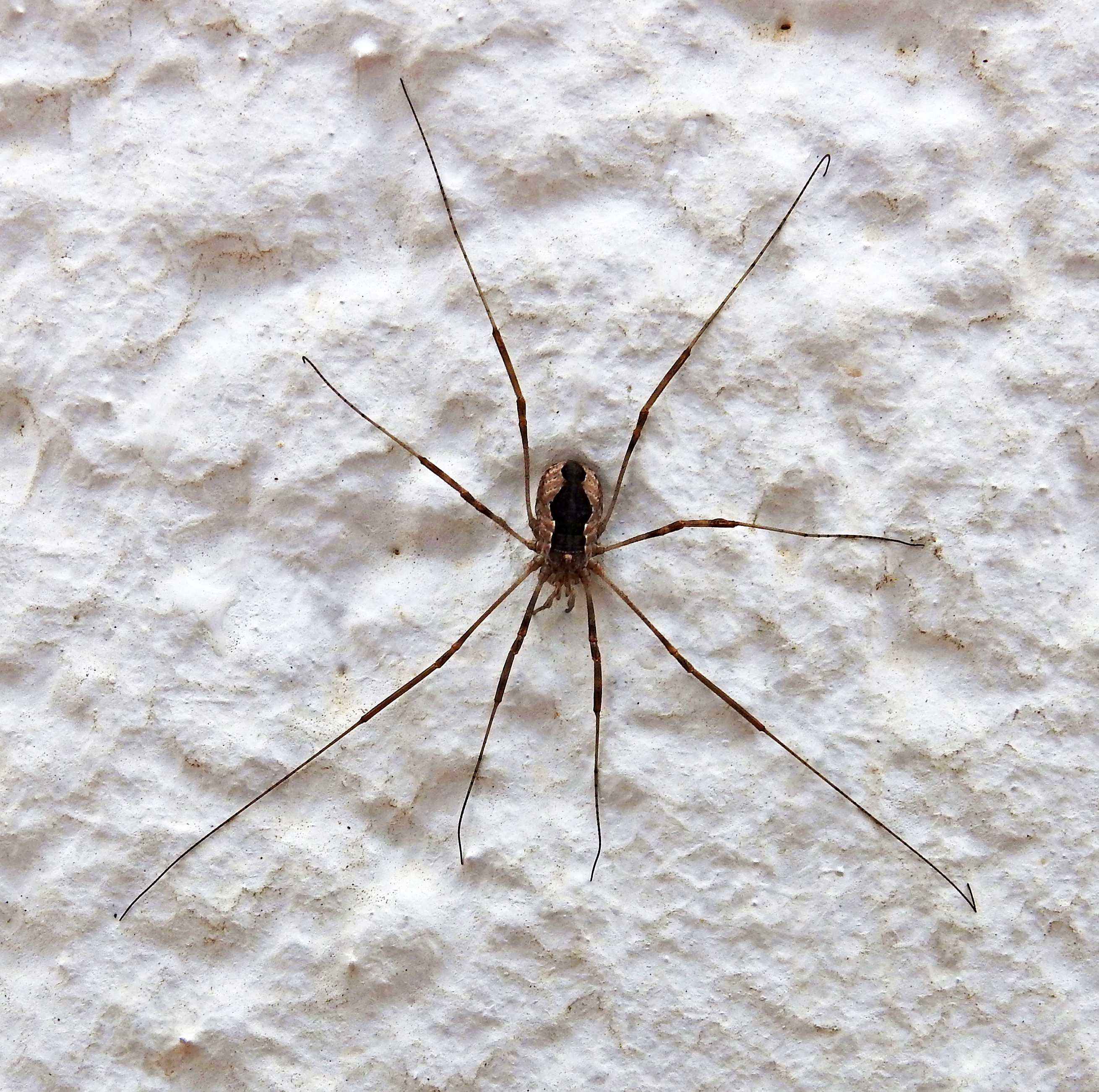
Dasylobus is a genus of harvestmen in the family Phalangiidae.

Saturday, 26 March 2022
6-6-2019 KHWAI CAMP, BOTSWANA - AFRICAN SAVANNA ELEPHANT (JUVENILE) (Loxodonta Africana)
%2010.jpg)
The African bush elephant (Loxodonta africana), also known as the African savanna elephant, is a species of elephant native to sub-Saharan Africa. It is one of three extant elephant species and, along with the African forest elephant, one of two extant species of African elephant. It is the largest living terrestrial animal, with fully grown bulls reaching an average shoulder height of 3.04–3.36 metres (10.0–11.0 ft) and a body mass of 5.2–6.9 tonnes (5.7–7.6 short tons); the largest recorded specimen had a shoulder height of 3.96 metres (13.0 ft) and an estimated body mass of 10.4 tonnes (11.5 short tons). The African bush elephant is characterised by its long prehensile trunk with two finger-like processes; a convex back; large ears which help reduce body heat; and sturdy tusks that are noticeably curved. The skin is grey with scanty hairs, and bending cracks which support thermoregulation by retaining water.
%2011.jpg)
The African bush elephant inhabits a variety of habitats such as forests, grasslands, woodlands, wetlands and agricultural land. It is a mixed herbivore feeding mostly on grasses, creepers, herbs, leaves, and bark. The average adult consumes about 150 kg (330 lb) of vegetation and 230 L (51 imp gal; 61 US gal) of water each day. A social animal, the African bush elephant often travels in herds composed of cows and their offspring. Adult bulls usually live alone or in small bachelor groups. During the mating season, males go through a process called musth, a period of high testosterone levels and heightened aggression. For females, the menstrual cycle lasts three to four months, and gestation around 22 months, the longest of any mammal.
Since 2021, the African bush elephant has been listed as Endangered on the IUCN Red List. It is threatened foremost by habitat destruction, and in parts of its range also by poaching for meat and ivory. Between 2003 and 2015, the illegal killing of 14,606 African bush elephants was reported by rangers across 29 range countries. Chad is a major transit country for smuggling of ivory in West Africa. This trend was curtailed by raising penalties for poaching and improving law enforcement. Poaching of the elephant has dated back to the 1970s and 80s, which were considered the largest killings in history. In human culture, elephants have been extensively featured in literature, folklore and media, and are most valued for their large tusks in many places.
6-6-2019 KHWAI CAMP, BOTSWANA - AFRICAN SAVANNA ELEPHANT (JUVENILE) (Loxodonta Africana)
%20(Loxodonta%20Africana)%2011.jpg)
The African bush elephant (Loxodonta africana), also known as the African savanna elephant, is a species of elephant native to sub-Saharan Africa. It is one of three extant elephant species and, along with the African forest elephant, one of two extant species of African elephant. It is the largest living terrestrial animal, with fully grown bulls reaching an average shoulder height of 3.04–3.36 metres (10.0–11.0 ft) and a body mass of 5.2–6.9 tonnes (5.7–7.6 short tons); the largest recorded specimen had a shoulder height of 3.96 metres (13.0 ft) and an estimated body mass of 10.4 tonnes (11.5 short tons). The African bush elephant is characterised by its long prehensile trunk with two finger-like processes; a convex back; large ears which help reduce body heat; and sturdy tusks that are noticeably curved. The skin is grey with scanty hairs, and bending cracks which support thermoregulation by retaining water.
%20(Loxodonta%20Africana)%2012.jpg)
The African bush elephant inhabits a variety of habitats such as forests, grasslands, woodlands, wetlands and agricultural land. It is a mixed herbivore feeding mostly on grasses, creepers, herbs, leaves, and bark. The average adult consumes about 150 kg (330 lb) of vegetation and 230 L (51 imp gal; 61 US gal) of water each day. A social animal, the African bush elephant often travels in herds composed of cows and their offspring. Adult bulls usually live alone or in small bachelor groups. During the mating season, males go through a process called musth, a period of high testosterone levels and heightened aggression. For females, the menstrual cycle lasts three to four months, and gestation around 22 months, the longest of any mammal.
Since 2021, the African bush elephant has been listed as Endangered on the IUCN Red List. It is threatened foremost by habitat destruction, and in parts of its range also by poaching for meat and ivory. Between 2003 and 2015, the illegal killing of 14,606 African bush elephants was reported by rangers across 29 range countries. Chad is a major transit country for smuggling of ivory in West Africa. This trend was curtailed by raising penalties for poaching and improving law enforcement. Poaching of the elephant has dated back to the 1970s and 80s, which were considered the largest killings in history. In human culture, elephants have been extensively featured in literature, folklore and media, and are most valued for their large tusks in many places.

Subscribe to:
Comments (Atom)