This Blog contains Wildlife, Plants and Bird Photos from Walks, Safaris, Birding Trips and Vacations. Most of the pictures have been taken with my Nikon P900 and P950X cameras. Just click on any image for a larger picture. On the right column under the Blog Archive are the entries by date. Below that under Animal categories all the diffent species of Animals, Birds, Insects and Plants contained in the website are listed. Clicking on any entry will show all the entries for that species.
TOTAL PAGEVIEWS
TRANSLATE
Tuesday, 15 February 2022
Saturday, 27 November 2021
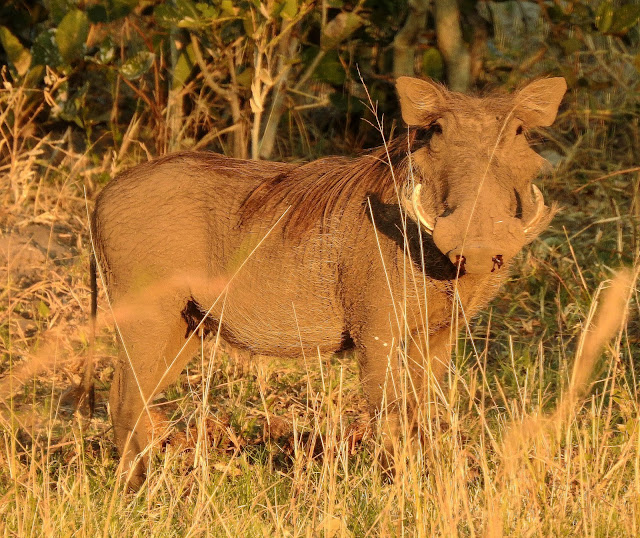
2-6-2019 LINYANTI, BOTSWANA - COMMON WARTHOG (Phacochoerus Africus)
Sunday, 30 June 2019
Thursday, 10 January 2019
21-4-2018 OKAVANGO DELTA, BOTSWANA - COMMON WARTHOG (Phacochoerus Africus)
Monday, 10 September 2018
6-4-2018 PHINDA GAME RESERVE, SOUTH AFRICA - COMMON WARTHOG (Phacochoerus Africus)
Wednesday, 6 June 2018
16-4-2018 CHOBE NATIONAL PARK, BOTSWANA - COMMON WARTHOG (Phacochoerus Africus) COURTESY OF MRS VALERIE FISHER
Friday, 18 May 2018
3-4-2018 PHINDA FOREST LODGE, SOUTH AFRICA - COMMON WARTHOG (Phacochoerus Africus)
Saturday, 5 May 2018
23-4-2018 OKAVANGO DELTA, BOTSWANA - COMMON WARTHOG (Phacochoerus Africus)
Friday, 4 May 2018
21-4-2018 OKAVANGO DELTA, BOTSWANA - COMMON WARTHOG (Phacochoerus Africus)
Saturday, 28 April 2018
6-4-2018 THORNYBUSH GAME LODGE, SOUTH AFRICA - COMMON WARTHOG (Phacochoerus Africus)
Thursday, 12 April 2018
12-4-2018 VICTORIA FALLS, ZIMBABWE - COMMON WARTHOG (Phacochoerus Africus)
Wednesday, 11 April 2018
10-4-2018 VICTORIA FALLS, ZIMBABWE - COMMON WARTHOG (Phacochoerus Africus)
Tuesday, 3 April 2018
3-4-2018 PHINDA FOREST LODGE, SOUTH AFRICA - COMMON WARTHOG (Phacochoerus Africus)
Monday, 15 November 1993
15-11-1993 MASAI MARA, KENYA - COMMON WARTHOG (Phacochoerus Africus)
The common warthog (Phacochoerus africanus) is a wild member of the pig family (Suidae) found in grassland, savanna, and woodland in sub-Saharan Africa. In the past, it was commonly treated as a subspecies of P. aethiopicus, but today that scientific name is restricted to the desert warthog of northern Kenya, Somalia, and eastern Ethiopia.
The common warthog is a medium-sized species, with a head-and-body length ranging from 0.9 to 1.5 m (2 ft 11 in to 4 ft 11 in), and shoulder height from 63.5 to 85 cm (25.0 to 33.5 in). Females, at 45 to 75 kg (99 to 165 lb), are smaller and lighter than males, at 60 to 150 kg (130 to 330 lb).] A warthog is identifiable by the two pairs of tusks protruding from the mouth and curving upwards. The lower pair, which is far shorter than the upper pair, becomes razor-sharp by rubbing against the upper pair every time the mouth is opened and closed. The upper canine teeth can grow to 25.5 cm (10.0 in) long and have a wide elliptical cross section, being about 4.5 cm (1.8 in) deep and 2.5 cm (0.98 in) wide. A tusk will curve 90° or more from the root, and will not lie flat on a table, as it curves somewhat backwards as it grows. The tusks are not used for digging, but are used for combat with other hogs and in defense against predators – the lower set can inflict severe wounds.
Common warthog ivory is taken from the constantly growing canine teeth. The tusks, particularly the upper set, work in much the same way as elephant tusks with all designs scaled down. Tusks are carved predominantly for the tourist trade in eastern and southern Africa.
Monday, 8 November 1993
8-11-1993 TSAVO, KENYA - COMMON WARTHOG (Phacochoerus Africus)
The common warthog (Phacochoerus africanus) is a wild member of the pig family (Suidae) found in grassland, savanna, and woodland in sub-Saharan Africa. In the past, it was commonly treated as a subspecies of P. aethiopicus, but today that scientific name is restricted to the desert warthog of northern Kenya, Somalia, and eastern Ethiopia.
The common warthog is a medium-sized species, with a head-and-body length ranging from 0.9 to 1.5 m (2 ft 11 in to 4 ft 11 in), and shoulder height from 63.5 to 85 cm (25.0 to 33.5 in). Females, at 45 to 75 kg (99 to 165 lb), are smaller and lighter than males, at 60 to 150 kg (130 to 330 lb).] A warthog is identifiable by the two pairs of tusks protruding from the mouth and curving upwards. The lower pair, which is far shorter than the upper pair, becomes razor-sharp by rubbing against the upper pair every time the mouth is opened and closed. The upper canine teeth can grow to 25.5 cm (10.0 in) long and have a wide elliptical cross section, being about 4.5 cm (1.8 in) deep and 2.5 cm (0.98 in) wide. A tusk will curve 90° or more from the root, and will not lie flat on a table, as it curves somewhat backwards as it grows. The tusks are not used for digging, but are used for combat with other hogs and in defense against predators – the lower set can inflict severe wounds.
Common warthog ivory is taken from the constantly growing canine teeth. The tusks, particularly the upper set, work in much the same way as elephant tusks with all designs scaled down. Tusks are carved predominantly for the tourist trade in eastern and southern Africa.