TOTAL PAGEVIEWS

TRANSLATE

Showing posts with label GEOMETER MOTH (Charissa mucidaria). Show all posts

Monday, 31 August 2026

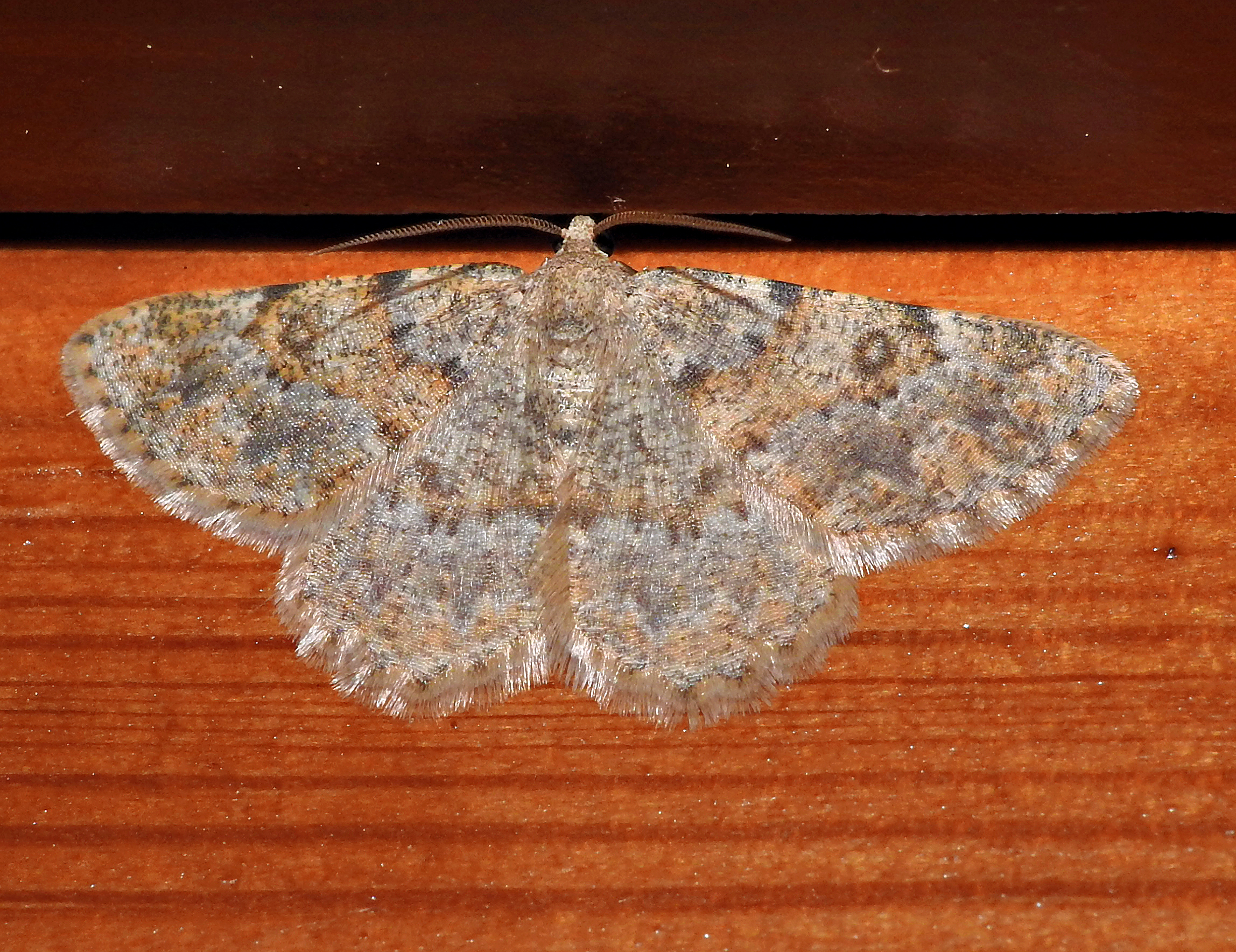
31-8-2026 MONTE CORONA, VALENCIA - GEOMETER MOTH (Charissa mucidaria)


Charissa mucidaria, commonly known as the coppery taupe, is a species of moth belonging to the family Geometridae.First described by German entomologist Jacob Hübner in 1799, this moth is native to Southern Europe and North Africa. It is well-regarded for its intricate camouflage patterns that allow it to blend seamlessly against rocky substrates and stone walls.

Key Identification Features

Wingspan: Typically ranges from 20 to 30 mm.

Coloration: Highly variable ochre, gray, or brown tones with a distinctive coppery or rusty metallic tint.

Markings: Features a central transverse band on its wings outlined by irregular dark lines, marked with tiny black spots, and a small dark eyespot (ocellus) with a light center near the wing margin.

Fringes: The wing edges often showcase distinct orange or warm-toned fringes (fimbriae).

Ecology and Life Cycle

Habitat: It primarily inhabits dry, warm, rocky slopes, stone walls, and sparse grasslands from lowlands up to mid-altitude mountain ranges.

Flight Period: Adults are bivoltine, flying in two main generations: from March to May and again from July to September. In warmer coastal regions like Andalusia, adults can be found active into early winter.

Larval Diet: The caterpillars feed polyphagously on low-growing herbs and rock plants, including species of Sedum (stonecrop), Anagallis, Polygonum, Sanguisorba, and Rumex.

Overwintering: The species hibernates during its larval stage, emerging fully mature in early spring.

Thursday, 8 May 2025

8-5-2025 MONTE CORONA, VALENCIA - GEOMETER MOTH (Charissa mucidaria)


Charissa mucidaria, the coppery taupe, is a moth of the family Geometridae. It was described by Jacob Hübner in 1799. It is found in southern Europe and North Africa (including Morocco).

The wingspan is 20–30 mm. Adults are on wing from March to May and again from July to September.

The larvae feed on Sedum, Anagallis, Polygonum and Rumex species.

Sunday, 26 December 2021

26-12-2021 MONTE CORONA, VALENCIA - GEOMETER MOTH (Charissa mucidaria)


Charissa mucidaria, commonly known as the coppery taupe, is a species of moth belonging to the family Geometridae.First described by German entomologist Jacob Hübner in 1799, this moth is native to Southern Europe and North Africa. It is well-regarded for its intricate camouflage patterns that allow it to blend seamlessly against rocky substrates and stone walls.

Key Identification Features

Wingspan: Typically ranges from 20 to 30 mm.

Coloration: Highly variable ochre, gray, or brown tones with a distinctive coppery or rusty metallic tint.

Markings: Features a central transverse band on its wings outlined by irregular dark lines, marked with tiny black spots, and a small dark eyespot (ocellus) with a light center near the wing margin.

Fringes: The wing edges often showcase distinct orange or warm-toned fringes (fimbriae).

Ecology and Life Cycle

Habitat: It primarily inhabits dry, warm, rocky slopes, stone walls, and sparse grasslands from lowlands up to mid-altitude mountain ranges.

Flight Period: Adults are bivoltine, flying in two main generations: from March to May and again from July to September. In warmer coastal regions like Andalusia, adults can be found active into early winter.

Larval Diet: The caterpillars feed polyphagously on low-growing herbs and rock plants, including species of Sedum (stonecrop), Anagallis, Polygonum, Sanguisorba, and Rumex.

Overwintering: The species hibernates during its larval stage, emerging fully mature in early spring.

Thursday, 17 September 2020

8-9-2019 MONTE CORONA, VALENCIA - GEOMETER MOTH (Charissa mucidaria)


Charissa mucidaria, commonly known as the coppery taupe, is a species of geometer moth in the family Geometridae. It is native to the western Palaearctic region, particularly southern Europe and North Africa. 
Here are the key facts about this species:
The moth, also called the coppery taupe, has a scientific name of Charissa mucidaria and belongs to the Geometridae family. It is typically yellow-tan to greyish-brown with a wingspan between 20–30 mm. 

Native to Southern Europe and North Africa, it is often found in rocky habitats. Adults fly from March to May and again from July to September and are active at night. The larvae, known as "inchworms," feed on plants like Sedum and Rumex. 
Synonyms for the species include Charissa lusitanica and Charissa ochracearia. The species is included in biodiversity studies. 

Monday, 14 September 2020

14-9-2020 MONTE CORONA, VALENCIA - GEOMETER MOTH (Charissa mucidaria)


Charissa mucidaria, the coppery taupe, is a moth of the family Geometridae. It was described by Jacob Hübner in 1799. It is found in southern Europe and North Africa (including Morocco).

The wingspan is 20–30 mm. Adults are on wing from March to May and again from July to September.

The larvae feed on Sedum, Anagallis, Polygonum and Rumex species.

Tuesday, 23 October 2018

23-10-2018 MONTE CORONA, VALENCIA - GEOMETER MOTH (Charissa mucidaria)


A moth of the Geometridae family found in southern Europe and North Africa. The wingspan is 20 to 30 mm. Adults fly from March to May and again from July to September.


Charissa mucidaria, the coppery taupe, is a moth of the family Geometridae. It was described by Jacob Hübner in 1799. It is found in southern Europe and North Africa (including Morocco).

The wingspan is 20–30 mm. Adults are on wing from March to May and again from July to September.

The larvae feed on Sedum, Anagallis, Polygonum and Rumex species.

Friday, 7 July 2017

21-9-2015 MONTE CORONA, VALENCIA - GEOMETER MOTH (Charissa mucidaria)


Charissa mucidaria, the coppery taupe, is a moth of the family Geometridae. It was described by Jacob Hübner in 1799. It is found in southern Europe and North Africa (including Morocco).

The wingspan is 20–30 mm. Adults are on wing from March to May and again from July to September.

The larvae feed on Sedum, Anagallis, Polygonum and Rumex species.