This Blog contains Wildlife, Plants and Bird Photos from Walks, Safaris, Birding Trips and Vacations. Most of the pictures have been taken with my Nikon P900 and P950X cameras. Just click on any image for a larger picture. On the right column under the Blog Archive are the entries by date. Below that under Animal categories all the diffent species of Animals, Birds, Insects and Plants contained in the website are listed. Clicking on any entry will show all the entries for that species.
TOTAL PAGEVIEWS
TRANSLATE
Showing posts with label PINE PROCESSIONARY CATERPILLAR (Thaumetopoea pityocampa). Show all posts
Monday, 20 February 2023
Sunday, 6 February 2022
Monday, 17 February 2020
Tuesday, 26 February 2019
Monday, 11 February 2019
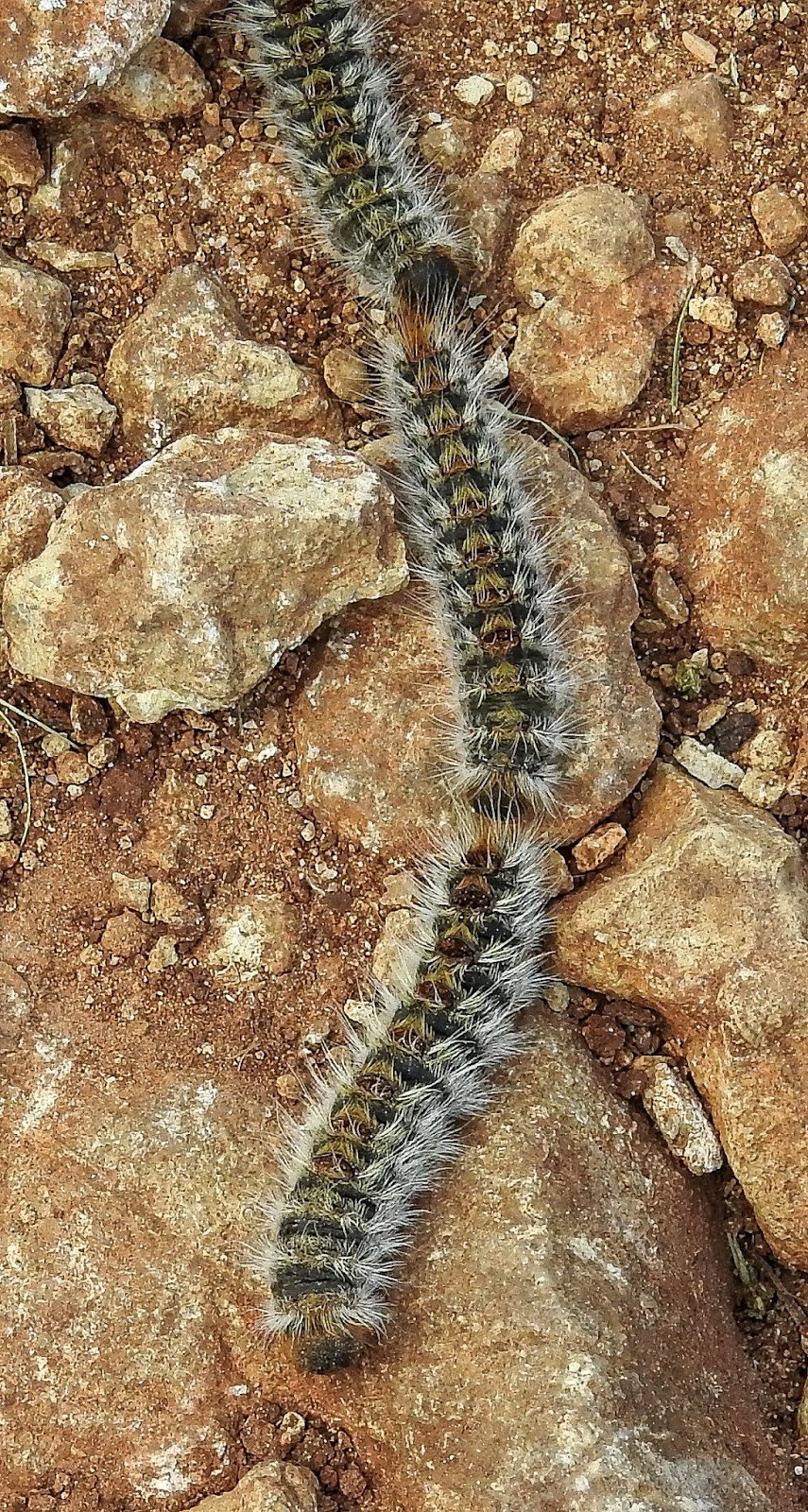
11-2-2019 JALON, ALICANTE - PINE PROCESSIONARY CATERPILLAR (Thaumetopoea pityocampa)
Pine processionary caterpillars are a danger to humans and animals due to their urticating (stinging) hairs, which can cause severe rashes, eye irritation, and in pets, potentially fatal reactions. They are known for forming long, single-file processions when descending trees to pupate. These caterpillars build silky nests in pine trees during the fall and winter and emerge as moths in the summer.
Key facts
Appearance: They are typically 3 to 4 cm long and orange to brown in color.
Behavior: They form long, single-file "processions" from head to tail, especially when moving from the tree to the ground to burrow and pupate.
Nests: They construct large, silken, tent-like nests on pine trees, often in the branches.
Diet: They feed on pine needles.
Life cycle: Adult moths lay eggs on pine trees in late summer. Caterpillars hatch, grow in nests, and then descend in procession in late winter or early spring to pupate in the soil.
Habitat: Native to the Mediterranean, Middle East, and North Africa, they have been spreading north due to climate change.
Dangers and risks
Urticating hairs: Each caterpillar has hundreds of thousands of tiny, barbed, stinging hairs that can be easily released into the air.
Human contact: Direct contact can cause a rash that is itchy, painful, and can last for weeks. The hairs can cause inflammation and irritation, and severe reactions, including anaphylactic shock, are possible.
Animal contact: Pets, especially dogs, are at a high risk. They can experience severe reactions if they come into contact with the hairs on their nose or mouth. Symptoms can include swelling, excessive drooling, and chomping. In severe cases, this can lead to tissue damage and requires immediate veterinary care.
Tree damage: They can defoliate trees, weakening them and making them vulnerable to other pests and diseases.
Safety and prevention
Avoid contact: The best way to stay safe is to avoid areas with pine processionary caterpillars, especially in the spring.
Keep pets on a leash: Keep pets on a leash in wooded areas and be vigilant.
Handle with care: If you must remove nests, avoid touching them and wear protective gear.
Disposal: If you find a procession, do not stand on them or scatter them, as this can release the hairs. Spray the procession with hairspray to disable the hairs, then douse the ground with soapy water and brush thoroughly before disposal.
Emergency: If you or a pet has a reaction, seek medical or veterinary attention immediately.
Monday, 26 February 2018
26-2-2018 PINET, VALENCIA - PINE PROCESSIONARY CATERPILLAR (Thaumetopoea pityocampa)
If you live here in Spain, you need to be aware of a dangerous and often deadly critter known as the Pine Processionary Caterpillar (Thaumetopoea Pityocampa).
Unlike the vast majority of caterpillars, this particular species can be harmful to young children and sometimes fatal to dogs and cats.
Many dog owners have lost their pets after coming into contact with the caterpillars so you must be familiar with them and the potential dangers.
In early spring, the processionary caterpillars leave their nests high up in the Mediterranean pine trees and head to the ground to pupate. When this happens, they potentially come into contact with young children and curious pets.
Below we provide you with everything you need to know about this insect including the dangers, how to identify them, where they can be found, how to stay safe and what to do if you come across them.
What is a Pine Processionary Caterpillar?
The processionary caterpillar is mostly found in wooded forests and can be identified by the thousands of small fine poisonous hairs or bristles that cover their bodies.
The caterpillars are 3-4cm in length and are usually an orange and brown colour.
The name ‘processionary’ comes from the fact that they create a procession or caterpillar style ‘conga’ from head to tail to form a long chain. It is not unheard of to see chains with hundreds of them all joined together.
Saturday, 4 March 2017
30-1-2017 MONTE CORONA, VALENCIA - PINE PROCESSIONARY CATERPILLAR (Thaumetopoea pityocampa)
If you live here in Spain, you need to be aware of a dangerous and often deadly critter known as the Pine Processionary Caterpillar (Thaumetopoea Pityocampa).
Unlike the vast majority of caterpillars, this particular species can be harmful to young children and sometimes fatal to dogs and cats.
Many dog owners have lost their pets after coming into contact with the caterpillars so you must be familiar with them and the potential dangers.
In early spring, the processionary caterpillars leave their nests high up in the Mediterranean pine trees and head to the ground to pupate. When this happens, they potentially come into contact with young children and curious pets.
The processionary caterpillar is mostly found in wooded forests and can be identified by the thousands of small fine poisonous hairs or bristles that cover their bodies.
The caterpillars are 3-4cm in length and are usually an orange and brown colour.
The name ‘processionary’ comes from the fact that they create a procession or caterpillar style ‘conga’ from head to tail to form a long chain. It is not unheard of to see chains with hundreds of them all joined together.
In recent years, Europe has seen a big increase in numbers with Germany, the Netherlands and Belgium experiencing plague-like infestations.
The caterpillars can often be found in oak trees, which is where they were first discovered in the UK in 2006. However, here in Spain, they are more commonly found in pine trees which of course are a frequent sight.
The caterpillars are not only extremely toxic and therefore dangerous to anyone who comes into contact with them, they are also responsible for the destruction of the pine trees they inhabit.
Their nests are like tents and are usually found high up in the pine trees. The larvae (caterpillar) are considered to be real forest pests and will frequently come out at night and feed on the pine’s leaves.
When the larvae are ready to pupate between late winter, and early spring, they will march single file down the tree to the ground where they disperse looking for somewhere to continue their life cycle, often burrowing just below the surface.
Unfortunately, you don’t have to visit a forest to put yourself in harm’s way. Many of the parks and communal areas in Spain feature pine trees meaning that you can just as easily find them in urban areas.
Although many of the local councils will spray down the local municipal parks to prevent their spread, this isn’t always enough to keep them completely at bay.
Monday, 25 January 2016
25-1-2016 BENICOLET - PINE PROCESSIONARY CATERPILLAR (Thaumetopoea pityocampa)
The pine processionary (Thaumetopoea pityocampa) is a moth of the subfamily Thaumetopoeinae in the family Notodontidae, known for the irritating hairs of its caterpillars, their processions, and the economic damage they cause in coniferous forests. The species was first described scientifically by Michael Denis and Ignaz Schiffermüller in 1775, though it was known to the ancients, with remedies described by Theophrastus, Dioscorides and Pliny the Elder. Its processionary behaviour was described in 1916 by the French entomologist Jean-Henri Fabre. It is one of the most destructive species to pines and cedars in Central Asia, North Africa and southern Europe.
The species is notable for the behaviour of its caterpillars, which overwinter in tent-like nests high in pine trees, and which proceed through the woods in nose-to-tail columns, protected from predators by their severely irritating hairs.
The species is one of the few insects where the larva develops in winter in temperate zones. Global warming is causing the species to affect forests progressively further north. The urticating hairs of the caterpillar larvae cause harmful (and in some cases allergic) reactions, in humans and other mammals.
Though most individuals of the species only live one year, some in high altitudes or more northern areas may survive for over two years. Each female lays an "enormous number" of eggs near the tops of pine trees. After hatching, the larvae eat pine needles while progressing through five stages of development (instars). To survive through the winter, the caterpillars construct a nest of silk threads, making them one of the few species of temperate zone insects where the larvae develop in winter. Around the beginning of April, the caterpillars leave the nests in the procession for which the species is known. They burrow underground, pupate, and emerge between mid May and August.
The eggs are laid in cylindrical bodies ranging from 4 to 5 centimetres (1.6 to 2.0 in) in length. The eggs are covered with scales which come from the female and mimic pine shoots.
Subscribe to:
Comments (Atom)