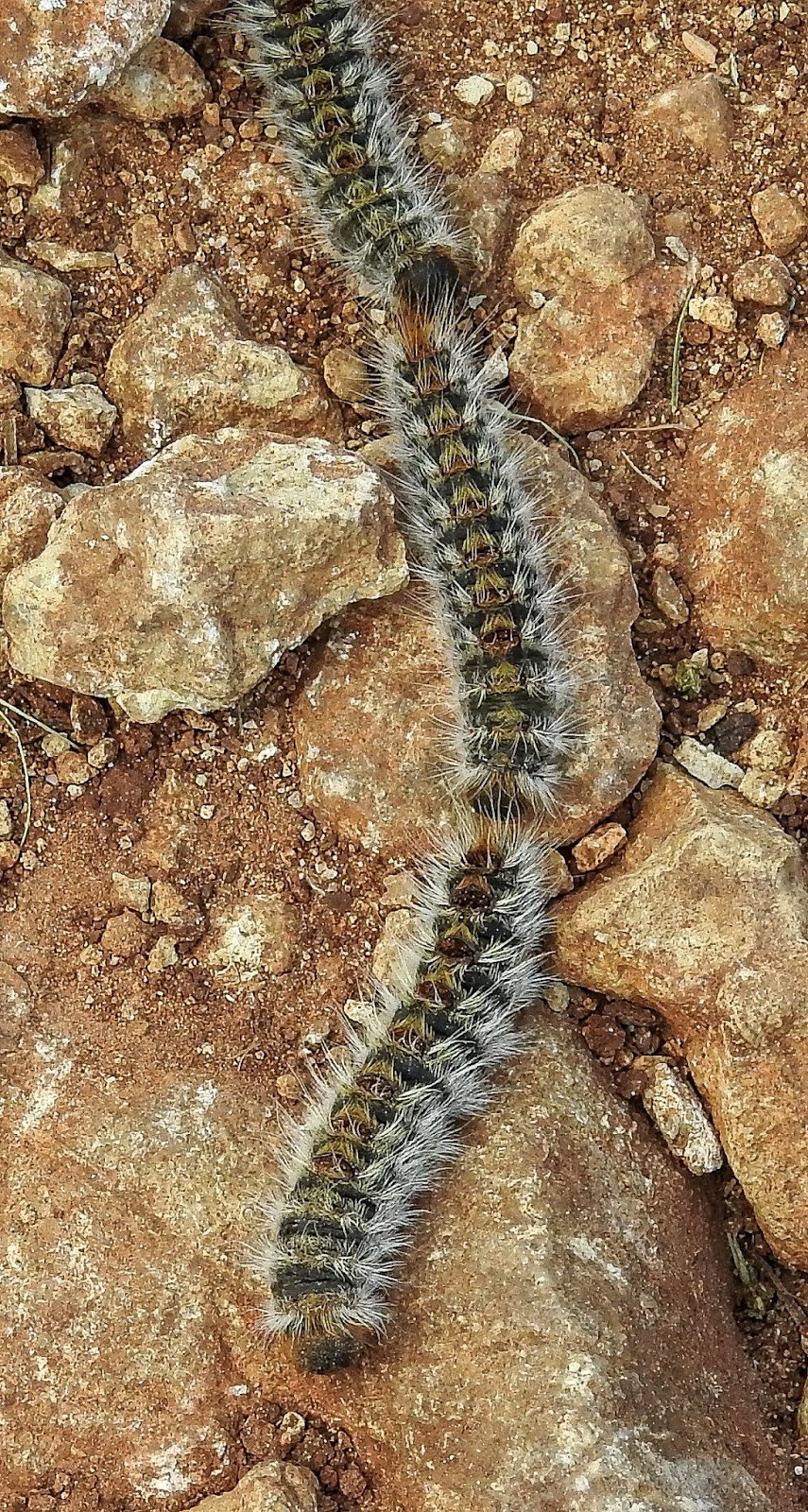
Pine processionary caterpillars are a danger to humans and animals due to their urticating (stinging) hairs, which can cause severe rashes, eye irritation, and in pets, potentially fatal reactions. They are known for forming long, single-file processions when descending trees to pupate. These caterpillars build silky nests in pine trees during the fall and winter and emerge as moths in the summer.
Key facts
Appearance: They are typically 3 to 4 cm long and orange to brown in color.
Behavior: They form long, single-file "processions" from head to tail, especially when moving from the tree to the ground to burrow and pupate.
Nests: They construct large, silken, tent-like nests on pine trees, often in the branches.
Diet: They feed on pine needles.
Life cycle: Adult moths lay eggs on pine trees in late summer. Caterpillars hatch, grow in nests, and then descend in procession in late winter or early spring to pupate in the soil.
Habitat: Native to the Mediterranean, Middle East, and North Africa, they have been spreading north due to climate change.
Dangers and risks
Urticating hairs: Each caterpillar has hundreds of thousands of tiny, barbed, stinging hairs that can be easily released into the air.
Human contact: Direct contact can cause a rash that is itchy, painful, and can last for weeks. The hairs can cause inflammation and irritation, and severe reactions, including anaphylactic shock, are possible.
Animal contact: Pets, especially dogs, are at a high risk. They can experience severe reactions if they come into contact with the hairs on their nose or mouth. Symptoms can include swelling, excessive drooling, and chomping. In severe cases, this can lead to tissue damage and requires immediate veterinary care.
Tree damage: They can defoliate trees, weakening them and making them vulnerable to other pests and diseases.
Safety and prevention
Avoid contact: The best way to stay safe is to avoid areas with pine processionary caterpillars, especially in the spring.
Keep pets on a leash: Keep pets on a leash in wooded areas and be vigilant.
Handle with care: If you must remove nests, avoid touching them and wear protective gear.
Disposal: If you find a procession, do not stand on them or scatter them, as this can release the hairs. Spray the procession with hairspray to disable the hairs, then douse the ground with soapy water and brush thoroughly before disposal.
Emergency: If you or a pet has a reaction, seek medical or veterinary attention immediately.


%20(Luscinia%20svecica%20ssp.%20cyanecula)%2020.jpg)
%20(Luscinia%20svecica%20ssp.%20cyanecula)%2021.jpg)
%2020.jpg)
%20(Saxicola%20rubicola)%2020.jpg)
%20(Alcedo%20atthis)%2020.jpg)
%2020.jpg)


%2020.jpg)

%2020.jpg)


%20(Fringilla%20coelebs)%2022.jpg)

%2020.jpg)

%20(Passer%20domesticus)%2020.jpg)
%2020.jpg)

%2020-gigapixel-standard-scale-1_40x.jpg)
%2020.jpg)
%2021.jpg)


%2020.jpg)
%2021.jpg)