TOTAL PAGEVIEWS

TRANSLATE

Friday, 15 February 2019

15-2-2019 OLIVA PLAYA, VALENCIA - MALLARD (MALE) (Anas platyrhynchos)


Male Mallards have a dark, iridescent-green head and bright yellow bill. The gray body is sandwiched between a brown breast and black rear. Females and juveniles are mottled brown with orange-and-brown bills. Both sexes have a white-bordered, blue “speculum” patch in the wing.
Unlike larger waterfowl such as the Tundra Swan, which mate for life, Mallard pairs only stay together for a season. Courtship and pair formation begin each fall and winter. Groups of males display for a hen with a variety of behaviors, including head and tail shaking, head-bobbing, dipping, and whistling.

The female Mallard has between five and 14 light green eggs that she incubates for 30 days.

The ducklings are lead to water as soon as their soft, downy feathers are dry. ...

Most Mallard ducks live for one or two years, but some can live as long as 16 years!

Mallards swim with their tail held above the water.


The Mallard, or wild duck (Anas platyrhynchos), is a familiar and widespread dabbling duck with a presence across temperate and subtropical regions of the Americas, Eurasia, and North Africa. It has also been introduced to parts of the Southern Hemisphere. The male is renowned for its iridescent green head and white collar, while the female sports a brown-speckled plumage. Both sexes boast a speculum—a patch of feathers with iridescent purple or blue hues bordered by white. The Mallard's length ranges from 50 to 65 cm, with a wingspan of 81 to 98 cm, and it typically weighs between 0.7 and 1.6 kg.
Males during the breeding season are unmistakable with their glossy green heads, white collars, and purple-tinged brown breasts. Females are mottled brown with buff cheeks and an eye-stripe. Both sexes have the distinctive speculum on their wings. The male's bill is yellowish-orange tipped with black, while the female's is darker, ranging from black to mottled orange and brown.

15-2-2019 CAMI LES FONTS OLIVA, VALENCIA - HOUSE SPARROW (MALE) (Passer domesticus)


The house sparrow (Passer domesticus) is a member of the sparrow family Passeridae. This small bird typically measures around 16 cm (6.3 in) in length and weighs between 24–39.5 g (0.85–1.39 oz). The species exhibits sexual dimorphism, with females and young birds displaying pale brown and grey plumage, while males are characterized by more vibrant black, white, and brown markings.

Males can be identified by their bright black, white, and brown markings, with a distinctive black bib, white cheeks, and a grey crown. Females lack the striking head patterns of males and are predominantly buffish with softer coloration. Juveniles resemble adult females but are generally paler with less defined markings.

The house sparrow is highly adaptable and can thrive in both urban and rural environments. It is commonly found in close association with human habitation and avoids dense forests, grasslands, polar regions, and deserts far from human development.

Native to Europe, the Mediterranean Basin, and much of Asia, the house sparrow has been introduced to various regions worldwide, including parts of Australasia, Africa, and the Americas, making it one of the most widely distributed wild birds.

15-2-2019 OLIVA PLAYA, VALENCIA - SAND STOCK (Marcus-kochia littorea)


Marcus-kochia littorea is a subshrub known for its resilience, found in dry, sandy coastal soils in the Mediterranean region. This plant, also called "alhelí de mar" (sea wallflower), belongs to the Brassicaceae family and is characterized by its white-ashy stems and lilac or purple flowers that bloom nearly year-round. 

Characteristics and habitat
Habitat: Thrives in dry, sandy, coastal dunes and sandy plains.
Native range: Found in the western and southern Mediterranean regions, including Spain, Portugal, France, Italy, and North Africa (Morocco and Algeria).
Growth: It is a subshrub that can grow up to 40-50 cm tall.
Adaptation: It is well-adapted to salty conditions and can withstand high temperatures. 


Appearance and flowering
Flowers: The plant features delicate flowers with a purple or lilac exterior and a yellowish-white underside.
Stems: The stems are described as white-ashy and can be erect or ascending.
Flowering period: Blooms occur almost year-round, from February to December. 
Classification and naming
Family: It belongs to the Brassicaceae family (mustard family).
Scientific name: The genus Marcus-kochia was named after the botanist Marcus Koch, and the species name littorea is Latin for "of the coast".
Synonym: It was previously known as Malcolmia littorea.

15-2-2019 OLIVA PLAYA, VALENCIA - FALSE SOW THISTLE (Reichardia tingitana)


Reichardia tingitana is a species of plant in the family Asteraceae that is distributed primarily throughout Mediterranean and West Asia. It is known by the common name false sowthistle.

The leaves have an alternate arrangement and are entire with serrated margins. No stipule is present on the petiole.

An annual plant, its flowering period is from March to May. Like most angiosperms, its flowers are hermaphroditic. The petals are of a yellow color.

As a glycophyte, it is accustomed to growing in saline soils. Arid deserts and shrub-steppes are its most common habitats. It also grows well in sandy depressions in the Middle East.

In France, it is a naturalized species. Another country it has been introduced to is Australia, where it is commonly recognized as a minor weed. There its main habitats are urban sites, coastal dunes and alluvial plains.

It has been recorded in Bahrain, Kuwait, Qatar, the United Arab Emirates and eastern Saudi Arabia. Common names for it in Arabia are huzan, mureer, and murar. Uses in folk medicine have been recorded in the Middle East, its leaves being used to treat ailments such as constipation, colic and inflamed eyes.

Thursday, 14 February 2019

13-2-2019 DEVESA, VALENCIA - BLACK REDSTART (FEMALE) (Phoenicurus ochruros)


The Black Redstart (Phoenicurus ochruros) is a small, charismatic passerine bird, exhibiting a blend of dark and vibrant plumage. Males are distinguished by their dark grey to black upperparts and breast, with a striking orange-red rump and tail. Females and juveniles are more subdued in color, with grey to grey-brown feathers and the same vivid tail coloration that is the hallmark of the species.

Adult males are easily identified by their dark upperparts and black breast, contrasting with the orange-red lower rump and tail. The belly and undertail may vary from blackish-grey to orange-red, depending on the subspecies. Females and juveniles are less conspicuous, with overall greyer tones and a distinctive orange-red rump and tail. The presence of pale fringes on the secondaries forms a whitish wing panel in some subspecies.


The Black Redstart has adapted remarkably to urban environments, often found nesting in crevices or holes within buildings. Originally a dweller of stony mountainous regions, it now thrives in industrial areas with similar structural features.

This species is widely distributed across south and central Europe, Asia, and north-west Africa. It is a resident in milder regions, while populations in the northeast migrate to warmer areas during winter.

The Black Redstart is known for its robin-like movements, including quick ducks of the head and body, and frequent tail flicking. Males possess a rattling song and a tick call, adding to their distinctive presence.

13-2-2019 ALBUFERA, VALENCIA - GREY HERON (Ardea cinerea)


Grey herons are large, grey-plumaged birds that are solitary feeders but nest in colonies called heronries. They have long legs and necks, a yellow bill, and a distinctive black eye-stripe. Herons are excellent fishers, using their long beaks to spear prey, and they live near freshwater habitats like lakes and rivers, though they can also be found along coasts and at fish farms. 

Physical characteristics
Appearance: Grey plumage on their back and greyish-white underneath, with a long, white neck and a bright yellow, dagger-shaped bill. They have a black eye-stripe that extends into black feathers at the back of their head.
Size: They can stand up to a meter tall and weigh up to 2 kilograms, making them one of the tallest birds in Britain. 


Habitat and diet
Habitat: They prefer freshwater environments such as lakes, ponds, rivers, and marshlands, but can also adapt to saltwater habitats and feed in flooded fields.
Diet: They mainly eat fish but also prey on frogs, insects, and other small creatures. They use their long necks and beaks to snatch prey from the water.
Hunting: Once they catch prey, they often toss it in the air and swallow it head-first. 


Behavior and reproduction
Nesting: Grey herons nest in large colonies called heronries, typically in treetops.
Breeding: They breed in the spring, laying 3 to 6 eggs that are about the size of a chicken egg. Both parents feed the chicks by regurgitating fish.
Flight: In flight, they retract their long necks into a characteristic "S" shape, unlike storks which fly with their necks outstretched.
Lifespan: The average lifespan is about five years, though some can live much longer. 

Adaptability and intelligence
Adaptability: They are a highly successful species due to their biological flexibility, which allows them to live in a wide variety of habitats and take advantage of different food sources, including those created by humans.
Solitary vs. social: They are solitary feeders but come together to nest, a combination that allows them to take advantage of both strategies. 

13-2-2019 ALBUFERA, VALENCIA - EURASIAN KESTREL (Falco tinnunculus)


The common kestrel, Falco tinnunculus, is a bird of prey from the kestrel group within the falcon family Falconidae. It is also known as the European kestrel, Eurasian kestrel, or Old World kestrel. In the United Kingdom, it is often simply referred to as the "kestrel." This raptor is small compared to other birds of prey but larger than most songbirds, with long wings and a distinctive long tail.

Males and females exhibit sexual dimorphism in their plumage. The male has a blue-grey cap and tail with a black tip bordered by a narrow white rim. Its back is chestnut with black spots, and the underside is buff with black streaks. The female is larger and lacks the blue-grey coloring, having a brown back with black bars and a similar underside to the male. Both sexes have a prominent black malar stripe, bright yellow cere, feet, and eye-ring, with dark toenails, bill, and iris.

The common kestrel favors open habitats such as fields, heaths, shrubland, and marshland. It does not require woodland but needs alternative perching and nesting sites like rocks or buildings. It thrives in treeless steppes and can adapt to human settlements and various landscapes, from wetlands to arid savannas.

This species has a vast range, being widespread in Europe, Asia, and Africa, and occasionally reaching the east coast of North America. It has colonized some oceanic islands, though vagrant individuals are generally rare.


The common kestrel is diurnal and can be sedentary or migratory, depending on the region. It is known for its characteristic hunting behavior, hovering 10-20 meters above the ground before diving steeply onto prey. It is also capable of seeing ultraviolet light, which aids in detecting the urine trails of small mammals.

Breeding occurs in spring or the start of the dry season, with the kestrel preferring cavity nests in cliffs, trees, or buildings. Clutches typically consist of 3-7 eggs, which are incubated by both parents. The young fledge after 4-5 weeks and stay with the family for a short period thereafter.

The common kestrel's diet consists almost exclusively of mouse-sized mammals, such as voles, shrews, and true mice. It may also consume small birds, particularly during the summer when fledglings are abundant. Invertebrates and arthropods can be significant food sources seasonally.

The IUCN lists the common kestrel as Least Concern. Its population has fluctuated but remains generally stable, with an estimated 1-2 million pairs globally. Some subspecies, such as those in the Canary Islands, are rarer and number less than 1000 adult birds.

13-2-2019 ALBUFERA, VALENCIA - EUROPEAN STARLING (Sturnus vulgaris)


The Common Starling, Sturnus vulgaris, is a medium-sized passerine bird characterized by its glossy black plumage with a metallic sheen. Throughout the year, the plumage is speckled with white, though less so during the breeding season. Adults measure approximately 20 cm in length, with pink legs and a seasonally changing bill color—black in winter and yellow in summer. Juveniles display browner plumage compared to adults.

To identify the Common Starling, look for its iridescent black feathers, which may appear purple or green when reflecting light. The bird's bill is black in the winter and transitions to yellow in the summer, aiding in identification. The starling's flight is strong and direct, with pointed wings that are distinctive in the air. On the ground, its waddling gait is notable.

Common Starlings are highly adaptable, favoring urban and suburban areas where they find ample nesting and roosting opportunities. They also inhabit grasslands, such as farmlands and pastures, where short grass makes foraging for invertebrates easier.

Native to temperate Europe and western Asia, the Common Starling has been introduced to Australia, New Zealand, North America, and other regions. Its range extends from Europe to northern Africa and across the Palearctic to western Mongolia.


The Common Starling is a gregarious bird, especially in autumn and winter, forming large flocks known as murmurations. These flocks are thought to be a defense against predators. On the ground, starlings forage in groups, often following grazing animals to feed on disturbed invertebrates.

The Common Starling's song is a varied mix of melodic and mechanical sounds, including mimicked noises from other bird species and the environment. Males sing to attract mates and defend their territory. Calls include a harsh alarm scream and a variety of social chatters.

Breeding occurs in the spring and summer, with the female laying four to five glossy, pale blue eggs in a nest built within a natural or artificial cavity. Both parents share incubation duties, and the young fledge after about three weeks.

Omnivorous, the Common Starling's diet includes a wide range of invertebrates, seeds, and fruit. They employ various foraging techniques, such as probing the ground and catching flying insects.

Despite declines in some European populations, the Common Starling's global population is not considered to be declining significantly. It is classified as Least Concern by the International Union for Conservation of Nature (IUCN).

13-2-2019 ULLAL DE BOLDOVI, VALENCIA - LITTLE GREBE (Tachybaptus ruficollis)


13-2-2019 ALBUFERA, VALENCIA - MEADOW PIPIT (Anthus pratensis)


Wednesday, 13 February 2019

13-2-2019 BONAIRE, VALENCIA - CABBAGE WHITE BUTTERFLY (Pieris rapae)


Pieris rapae is a small- to medium-sized butterfly species of the whites-and-yellows family Pieridae. It is known in Europe as the small white, in North America as the cabbage white or cabbage butterfly, on several continents as the small cabbage white, and in New Zealand as the white butterfly. The butterfly is recognizable by its white color with small black dots on its wings, and it can be distinguished from P. brassicae by its larger size and the black band at the tip of its forewings.

The caterpillar of this species, often referred to as the "imported cabbageworm", is a pest to crucifer crops such as cabbage, kale, bok choy and broccoli. Pieris rapae is widespread in Europe and Asia; it is believed to have originated in the Eastern Mediterranean region of Europe, and to have spread across Eurasia thanks to the diversification of brassicaceous crops and the development of human trade routes. Over the past two centuries, it spread to North Africa, North America, New Zealand, and Australia, as a result of accidental introductions.

13-2-2019 ALBUFERA, VALENCIA - BLUETHROAT (MALE) (Luscinia svecica)


The Bluethroat (Luscinia svecica) is a small and enchanting passerine, reminiscent of the European robin in stature, measuring 13-14 cm in length. The males are particularly striking with their vibrant throat plumage, which boasts a rich blue central patch framed by black and rust-colored borders, evoking the hues of the Swedish flag. Above, they are a modest brown, save for the black tail adorned with red side patches, and they possess a pronounced white supercilium that stands out against their plumage.

To identify the Bluethroat, look for the male's resplendent throat, which is its most distinguishing feature. Females and juveniles are more subdued, with the females typically displaying a blackish crescent on a cream throat and breast. Juveniles are freckled and spotted with dark brown above. All share the characteristic white supercilium and black tail with red side patches.

The Bluethroat favors wet birch woods or bushy swamps for breeding, finding solace in the dense undergrowth where it can nest in tussocks or low bushes.

This migratory bird breeds across the Palearctic and has a foothold in western Alaska. When the cold season approaches, it retreats to warmer climes, wintering in the Iberian Peninsula, northern Africa, and southern Asia, including the Indian subcontinent.


The Bluethroat is a bird of secretive nature, often found flitting through dense vegetation. It is migratory, with moulting beginning in July after breeding and completed in 40-45 days before the birds embark on their long journey to wintering grounds.

The male Bluethroat is a skilled vocalist with a song that is both varied and highly imitative. Its call is a characteristic chat "chack" noise, which can be heard amidst the underbrush where it dwells.

Bluethroats nest in tussocks or low in dense bushes, preferring the sheltered environment of wet woodlands or swampy areas.

As an insectivorous bird, the Bluethroat's diet consists primarily of insects, which it seeks out in its wetland and swampy habitats.

13-2-2019 BONAIRE, VALENCIA - SPOTLESS STARLING (Sturnus unicolor)


The Spotless Starling, known scientifically as Sturnus unicolor, is a member of the starling family, Sturnidae. It bears a striking resemblance to its cousin, the Common Starling, but is distinguished by its slightly larger size, measuring 21-23 cm in length and weighing between 70-100 grams. Its plumage is a glossy, oily black, which may exhibit purple or green iridescence under bright light. Notably, during the spring and summer, its feathers are completely devoid of spots, while in winter, it sports only minuscule pale spots.

To identify the Spotless Starling, look for its longer throat feathers, which are double the length of those on the Common Starling, creating a pronounced "beard" especially visible when the bird vocalizes. Its legs are a vivid pink, and the bill color changes with the seasons: yellow with a bluish or pinkish base in summer, and a duller, often blackish hue in winter. Juveniles present a dull brown plumage, darker than their common counterparts, with a black bill and brown legs.

The Spotless Starling is quite adaptable, inhabiting a variety of open environments from farmlands and olive groves to urban areas. It thrives particularly well in open grazed holm oak woods and in cities like Gibraltar, where it is a common sight.

This bird has a more restricted range compared to the Common Starling, being native to the Iberian Peninsula, Northwest Africa, southernmost France, and the islands of Sicily, Corsica, and Sardinia. It is largely sedentary, with its population having expanded northward in recent decades.

13-2-2019 ALBUFERA, VALENCIA - EUROPEAN STONECHAT (FEMALE) (Saxicola rubicola)


The European stonechat, Saxicola rubicola, is a small, charming passerine bird, once thought to be a member of the thrush family but now placed within the Old World flycatcher family, Muscicapidae. This species exhibits a striking sexual dimorphism, with males donning a black plumage with vibrant orange throats and females wearing a more subdued brown.

Males in their summer plumage are unmistakable with their black heads, orange throats, and white bellies. They also sport a distinctive white half-collar and small white patches on the wings and rump. Females, on the other hand, are predominantly brown with less pronounced white wing patches. Both sexes have notably short wings, which are shorter than those of their migratory relatives.

The European stonechat favors heathlands, coastal dunes, and open grasslands dotted with shrubs, brambles, and heather. These habitats provide the perfect backdrop for their active foraging and breeding behaviors.

13-2-2019 ALBUFERA, VALENCIA - COMMON KINGFISHER (MALE) (Alcedo atthis)


Tuesday, 12 February 2019

14-11-2016 YANDOBA, MYANMAR - WHITE WAGTAIL (Motacilla alba)


The White wagtail is a slender bird with the characteristic long, constantly wagging tail of its genus. There are a number of other subspecies, some of which may have arisen because of partial geographical isolation, such as the resident British and Irish form, the pied wagtail M. a. yarrellii, which now also breeds in adjacent areas of the neighbouring European mainland. The Pied wagtail exchanges the grey colour of the nominate form with black (or very dark grey in females), but is otherwise identical in its behaviour. Other subspecies, the validity of some of which is questionable, differ in the colour of the wings, back, and head, or other features. Some races show sexual dimorphism during the breeding season. As many as six subspecies may be present in the wintering ground in India or Southeast Asia and here they can be difficult to distinguish.

White wagtails breed throughout Eurasia, only being absent in the Arctic. They also breed in the mountains of Morocco and western Alaska. These birds are residents in the milder parts of their range such as western Europe and the Mediterranean, but migratory in much of the rest of their range. Northern European breeders winter around the Mediterranean and in tropical and subtropical Africa, and Asiatic birds move to the Middle East, India, and Southeast Asia. Birds from the North American population also winter in tropical Asia. White wagtails occupy a wide range of habitats but are absent from deserts. They inhabit grasslands, seashores, rocky shorelines, sand beaches, tidepools, rivers, lakeshores, farmland, gardens, and parks. They are also often found in towns and villages.

12-2-2019 OLIVA, VALENCIA - WOODSORREL (Oxalis pes-caprae f. pleniflora)


12-2-2019 OLIVA, VALENCIA - STORKS BILL (Genus Erodium)


Monday, 11 February 2019

11-2-2019 JALON, ALICANTE - RED VALERIAN (Centranthus ruber)


Red valerian, or Centranthus ruber, is a low-maintenance perennial with bright red, pink, or white flowers that blooms for a long period. Native to the Mediterranean, it thrives in full sun and well-drained soil, can tolerate poor conditions, and self-seeds easily, making it a popular plant for garden walls and rocky areas. It attracts pollinators like bees and butterflies and is also known as Jupiter's Beard. 

Botanical and growing facts
Botanical Name: Centranthus ruber
Common Names: Red valerian, Jupiter's Beard, Keys of Heaven
Native Range: Mediterranean region
Growth Habit: Herbaceous perennial, grows to about 2-3 feet tall and 18-24 inches wide, with a woody base as it matures.
Flowers: Dense clusters of small, star-shaped flowers that are typically red, pink, or white. They bloom from late spring through autumn.
Leaves: Opposite, oval, and pale green.
Soil: Prefers well-drained, alkaline soil, but is very adaptable and tolerates poor soil conditions.

11-2-2019 JALON, ALICANTE - EUROPEAN ROBIN (Erithacus rubecula)


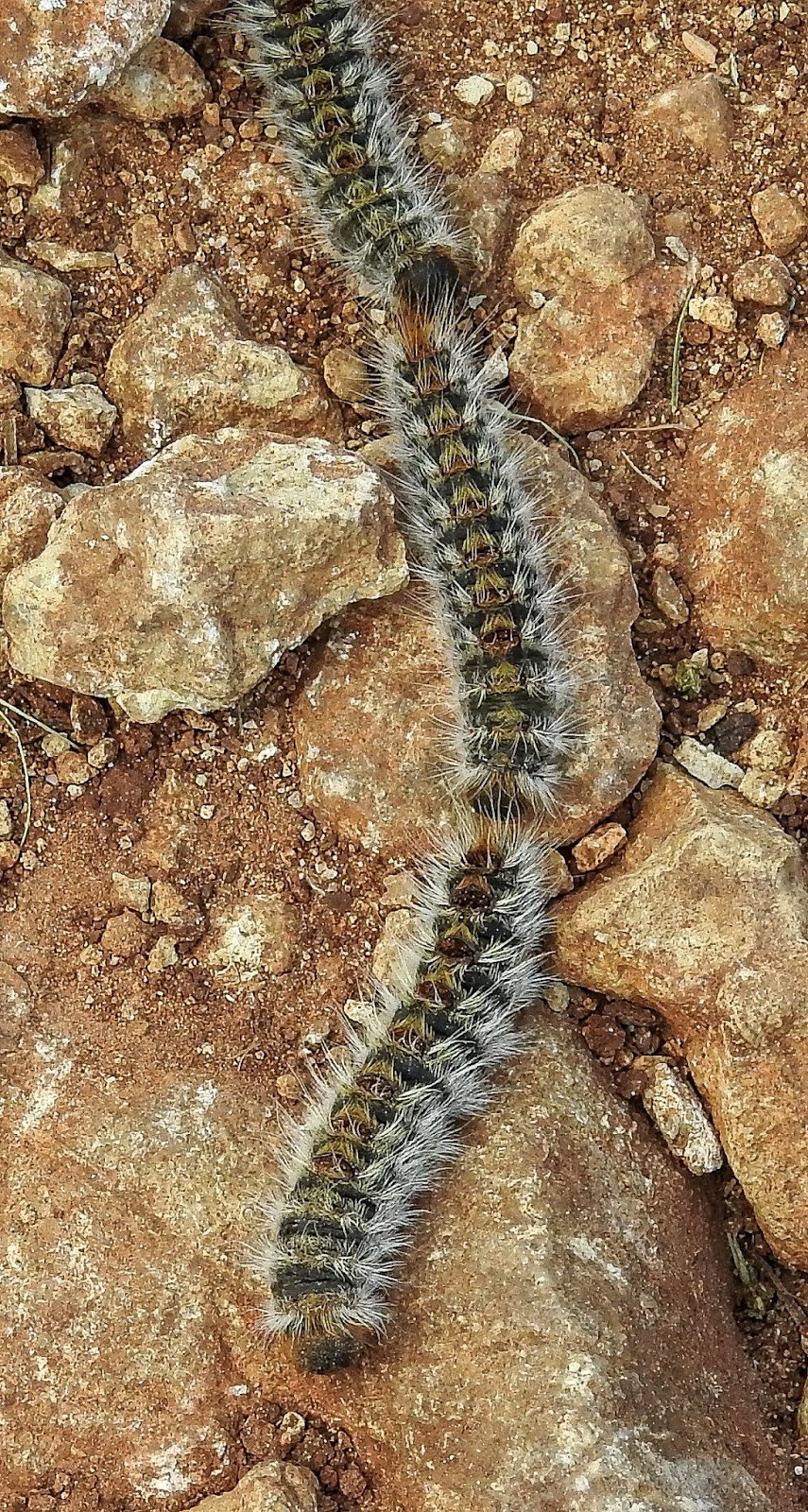
11-2-2019 JALON, ALICANTE - PINE PROCESSIONARY CATERPILLAR (Thaumetopoea pityocampa)


Pine processionary caterpillars are a danger to humans and animals due to their urticating (stinging) hairs, which can cause severe rashes, eye irritation, and in pets, potentially fatal reactions. They are known for forming long, single-file processions when descending trees to pupate. These caterpillars build silky nests in pine trees during the fall and winter and emerge as moths in the summer. 

Key facts

Appearance: They are typically 3 to 4 cm long and orange to brown in color.

Behavior: They form long, single-file "processions" from head to tail, especially when moving from the tree to the ground to burrow and pupate.

Nests: They construct large, silken, tent-like nests on pine trees, often in the branches.

Diet: They feed on pine needles.

Life cycle: Adult moths lay eggs on pine trees in late summer. Caterpillars hatch, grow in nests, and then descend in procession in late winter or early spring to pupate in the soil.

Habitat: Native to the Mediterranean, Middle East, and North Africa, they have been spreading north due to climate change. 


Dangers and risks

Urticating hairs: Each caterpillar has hundreds of thousands of tiny, barbed, stinging hairs that can be easily released into the air.

Human contact: Direct contact can cause a rash that is itchy, painful, and can last for weeks. The hairs can cause inflammation and irritation, and severe reactions, including anaphylactic shock, are possible.

Animal contact: Pets, especially dogs, are at a high risk. They can experience severe reactions if they come into contact with the hairs on their nose or mouth. Symptoms can include swelling, excessive drooling, and chomping. In severe cases, this can lead to tissue damage and requires immediate veterinary care.

Tree damage: They can defoliate trees, weakening them and making them vulnerable to other pests and diseases. 

Safety and prevention
Avoid contact: The best way to stay safe is to avoid areas with pine processionary caterpillars, especially in the spring.

Keep pets on a leash: Keep pets on a leash in wooded areas and be vigilant.

Handle with care: If you must remove nests, avoid touching them and wear protective gear.

Disposal: If you find a procession, do not stand on them or scatter them, as this can release the hairs. Spray the procession with hairspray to disable the hairs, then douse the ground with soapy water and brush thoroughly before disposal.

Emergency: If you or a pet has a reaction, seek medical or veterinary attention immediately. 

11-2-2019 JALON, ALICANTE - WILD DAFFODIL (Narcissus pseudonarcissus)


11-2-2019 JALON, ALICANTE - PLANTAIN FAMILY (Antirrhinum controversum)


Antirrhinum controversum is a subshrub species native to southern Spain, Portugal, and northern Morocco that produces pale-pink flowers and grows between February and November. It thrives in rocky or calcareous soils in sunny to partially shaded, mild-winter areas and can reach heights of 35 to 150 cm. As a species of snapdragon (Antirrhinum), it is part of the Plantaginaceae family and has specific adaptations to its native subtropical environment. 

Physical characteristics
Type: Subshrub
Height: Grows 35 to 150 cm tall
Flowers: Produces dense inflorescences of pale-pink flowers at the end of its stems
Bloom Time: February to November in its native range 
Habitat and ecology
Native Range: Southeastern and southern Spain, Portugal, and northern Morocco
Biome: Favors subtropical biomes
Soil: Indifferent to soil type but has a preference for calcareous soils; it grows in rocky areas, crevices, and on walls

11-2-2019 JALON, ALICANTE - MEDITERRANEAN PALE GLOW-WORM (Nyctophila reichii)


Nyctophila reichii, commonly known as the Mediterranean firefly, is a species of firefly. The species is very common in the southern and eastern part of the Iberian Peninsula.

The Mediterranean firefly is a small beetle, typically measuring 15-18 mm for the male and up to 4 cm for the female. Its body coloration is predominantly black or brown.

These organisms exhibit significant sexual dimorphism, with females tending to have a morphology more similar to that of larvae, while males have a more classic beetle shape.


Females, therefore, are flightless, although they have vestigial wings and have an elongated shape. They are characterized by the ability to generate a large amount of greenish light in the ventral region of the last three abdominal segments. Furthermore, they can expose more of the bioluminescent region by twisting the terminal area of ​​their body.

Males, on the other hand, have a more classic beetle shape, with elytra that cover the entire abdomen and membranous wings that allow flight. Their pronotum is wide, light-colored, with a reddish spot on its surface, and conceals well-developed eyes for detecting the bioluminescence of females. It's worth noting that, unlike other fireflies, these males are not capable of generating bioluminescence.