TOTAL PAGEVIEWS

TRANSLATE

Monday, 22 July 2019

26-5-2019 MANA POOLS, ZIMBABWE - BLACK WINGED STILT (Himantopus himantopus)


The Black-winged Stilt, Himantopus himantopus, is a slender wader known for its strikingly long, pink legs and contrasting black-and-white plumage. This elegant bird is a member of the avocet and stilt family, Recurvirostridae.
Adult Black-winged Stilts measure 33–36 cm in length. They possess a long, thin black bill and display a distinctive black and white coloration. The head and neck are predominantly white, with variable black markings depending on the sex and subspecies. Males typically have a glossy or greenish sheen on their black backs, while females exhibit a more brownish tinge. During flight, their long legs trail behind, and their wingbeats are steady.

These birds favor marshes, shallow lakes, and ponds as their breeding grounds. They are also known to inhabit coastal areas during migration and in the winter months.

The Black-winged Stilt has a wide range, extending across Europe, Asia, and Africa. Some populations migrate to coastal regions in winter, while others in milder climates may remain resident or engage in short-range movements.

Black-winged Stilts are often seen foraging in shallow waters, gracefully picking insects and crustaceans from the surface. They are known to nest in small groups, sometimes alongside avocets, and exhibit a variety of courtship behaviors, including intricate displays and duets.


The flight call of the Black-winged Stilt is a sharp and clear kleek, typically heard during its aerial maneuvers.

Nests are simple bare spots on the ground near water. These birds are communal nesters and may breed in loose colonies. They have been known to breed as far north as Britain, with recent successful breeding events recorded in Southern and Northern England.

The Black-winged Stilt can be confused with other stilt species, such as the Black-necked Stilt (H. mexicanus) in the Americas, the White-backed Stilt (H. melanurus), and the Pied Stilt (H. leucocephalus) in Australasia and New Zealand.

Their diet consists mainly of insects and crustaceans, which they deftly pick from the water's surface or from wet sand.

The IUCN lists the Black-winged Stilt as Least Concern, indicating a stable global population. However, they are protected under the Agreement on the Conservation of African-Eurasian Migratory Waterbirds, highlighting the importance of international cooperation in their conservation.

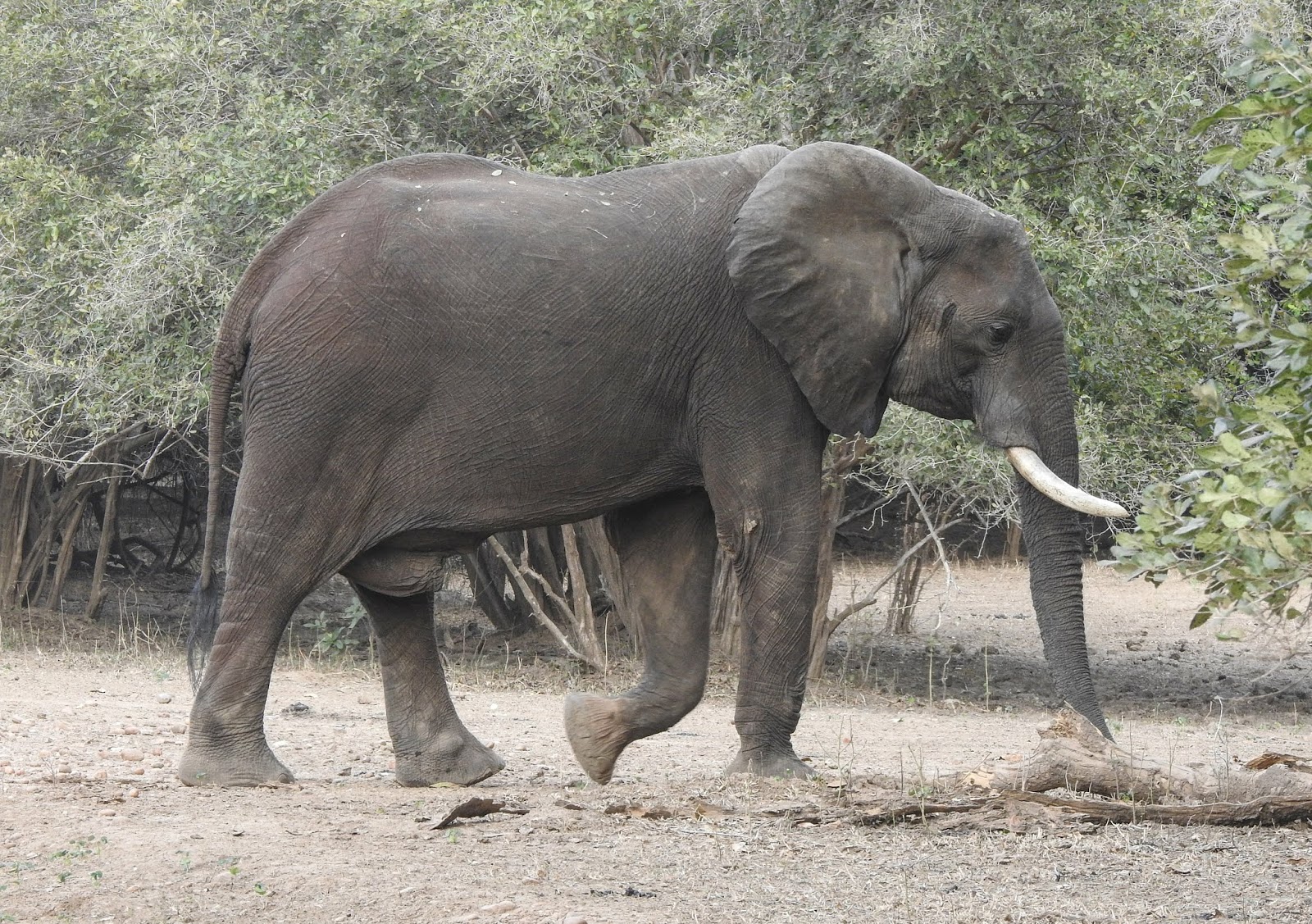
25-5-2019 SOMALISA, ZIMBABWE - AFRICAN SAVANNA ELEPHANT (Loxodonta Africana)


The African bush elephant (Loxodonta africana), also known as the African savanna elephant, is a species of elephant native to sub-Saharan Africa. It is one of three extant elephant species and, along with the African forest elephant, one of two extant species of African elephant. It is the largest living terrestrial animal, with fully grown bulls reaching an average shoulder height of 3.04–3.36 metres (10.0–11.0 ft) and a body mass of 5.2–6.9 tonnes (5.7–7.6 short tons); the largest recorded specimen had a shoulder height of 3.96 metres (13.0 ft) and an estimated body mass of 10.4 tonnes (11.5 short tons). The African bush elephant is characterised by its long prehensile trunk with two finger-like processes; a convex back; large ears which help reduce body heat; and sturdy tusks that are noticeably curved. The skin is grey with scanty hairs, and bending cracks which support thermoregulation by retaining water.


The African bush elephant inhabits a variety of habitats such as forests, grasslands, woodlands, wetlands and agricultural land. It is a mixed herbivore feeding mostly on grasses, creepers, herbs, leaves, and bark. The average adult consumes about 150 kg (330 lb) of vegetation and 230 L (51 imp gal; 61 US gal) of water each day. A social animal, the African bush elephant often travels in herds composed of cows and their offspring. Adult bulls usually live alone or in small bachelor groups. During the mating season, males go through a process called musth, a period of high testosterone levels and heightened aggression. For females, the menstrual cycle lasts three to four months, and gestation around 22 months, the longest of any mammal.


Since 2021, the African bush elephant has been listed as Endangered on the IUCN Red List. It is threatened foremost by habitat destruction, and in parts of its range also by poaching for meat and ivory. Between 2003 and 2015, the illegal killing of 14,606 African bush elephants was reported by rangers across 29 range countries. Chad is a major transit country for smuggling of ivory in West Africa. This trend was curtailed by raising penalties for poaching and improving law enforcement. Poaching of the elephant has dated back to the 1970s and 80s, which were considered the largest killings in history. In human culture, elephants have been extensively featured in literature, folklore and media, and are most valued for their large tusks in many places.


Savanna elephants live in a rather complex social hierarchy. These animals gather into family units, consisting of about 10 females and their offspring. Reaching maturity, male calves usually leave the family unit, forming bachelor herds or living solitarily. As a general rule, males socialize with these family groups only when mating. Meanwhile, several family herds may gather together, making up a 'clan'. Each clan is dominated by a female matriarch and can consist of as many as several hundred elephants. African bush elephants are very careful and protective animals. Allomothering is a common practice in this species: females can raise calves of other females of their herd.

They protect and care for the calves of the herd, while all adults are sleeping. If a calf strays too far, these allomothers are responsible for retrieving the baby. These active animals are constantly on the move. These elephants forage during the daytime hours, wandering the home range of their herd. Savanna elephants freely communicate with conspecifics both verbally and non-verbally.


The African bush elephant is the largest and heaviest living land animal. Under optimal conditions where individuals are capable of reaching full growth potential, fully grown mature males are about 3.20 m (10.5 ft) tall at the shoulder and weigh 6.0 t (6.6 short tons) on average (with 90% of fully grown males under optimal conditions being between 3.04–3.36 m (10.0–11.0 ft) and 5.2–6.9 t (5.7–7.6 short tons).

 Mature fully grown females are smaller at about 2.60 m (8 ft 6 in) tall at the shoulder and 3.0 t (3.3 short tons) in weight on average under optimal growth conditions (with 90% of fully grown females ranging between 2.47–2.73 m (8 ft 1 in – 8 ft 11 in) and 2.6–3.5 t (2.9–3.9 short tons) in optimal conditions).

The maximum recorded shoulder height of an adult bull is 3.96 m (13.0 ft), with this individual having an estimated weight of 10.4 t (11.5 short tons). Another individual with a similar weight of more than 10 t (9.8 long tons; 11 short tons) was found in Kenya in 2025, making it one of the largest elephants ever recorded. Elephants attain their maximum stature when they complete the fusion of long-bone epiphyses, occurring in males around the age of 40 and females around 25 years of age.

25-5-2019 MANA POOLS, ZIMBABWE - YELLOW PANSY BUTTERFLY (Junonia hierta)


Junonia hierta, the yellow pansy, is a species of nymphalid butterfly found in the Palaeotropics. It is usually seen in open scrub and grassland habitats.

The male upper side is bright yellow. The costa of the forewing has a broad triangular jet-black projection downwards at the discocellulars, and the dorsum has a triangular projection upwards near the tornus; this black margin narrows near the middle of the termen and bears on the apex two short transverse preapical white streaks crossed by the black veins. Below these is an obscure ocellus that is sometimes absent. The anterior half and the terminal margin of the hindwing is black, and the dorsum is broadly shaded with brown while the anterior black area has a large brilliant blue spot. The cilia of both forewings and hindwings are white alternated with brown.

The underside of the forewing is pale yellow. The cell is crossed by three laterally black-margined orange-yellow bars, beyond that is a short, broad, irregular jet-black oblique band from costa to base of vein 4. The hindwing is greyish yellow, and in the dry season its form is strongly irrorated (sprinkled) with dusky scales. With a prominent transverse brown discal fascia, its margins are highly sinuous. There is a brownish broad shade on the middle of the termen and some obscure lunular marks on the basal area. The antennae is pale, and the head, thorax and abdomen are dark brownish black; beneath that is a dull ochraceous white. 

The female is similar, although the colours are duller. The cell of the upper side forewing has a more or less complete transverse black fascia and another at the discocellulars. A blue-centered well-marked ocelli is in interspaces 2 and 5 on the disc of the forewing, and smaller ocelli in interspaces 2 and 5 on the disc of the hindwing. The forewings and hindwings have a fairly well-defined pale subterminal line, though the blue spot on the anterior black area on the hindwing is small and ill-defined; the rest is as the male. The underside is also as the male, but generally has heavier and more clearly defined markings.

22-7-2019 MONTE CORONA, VALENCIA - COMMON GERANIUM BRONZE BUTTERFLY (Cacyreus marshalli)


The geranium bronze or brun des pélargoniums in French (Cacyreus marshalli), is a butterfly in the family Lycaenidae.
The geranium bronze butterfly is native to South Africa. The butterfly was first introduced to Europe in the late 20th century, where it has quickly spread to many southern and eastern European regions.

Since its introduction to Europe, the geranium bronze butterfly has become a pest to cultivated Pelargonium and Geranium plant species. Currently, efforts are being made to contain the spread of the geranium bronze butterflies as well as to determine the most effective pesticide for the species.

22-7-2019 VILLALONGA RESERVOIR, VALENCIA - EPAULET SKIMMER DRAGONFLY (MALE) (Orthetrum chrysostigma)


Orthetrum chrysostigma, the epaulet skimmer, is a species of dragonfly in the family Libellulidae. It is found in Algeria, Angola, Benin, Botswana, Burkina Faso, Cameroon, Central African Republic, Chad, the Democratic Republic of the Congo, Ivory Coast, Egypt, Equatorial Guinea, Ethiopia, Gambia, Ghana, Guinea, Israel, Kenya, Liberia, Libya, Malawi, Mali, Mauritania, Morocco, Mozambique, Namibia, Niger, Nigeria, Senegal, Sierra Leone, Somalia, South Africa, Sudan, Tanzania, Togo, Uganda, Zambia, Zimbabwe, and possibly Burundi as well as Canary Islands, and Portugal. It was recorded in the Maltese Islands in 2010.
Its natural habitats are subtropical or tropical moist lowland forests, dry savanna, moist savanna, subtropical or tropical dry shrubland, subtropical or tropical moist shrubland, rivers, intermittent rivers, shrub-dominated wetlands, swamps, freshwater lakes, intermittent freshwater lakes, freshwater marshes, intermittent freshwater marshes, and freshwater springs. The adults prey on various flying insects. The bodies of adult males are blue, and those of young and females are yellow and brown.

22-7-2019 VILLALONGA RESERVOIR, VALENCIA - COMMON SANDPIPER (Actitis hypoleucos)


The Common Sandpiper, Actitis hypoleucos, is a small wader of the Palearctic region, easily recognized by its greyish-brown upperparts and pristine white underparts. Adults typically measure between 18-20 cm in length, with a wingspan of 32-35 cm. They possess short, dark-yellowish legs and feet, and a bill that is pale at the base with a dark tip.

In the field, look for the Common Sandpiper's distinctive stiff-winged flight pattern, just above the water's surface. During the non-breeding season, they appear duller and exhibit more noticeable barring on the wings, which is most visible at close range. Juveniles display heavier barring above and buff edges to their wing feathers. The species can be differentiated from the similar Spotted Sandpiper by its darker legs and feet and the crisper wing pattern, especially in flight.

These birds are often found near freshwater sources, where they nest on the ground in close proximity to the water's edge. 

25-5-2019 MANA POOLS, ZIMBABWE - YELLOW BILLED STORK (Mycteria ibis)


The Yellow-billed Stork, Mycteria ibis, is a striking wader of the African continent. This medium-sized stork, with a height ranging from 90 to 105 cm, is adorned with a predominantly white plumage contrasted by a short black tail with a green and purple sheen. Its namesake yellow bill is slightly curved at the end, distinguishing it from other storks.

During the breeding season, the Yellow-billed Stork's plumage is tinged pink on the upperwings and back, and its legs turn a vivid pink. The male is generally larger with a longer bill compared to the female. Juveniles can be identified by their greyish-brown coloration, dull yellowish bill, and brown legs.

This species favors wetlands, shallow lakes, and mudflats, typically in water depths of 10-40 cm, avoiding heavily forested areas and deep waters unsuitable for their feeding techniques.

The Yellow-billed Stork is found across Eastern Africa, from Senegal and Somalia to South Africa, and in parts of Madagascar. It exhibits local migratory movements influenced by rainfall patterns.


These storks are known for their high-stepped stalking gait and impressive flight aerobatics. They are generally non-vocal but may emit hissing screams during social displays in the breeding season.

The species is mostly silent, but during the breeding season, it engages in bill clattering and a distinctive "woofing" wing beat. Nestlings produce a loud, monotonous braying call to solicit food from adults.

Breeding is triggered by heavy rainfall and subsequent flooding, which increases prey availability. Courtship involves a series of displays and rituals leading to pair formation. Both parents share incubation duties, and hatching is asynchronous, leading to size disparities among chicks.

The Yellow-billed Stork can be confused with other storks, but its yellow bill and breeding plumage are distinctive.


The diet consists mainly of small fish, crustaceans, and other aquatic organisms. They feed by touch, using a snap-bill reflex to capture prey and a foot-stirring technique to flush out hidden prey.

The Yellow-billed Stork is classified as Least Concern due to its large range and population size, despite local threats such as habitat reduction and poaching.

This bird has been featured on postage stamps in various African countries, highlighting its cultural significance.

Despite a decreasing population trend, the Yellow-billed Stork is not considered vulnerable due to its large population and extensive range.

25-5-2019 MANA POOLS, ZIMBABWE - WHITE FRONTED BEE-EATER (Merops bullockoides)


The White-fronted Bee-eater, known scientifically as Merops bullockoides, is a vibrant and slender bird adorned with a striking black mask and a white forehead. Its square tail and bright red throat patch are distinctive features. Measuring at 23 cm in length, the bird's upperparts are a lush green, while its underparts boast a warm cinnamon hue. Its call is a resonant, deep squeak that carries through the air.

A bright and colorful bee-eater; the red throat and white line under the black face mask render it unmistakable. Pairs and groups inhabit woodland adjacent to watercourses, hillsides, and scrub, especially near earthen banks, where nesting colonies are formed by up to 450 individuals burrowing into the dirt. They have one of the most complex of all avian societies, featuring families, clans, and pirates! A nasal rolling “ngyaaau” is the main vocalization.


To identify the White-fronted Bee-eater, look for its unique combination of colors: a black mask, white forehead, green upperparts, and cinnamon underparts. The square tail and bright red throat patch are also key identifiers. Listen for its deep squeaking call as a helpful auditory clue.

This species thrives in the open savannahs of sub-equatorial Africa, often found near gullies where their insect prey, particularly bees, are abundant.

The White-fronted Bee-eater is widely distributed across the savannah regions of sub-equatorial Africa, where it is a common sight in its preferred habitat.


The White-fronted Bee-eater exhibits a complex social structure, nesting in colonies that can average around 200 individuals. These colonies are not just for breeding but also serve as a communal space for roosting and socializing. The birds demonstrate cooperative breeding, with non-breeding individuals acting as helpers to their kin, significantly increasing the success rate of raising young.

The diet of the White-fronted Bee-eater primarily consists of bees, but it also includes other flying insects, depending on seasonal availability. They employ two hunting strategies: making swift hawking flights from lower branches or gliding down from perches to hover momentarily before snatching their prey mid-flight.

The White-fronted Bee-eater is currently listed as Least Concern on the IUCN Red List, indicating that it is not at immediate risk of population decline or habitat loss at a global scale.

25-5-2019 MANA POOLS, ZIMBABWE - WHITE BROWED COUCAL (Centropus superciliosus)


The white-browed coucal or lark-heeled cuckoo (Centropus superciliosus), is a species of cuckoo in the family Cuculidae. It is found in sub-Saharan Africa. It inhabits areas with thick cover afforded by rank undergrowth and scrub, including in suitable coastal regions. Burchell's coucal is sometimes considered a subspecies.

The white-browed coucal is a medium-sized species growing to 36 to 42 cm (14 to 17 in) in length. The sexes are similar, adults having a blackish crown and nape, a white supercilium, rufous-brown back, chestnut wings, blackish rump and black tail, glossed with green, with a white tip. The underparts are creamy-white, the eyes red, the beak black, and the legs and feet greyish-black or black. Juveniles have rufous streaking on the crown, a faint buff supercilium, barred upper parts and darker underparts.

25-5-2019 MANA POOLS, ZIMBABWE - NILE MONITOR (Varanus niloticus)


Nile monitors are large, semi-aquatic lizards native to sub-Saharan Africa that are also found in some parts of the United States due to being released or escaped pets. They are excellent swimmers and climbers, and their diet is opportunistic, consisting of fish, insects, birds, small mammals, and eggs. Nile monitors are known for their large clutches of eggs, which are often laid in termite mounds, and males compete fiercely for mating rights. 

Physical characteristics They can grow to be Africa's largest lizard, with some specimens reaching up to \(2.4\) meters (\(8\) feet) in length, though adults typically range from \(1.2\) to \(2.2\) meters (\(4\) to \(7\) feet).Their tails are muscular and often \(1.5\) times the length of their bodies, acting as a rudder for swimming.Their coloration is typically olive green to black with yellowish, V-shaped stripes on the head and bands or spots along their back. 

25-5-2019 MANA POOLS, ZIMBABWE - SPUR WINGED GOOSE (Plectropterus gambensis)


The Spur-winged Goose, Plectropterus gambensis, is a striking waterbird endemic to Sub-Saharan Africa. It is a member of the Anatidae family, which encompasses geese and shelducks, but has evolved unique anatomical features that distinguish it from its relatives, placing it in its own subfamily, Plectropterinae. This species is one of the largest true waterfowl in Africa and is considered the world's largest goose by average weight, with males being notably larger than females.

Adult Spur-winged Geese measure between 75 to 115 cm in length and weigh approximately 4 to 6.8 kg, with some individuals reaching up to 10 kg. They boast a wingspan ranging from 150 to 200 cm. The plumage is predominantly black with a white face and prominent white wing patches. Their long legs are tinged with pinkish red. The male is distinguishable by a larger red facial patch extending from the red bill and a knob at the base of the upper mandible. The subspecies P. g. niger, found south of the Zambezi River, has a smaller white belly patch and can appear almost entirely black from a distance.


The Spur-winged Goose favors open grasslands adorned with lakes, seasonal pools, rivers, swamps, and river deltas. It typically inhabits large inland rivers and lakes, avoiding saline lakes and arid zones. It can be found at elevations up to 3,000 meters in eastern Africa.

This species is widespread across Sub-Saharan Africa, with the subspecies P. g. gambensis and P. g. niger occupying different regions. P. g. niger is particularly prevalent south of the Zambezi River.

The Spur-winged Goose is a social bird, often found in small flocks of up to 50 individuals. It spends the middle part of the day resting by water and feeds by grazing on plant matter, occasionally supplementing its diet with small fish or insects. The species is known for its aggressive behavior towards other waterfowl during the breeding season, using the spur on its wings in conflicts.


The Spur-winged Goose is generally a quiet species. Males may emit a soft bubbling 'cherwit' when taking flight or feeling alarmed. Both sexes may produce other inconspicuous calls during breeding displays or when alarmed.

Breeding seasons vary across their range, with northern populations breeding from August to December, eastern Africa from January to June, and southern Africa from August to May. Nests are large and usually concealed in vegetation near water, but they may also use tree holes, cavities in rocks, or even the nests of other birds.
The diet is predominantly plant-based, including grasses, sedges, aquatic plants, grains, fruits, and tuberous crops. They may also eat small fish or insects.

The Spur-winged Goose is classified as Least Concern by the IUCN. The main threats include habitat destruction and unregulated hunting. A survey in western Africa estimated a population of 10,000 individuals, with many found in the Niger basin. The species is protected under the Agreement on the Conservation of African-Eurasian Migratory Waterbirds (AEWA).

Sunday, 21 July 2019

25-5-2019 MANA POOLS, ZIMBABWE - SOUTHERN RED BILLED HORNBILL (Tockus rufirostris)


The southern yellow-billed hornbill is a medium-sized bird native to southern Africa, known for its large, yellow, down-curved bill and black-and-white plumage. It is an omnivore that forages on the ground for insects, seeds, and fruit, and has a unique nesting behavior where the female seals herself inside a tree cavity. The female is fed by the male through a small slit in the entrance during incubation. 

Physical characteristics
Size: 48–60 cm in length
Weight: 132–242 grams
Beak: A large, yellow, down-curved beak that can be up to 1/6th of its body length. A male's beak is longer on average than a female's.
Plumage: Black and white with a white belly and grey neck. 
Diet and foraging
Omnivorous: Eats arthropods (like termites, beetles, and caterpillars), scorpions, small mammals, and fruits, berries, and seeds.
Ground forager: Primarily forages on the ground, but also nests in trees.
Cooperative foraging: Can forage with dwarf mongooses, with the hornbills alerting the mongoose to overhead predators in exchange for the mongoose disturbing prey on the ground. 

25-5-2019 MANA POOLS, ZIMBABWE - SOUTHERN GREATER KUDU (FEMALE) (Tragelaphus Strepsiceros)


The Greater kudu (Tragelaphus strepsiceros) is a woodland antelope found in Africa. Despite occupying such widespread territory, Greater kudus are sparsely populated in most areas due to declining habitat, deforestation, and poaching.

Greater kudus have a narrow body with long legs, and their coats can range from brown/bluish-grey to reddish-brown. They possess between 4 and 12 vertical white stripes along their torso. The head is usually darker in color than the rest of the body and exhibits a small white v-shaped mark that runs between the eyes. Bulls tend to be much larger than cows, and vocalize much more; they also have beards running along their throats and large horns with two and a half twists.

The range of Greater kudu extends from the east in Ethiopia, Tanzania, Eritrea, and Kenya into the south where they are found in Zambia, Angola, Namibia, Botswana, Zimbabwe, and South Africa. Other regions where they occur are the Central African Republic, Chad, the Democratic Republic of the Congo, Djibouti, Malawi, Mozambique, Somalia, Swaziland, and Uganda. These antelopes live in mixed scrub woodlands and bush on abandoned fields and degraded pastures, mopane bush, and acacia in lowlands, hills, and mountains. They will occasionally venture onto plains only if there is a large abundance of bushes but normally avoid such open areas to avoid becoming an easy target for their predators.

25-5-2019 MANA POOLS, ZIMBABWE - AFRICAN GREAT EGRET (Ardea alba ssp. melanorhynchos)


The African Great Egret (Ardea alba melanorhynchos or Casmerodius albus melanorhynchos) is found in the wetlands of tropical Africa.

The African Great Egret has all white feathers, and a long, thin, yellow beak, which may become darker in the breeding season. It has a fine black line from its beak to beyond its eye (like eye-liner underneath the eye). It has black legs and feet.


It grows to 100 centimetres (39 inches) tall, with a wingspan up to 170 centimetres (67 inches).

It flys slowly, with its neck retracted into an S-shape (not out-stretched). Storks, cranes, spoonbills, and ibises fly with their necks out-stretched, but egrets, herons, and bitterns fly with their heads retracted into their neck.

It is a wetland bird. It is a wading bird.

The African Great Egret feeds in shallow water on fish, frogs, insects, and small reptiles. It spears its prey with its long beak when they come near to it. It can stand still in the water, or wade slowly in the water, silently looking for its prey.


The African Great Egret lives in colonies. Pairs mate for life. Females lay 2-6 blue-green eggs in a stick nest made by the male. Both parents sit on the eggs for 23-26 days before they hatch. Both parents feed the chicks. The chicks can fly after about 6-7 weeks.

25-5-2019 MANA POOLS, ZIMBABWE - COMMON IMPALA (MALE) (Aepyceros melampus ssp. melampus)


The impala (Aepyceros melampus) is a medium-sized antelope that is found in Africa. It was first described to European audiences by German zoologist Hinrich Lichtenstein in 1812. Active mainly during the day, the impala may be gregarious or territorial depending upon the climate and geography. The impala is known for two characteristic leaps that constitute an anti-predator strategy.

Impala is an elegant and magnificent species of antelope. The animal has slender body with the identifying "M"-like marking on the rear. This medium-sized antelope possesses thin, pointed horns with tips, lying far apart from each other. Males of this species are identified by the characteristic "S"-like horns. The elegant limbs of these animals have scent glands behind the ankles. The overall coloration of their fur is red-brown with paler sides. In addition, they have black and white colored areas on their body. Thus, the tail, belly, chin, lips, inside ears as well as the lines above the eyes are colored with white. Meanwhile, black bands cover their thighs, tail, forehead and ear tips.


Impalas are distributed throughout the northeastern part of South Africa, Angola, southern Rwanda, Uganda, and Kenya. Close proximity to a water source is an important life condition for these animals. Generally, they prefer woodland with little undergrowth as well as low to medium-height grassland.

Impalas have polygynous mating system, where each male mates with a number of females. The period of peak breeding activity is March-May. During this period, pregnant females live in isolation to give birth. The gestation period lasts from 194 to 200 days, yielding a single calf, which weighs about 5kgs (11 lbs). After a few days, the calf and the female rejoin the herd. Then, after a while, the calf joins a crèche of other young impalas. They are weaned at 4-5 months old. Male impalas reach reproductive maturity at 1 year of age, while females are ready to breed when they are between 1 and 2 years old. Becoming reproductively mature, they, however, do not rush to establish territories. They typically start mating only at 4 years old.

25-5-2019 MANA POOLS, ZIMBABWE - CHACMA BABOON (FEMALE & JUVENILE) (Papio ursinus)


Chacma baboons are found throughout southern Africa, ranging from South Africa north to Angola, Zambia, and Mozambique. They live in diverse habitats from woodlands to savannas, steppes, and sub-deserts. Chacma baboons are found in the Kalahari Desert as well as on the alpine slopes of the Drakensberg. They usually sleep on hills, cliffs, or large trees and during the day, avoid arid areas with a lack of water.

The Chacma baboon (Papio ursinus) is a member of the Old World monkey family. It is one of the largest of all monkeys. Located primarily in southern Africa, the chacma baboon has a wide variety of social behaviors, including a dominance hierarchy, collective foraging, adoption of young by females, and friendship pairings. In general, the species is not threatened, but hunting, trapping, and accidents kill or remove many baboons from the wild, thereby reducing their numbers and disrupting their social structure.


The Chacma baboon is perhaps the longest species of monkey and it is also one of the heaviest. Adult males can in some instances be about twice as long and three times as heavy as adult females. Perhaps the most distinctive feature of this baboon is its long, downward-sloping face. The Chacma baboon is generally dark brown to gray in color, with a patch of rough hair on the nape of its neck. Unlike the males of northern baboon species (Guinea, hamadryas, and Olive baboons), Chacma males do not have a mane. The three subspecies are differentiated by size and color. The Cape chacma is a large, heavy, dark-brown, and has black feet. The Gray-footed chacma is slightly smaller than the Cape chacma, lighter in color and build, and has gray feet. The Ruacana chacma generally appears to be a smaller, less darkly colored version of the Cape chacma.

25-5-2019 MANA POOLS, ZIMBABWE - BROWN HOODED KINGFISHER (Halcyon albiventris)


The brown-hooded kingfisher (Halcyon albiventris) is a species of bird in the subfamily Halcyoninae, the tree kingfishers. It has a brown head and blackish and turquoise wings. It is found in Sub-Saharan Africa, living in woodland, scrubland, forest edges, and also suburban areas. The International Union for Conservation of Nature (IUCN) has assessed it as being of least concern.

This species was described as Alcedo albiventris by Giovanni Antonio Scopoli in 1786. Four subspecies are recognised: Halcyon albiventris albiventris, H. a. orientalis, H. a. prentissgrayi and H. a. vociferans. Subspecies hylophila and erlangeri have also been described, but they are not considered distinct enough.

The brown-hooded kingfisher is about 22 cm (8.7 in) long. The head is brown, with blackish streaks. There is a broad buffy collar above the brownish-black mantle. The wing coverts are mostly brownish-black, and the secondary flight feathers are turquoise. The rump is azure-blue. The chin is white, the breast is tawny with some dark streaks, and the belly is buffy. The beak is red, tipped brown, the legs are carmine, and the eyes are dark brown. The female has dark brown upperparts, and its underparts are more streaked than the male. The juvenile bird is duller, with scalloped whitish underparts. The subspecies differ in shade and streaking.


This kingfisher is found in Sub-Saharan Africa, in Gabon, Congo, the Democratic Republic of the Congo, Angola, Kenya, Tanzania, Zambia, Somalia, Mozambique, Malawi, Zimbabwe, Botswana, Namibia, South Africa and Eswatini. It occurs below 1,800 m (5,900 ft) in elevation, living in woodland, grassland with trees, scrubland, forest edge, and also cultivations, parks and gardens. It sometimes occurs near water, and can adapt to suburban habitats. Most populations do not migrate, but there is evidence of seasonal movements in some areas.

This kingfisher is generally seen alone or in pairs. It usually forages on the ground, mainly feeding on insects, and also eating scorpions, reptiles, small birds, rodents and fishes. Eating snakes and lizards as long as 25 cm (9.8 in) has been reported. The song, given while vibrating the wings, is a tiiiu or ki-ti-ti-ti trill, and a sharp cheerit is given when alarmed. The breeding season is mainly between September and April. A burrow nest is dug in a river bank, gully or road cutting. The family stays together for a few weeks after breeding.

25-5-2019 MANA POOLS, ZIMBABWE - BENNETT'S WOODPECKER (Campethera bennettii ssp. bennettii)


Bennett's woodpecker (Campethera bennettii) is a species of bird in the family Picidae. It is found in woodlands and bushes in Africa. The International Union for Conservation of Nature (IUCN) has assessed it as a least-concern species.

This species was described by Andrew Smith in 1836. Two subspecies are recognised: Campethera bennettii bennettii and C. b. capricorni. The common name and Latin binomial commemorate the British naturalist Edward Turner Bennett. Bennett's woodpecker, the fine-spotted woodpecker, the Nubian woodpecker and the speckle-throated woodpecker form a superspecies.


Bennett's woodpecker is about 24 cm (9.4 in) long and weighs 61–84 g (2.2–3.0 oz). The male's forehead, crown and nape are red. The chin and throat are white. The upperparts are brown, yellow and white. The underparts are pale yellow, and there are dark spots on the breast and flanks. The eyes are red, the beak is grey, and the legs are bluish-green or grey-green. The female has a black forehead with white spots, and its ear coverts and throat are brown or blackish-brown. The juvenile bird has a black forehead and crown and darker upperparts. The subspecies capricorni is slightly larger, and its underparts have a deeper colour and fewer spots.

This woodpecker is found in Angola, Botswana, Burundi, Democratic Republic of the Congo, Eswatini, Malawi, Mozambique, Namibia, Rwanda, South Africa, Tanzania, Zambia, and Zimbabwe, and it has a patchy distribution. Its habitat is woodlands and bushes, including miombo, Baikiaea, Acacia and mopane woodlands.

25-5-2019 MANA POOLS , ZIMBABWE - COMMON WATERBUCK (MALE) (Kobus ellipsiprymnus ssp. ellipsiprymnus)


The waterbuck (Kobus ellipsiprymnus) is a large antelope found widely in sub-Saharan Africa. It is in the genus Kobus of the family Bovidae. It was first described by Irish naturalist William Ogilby in 1833. Its 13 subspecies are grouped under two varieties: the common or ellipsiprymnus waterbuck and the defassa waterbuck. Their coat colour varies from brown to grey. The long, spiral horns, present only on males, curve backward, then forward, and are 55–99 cm (22–39 in) long.


The waterbuck (Kobus ellipsiprymnus) is a large antelope found widely in sub-Saharan Africa. It is in the genus Kobus of the family Bovidae. It was first described by Irish naturalist William Ogilby in 1833. Its 13 subspecies are grouped under two varieties: the common or ellipsiprymnus waterbuck and the defassa waterbuck. Their coat colour varies from brown to grey. The long, spiral horns, present only on males, curve backward, then forward, and are 55–99 cm (22–39 in) long.


Waterbucks are rather sedentary in nature. As gregarious animals, they may form herds consisting of six to thirty individuals. These groups are either nursery herds with females and their offspring or bachelor herds. Males start showing territorial behaviour from the age of five years, but are most dominant from six to nine. The waterbuck cannot tolerate dehydration in hot weather, and thus inhabits areas close to sources of water. Predominantly a grazer, the waterbuck is mostly found on grassland. In equatorial regions, breeding takes place throughout the year, but births are at their peak in the rainy season. The gestational period lasts 7–8 months, followed by the birth of a single calf.


Waterbucks inhabit scrub and savanna areas along rivers, lakes, and valleys. Due to their requirement for grasslands and water, waterbucks have a sparse ecotone distribution. The IUCN lists the waterbuck as being of least concern. More specifically, the common waterbuck is listed as of least concern, while the defassa waterbuck is near threatened. The population trend for both is downwards, especially that of the defassa, with large populations being eliminated from certain habitats because of poaching and human disturbance.

25-5-2019 MANA POOLS , ZIMBABWE - SPUR WINGED GOOSE (Plectropterus gambensis)


The Spur-winged Goose is Africa's largest waterfowl, known for the sharp spurs on its wings used for defense. These large, black-and-white geese are found in wetlands and floodplains across Sub-Saharan Africa, and they have a unique diet that can include toxic blister beetles, making the birds themselves potentially poisonous to predators, including humans. They are omnivorous, feeding on both plants and small animals, and can cause damage to crops due to their preference for grains and fodder. Physical characteristics and defense They are the largest waterfowl species in Africa, with some males weighing over \(10\) kg.Their appearance is mostly black with metallic green glossing and white on the face and belly, and they have pinkish-red legs and bills.The "spur" is a sharp, hard projection on the bend of each wing, which they use aggressively for defense and territorial disputes with other birds. 


Habitat and diet They inhabit a wide range of wetland habitats, such as rivers, lakes, swamps, and floodplains, but also frequent agricultural fields.They are predominantly herbivores, feeding on seeds, grasses, and crops, but will also eat insects and small fish.Some populations are potentially poisonous due to their diet of blister beetles, which contain the toxin cantharidin. Behavior and breeding Spur-winged Geese are often gregarious and can form large flocks, though they are shy and wary.They are monogamous and their breeding season varies depending on the region.Nests are typically built in vegetation near water, but they will also use tree holes, rock cavities, or termite mounds.Females incubate the eggs and care for the young, while males may stay to defend the area. 

25-5-2019 MANA POOLS , ZIMBABWE - WHITE HELMETSHRIKE (Prinops plumatus)


The White-crested Helmetshrike, Prionops plumatus, also known as the White Helmetshrike, is a striking passerine bird belonging to the Vanga family Vangidae. It is characterized by its prominent white crest and the contrasting black plumage that adorns its body.

This species can be identified by its distinctive white crest, which stands out against its predominantly black body. The wings, when closed, are largely black, and the bird exhibits a curly-crested appearance, particularly noticeable in the subspecies P. p. cristatus.

The White-crested Helmetshrike inhabits a variety of environments, including subtropical or tropical dry forests, dry and moist savannas, as well as subtropical or tropical dry shrublands.

The bird's range extends across a vast swath of Africa, from Angola to Zimbabwe, including countries such as Benin, Botswana, Burkina Faso, and many others. It is a common sight in these regions, adapting well to its diverse habitats.

A gregarious creature, the White-crested Helmetshrike is often seen in small, active parties. These groups are constantly on the move, foraging among foliage or on the ground. They maintain a noisy chatter amongst themselves as they traverse their territory.

25-5-2019 MANA POOLS , ZIMBABWE - SOUTHERN WARTHOG (Phacochoerus africanus ssp. sundevallii)


The common warthog (Phacochoerus africanus) is a wild member of the pig family (Suidae) found in grassland, savanna, and woodland in sub-Saharan Africa. In the past, it was commonly treated as a subspecies of P. aethiopicus, but today that scientific name is restricted to the desert warthog of northern Kenya, Somalia, and eastern Ethiopia.


The common warthog is a medium-sized species, with a head-and-body length ranging from 0.9 to 1.5 m (2 ft 11 in to 4 ft 11 in), and shoulder height from 63.5 to 85 cm (25.0 to 33.5 in). Females, at 45 to 75 kg (99 to 165 lb), are smaller and lighter than males, at 60 to 150 kg (130 to 330 lb).[4][5] A warthog is identifiable by the two pairs of tusks protruding from the mouth and curving upwards. The lower pair, which is far shorter than the upper pair, becomes razor-sharp by rubbing against the upper pair every time the mouth is opened and closed. The upper canine teeth can grow to 25.5 cm (10.0 in) long and have a wide elliptical cross section, being about 4.5 cm (1.8 in) deep and 2.5 cm (0.98 in) wide. A tusk will curve 90° or more from the root, and will not lie flat on a table, as it curves somewhat backwards as it grows. The tusks are not used for digging, but are used for combat with other hogs and in defense against predators – the lower set can inflict severe wounds.


Common warthog ivory is taken from the constantly growing canine teeth. The tusks, particularly the upper set, work in much the same way as elephant tusks with all designs scaled down. Tusks are carved predominantly for the tourist trade in eastern and southern Africa.[citation needed]

The head of the common warthog is large, with a mane down the spine to the middle of the back. Sparse hair covers the body. Its color is usually black or brown. Tails are long and end with a tuft of hair. Common warthogs do not have subcutaneous fat and the coat is sparse, making them susceptible to extreme environmental temperatures.

As of 1999, the common warthog population in southern Africa was estimated to be about 250,000. Typical densities range between 1 and 10 km2 (0.39 and 3.86 sq mi) in protected areas, but local densities of 77 km2 (30 sq mi) were found on short grass in Nakuru National Park in Kenya. The species is susceptible to drought and hunting (especially with dogs), which may result in localized extinctions. The common warthog is present in numerous protected areas across its extensive range.