TOTAL PAGEVIEWS

TRANSLATE

Friday, 18 October 2019

18-10-2019 MONTE CORONA,18-10-2019 MONTE CORONA, VALENCIA - WESTERN CONIFER SEED BUG (Leptoglossus occidentalis)


The western conifer seed bug (Leptoglossus occidentalis), sometimes abbreviated as WCSB, is a species of true bug (Hemiptera) in the family Coreidae. It is native to North America west of the Rocky Mountains (California to British Columbia, east to Idaho Minnesota and Nevada) but has in recent times expanded its range to eastern North America, to include Ontario, Québec, New Brunswick, Nova Scotia, Michigan, Maine, Pennsylvania, New York, Connecticut, Massachusetts, New Hampshire, Ohio, Indiana, Kentucky, and Wisconsin, and has become an accidental introduced species in parts of Europe and Argentina.

This species is a member of the insect family Coreidae, or leaf-footed bugs, which also includes the similar Leptoglossus phyllopus and Acanthocephala femorata, both known as the "Florida leaf-footed bug". Western conifer seed bugs are sometimes colloquially called stink bugs. While they do use a foul-smelling spray as a defense, they are not classified in the stink bug family Pentatomidae. In Chile, it has been confused with kissing bugs (Triatominae), causing unjustified alarm.


The average length is 16–20 millimetres (0.63–0.79 in) with males being smaller than females. They are able to fly, making a buzzing noise when airborne. Western conifer seed bugs are somewhat similar in appearance to the wheel bug Arilus cristatus and other Reduviidae (assassin bugs). These, being Cimicomorpha, are not very closely related to leaf-footed bugs as Heteroptera go; though both have a proboscis, but only the assassin bugs bite even if unprovoked, and L. occidentalis like its closest relatives can be most easily recognized by the expanded hindleg tibiae and by the alternating light and dark bands which run along the outer wing edges on the flaring sides of the abdomen.

Their primary defense is to emit an unpleasant-smelling alarm pheromone; however, if handled roughly they will stab with their proboscis, though they are hardly able to cause injury to humans as it is adapted only to suck plant sap and not, as in the assassin bugs, to inject venom.


In its native range, the western conifer seed bug feeds on the sap of developing conifer cones throughout its life, and its sap-sucking causes the developing seeds to wither and misdevelop. It is therefore considered a minor tree pest in North America, but becoming sometimes more harmful e.g. in conifer plantations. However, it is not monophagous and even adaptable enough to feed on angiosperms if it has to, though it seems to prefer resiniferous plants that are rich in terpenes. As these are produced by plants to deter herbivores, it might be that in evolving its ability to overcome these defenses, L. occidentalis actually became somewhat dependent on such compounds.

Its host plants in the native range include conifers such as Douglas-fir (Pseudotsuga menziesii), ponderosa pine (Pinus ponderosa), lodgepole pine (Pinus contorta), and white spruce (Picea glauca). Outside the native range, it is found on species such as eastern white pine (P. strobus) and red pine (P. resinosa) in eastern North America and Europe, and mountain pine (P. mugo), black pine (P. nigra), Scots pine (P. sylvestris) and pistachio (Pistacia vera) in Europe.

The eggs are laid in small groups on the needles or leaf stems of its host plants, and hatch in spring. The nymphs go through 5 instar stages before moulting into adults. In the United States, the species is univoltine, but in southern Europe, it completes two generations a year, and in tropical Mexico even three. In the northern parts of its range, these bugs start to move about widely by September or so to seek crevices for overwintering; they may become a nuisance in areas with extensive conifer woods, as they will sometimes enter houses in considerable numbers. They have the potential to become structural pests, as it has been found that they will sometimes pierce PEX tubing with their mouthparts, resulting in leakage.

Thursday, 17 October 2019

17-10-2019 CAMI LES FONTS OLIVA, VALENCIA - MARVEL OF PERU (Mirabilis jalapa)


It is a perennial, herbaceous, bushy plant that reaches stature heights of mostly 1 meter, rarely up to 2 meters, in height. It may also be grown as an annual, especially in the temperate zone. The single-seeded fruits are spherical, wrinkled and black upon maturity, having started out greenish-yellow. The stems are thick, full, quadrangular with many ramifications and rooting at the nodes. The posture is often prostrate.

A curious aspect of M. jalapa is that flowers with different colors grow simultaneously on the same plant. Additionally, an individual flower can be splashed with different colors. Flower patterns are referred to as sectors (whole sections of flower), flakes (stripes of varying length), and spots. A single flower can be plain yellow, red, magenta, pink, or white, or have a combination of sectors, flakes, and spots. Furthermore, different combinations of flowers and patterns can occur on different flowers of the same plant.

Usually, the flowers are yellow, pink and white, but a different combination of flowers growing on the same single four o’clock plant can be found. Another interesting point is a color-changing phenomenon. For example, in the yellow variety, as the plant matures, it can display flowers that gradually change to a dark pink colour. Similarly, white flowers can change to light violet. Despite their appearance, the flowers are not formed from petals – rather they are a pigmented modification of the calyx. Similarly, the 'calyx' is an involucre of bracts. The flowers are funnel-shaped and pentalobed, they have no cup (replaced by bracteal leaves) but are made of a corolla.

2-8-2017 BUDAPEST, HUNGARY - ICTERINE WARBLER (Hippolais icterina)


The Icterine warbler (Hippolais icterina) is an Old World warbler in the tree warbler genus Hippolais. It breeds in mainland Europe except the southwest, where it is replaced by its western counterpart, the melodious warbler. It is migratory, wintering in sub-Saharan Africa.

A fairly big warbler with a large head, broad-based bill and long wings with a quite short square-ended tail. The upperparts are greyish-green and the underparts are uniformly light yellow. It has pale lores and a rather vague yellowish supercilium with a pale eye ring. Other distinguishing features include a panel on the folded wings formed by pale edges to the secondary feathers and tertiary feathers and the grey, sometimes bluish legs.

The icterine warbler is a bird of woodland rather than forest, preferring woodland edge or glades, favouring the crowns of well-spaced trees with tall undergrowth. It prefers broad-leafed trees, but may be found in conifers mixed with broad-leafed trees. It will use copses, orchards, parks, gardens, shelterbelts and tall hedges interspersed with trees.

6-10-2019 CALPE, ALICANTE - GIANT AFRICAN MANTIS (FEMALE) (Sphodromantis viridis)


Sphodromantis viridis is a species of praying mantis that is kept worldwide as a pet. Its common names include African mantis, giant African mantis, and bush mantis.

Sphodromantis viridis is popularly called the African mantis, but that common name is shared with not only other species in its genus (i.e. S. belachowski, S. centralis, S. gastrica, S. lineola, etc.), but also Miomantis caffra and others, as well.

Sphodromantis viridis is native to West Africa south of the Sahara Desert. It can also be found as an introduced species in areas outside its original range, including Israel and Spain.

Despite its scientific name (viridis is Latin for green) this insect ranges in color from bright green to dull brown. Females can reach 10 cm (3.9 in) in length. Sexual dimorphism is typical of mantises; the male is much smaller. Females may also be distinguished from males as they have a six-segmented abdomen compared to an eight-segmented abdomen of the male.


As adults, both sexes have a distinctive white spot on their wings. They have a yellowish color on their inner fore leg distinguishable from the black eyespot and white dots of the European mantis Mantis religiosa with which it shares some range.

As with most mantis species, S. viridis males are frequently the victims of sexual cannibalism. A female produces an ootheca within a few days of mating and can produce several before she ends her lifecycle. Each ootheca produces up to 300 nymphs when it hatches. This species has also been noted to have reproduced parthenogenically.

Because of its size and hardiness, S. viridis is popular among those who keep insects as pets. S. viridis "is an easy species to keep, very suitable for beginners...They will happily take food of their own size and they will also take pieces of meat if it is offered on a pair of tweezers". They are also more tolerant of changes in humidity and temperature than are many other species.

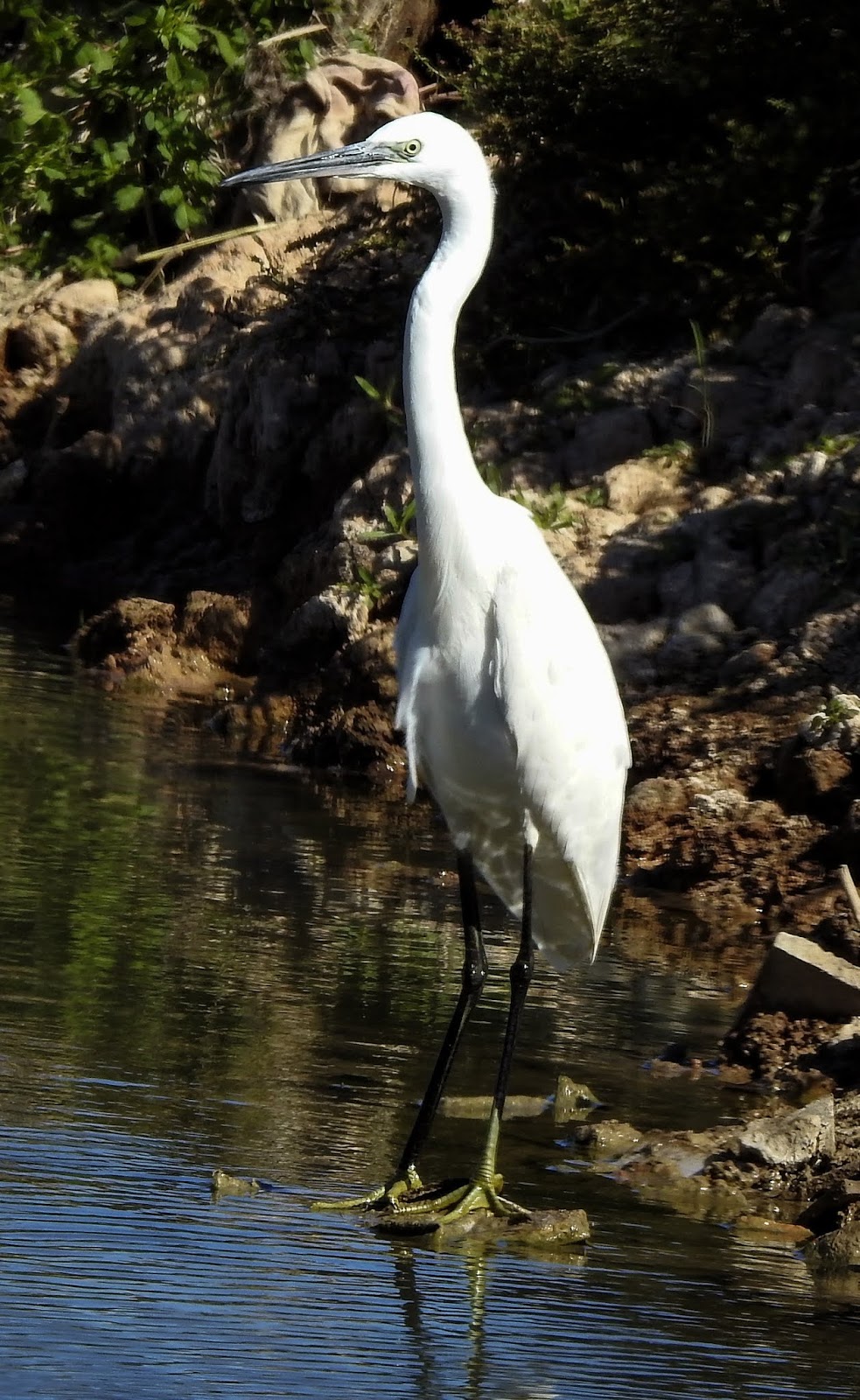
16-10-2019 EL SALER, VALENCIA - LITTLE EGRET (Egretta garzetta)


The little egret (Egretta garzetta) is a species of small heron in the family Ardeidae. It is a white bird with a slender black beak, long black legs and, in the western race, yellow feet. As an aquatic bird, it feeds in shallow water and on land, consuming a variety of small creatures. It breeds colonially, often with other species of water birds, making a platform nest of sticks in a tree, bush or reed bed. A clutch of three to five bluish-green eggs is laid and incubated by both parents for about three weeks. The young fledge at about six weeks of age.
Its breeding distribution is in wetlands in warm temperate to tropical parts of Asia, Africa, Australia, and Europe. A successful colonist, its range has gradually expanded north, with stable and self-sustaining populations now present in the United Kingdom.


In warmer locations, most birds are permanent residents; northern populations, including many European birds, migrate to Africa and southern Asia to over-winter there. The birds may also wander north in late summer after the breeding season, and their tendency to disperse may have assisted in the recent expansion of the bird's range. At one time common in Western Europe, it was hunted extensively in the 19th century to provide plumes for the decoration of hats and became locally extinct in northwestern Europe and scarce in the south. Around 1950, conservation laws were introduced in southern Europe to protect the species and their numbers began to increase. By the beginning of the 21st century the bird was breeding again in France, the Netherlands, Ireland and Britain. Its range is continuing to expand westward, and the species has begun to colonise the New World; it was first seen in Barbados in 1954 and first bred there in 1994. The International Union for Conservation of Nature has assessed the bird's global conservation status as being of "least concern".

10-10-2019 MONTE CORONA, VALENCIA - MOORISH GECKO (Tarentola mauritanica)


Tarentola mauritanica, known as the common wall gecko, is a species of gecko (Gekkota) native to the western Mediterranean area of North Africa and Europe. It has been introduced to Madeira and Balearic Islands, and the Americas (in Montevideo, Buenos Aires and California). A nocturnal animal with a predominantly insectivorous diet, it is commonly observed on walls in urban environments in warm coastal areas; it can be found further inland, especially in Spain where it has a tradition of cohabitation with humans as an insect hunter. A robust species, up to 15 centimetres (5.9 in) long, its tubercules are enlarged and give the species a spiny armoured appearance.
The species was first described by Carl Linnaeus in 1758. It is also known as moorish gecko, crocodile gecko, European common gecko, and, regionally, as osga (in Portuguese), salamanquesa (in Spanish) and dragó (in Catalan).

10-10-2019 MONTE CORONA, VALENCIA - HOUSE SPARROW (MALE) (Passer domesticus)


The house sparrow (Passer domesticus) is a member of the sparrow family Passeridae. This small bird typically measures around 16 cm (6.3 in) in length and weighs between 24–39.5 g (0.85–1.39 oz). The species exhibits sexual dimorphism, with females and young birds displaying pale brown and grey plumage, while males are characterized by more vibrant black, white, and brown markings.

Males can be identified by their bright black, white, and brown markings, with a distinctive black bib, white cheeks, and a grey crown. Females lack the striking head patterns of males and are predominantly buffish with softer coloration. Juveniles resemble adult females but are generally paler with less defined markings.

The house sparrow is highly adaptable and can thrive in both urban and rural environments. It is commonly found in close association with human habitation and avoids dense forests, grasslands, polar regions, and deserts far from human development.

Native to Europe, the Mediterranean Basin, and much of Asia, the house sparrow has been introduced to various regions worldwide, including parts of Australasia, Africa, and the Americas, making it one of the most widely distributed wild birds.

10-10-2019 MONTE CORONA, VALENCIA - HOUSE SPARROW (FEMALE) (Passer domesticus)


The house sparrow (Passer domesticus) is a member of the sparrow family Passeridae. This small bird typically measures around 16 cm (6.3 in) in length and weighs between 24–39.5 g (0.85–1.39 oz). The species exhibits sexual dimorphism, with females and young birds displaying pale brown and grey plumage, while males are characterized by more vibrant black, white, and brown markings.
Males can be identified by their bright black, white, and brown markings, with a distinctive black bib, white cheeks, and a grey crown. Females lack the striking head patterns of males and are predominantly buffish with softer coloration. Juveniles resemble adult females but are generally paler with less defined markings.

The house sparrow is highly adaptable and can thrive in both urban and rural environments. It is commonly found in close association with human habitation and avoids dense forests, grasslands, polar regions, and deserts far from human development.

Native to Europe, the Mediterranean Basin, and much of Asia, the house sparrow has been introduced to various regions worldwide, including parts of Australasia, Africa, and the Americas, making it one of the most widely distributed wild birds.

15-10-2019 OLIVA, VALENCIA - LAMENTING GRASSHOPPER (Eyprepocnemis plorans)


Eyprepocnemis plorans, the lamenting grasshopper, is a species of insect in the family Acrididae. It is the type species of the genus Eyprepocnemis, and is found in Africa, parts of the Middle East, and southern Europe. It typically inhabits wetlands and other moist habitats.
This is a medium-sized grasshopper, with females growing to a length of about 4.5 cm (1.8 in), while males are slightly smaller. The general colour is greyish-brown. The head and prothorax have a central dark band edged with paler stripes. The eye has a longitudinal dark streak, a characteristic shared by Anacridium aegyptium, Heteracris annulosa and Heteracris adspersa. The femurs of the hind legs have greenish, blue and yellow striations, and the hind tibia have reddish or bluish iridescence, and black and white spines.

Eyprepocnemis plorans is native to much of Africa, parts of the Middle East such as Iran, and southern Europe, where it is present in southern Greece, southern Italy, Sicily, Sardinia and southern Spain. It seems to be expanding its range northwards in Italy, possibly as a result of putative climate change.[3] It usually occurs in wetlands, reed beds, freshwater and salt marshes, riverside vegetation, coastal vegetation and man-made habitats. It appreciates vertical-growing stems such as reeds, and habitats with tall forbs mixed with lower-growing plants.

Wednesday, 16 October 2019

16-10-2019 ALBUFERA, VALENCIA - LITTLE EGRET (Egretta garzetta)


The Little Egret, Egretta garzetta, is a dainty heron adorned in pure white plumage. It is characterized by a slender black beak, long black legs, and, notably in the western race, yellow feet. This elegant bird is a sight to behold with its graceful neck and poised stance.

Adult Little Egrets measure between 55–65 cm in length with a wingspan of 88–106 cm, and weigh 350–550 g. Their plumage is predominantly white, though some may exhibit bluish-grey coloration. Breeding adults boast ornate nape plumes reaching about 150 mm, along with distinctive feathers on the breast and elongated scapulars. The bill and lores are black, with greenish-grey skin at the base of the lower mandible and around the eye, which houses a yellow iris. Legs are black with contrasting yellow feet, though juveniles may have greenish-black legs and duller feet. The subspecies E. g. nigripes is distinguished by yellow skin between the bill and eye, and blackish feet.

The Little Egret frequents a variety of wetland habitats, from the shores of lakes and rivers to marshes and coastal regions. It is often found in open environments, such as mangroves, swamps, mudflats, and sandy beaches, as well as human-altered landscapes like rice fields.


The species has a broad breeding distribution across warm temperate to tropical regions of Asia, Africa, Australia, and Europe. Northern populations are migratory, wintering in Africa and southern Asia, while others remain as permanent residents in warmer areas.

Little Egrets are social yet territorial when feeding. They exhibit a range of foraging behaviors, from active chasing to patient ambush. Their movements are often in response to the presence of other animals, which may stir up prey.

The Little Egret's vocalizations include croaking and bubbling sounds at breeding colonies and a harsh alarm call when disturbed. These calls are similar to those of the Black-crowned Night Heron and the Cattle Egret.

Breeding colonies are often mixed with other water birds. Nests are platforms of sticks located in trees, shrubs, or reed beds. Clutches typically consist of three to five bluish-green eggs, incubated by both parents for about three weeks. The young fledge at approximately six weeks old.

The diet is diverse, including fish, amphibians, small reptiles, mammals, birds, crustaceans, molluscs, insects, spiders, and worms. The Little Egret employs various hunting techniques, both in water and on land, to capture its prey.

16-10-2019 SUECA, VALENCIA - WESTERN CATTLE EGRET (Bubulcus ibis ssp. ibis)


The Cattle Egret, a member of the heron family Ardeidae, is a small white bird recognized for its association with grazing animals. It exhibits a stout build, with a wingspan ranging from 88 to 96 cm, and a body length between 46 to 56 cm. The species is relatively light, weighing between 270 to 512 grams. It is characterized by a short, thick neck, a robust bill, and a somewhat hunched posture.

Outside the breeding season, the adult Cattle Egret has predominantly white plumage, a yellow bill, and greyish-yellow legs. Come breeding time, the western variety develops striking orange-buff plumes on the back, breast, and crown, while the bill, legs, and irises turn a vivid red. The eastern variety differs slightly with buff coloration extending to the cheeks and throat during breeding, and the plumes taking on a more golden hue. Both sexes are similar in appearance, though males are marginally larger with longer breeding plumes.

Cattle Egrets are adaptable birds that exploit a variety of drier and open habitats more than other heron species. Their preferred environments include seasonally inundated grasslands, pastures, farmlands, wetlands, and rice paddies.


Originally native to parts of Asia, Africa, and Europe, the Cattle Egret has seen a significant expansion in its distribution, colonizing much of the rest of the world over the last century. It is now found in the tropics, subtropics, and warm-temperate zones globally.

Cattle Egrets are often seen in the company of cattle or other large mammals, benefiting from the insects and small vertebrates these animals disturb. They are known for their migratory behavior, with some populations moving seasonally, while others disperse post-breeding.

At breeding colonies, the Cattle Egret emits a soft, guttural "rick-rack" call but is generally quiet outside this setting.


Breeding occurs in colonies, often near water and in the company of other wading birds. The nest is a platform of sticks in trees or shrubs. Both parents are involved in nest construction and incubation, which lasts about 23 days. Chicks are born with some down and are dependent on their parents for warmth and food.

The diet is varied, primarily consisting of insects like grasshoppers, crickets, and flies. They also consume spiders, frogs, small reptiles, and occasionally bird eggs and chicks. They are known to forage in fields, often near grazing animals, and have been observed following farm machinery to catch disturbed prey.

The Cattle Egret is classified as Least Concern by the IUCN, with an extensive range and a large, stable population. Its successful colonization of new areas has led to it being considered an invasive species in some regions, though it has not yet been noted to have significant negative impacts.

16-10-2019 ULLAL DE BOLDOVI, VALENCIA - EURASIAN COOT (Fulica atra)


The Eurasian coot, Fulica atra, also known as the common coot or Australian coot, is a distinctive waterbird with a slaty-black body, a glossy black head, and a striking white bill topped with a white frontal shield. This bird is a member of the Rallidae family, which includes rails and crakes. Both sexes exhibit similar plumage, making them indistinguishable in the field.
Adult Eurasian coots measure 36–38 cm in length with a wingspan of 70–80 cm. Males are slightly heavier than females, weighing around 890 g compared to the females' 750 g. The species is characterized by its white bill and frontal shield, which contrast sharply with its all-black body. Juveniles are paler with a whitish breast and lack the facial shield, which develops fully by one year of age.

The Eurasian coot is found on freshwater lakes and ponds and has adapted well to urban environments, often seen in city parks and gardens with water bodies.

This bird has a broad range across the Old World, including Europe, Asia, Australia, New Zealand, and parts of North Africa. It is a resident in milder regions but migrates south and west from much of Asia during winter.

The Eurasian coot is less secretive than many rails, often visible on open water or grasslands. It is territorial and aggressive during the breeding season, with both parents defending their territory. In non-breeding seasons, coots may form large flocks. They are reluctant flyers, preferring to run across water surfaces, and are known for bobbing their heads while swimming.

16-10-2019 SUECA, VALENCIA - GREY HERON (Ardea cinerea)


The Grey Heron (Ardea cinerea) is a statuesque wading bird belonging to the family Ardeidae. It is a familiar sight in both rural and urban settings, often seen standing stoically along the water's edge. An adult Grey Heron is a large bird, reaching up to 100 cm in height, with a wingspan between 155 to 195 cm. It weighs between 1 to 2 kg. The plumage is predominantly ashy-grey above, with a greyish-white underbelly and some black on the flanks. A striking feature is the white head and neck adorned with a broad black stripe that extends from the eye to the black crest. The beak is pinkish-yellow, long, and sharply pointed, while the legs are a brown hue.
When identifying the Grey Heron, look for the white head with the black supercilium and crest, the long grey neck, and the ashy-grey wings and back. The underparts are lighter, and the legs are long and brown. Juveniles can be distinguished by their duller grey neck and smaller crest. The beak is a useful indicator of age, being brighter in breeding adults.


Grey Herons are highly adaptable and can be found in a variety of watery habitats including lakes, rivers, ponds, marshes, and coastal environments. They require shallow waters for foraging or areas with shelving margins where they can wade.

Native to temperate Europe and Asia, as well as parts of Africa, the Grey Heron has a broad range. Northern populations may migrate southwards in autumn, while others remain resident year-round. Vagrant sightings have occurred in the Caribbean, Bermuda, and parts of North America.

The Grey Heron exhibits a slow, deliberate flight with its neck retracted in an S-shape. It is known for its solitary foraging habits, often standing motionless or stalking prey through shallow waters. It is also a communal rooster, often found in trees or cliffs at night.


The primary call of the Grey Heron is a loud croaking "fraaank." At breeding colonies, a variety of guttural and raucous noises can be heard, including greeting calls between mates and alarm calls when predators are nearby.

Breeding takes place in colonies, or heronries, typically in high trees near water. Nests are reused and added to each year. The breeding season sees a clutch of three to five bluish-green eggs laid, which both parents incubate. Chicks fledge at 7-8 weeks old.

Grey Herons are apex predators within their ecosystem, feeding on a variety of aquatic creatures such as fish, amphibians, crustaceans, and insects. They have also been known to consume small mammals and juvenile birds.

The Grey Heron is classified as Least Concern by the IUCN, indicating a stable and widespread population.

16-10-2019 SUECA, VALENCIA - COMMON WOOD PIGEON (Columba palumbus)


The common wood pigeon (Columba palumbus), also known simply as the wood pigeon, is a large species in the dove and pigeon family (Columbidae), native to the western Palearctic. It belongs to the genus Columba, which includes closely related species such as the rock dove (Columba livia). It has a flexible diet, feeding mainly on plant material, including cereals, and is therefore considered an agricultural pest. Wood pigeons are extensively hunted over much of their range, but this does not appear to have a major impact on their population numbers.

In the colder northern and eastern parts of Europe and western Asia the common wood pigeon is a migrant, but in southern and western Europe it is a well distributed and often abundant resident. In Great Britain wood pigeons are commonly seen in parks and gardens[10] and are increasingly seen in towns and cities. In May 2019, a single wood pigeon was sighted in La Romaine, Quebec, Canada, making it the only known record of the species in the Americas.

16-10-2019 RACO DE OLLA, VALENCIA - RUFF (Calidris pugnax)


The Ruff, Calidris pugnax, is a medium-sized wading bird known for its remarkable breeding plumage and sexual dimorphism. Males, significantly larger than females, boast ornate ruffs and head tufts in a variety of colors during the breeding season. Females, referred to as "reeves," are more subdued in coloration. The species exhibits a pot-bellied profile, with a small head and long neck, and displays a distinctive flight pattern with a slow wingbeat.

In breeding plumage, males are unmistakable with their bright ruffs and head tufts, which can be black, chestnut, or white. Females and non-breeding males are more cryptic, with grey-brown upperparts and mainly white underparts. Juveniles resemble non-breeding adults but have a buff tinge to their plumage. The ruff's long legs vary in color from greenish in juveniles to pink or orange in adults.


Ruffs breed in marshes and wet meadows across northern Eurasia. They prefer hummocky marshes and deltas with shallow water for feeding and dry areas with sedge or low scrub for nesting.

This migratory species breeds from Scandinavia and Great Britain to the Pacific, with the largest numbers in Russia and Scandinavia. In winter, they are found in southern and western Europe, Africa, southern Asia, and parts of Australia.

Ruffs are highly gregarious, especially during migration when they form large flocks. Males display at leks, with territorial males occupying small areas and satellite males attempting to mate within these territories. A third, rare male type mimics females to gain mating opportunities.


The ruff is generally silent, but during display, a soft "gue-gue-gue" may be heard.

Females lay four eggs in a well-hidden ground nest and incubate them alone. Chicks are mobile soon after hatching and are reared solely by the female. Males leave the breeding grounds early in the season.

Juvenile sharp-tailed sandpipers and buff-breasted sandpipers can be confused with juvenile ruffs but differ in size, shape, and plumage details.


Ruffs feed on insects, especially during the breeding season, and consume plant material, including rice and maize, during migration and winter. They forage in wet grassland and soft mud, probing or searching by sight for edible items.

Globally, the ruff is classified as "Least Concern" due to its large breeding numbers in Scandinavia and the Arctic. However, European populations are contracting and are listed as "Near Threatened" due to habitat loss and over-hunting. The species is protected under the Agreement on the Conservation of African-Eurasian Migratory Waterbirds (AEWA).

16-10-2019 CREU DE LONGA, VALENCIA - WESTERN MARSH HARRIER (Circus aeruginosus)


The Western Marsh Harrier (Circus aeruginosus), a bird of prey from temperate and subtropical western Eurasia and adjacent Africa, is a large harrier known for its impressive size and sexual dimorphism. Males typically exhibit a cryptic reddish-brown plumage with lighter streaks and a pale greyish-yellowish head and shoulders, while females are predominantly chocolate-brown with a lighter yellowish crown, nape, and throat.

Males can be identified by their three-colored brown-grey-black appearance in flight, with grey rectrices and secondary and tertiary remiges contrasting with brown forewings and black primary remiges. Females have a darker eye area, making their light eyes stand out, and lack the grey wing-patch and tail seen in males. Juveniles resemble females but with less yellow, particularly on the shoulders.

The Western Marsh Harrier is strongly associated with wetland areas, especially those rich in common reed (Phragmites australis). It can also be found in open habitats such as farmland and grassland, particularly where these border marshland.


This species has a wide breeding range from Europe and northwestern Africa to Central Asia and the northern parts of the Middle East. It is migratory or dispersive, with some populations wintering in southern and western Europe, the Sahel, Nile basin, Great Lakes region in Africa, or in Arabia, the Indian subcontinent, and Myanmar.

The Western Marsh Harrier is a territorial bird during the breeding season and less social than other harriers in winter, likely due to habitat preferences. It hunts in typical harrier fashion, gliding low over open ground with wings held in a shallow V-shape.

Breeding season varies, with males often pairing with multiple females. The ground nest is made of sticks, reeds, and grasses, usually in a reedbed. Clutches typically contain three to eight white eggs with a bluish or greenish tinge, incubated for 31–38 days.

The Western Marsh Harrier feeds on small mammals, birds, insects, reptiles, and frogs, hunting by gliding low over the ground in search of prey.

Once declining due to persecution, habitat destruction, and pesticide use, the Western Marsh Harrier is now protected and classified as Least Concern by the IUCN. It has made a comeback in areas like Great Britain and Ireland but still faces threats such as shooting during migration and disturbance during breeding.

16-10-2019 MONTE CORONA, VALENCIA - WALL BROWN BUTTERFLY (Lasiommata megera)


Lasiommata megera, the wall or wall brown, is a butterfly in the family Nymphalidae (subfamily Satyrinae). It is widespread in the Palearctic realm with a large variety of habitats and number of generations a year.

P. megera L. [— xiphie Boisd. pt (45d). Above reddish yellow, with a black mark which traverses the distal band from the cell of the forewing to the abdominal margin of the hindwing, short black stripes crossing the disc and the cell of the forewing.

The species lives in North Africa, Europe, the Caucasus, Asia Minor, the Middle East, western Siberia, northern Tian Shan, Dzungarian Alatau, Kazakhstan and Dzungaria.

Habitats include forest edges and clearings, shrubby areas in ravines and river valleys and sparse woodlands. It is also found in mountain habitats up to 0–3,000 metres (0–9,843 ft) above sea level.

The imago flies from April to October in two or three generations depending on locality and altitude. The larva feeds on grasses in the genera Festuca, Bromus, Deschampsia, Poa, Dactylis and Brachypodium.

16-10-2019 EL SALER, VALENCIA - SOUTHERN GREEN STINK BUG (Nezara viridula)


Nezara viridula, commonly known as the southern green stink bug (USA), southern green shield bug (UK) or green vegetable bug (Australia and New Zealand), is a plant-feeding stink bug. Believed to have originated in Ethiopia, it can now be found across the world. Because of its preference for certain species of legumes, such as beans and soybeans, it is an economically important pest on such crops.

Nezara viridula is a cosmopolitan species, living in tropical and subtropical regions of the Americas, Africa, Asia, Australasia, and Europe between 45 degrees north and 45 degrees south. Its exact origin is unknown, but it is believed to have originated from the Ethiopia region of East Africa, from where it has spread around the world due to its strong flight and human transport along trade routes.

The adult males can reach a body length (from front to elytral apex) of about 12.1 millimetres (0.48 in), while females are bigger, reaching a size of about 13.1 millimetres (0.52 in). The body is usually bright green and shield-shaped and the eyes are usually reddish, but they may also be black. There is a row of three white spots on the scutellum. They differ from the similar green stink bug (Chinavia hilaris) by the shape of their scent gland openings, which are short and wide in N. viridula, and narrow and long in the green stink bug.


When ready to mate N. viridula produce 100 Hz vibrations with a "tymbal" composed of fused first and second terga (not to be confused with tymbal of cicadas) that allow bi-directional communication to any Nezara standing on the same plant so they could find each other. The female lays 30 to 130 eggs at a time, in the form of an egg mass glued firmly to the bottom of a leaf. The eggs are barrel-shaped with an opening on the top. The eggs take between 5 and 21 days to develop, depending on the temperature. The newborn nymphs gather near the empty eggs and do not feed until three days later, after the first moult. They moult five times before reaching maturity, increasing in size each time. Each instar stage lasts about a week, except for the last one which is a day longer. Up to four generations can develop in one year, with eggs developing into adults in as few as 35 days in mid-summer. Up until their third moult the nymphs aggregate together on the host plant; the purpose of this aggregation is probably pooling of chemical defenses against predators such as ants.

Sunday, 13 October 2019

12-10-2019 MONTE CORONA, VALENCIA - MEDITERRANEAN HOUSE GECKO (Hemidactylus turcicus)


The Mediterranean house gecko (Hemidactylus turcicus) is a species of house gecko native to the Mediterranean region, from which it has spread to many parts of the world including parts of East Africa, South America, the Caribbean, and the Southern and Southeastern United States. It is commonly referred to as the Turkish gecko as represented in its Latin name and also as the moon lizard because it tends to emerge in the evening.

A study in Portugal found H. turcicus to be totally nocturnal, with its highest activity around 02:00. It is insectivorous, rarely exceeds 15 cm (5.9 in) in length, has large, lidless eyes with elliptical pupils, and purple or tan-colored skin with black spots, often with stripes on the tail. Its belly or undersides are somewhat translucent. What impact this gecko has on native wildlife in the regions to which it has been introduced is unknown.

In many parts of the world, the range of H. turcicus is increasing, and unlike many other reptiles, it appears to be highly resistant to pesticides. The increase may be explained as a consequence of having few predators in places where it has been introduced, and also of its tendency to take shelter in the cracks and unseen areas of human homes, for example inside walls. Reliance on human habitation has thus contributed to the species' proliferation, similar to rodents. In some Eastern Mediterranean countries such as Greece, Turkey and Cyprus, harming H. turcicus is taboo due to its benign nature, and it is often kept as a house pet.

12-10-2019 MONTE CORONA, VALENCIA - DOUBLE STRIPED PUG MOTH (Gymnoscelis rufifasciata)


The double-striped pug (Gymnoscelis rufifasciata) is a moth of the family Geometridae. It is a widespread and common species, being found throughout the Palearctic region, including the Near East and North Africa.

This is a variable species but always easy to recognize due to the two prominent dark fascia across each forewing which give the species its common name. The forewing ground colour ranges from light to dark reddish brown. The crosslines are distinct. The inner margin of the pale white sub-marginal line bears black marks. The hindwings are pale grey with darker fringes, darker lines and a small black discal spot. There is a dark band across the basal segments of the abdomen. The wingspan is 15–19 mm.

The caterpillars reach a length of up to 17 millimeters and have a very variable basic colouration. It ranges from whitish to yellowish green, brown, red to purple. On the back there is a pale band marked with a series of dark diamonds or triangles. The drawing resembles a rear-facing trident, is sometimes crow-foot-like and can occasionally be only weakly formed. The head is yellowish brown.

Two, sometimes three, broods are produced each year and the adults are on the wing in April and May (sometimes earlier), July and August, and sometimes later in the autumn. Later broods are more heavily marked. It flies at night and is attracted to light and flowers, both of its food plants and others.

12-10-2019 MONTE CORONA, VALENCIA - FLESH FLY (Family Sarcophagidae)


Sarcophaga is a genus of true flies and the type genus of the flesh-fly family (Sarcophagidae). The members of this cosmopolitan genus are frequently known as common flesh flies. There are more than 1000 species in Sarcophaga.

This genus occurs essentially worldwide. These flies are generally well-sized and of a greyish color; like many of their relatives, the typical patterns are lengthwise darker stripes on the thorax and dark and light square dots on the abdomen. Many have conspicuous red compound eyes. These are set further apart in females than in males; the females are also larger on average. As typical for this family, it is almost impossible to tell the species apart from their outward appearance, and many can only be reliably identified by microscopic examination of the males' genitalia.

As the common name implies, their larvae typically feed on decaying meat. Some, however, instead eat the bacteria and other small organisms living on carrion. Many species have adapted to humans, and while they are usually nuisance pests, some are medically significant vectors of pathogens and bacteria. Sometimes, the larvae cause myiasis. Others are parasitoids of pest caterpillars and beneficial in forestry and orchards.

Friday, 11 October 2019

10-10-2019 MONTE CORONA, VALENCIA - LESSER BLOODY NOSE BEETLE (Timarcha goettingensis)


Timarcha goettingensis, commonly known as the Small Bloody-nosed Beetle or the Lesser Bloody-nosed Beetle is a species of leaf beetle native to Europe.

T. goettingensis is a shiny blue-black, violet-copper, or black beetle measuring 8–13 mm in length. Visually it may be confused with Timarcha tenebricosa, but this beetle is larger (11–18 mm) and is more constricted on the base of its pronotum than T. goettingensis. Timarcha goettingensis may also be visually confused with Chrysolina sturmi.

10-10-2019 MONTE CORONA, VALENCIA - LEAFHOPPER ASSASSIN BUG (Zelus renardii)


The Leafhopper Assassin Bug (Zelus renardii) is a beneficial garden predator that uses sticky front legs and a sharp beak to ambush and inject paralyzing saliva into pests like aphids, leafhoppers, and caterpillars, dissolving and consuming their insides; they have a simple metamorphosis (egg, nymph, adult), are generally harmless but can deliver a painful bite if handled, and are distinct from disease-carrying kissing bugs. 

Key Facts:

Name: Officially Zelus renardii, known as the Leafhopper Assassin Bug.

Predatory Nature: A generalist predator that ambushes or waits for prey, injecting toxic saliva to paralyze and liquefy victims.


Diet: Eats pests like aphids, leafhoppers, caterpillars, and eggs, but also beneficial insects like bees and ladybugs.

Hunting Style: Uses sticky hairs on its front legs (especially nymphs) to capture small prey and a piercing-sucking beak for feeding.

Life Cycle: Undergoes incomplete metamorphosis (egg, nymph, adult), with nymphs looking like smaller versions of adults.

Defense: Can deliver a painful, burning bite to humans if threatened, but isn't aggressive and doesn't seek people out.


Beneficial Role: Important for natural pest control in gardens and crops, though rarely numerous enough to control large infestations. 

What to Do If You Find One:
Leave it alone: They are beneficial predators that help control pests.

Handle with care: Avoid touching them to prevent a defensive bite.

Release Indoors: If found inside, carefully release them outdoors into your garden. 

Myth Buster:
Not a Kissing Bug: Assassin bugs (Family Reduviidae) are different from kissing bugs, which carry Chagas disease. 

11-10-2019 MONTE CORONA, VALENCIA - GEOMETER MOTH (Tribe Gnophini)


Members of the tribe Gnophini are geometer moths (family Geometridae) belonging to the diverse subfamily Ennominae. They are generally characterized by their cryptic coloration, often in shades of brown and grey, which helps them blend into their surroundings. 

Key Facts

Appearance: Gnophini moths are typically slender with broad wings, often featuring subtle, wavy patterns. They tend to rest with their wings spread flat, which can make them appear somewhat butterfly-like. Most are moderate in size, with wingspans ranging from approximately 15 to 50 mm.

Camouflage: Their coloration serves as effective camouflage in their natural habitats, which range from boreal forests to arid and semi-arid regions.

Larvae (Inchworms): Like all geometer moths, their larvae are known as inchworms or loopers due to their unique, "measuring" locomotion. This movement is a result of having fewer pairs of prolegs (fleshy, unjointed abdominal legs) than most other caterpillars.


Nocturnal Activity: The majority of adult geometer moths, including those in this tribe, are active at night.

Sexual Dimorphism: Males often have feathery (pectinate) antennae, while females typically have thin (filiform) antennae. In some species, females may have reduced or entirely absent wings and are incapable of flight.

Habitat: The tribe has a wide global distribution, with specific genera found in varied regions, such as the Hirasa genus in Asia (particularly the Himalayas and northeastern India) and Scodionista in North Africa and the Middle East.

Knowledge Gaps: Despite belonging to one of the largest moth families, current knowledge about the biology and organization of the Gnophini tribe is considered scarce and not well agreed upon in scientific literature.