TOTAL PAGEVIEWS

TRANSLATE

Wednesday, 23 October 2019

23-10-2019 BIOPARC, VALENCIA - FOREST BUFFALO (MALE) (Syncerus caffer ssp. nanus)


The African forest buffalo (Syncerus caffer nanus), also known as the dwarf buffalo, red buffalo, Congo buffalo or bush-cow, is the smallest subspecies of the African buffalo. It is related to the Cape buffalo (Syncerus caffer caffer), the Sudan buffalo (Syncerus caffer brachyceros), and the Nile buffalo (Syncerus caffer aequinoctialis). However, it is the only subspecies that occurs mainly in the rainforests of Central Africa and Western Africa, with an annual rainfall around 1,500 mm (59 in). It has been proposed to represent a distinct species, Syncerus nanus.

The African forest buffalo is a small subspecies of the African buffalo. Cape buffaloes weigh 425 to 870 kg (937 to 1,918 lb), whereas African forest buffaloes are much lighter, weighing in at 250 to 320 kg (550–705 lbs). Weight is not the only differentiation, however; this subspecies has a reddish-brown hide that is darker in the facial area. The shape and size of the horns distinguish African forest buffalo from the other subspecies. African forest buffalo have much smaller horns than their savanna counterparts the Cape, Sudan and Nile buffalo. Cape buffalo horns often grow and fuse together, but African forest buffalo horns rarely fuse.

23-10-2019 BIOPARC, VALENCIA - FOSSA (Cryptoprocta ferox)


The fossa (Cryptoprocta ferox; /ˈfɒsə/ FOSS-ə or /ˈfuːsə/ FOO-sə;[3] Malagasy: [ˈfusə̥]) is a slender, long-tailed, cat-like mammal that is endemic to Madagascar. It is a member of the carnivoran family Eupleridae.

The fossa is the largest mammalian carnivore on Madagascar and has been compared to a small cougar, as it has convergently evolved many cat-like features. Adults have a head-body length of 70–80 cm (28–31 in) and weigh between 5.5 and 8.6 kg (12 and 19 lb), with the males larger than the females. It has semi-retractable claws (meaning it can extend but not retract its claws fully) and flexible ankles that allow it to climb up and down trees head-first, and also support jumping from tree to tree. A larger relative of the species, Cryptoprocta spelea, probably became extinct before 1400.


The species is widespread, although population densities are usually low. It is found solely in forested habitat, and actively hunts both by day and night. Over 50% of its diet consists of lemurs, the endemic primates found on the island; tenrecs, rodents, lizards, birds, and other animals are also documented as prey. Mating usually occurs in trees on horizontal limbs and can last for several hours. Litters range from one to six pups, which are born altricial (blind and toothless). Infants wean after 4.5 months and are independent after a year. Sexual maturity occurs around three to four years of age, and life expectancy in captivity is 20 years. The fossa is listed as a vulnerable species on the IUCN Red List. It is generally feared by the Malagasy people and is often protected by their fady taboo. The greatest threat to the fossa is habitat destruction.


Its taxonomic classification has been controversial because its physical traits resemble those of cats, yet other traits suggest a close relationship with viverrids. Its classification, along with that of the other Malagasy carnivores, influenced hypotheses about how many times mammalian carnivores have colonized Madagascar. With genetic studies demonstrating that the fossa and all other Malagasy carnivores are most closely related to each other forming a clade, recognized as the family Eupleridae, carnivorans are now thought to have colonized the island once, around 18–20 million years ago.

Tuesday, 22 October 2019

21-10-2019 MONTE CORONA, VALENCIA - WAVE MOTH (Scopula minorata)


Scopula minorata is a moth of the family Geometridae. It was described by Jean Baptiste Boisduval in 1833. It is found in Africa south of the Sahara, the Arabian Peninsula and on the islands of the Indian Ocean. Furthermore, it is found in southern Europe. It can be distinguished from Scopula lactaria only by examination of its genitalia.

The wingspan is 15–20 millimetres (0.59–0.79 in).

19-10-2019 MONTE CORONA, VALENCIA - MOORISH GECKO (Tarentola mauritanica)


Tarentola mauritanica, known as the common wall gecko, is a species of gecko (Gekkota) native to the western Mediterranean area of North Africa and Europe. It has been introduced to Madeira and Balearic Islands, and the Americas (in Montevideo, Buenos Aires and California). A nocturnal animal with a predominantly insectivorous diet, it is commonly observed on walls in urban environments in warm coastal areas; it can be found further inland, especially in Spain where it has a tradition of cohabitation with humans as an insect hunter. A robust species, up to 15 centimetres (5.9 in) long, its tubercules are enlarged and give the species a spiny armoured appearance.
The species was first described by Carl Linnaeus in 1758. It is also known as moorish gecko, crocodile gecko, European common gecko, and, regionally, as osga (in Portuguese), salamanquesa (in Spanish) and dragó (in Catalan).

Sunday, 20 October 2019

02-6-2019 LINYANTI CAMP, BOTSWANA - AFRICAN LION (Panthera leo) COURTESY MRS VALERIE FISHER

16-10-2019 RACO DE OLLA, VALENCIA - BAR TAILED GODWIT (Limosa lapponica)


The bar-tailed godwit (Limosa lapponica) is a large and strongly migratory wader in the family Scolopacidae, which feeds on bristle-worms and shellfish on coastal mudflats and estuaries. It has distinctive red breeding plumage, long legs, and a long upturned bill. Bar-tailed godwits breed on Arctic coasts and tundra from Scandinavia to Alaska, and overwinter on coasts in temperate and tropical regions of Australia and New Zealand.

The migration of the subspecies Limosa lapponica baueri across the Pacific Ocean from Alaska to New Zealand is the longest known non-stop flight of any bird, and also the longest journey without pausing to feed by any animal. The round-trip migration for this subspecies is over 29,000 km (18,020 mi).

20-10-2019 PEGO MARJAL, ALICANTE - PLAIN TIGER BUTTERFLY (Danaus chrysippus)


Danaus chrysippus, also known as the plain tiger, African queen, or African monarch, is a medium-sized butterfly widespread in Asia, Australia and Africa. It belongs to the Danainae subfamily of the brush-footed butterfly family Nymphalidae. Danainae primarily consume plants in the genus Asclepias, more commonly called milkweed. Milkweed contains toxic compounds, cardenolides, which are often consumed and stored by many butterflies. Because of their emetic properties, the plain tiger is unpalatable to most predators. As a result, its colouration is widely mimicked by other species of butterflies.


The plain tiger inhabits a wide variety of habitats, although it is less likely to thrive in jungle-like conditions and is most often found in drier, wide-open areas.
D. chrysippus encompasses three main subspecies: D. c. alcippus, D. c. chrysippus, and D. c. orientis. These subspecies are found concentrated in specific regions within the larger range of the entire species.

The plain tiger is believed to be one of the first butterflies depicted in art. A 3,500-year-old ancient Egyptian fresco in Luxor features the oldest known illustration of this species.


D. chrysippus is a medium-sized butterfly with a wingspan of about 7–8 cm (2.8–3.1 in). The body is black with white spots. The wings are a brownish orange, the upper side brighter and richer than the underside. The apical half of the forewing is black with a white band. The hindwing has three black spots in the centre. The wings are bordered in black and outlined with semicircular white spots. This species exhibits slight sexual dimorphism, as the male has large scent glands on his hindwings, which the female lacks. They appear as a large black spot with a white centre if viewed from the underside

D. chrysippus is a polymorphic species, so the exact colouring and patterning vary within and between populations.

It is similar in appearance to the Indian fritillary (Argynnis hyperbius), which may coexist with it.


The plain tiger is found across the entirety of Africa, where the predominant subspecies is D. c. alcippus. Its range extends across the majority of Asia throughout Indian subcontinent, as well as many south Pacific islands. The plain tiger is even present in parts of Australia. D. c. chrysippus is most common throughout Asia and in some select regions in Africa, while D. c. orientis is present in more tropical African regions as well as some African islands, including Madagascar and the Seychelles.It is also found in Southern Europe and Kuwait. These insects are considered bioinvaders in North America.

The plain tiger prefers arid, open areas, and is found in a variety of habitats, including deserts, mountains, deciduous forests, and human-tended gardens in cities and parks. It is comfortable at altitudes ranging from sea level to around 1,500 m (4,900 ft).

Saturday, 19 October 2019

19-10-2019 MONTE CORONA, VALENCIA - PUG MOTH (Genus Eupithecia)


Eupitheciini is a tribe of geometer moths under subfamily Larentiinae, often referred to as pugs.[1] The tribe was described by Tutt in 1896.

Diversity
The tribe consists of about 47 genera, 15 of which are monotypic.

19-10-2019 MONTE CORONA, VALENCIA - CUTWORM & DART MOTH (Polymixis dubia)


Lepidoptera of the family Noctuidae and the subfamily Noctuinae .

It has a wingspan of about 37 mm. It usually has light and dark gray tones with whitish or straw-colored areas. The dark gray tones are usually more concentrated in the transverse median third of the anterior part of the forewing, while the margins are usually lighter.

Its caterpillars are polyphagous although they seem to prefer Cistus.

19-10-2019 MONTE CORONA, VALENCIA - ROVE BEETLE (Family Staphylinidae)


19-10-2019 MONTE CORONA, VALENCIA - IBERIAN STRAW GRASSHOPPER (Euchorthippus chopardi)


Euchorthippus chopardi, the Iberian straw grasshopper, is a species of slant-faced grasshopper in the family Acrididae. It is found in Europe.

The IUCN conservation status of Euchorthippus chopardi is "LC", least concern, with no immediate threat to the species' survival. The IUCN status was assessed in 2015.

Friday, 18 October 2019

17-10-2019 OLIVA MARJAL, VALENCIA - MALLARD (MALE) (Anas platyrhynchos)


The Mallard, or wild duck (Anas platyrhynchos), is a familiar and widespread dabbling duck with a presence across temperate and subtropical regions of the Americas, Eurasia, and North Africa. It has also been introduced to parts of the Southern Hemisphere. The male is renowned for its iridescent green head and white collar, while the female sports a brown-speckled plumage. Both sexes boast a speculum—a patch of feathers with iridescent purple or blue hues bordered by white. 

The Mallard's length ranges from 50 to 65 cm, with a wingspan of 81 to 98 cm, and it typically weighs between 0.7 and 1.6 kg.
Males during the breeding season are unmistakable with their glossy green heads, white collars, and purple-tinged brown breasts. Females are mottled brown with buff cheeks and an eye-stripe. Both sexes have the distinctive speculum on their wings. The male's bill is yellowish-orange tipped with black, while the female's is darker, ranging from black to mottled orange and brown.

Mallards are found in a variety of wetlands, including parks, small ponds, rivers, lakes, and estuaries. They prefer water depths less than 0.9 meters and are drawn to areas with aquatic vegetation.

17-10-2019 OLIVA MARJAL, VALENCIA - MALLARD (FEMALE) (Anas platyrhynchos)


17-10-2019 OLIVA MARJAL, VALENCIA - CLOUDED YELLOW BUTTERFLY (Colias croceus)


Colias croceus, clouded yellow, is a small butterfly of the family Pieridae, the yellows and whites.

Colias croceus is one of the most widespread species in Europe. The common clouded yellow's breeding range is North Africa and southern Europe and eastwards through Turkey into the Middle East, but it occurs throughout much of Europe as a summer migrant, in good years individuals reaching Scandinavia. In Asia, its range extends into central Siberia in the north and barely into India in the south; it is not found in Central Asia.

This species is primarily an immigrant to the UK, originating from southern Europe and northern Africa. In the UK they can be seen on the south coast almost every year in varying numbers, and regularly breed there. Occurrence in the rest of the UK varies considerably from year to year, but they are increasingly observed as far north as Dumfries and Galloway. It has also been recorded in Ireland from the Raven, Co. Wexford, to Belfast, Co. Down.

A truly migratory European butterfly, this species is famous for occasional mass migrations and subsequent breeding, which are often referred to in the United Kingdom as "clouded yellow years". Notable clouded yellow years include 1877, 1947, 1983, 1992, 1994, 1996 and 2000.

17-10-2019 MONTE CORONA, VALENCIA - PUG MOTH (Tribe Eupitheciini)


Eupitheciini is a tribe of geometer moths under subfamily Larentiinae, often referred to as pugs. The tribe was described by Tutt in 1896.

Diversity
The tribe consists of about 47 genera, 15 of which are monotypic.


Eupitheciini is a tribe of geometer moths under subfamily Larentiinae, often referred to as pugs. The tribe was described by Tutt in 1896.

Diversity
The tribe consists of about 47 genera, 15 of which are monotypic.

18-10-2019 MONTE CORONA,18-10-2019 MONTE CORONA, VALENCIA - WESTERN CONIFER SEED BUG (Leptoglossus occidentalis)


The western conifer seed bug (Leptoglossus occidentalis), sometimes abbreviated as WCSB, is a species of true bug (Hemiptera) in the family Coreidae. It is native to North America west of the Rocky Mountains (California to British Columbia, east to Idaho Minnesota and Nevada) but has in recent times expanded its range to eastern North America, to include Ontario, Québec, New Brunswick, Nova Scotia, Michigan, Maine, Pennsylvania, New York, Connecticut, Massachusetts, New Hampshire, Ohio, Indiana, Kentucky, and Wisconsin, and has become an accidental introduced species in parts of Europe and Argentina.

This species is a member of the insect family Coreidae, or leaf-footed bugs, which also includes the similar Leptoglossus phyllopus and Acanthocephala femorata, both known as the "Florida leaf-footed bug". Western conifer seed bugs are sometimes colloquially called stink bugs. While they do use a foul-smelling spray as a defense, they are not classified in the stink bug family Pentatomidae. In Chile, it has been confused with kissing bugs (Triatominae), causing unjustified alarm.


The average length is 16–20 millimetres (0.63–0.79 in) with males being smaller than females. They are able to fly, making a buzzing noise when airborne. Western conifer seed bugs are somewhat similar in appearance to the wheel bug Arilus cristatus and other Reduviidae (assassin bugs). These, being Cimicomorpha, are not very closely related to leaf-footed bugs as Heteroptera go; though both have a proboscis, but only the assassin bugs bite even if unprovoked, and L. occidentalis like its closest relatives can be most easily recognized by the expanded hindleg tibiae and by the alternating light and dark bands which run along the outer wing edges on the flaring sides of the abdomen.

Their primary defense is to emit an unpleasant-smelling alarm pheromone; however, if handled roughly they will stab with their proboscis, though they are hardly able to cause injury to humans as it is adapted only to suck plant sap and not, as in the assassin bugs, to inject venom.


In its native range, the western conifer seed bug feeds on the sap of developing conifer cones throughout its life, and its sap-sucking causes the developing seeds to wither and misdevelop. It is therefore considered a minor tree pest in North America, but becoming sometimes more harmful e.g. in conifer plantations. However, it is not monophagous and even adaptable enough to feed on angiosperms if it has to, though it seems to prefer resiniferous plants that are rich in terpenes. As these are produced by plants to deter herbivores, it might be that in evolving its ability to overcome these defenses, L. occidentalis actually became somewhat dependent on such compounds.

Its host plants in the native range include conifers such as Douglas-fir (Pseudotsuga menziesii), ponderosa pine (Pinus ponderosa), lodgepole pine (Pinus contorta), and white spruce (Picea glauca). Outside the native range, it is found on species such as eastern white pine (P. strobus) and red pine (P. resinosa) in eastern North America and Europe, and mountain pine (P. mugo), black pine (P. nigra), Scots pine (P. sylvestris) and pistachio (Pistacia vera) in Europe.

The eggs are laid in small groups on the needles or leaf stems of its host plants, and hatch in spring. The nymphs go through 5 instar stages before moulting into adults. In the United States, the species is univoltine, but in southern Europe, it completes two generations a year, and in tropical Mexico even three. In the northern parts of its range, these bugs start to move about widely by September or so to seek crevices for overwintering; they may become a nuisance in areas with extensive conifer woods, as they will sometimes enter houses in considerable numbers. They have the potential to become structural pests, as it has been found that they will sometimes pierce PEX tubing with their mouthparts, resulting in leakage.

Thursday, 17 October 2019

17-10-2019 OLIVA MARJAL, VALENCIA - MARVEL OF PERU (Mirabilis jalapa)


2-8-2017 BUDAPEST, HUNGARY - ICTERINE WARBLER (Hippolais icterina)


The Icterine warbler (Hippolais icterina) is an Old World warbler in the tree warbler genus Hippolais. It breeds in mainland Europe except the southwest, where it is replaced by its western counterpart, the melodious warbler. It is migratory, wintering in sub-Saharan Africa.

A fairly big warbler with a large head, broad-based bill and long wings with a quite short square-ended tail. The upperparts are greyish-green and the underparts are uniformly light yellow. It has pale lores and a rather vague yellowish supercilium with a pale eye ring. Other distinguishing features include a panel on the folded wings formed by pale edges to the secondary feathers and tertiary feathers and the grey, sometimes bluish legs.

The icterine warbler is a bird of woodland rather than forest, preferring woodland edge or glades, favouring the crowns of well-spaced trees with tall undergrowth. It prefers broad-leafed trees, but may be found in conifers mixed with broad-leafed trees. It will use copses, orchards, parks, gardens, shelterbelts and tall hedges interspersed with trees.

6-10-2019 CALPE, ALICANTE - GIANT AFRICAN MANTIS (FEMALE) (Sphodromantis viridis)


Sphodromantis viridis is a species of praying mantis that is kept worldwide as a pet. Its common names include African mantis, giant African mantis, and bush mantis.

Sphodromantis viridis is popularly called the African mantis, but that common name is shared with not only other species in its genus (i.e. S. belachowski, S. centralis, S. gastrica, S. lineola, etc.), but also Miomantis caffra and others, as well.

Sphodromantis viridis is native to West Africa south of the Sahara Desert. It can also be found as an introduced species in areas outside its original range, including Israel and Spain.

Despite its scientific name (viridis is Latin for green) this insect ranges in color from bright green to dull brown. Females can reach 10 cm (3.9 in) in length. Sexual dimorphism is typical of mantises; the male is much smaller. Females may also be distinguished from males as they have a six-segmented abdomen compared to an eight-segmented abdomen of the male.


As adults, both sexes have a distinctive white spot on their wings. They have a yellowish color on their inner fore leg distinguishable from the black eyespot and white dots of the European mantis Mantis religiosa with which it shares some range.

As with most mantis species, S. viridis males are frequently the victims of sexual cannibalism. A female produces an ootheca within a few days of mating and can produce several before she ends her lifecycle. Each ootheca produces up to 300 nymphs when it hatches. This species has also been noted to have reproduced parthenogenically.

Because of its size and hardiness, S. viridis is popular among those who keep insects as pets. S. viridis "is an easy species to keep, very suitable for beginners...They will happily take food of their own size and they will also take pieces of meat if it is offered on a pair of tweezers". They are also more tolerant of changes in humidity and temperature than are many other species.

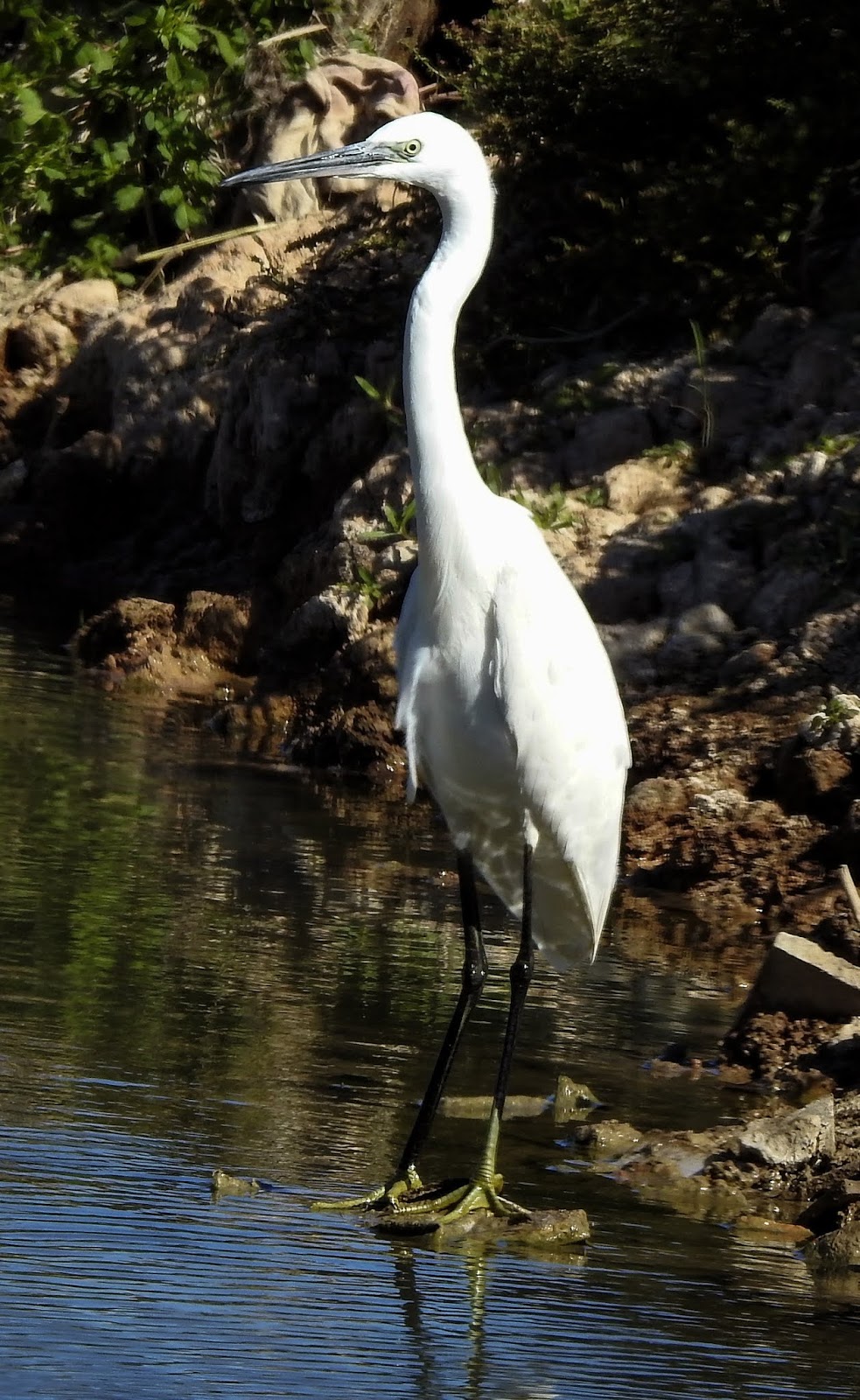
16-10-2019 EL SALER, VALENCIA - LITTLE EGRET (Egretta garzetta)


10-10-2019 MONTE CORONA, VALENCIA - MOORISH GECKO (Tarentola mauritanica)


Tarentola mauritanica, known as the common wall gecko, is a species of gecko (Gekkota) native to the western Mediterranean area of North Africa and Europe. It has been introduced to Madeira and Balearic Islands, and the Americas (in Montevideo, Buenos Aires and California). A nocturnal animal with a predominantly insectivorous diet, it is commonly observed on walls in urban environments in warm coastal areas; it can be found further inland, especially in Spain where it has a tradition of cohabitation with humans as an insect hunter. A robust species, up to 15 centimetres (5.9 in) long, its tubercules are enlarged and give the species a spiny armoured appearance.
The species was first described by Carl Linnaeus in 1758. It is also known as moorish gecko, crocodile gecko, European common gecko, and, regionally, as osga (in Portuguese), salamanquesa (in Spanish) and dragó (in Catalan).

10-10-2019 MONTE CORONA, VALENCIA - HOUSE SPARROW (MALE) (Passer domesticus)


10-10-2019 MONTE CORONA, VALENCIA - HOUSE SPARROW (FEMALE) (Passer domesticus)


15-10-2019 OLIVA, VALENCIA - LAMENTING GRASSHOPPER (Eyprepocnemis plorans)


Eyprepocnemis plorans, the lamenting grasshopper, is a species of insect in the family Acrididae. It is the type species of the genus Eyprepocnemis, and is found in Africa, parts of the Middle East, and southern Europe. It typically inhabits wetlands and other moist habitats.
This is a medium-sized grasshopper, with females growing to a length of about 4.5 cm (1.8 in), while males are slightly smaller. The general colour is greyish-brown. The head and prothorax have a central dark band edged with paler stripes. The eye has a longitudinal dark streak, a characteristic shared by Anacridium aegyptium, Heteracris annulosa and Heteracris adspersa. The femurs of the hind legs have greenish, blue and yellow striations, and the hind tibia have reddish or bluish iridescence, and black and white spines.

Eyprepocnemis plorans is native to much of Africa, parts of the Middle East such as Iran, and southern Europe, where it is present in southern Greece, southern Italy, Sicily, Sardinia and southern Spain. It seems to be expanding its range northwards in Italy, possibly as a result of putative climate change.[3] It usually occurs in wetlands, reed beds, freshwater and salt marshes, riverside vegetation, coastal vegetation and man-made habitats. It appreciates vertical-growing stems such as reeds, and habitats with tall forbs mixed with lower-growing plants.