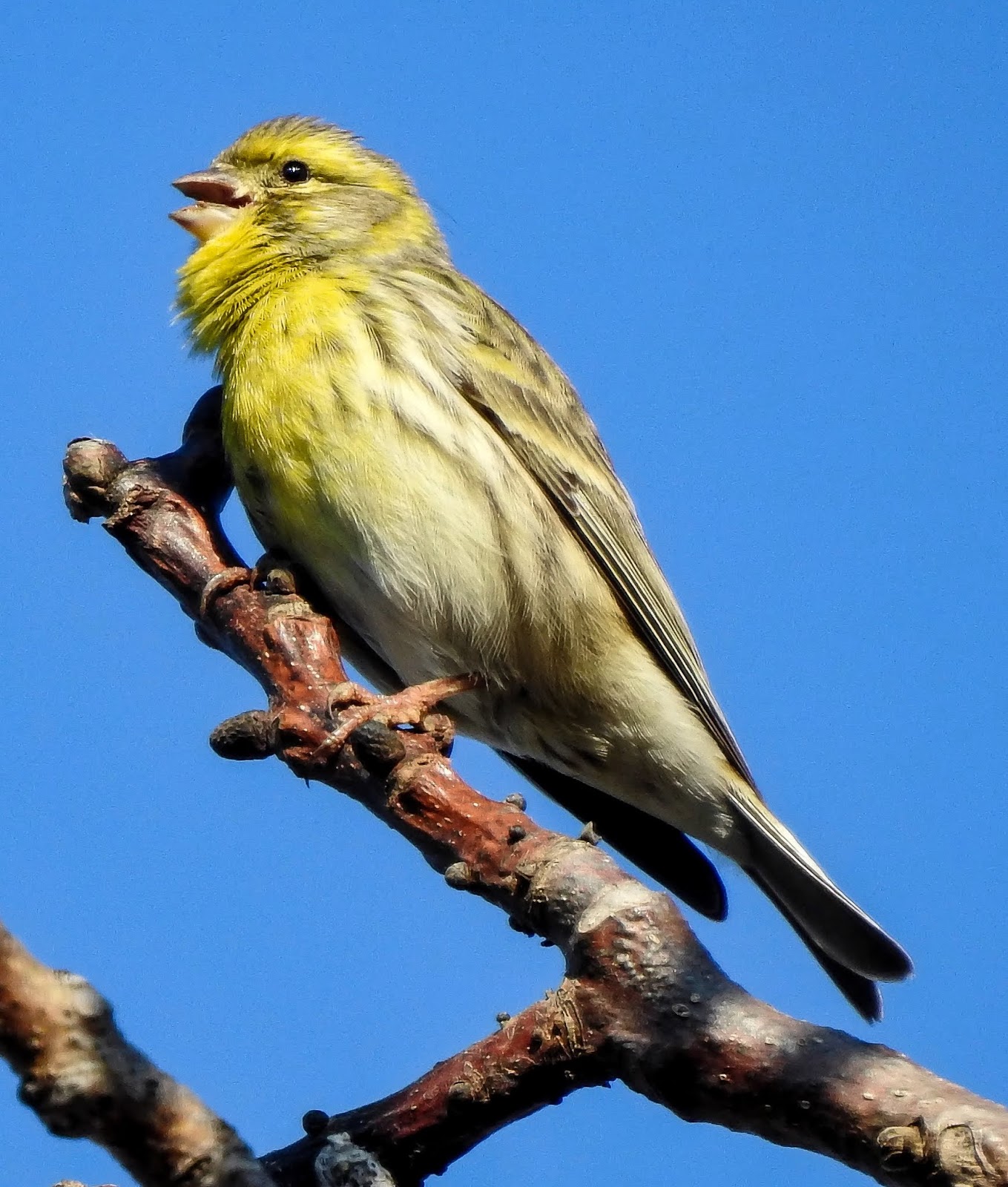
This Blog contains Wildlife, Plants and Bird Photos from Walks, Safaris, Birding Trips and Vacations. Most of the pictures have been taken with my Nikon P900 and P950X cameras. Just click on any image for a larger picture. On the right column under the Blog Archive are the entries by date. Below that under Animal categories all the diffent species of Animals, Birds, Insects and Plants contained in the website are listed. Clicking on any entry will show all the entries for that species.
TOTAL PAGEVIEWS
TRANSLATE
Sunday, 16 February 2020
Saturday, 15 February 2020
12-2-2020 BIOPARC, VALENCIA - AFRICAN SAVANNA ELEPHANT (Loxodonta Africana)
The African bush elephant (Loxodonta africana), also known as the African savanna elephant, is a species of elephant native to sub-Saharan Africa. It is one of three extant elephant species and, along with the African forest elephant, one of two extant species of African elephant. It is the largest living terrestrial animal, with fully grown bulls reaching an average shoulder height of 3.04–3.36 metres (10.0–11.0 ft) and a body mass of 5.2–6.9 tonnes (5.7–7.6 short tons); the largest recorded specimen had a shoulder height of 3.96 metres (13.0 ft) and an estimated body mass of 10.4 tonnes (11.5 short tons). The African bush elephant is characterised by its long prehensile trunk with two finger-like processes; a convex back; large ears which help reduce body heat; and sturdy tusks that are noticeably curved. The skin is grey with scanty hairs, and bending cracks which support thermoregulation by retaining water.
The African bush elephant inhabits a variety of habitats such as forests, grasslands, woodlands, wetlands and agricultural land. It is a mixed herbivore feeding mostly on grasses, creepers, herbs, leaves, and bark. The average adult consumes about 150 kg (330 lb) of vegetation and 230 L (51 imp gal; 61 US gal) of water each day. A social animal, the African bush elephant often travels in herds composed of cows and their offspring. Adult bulls usually live alone or in small bachelor groups. During the mating season, males go through a process called musth, a period of high testosterone levels and heightened aggression. For females, the menstrual cycle lasts three to four months, and gestation around 22 months, the longest of any mammal.
Since 2021, the African bush elephant has been listed as Endangered on the IUCN Red List. It is threatened foremost by habitat destruction, and in parts of its range also by poaching for meat and ivory. Between 2003 and 2015, the illegal killing of 14,606 African bush elephants was reported by rangers across 29 range countries. Chad is a major transit country for smuggling of ivory in West Africa. This trend was curtailed by raising penalties for poaching and improving law enforcement. Poaching of the elephant has dated back to the 1970s and 80s, which were considered the largest killings in history. In human culture, elephants have been extensively featured in literature, folklore and media, and are most valued for their large tusks in many places.
Friday, 14 February 2020
12-2-2020 BIOPARC, VALENCIA - WESTERN CATTLE EGRET (Bubulcus ibis ssp. ibis)
The Cattle Egret, a member of the heron family Ardeidae, is a small white bird recognized for its association with grazing animals. It exhibits a stout build, with a wingspan ranging from 88 to 96 cm, and a body length between 46 to 56 cm. The species is relatively light, weighing between 270 to 512 grams. It is characterized by a short, thick neck, a robust bill, and a somewhat hunched posture.
Outside the breeding season, the adult Cattle Egret has predominantly white plumage, a yellow bill, and greyish-yellow legs. Come breeding time, the western variety develops striking orange-buff plumes on the back, breast, and crown, while the bill, legs, and irises turn a vivid red. The eastern variety differs slightly with buff coloration extending to the cheeks and throat during breeding, and the plumes taking on a more golden hue. Both sexes are similar in appearance, though males are marginally larger with longer breeding plumes.
Cattle Egrets are adaptable birds that exploit a variety of drier and open habitats more than other heron species. Their preferred environments include seasonally inundated grasslands, pastures, farmlands, wetlands, and rice paddies.
Originally native to parts of Asia, Africa, and Europe, the Cattle Egret has seen a significant expansion in its distribution, colonizing much of the rest of the world over the last century. It is now found in the tropics, subtropics, and warm-temperate zones globally.
Cattle Egrets are often seen in the company of cattle or other large mammals, benefiting from the insects and small vertebrates these animals disturb. They are known for their migratory behavior, with some populations moving seasonally, while others disperse post-breeding.
Subscribe to:
Comments (Atom)