TOTAL PAGEVIEWS

TRANSLATE

Sunday, 26 December 2021

30-5-2019 RIVER ZAMBESI , ZAMBIA - SUNSET


A glorious sunset on the River Zambesi from Zimbabwe.

31-5-2019 THORNTREE CAMP, ZAMBIA - WAHLBERG STRIPED SKINK (Trachylepis striata ssp. wahlbergi)


Trachylepis wahlbergii, also known commonly as Wahlberg's striped skink, is a species of lizard in the family Scincidae. The species is native to Southern Africa.

Trachylepis wahlbergii has been considered a subspecies of Trachylepis striata. Whether T. wahlbergii is truly distinct from T. striata is not fully settled.

T. wahlbergii occurs in southern Angola, northern Botswana, northern Namibia, western Mozambique, Zambia, and northern, western and southern Zimbabwe.


The specific name, wahlbergi, is in honour of Swedish Naturalist Johan August Wahlberg.

T. wahlbergii is viviparous. In animals, viviparity is the development of the embryo inside the body of the mother, with the maternal circulation providing for the metabolic needs of the embryo's development, until the mother gives birth to a fully or partially developed juvenile that is at least metabolically independent

31-5-2019 THORNTREE CAMP, ZAMBIA - WHITE FRONTED BEE-EATER (Merops bullockoides)


The White-fronted Bee-eater, known scientifically as Merops bullockoides, is a vibrant and slender bird adorned with a striking black mask and a white forehead. Its square tail and bright red throat patch are distinctive features. Measuring at 23 cm in length, the bird's upperparts are a lush green, while its underparts boast a warm cinnamon hue. Its call is a resonant, deep squeak that carries through the air.

To identify the White-fronted Bee-eater, look for its unique combination of colors: a black mask, white forehead, green upperparts, and cinnamon underparts. The square tail and bright red throat patch are also key identifiers. Listen for its deep squeaking call as a helpful auditory clue.


This species thrives in the open savannahs of sub-equatorial Africa, often found near gullies where their insect prey, particularly bees, are abundant.

The White-fronted Bee-eater is widely distributed across the savannah regions of sub-equatorial Africa, where it is a common sight in its preferred habitat.


The White-fronted Bee-eater exhibits a complex social structure, nesting in colonies that can average around 200 individuals. These colonies are not just for breeding but also serve as a communal space for roosting and socializing. The birds demonstrate cooperative breeding, with non-breeding individuals acting as helpers to their kin, significantly increasing the success rate of raising young.


The White-fronted Bee-eater is currently listed as Least Concern on the IUCN Red List, indicating that it is not at immediate risk of population decline or habitat loss at a global scale.


The diet of the White-fronted Bee-eater primarily consists of bees, but it also includes other flying insects, depending on seasonal availability. They employ two hunting strategies: making swift hawking flights from lower branches or gliding down from perches to hover momentarily before snatching their prey mid-flight.

31-5-2019 THORNTREE CAMP, ZAMBIA - AFRICAN PIED WAGTAIL (Motacilla aguime)


The African pied wagtail, or African wagtail, (Motacilla aguimp) is a species of bird in the family Motacillidae.

The African pied wagtail is found in sub-Saharan Africa from the Eastern Cape north to extreme southern Egypt and from Guinea to western Eritrea and Somalia. It is a vagrant to Burkina Faso, Gambia, Mauritania and the Western Cape.


The African pied wagtail inhabits subtropical or tropical seasonally wet or flooded lowland grassland, rivers, and, sometimes, freshwater marshes. In some areas it is commensal with humans in towns and villages.

26-12-2021 MONTE CORONA, VALENCIA - GEOMETER MOTH (Charissa mucidaria)


31-5-2019 THORNTREE CAMP, ZAMBIA - AFRICAN DARTER (Anhinga rufa)


Friday, 24 December 2021

24-12-2021 MONTE CORONA, VALENCIA - CARPET MOTH (Nebula ibericata)


31-5-2019 THORNTREE CAMP, ZAMBIA - TAWNY FLANKED PRINIA (Prinia subflava)


31-5-2019 THORNTREE CAMP, ZAMBIA - BROWN HOODED KINGFISHER (Halcyon albiventris)


24-12-2021 MONTE CORONA, VALENCIA - SHORT TAILED ICHNEUMOID WASP (Genus Ophion)


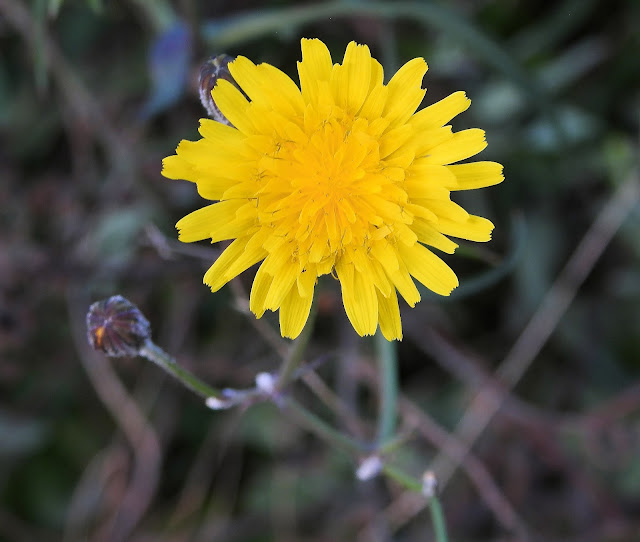
24-12-2021 ADOR CAMPO, VALENCIA - SLENDER SOWTHISTLE (Sonchus tenerrimus)


24-12-2021 ADOR CAMPO, VALENCIA - BLACK REDSTART (MALE) (Phoenicurus ochruros)


Thursday, 23 December 2021

31-5-2019 THORNTREE CAMP, ZAMBIA - MEVES'S STARLING (Lamprotornis mevesii)


31-5-2019 THORNTREE CAMP, ZAMBIA - COMMON BULBUL (Pycnonotus barbatus)


23-12-2021 MONTE CORONA, VALENCIA - GARDEN CARPET MOTH (Xanthorhoe fluctuata)


31-5-2019 THORNTREE CAMP, ZAMBIA - ARROW MARKED BABBLER (Turdoides jardineii ssp. tamalakanei)


The arrow-marked babbler (Turdoides jardineii) is a species of bird in the family Leiothrichidae. It is native to woodlands in the southern Afrotropics.

It is found in Angola, Botswana, Burundi, Republic of the Congo, DRC, Eswatini, Gabon, Kenya, Malawi, Mozambique, Namibia, Rwanda, South Africa, Tanzania, Uganda, Zambia, and Zimbabwe. Its natural habitats are subtropical or tropical dry forest, dry savanna, and subtropical or tropical moist shrubland.

Wednesday, 22 December 2021

22-12-2021 MONTE CORONA, VALENCIA - GEOMETER MOTH (Agriopis bajaria)


1-6-2019 LINYANTI CAMP, BOTSWANA - EMERALD SPOTTED WOOD DOVE (Turtur chalcospilos)


1-6-2019 LINYANTI CAMP, BOTSWANA - RED BILLED FRANCOLIN (Pternistis-adspersus)


1-6-2019 LINYANTI CAMP, BOTSWANA - SMITH'S BUSH SQUIRREL (Paraderus Cepapi)


Smith's bush squirrel (Paraxerus cepapi), also known as the yellow-footed squirrel or tree squirrel, is an African bush squirrel which is native to woodlands of the southern Afrotropics.

It is found in Angola, Botswana, the DRCongo, Malawi, Mozambique, Namibia, South Africa, Tanzania, Zambia, and Zimbabwe. It is a common rodent which is diurnal by nature.

Its total length is 350 mm (14 in), half of which is tail; weight 200 g (7.1 oz). The coat colour varies throughout the region. In the western and arid parts of its range, it is pale grey, and in the eastern localities, more brown. Its head and legs are a rusty colour. Colouration on the chest varies from yellowish to buff in the east, to white in the west. This squirrel's belly is white. These alert and ever busy creatures carry their long tails extended backwards.


Smith's bush squirrels are primarily vegetarian, but like most rodents, they take insect prey and use their front feet to manipulate food items when feeding. They scatter-hoard seeds next to tree trunks or grass tufts, thereby facilitating tree regeneration.

Essentially arboreal animals, they also spend a great deal of time on the ground, foraging for food. When disturbed, Smith's bush squirrels always seek the refuge of trees. At night, territorial family groups nest together in holes in trees. Offspring become sexually mature between six and nine months old, when they are forcibly evicted by the breeding pair. The males are mainly responsible for territorial defense, although females also chase intruders when they care for dependent pups. To promote group cohesion, a common scent is shared by mutual grooming, which is an important facet of the social fibre of this species. Smith's bush squirrels are diligent in their grooming and a mother tree squirrel holds her offspring down with her fore legs while grooming it with licks, nibbles, and scratches with her claws.


A conspicuous feature of their behaviour when under threat is 'mobbing': all the members of the colony make harsh clicking sounds while they flick their tails, building up momentum and gradually getting louder. In some areas, they are solitary, or are found in small family groups; a lone tree squirrel relies on its wits when in danger and always keeps a branch or the trunk of a tree between it and the enemy. Smith's bush squirrels are always alert, and when alarmed, run away with great speed, making for the nearest tree where they lie motionless, flattened against a branch.

18-12-2021 MONTE CORONA, VALENCIA - FUNNEL WEAVER SPIDER (Genus Textrix)


20-12-2021 MONTE CORONA, VALENCIA - RUSTY DOT PEARL MOTH (Udea ferrugalis)