TOTAL PAGEVIEWS

TRANSLATE

Sunday, 23 January 2022

28-5-2019 SOMALISA CAMP, ZIMBABWE - AFRICAN SAVANNA ELEPHANT (Loxodonta Africana)


The African bush elephant (Loxodonta africana), also known as the African savanna elephant, is a species of elephant native to sub-Saharan Africa. It is one of three extant elephant species and, along with the African forest elephant, one of two extant species of African elephant. It is the largest living terrestrial animal, with fully grown bulls reaching an average shoulder height of 3.04–3.36 metres (10.0–11.0 ft) and a body mass of 5.2–6.9 tonnes (5.7–7.6 short tons); the largest recorded specimen had a shoulder height of 3.96 metres (13.0 ft) and an estimated body mass of 10.4 tonnes (11.5 short tons). The African bush elephant is characterised by its long prehensile trunk with two finger-like processes; a convex back; large ears which help reduce body heat; and sturdy tusks that are noticeably curved. The skin is grey with scanty hairs, and bending cracks which support thermoregulation by retaining water.


The African bush elephant inhabits a variety of habitats such as forests, grasslands, woodlands, wetlands and agricultural land. It is a mixed herbivore feeding mostly on grasses, creepers, herbs, leaves, and bark. The average adult consumes about 150 kg (330 lb) of vegetation and 230 L (51 imp gal; 61 US gal) of water each day. A social animal, the African bush elephant often travels in herds composed of cows and their offspring. Adult bulls usually live alone or in small bachelor groups. During the mating season, males go through a process called musth, a period of high testosterone levels and heightened aggression. For females, the menstrual cycle lasts three to four months, and gestation around 22 months, the longest of any mammal.


Since 2021, the African bush elephant has been listed as Endangered on the IUCN Red List. It is threatened foremost by habitat destruction, and in parts of its range also by poaching for meat and ivory. Between 2003 and 2015, the illegal killing of 14,606 African bush elephants was reported by rangers across 29 range countries. Chad is a major transit country for smuggling of ivory in West Africa. This trend was curtailed by raising penalties for poaching and improving law enforcement. Poaching of the elephant has dated back to the 1970s and 80s, which were considered the largest killings in history. In human culture, elephants have been extensively featured in literature, folklore and media, and are most valued for their large tusks in many places.


Savanna elephants live in a rather complex social hierarchy. These animals gather into family units, consisting of about 10 females and their offspring. Reaching maturity, male calves usually leave the family unit, forming bachelor herds or living solitarily. As a general rule, males socialize with these family groups only when mating. Meanwhile, several family herds may gather together, making up a 'clan'. Each clan is dominated by a female matriarch and can consist of as many as several hundred elephants. African bush elephants are very careful and protective animals. Allomothering is a common practice in this species: females can raise calves of other females of their herd. They protect and care for the calves of the herd, while all adults are sleeping. If a calf strays too far, these allomothers are responsible for retrieving the baby. These active animals are constantly on the move. These elephants forage during the daytime hours, wandering the home range of their herd. Savanna elephants freely communicate with conspecifics both verbally and non-verbally.

23-1-2022 MONTE CORONA, VALENCIA - RUNNING CRAB SPIDER (Genus Thanatus)


Saturday, 22 January 2022

28-5-2019 SOMALISA CAMP, ZIMBABWE - SOUTHERN RUFOUS CROWNED ROLLER (Coracias naevius ssp. mosambicus)


The term "Southern Rufous-crowned Roller" refers to the southern populations of the Rufous-crowned Roller (also known as the Purple Roller), a large bird found in sub-Saharan Africa. Unlike the northern populations, which have a more rufous-colored crown, these southern birds have a more olive-green crown, though the term "Rufous-crowned" is often used for the species as a whole. They are known for their predominantly dull body plumage, but they exhibit brilliant blue wings and tail in flight. 


Key characteristics

Appearance: The southern populations have an olive-green crown, a prominent white stripe above the eye, and a dull, brownish-purple body. In flight, their blue wings and violet rump are very striking.

Size: It is the largest of the roller species, measuring about 35–40 cm in length.

Habitat: They inhabit dry savannas, open woodlands, and thornveld, often perching on prominent trees or poles to hunt.

Diet: Their diet consists of large insects like locusts and grasshoppers, as well as scorpions, spiders, small lizards, and mice.

Behavior: They are diurnal and spend long periods perched while surveying for prey, which they catch by swooping down to the ground.
Vocalization: They have a harsh, grating call. 

Thursday, 20 January 2022

19-1-2022 CREU DE LONGA , VALENCIA - WHITE WAGTAIL (Motacilla alba)


19-1-2022 CREU DE LONGA , VALENCIA - GLOSSY IBIS (Plegadis falcinellus)


19-1-2022 MONTE CORONA , VALENCIA - FUNNEL WEAVER SPIDER (Lycosoides coarctata)


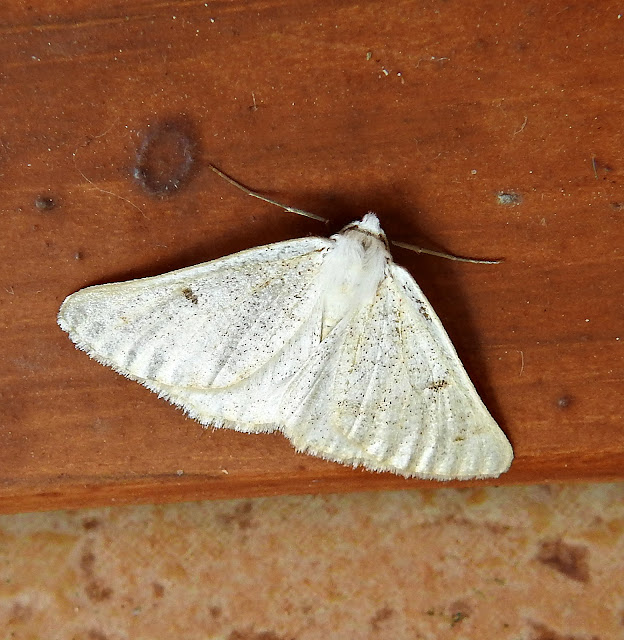
20-1-2022 MONTE CORONA, VALENCIA - GEOMETER MOTH (Dyscia penulataria)


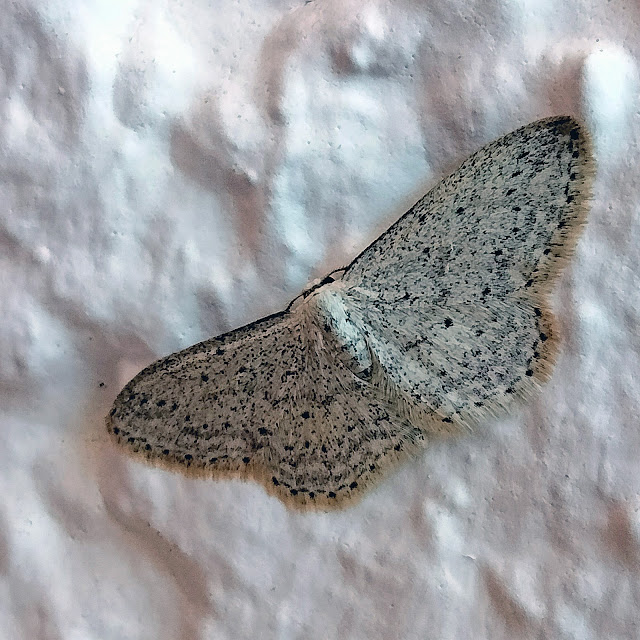
20-1-2022 MONTE CORONA, VALENCIA - GEOMETER MOTH (Dyscia penulataria)


19-1-2022 EL PALMAR , VALENCIA - MEADOW PIPIT (Anthus pratensis)


19-1-2022 EL PALMAR , VALENCIA - EUROPEAN SERIN (MALE) (Serinus serinus)


19-1-2022 CATARROJA, VALENCIA - HOUSE SPARROW (MALE) (Passer domesticus)


Saturday, 15 January 2022

15-1-2022 MONTE CORONA, VALENCIA - WHITE WAGTAIL (Motacilla alba)


15-4-1991 PANAMA, CENTRAL AMERICA - BLUE FOOTED BOOBY

The blue-footed booby (Sula nebouxii) is a marine bird native to subtropical and tropical regions of the eastern Pacific Ocean. It is one of six species of the genus Sula – known as boobies. It is easily recognizable by its distinctive bright blue feet, which is a sexually selected trait and a product of their diet. Males display their feet in an elaborate mating ritual by lifting them up and down while strutting before the female. The female is slightly larger than the male and can measure up to 90 cm (35 in) long with a wingspan up to 1.5 m (5 ft).

The natural breeding habitats of the blue-footed booby are the tropical and subtropical islands of the Pacific Ocean. It can be found from the Gulf of California south along the western coasts of Central and South America to Peru. About half of all breeding pairs nest on the Galápagos Islands. Its diet mainly consists of fish, which it obtains by diving and sometimes swimming under water in search of its prey. It sometimes hunts alone, but usually hunts in groups.

The blue-footed booby usually lays one to three eggs at a time. The species practices asynchronous hatching, in contrast to many other species whereby incubation begins when the last egg is laid and all chicks hatch together. This results in a growth inequality and size disparity between siblings, leading to facultative siblicide in times of food scarcity. This makes the blue-footed booby an important model for studying parent–offspring conflict and sibling rivalry.

The blue-footed booby is distributed among the continental coasts of the eastern Pacific Ocean from California to the Galápagos Islands south into Peru. It is strictly a marine bird. Its only need for land is to breed and rear young, which it does along the rocky coasts of the eastern Pacific.

A booby may use and defend two or three nesting sites, which consist of bare black lava in small divots in the ground, until they develop a preference for one a few weeks before the eggs are laid. These nests are created as parts of large colonies. While nesting, the female turns to face the sun throughout the day, so the nest is surrounded by excrement. 

15-1-2022 MONTE CORONA, VALENCIA - BUFF TAILED BUMBLE BEE (Bombus terrestris ssp. lusitanicus)


Bombus terrestris, the buff-tailed bumblebee or large earth bumblebee, is one of the most numerous bumblebee species in Europe. It is one of the main species used in greenhouse pollination, and so can be found in many countries and areas where it is not native, such as Tasmania. Moreover, it is a eusocial insect with an overlap of generations, a division of labour, and cooperative brood care. The queen is monandrous which means she mates with only one male. B. terrestris workers learn flower colours and forage efficiently.


B. terrestris is part of the order Hymenoptera, which is composed of ants, bees, and wasps. The family Apidae specifically consists of bees. It is also part of the subfamily Apinae. There are 14 tribe lineages within Apinae, and B. terrestris is in the bumblebee tribe, Bombini. It is in the genus Bombus, which consists entirely of bumblebees, and the subgenus Bombus sensu stricto. This subgenus contains closely related species such as Bombus affinis, Bombus cryptarum, Bombus franklini, Bombus ignitus, Bombus lucorum, Bombus magnus, Bombus occidentalis, and Bombus terricola. There are nine recognized subspecies: B. terrestris africanus, B. terrestris audax, B. terrestris calabricus, B. terrestris canariensis, B. terrestris dalmatinus, B. terrestris lusitanicus, B. terrestris sassaricus, B. terrestris terrestris and B. terrestris xanthopus, each with a distinctive coloration scheme.


Like in most social bees, there are three main social caste divisions in B. terrestris. This ensures a division of labor and efficient colony functioning. Queens become the main female individual to reproduce in a future colony. There is only one per colony. Her sole responsibility is to lay eggs after she founds a nest. This fate is determined for larvae that receive more food, have longer instar stages, and higher levels of juvenile hormone biosynthesis. Workers, an entirely female caste, mainly forage for food, defend the colony, and tend to the growing larvae. They are usually sterile for most of the colony cycle and do not raise their own young. Unlike queens and workers, which develop from fertilized diploid eggs, drones, or male bees, are born from unfertilized, haploid eggs. Drones leave the colony shortly after reaching adulthood to find a mate outside the nest. Mating is their sole role in the colony.