TOTAL PAGEVIEWS

TRANSLATE

Sunday, 13 February 2022

6-4-2019 LINYANTI, BOTSWANA - CROWNED HORNBILL (Lophoceros alboterminatus)


4-6-2019 LINYANTI CAMP, BOTSWANA - TAWNY EAGLE (Aquila rapax)


4-6-2019 LINYANTI CAMP, BOTSWANA - LILAC BREASTED ROLLER (Coracias caudatus)


4-6-2019 LINYANTI CAMP, BOTSWANA - AFRICAN SAVANNA ELEPHANT (Loxodonta Africana)


The African bush elephant (Loxodonta africana), also known as the African savanna elephant, is a species of elephant native to sub-Saharan Africa. It is one of three extant elephant species and, along with the African forest elephant, one of two extant species of African elephant. It is the largest living terrestrial animal, with fully grown bulls reaching an average shoulder height of 3.04–3.36 metres (10.0–11.0 ft) and a body mass of 5.2–6.9 tonnes (5.7–7.6 short tons); the largest recorded specimen had a shoulder height of 3.96 metres (13.0 ft) and an estimated body mass of 10.4 tonnes (11.5 short tons). The African bush elephant is characterised by its long prehensile trunk with two finger-like processes; a convex back; large ears which help reduce body heat; and sturdy tusks that are noticeably curved. The skin is grey with scanty hairs, and bending cracks which support thermoregulation by retaining water.


The African bush elephant inhabits a variety of habitats such as forests, grasslands, woodlands, wetlands and agricultural land. It is a mixed herbivore feeding mostly on grasses, creepers, herbs, leaves, and bark. The average adult consumes about 150 kg (330 lb) of vegetation and 230 L (51 imp gal; 61 US gal) of water each day. A social animal, the African bush elephant often travels in herds composed of cows and their offspring. Adult bulls usually live alone or in small bachelor groups. During the mating season, males go through a process called musth, a period of high testosterone levels and heightened aggression. For females, the menstrual cycle lasts three to four months, and gestation around 22 months, the longest of any mammal.

Since 2021, the African bush elephant has been listed as Endangered on the IUCN Red List. It is threatened foremost by habitat destruction, and in parts of its range also by poaching for meat and ivory. Between 2003 and 2015, the illegal killing of 14,606 African bush elephants was reported by rangers across 29 range countries. Chad is a major transit country for smuggling of ivory in West Africa. This trend was curtailed by raising penalties for poaching and improving law enforcement. Poaching of the elephant has dated back to the 1970s and 80s, which were considered the largest killings in history. In human culture, elephants have been extensively featured in literature, folklore and media, and are most valued for their large tusks in many places.


13-2-2022 BELLUS, VALENCIA - CETTI'S WARBLER (Cettia cetti)


6-4-2019 LINYANTI, BOTSWANA - BURCHELL'S STARLING (Lamprotornis australis)


Saturday, 12 February 2022

4-6-2019 LINYANTI CAMP, BOTSWANA - LAUGHING DOVE (Streptopelia senegalensis)


The laughing dove (Spilopelia senegalensis) is a small pigeon that is a resident breeder in Africa, the Middle East, South Asia, and Western Australia where it has established itself in the wild after being released from Perth Zoo in 1898. This small long-tailed dove is found in dry scrub and semi-desert habitats where pairs can often be seen feeding on the ground. It is closely related to the spotted dove (Spilopelia chinensis) which is distinguished by a white and black chequered necklace. Other names include laughing turtle dove, palm dove and Senegal dove while in Asia the name little brown dove is often used.

4-6-2019 LINYANTI CAMP, BOTSWANA - CROWNED LAPWING (Vanellus coronatus)


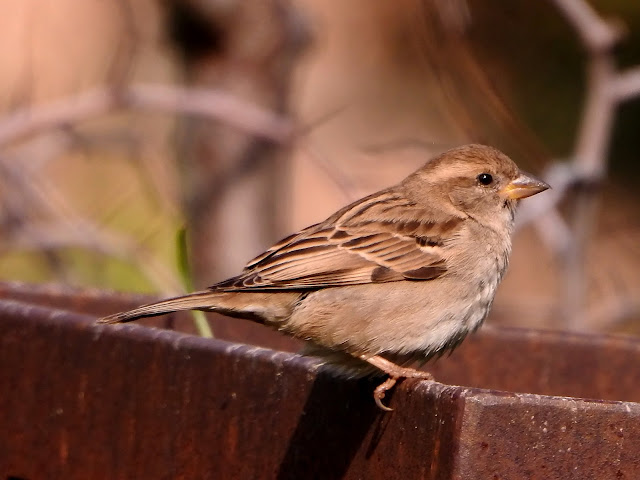
12-2-2022 GANDIA SERPIS, VALENCIA - HOUSE SPARROW (FEMALE) (Passer domesticus)


12-2-2022 GANDIA SERPIS, VALENCIA - EUROPEAN ROBIN (Erithacus rubecula)


12-2-2022 GANDIA SERPIS, VALENCIA - EURASIAN COLLARED DOVE (Streptopelia decaocto)


12-2-2022 GANDIA SERPIS, VALENCIA - EUROPEAN SERIN (MALE) (Serinus serinus)


12-2-2022 GANDIA SERPIS, VALENCIA - SPOTLESS STARLING (Sturnus unicolor)


12-2-2022 GANDIA SERPIS, VALENCIA - EURASIAN BLACKBIRD (MALE) (Turdus merula)


Friday, 11 February 2022

3-6-2019 LINYANTI CAMP, BOTSWANA - NAMIBIAN GIRAFFE (Giraffa camelopardalis ssp. angolensis)


3-6-2019 LINYANTI CAMP, BOTSWANA - AFRICAN SAVANNA ELEPHANT (Loxodonta Africana)


The African bush elephant (Loxodonta africana), also known as the African savanna elephant, is a species of elephant native to sub-Saharan Africa. It is one of three extant elephant species and, along with the African forest elephant, one of two extant species of African elephant. It is the largest living terrestrial animal, with fully grown bulls reaching an average shoulder height of 3.04–3.36 metres (10.0–11.0 ft) and a body mass of 5.2–6.9 tonnes (5.7–7.6 short tons); the largest recorded specimen had a shoulder height of 3.96 metres (13.0 ft) and an estimated body mass of 10.4 tonnes (11.5 short tons). The African bush elephant is characterised by its long prehensile trunk with two finger-like processes; a convex back; large ears which help reduce body heat; and sturdy tusks that are noticeably curved. The skin is grey with scanty hairs, and bending cracks which support thermoregulation by retaining water.


The African bush elephant inhabits a variety of habitats such as forests, grasslands, woodlands, wetlands and agricultural land. It is a mixed herbivore feeding mostly on grasses, creepers, herbs, leaves, and bark. The average adult consumes about 150 kg (330 lb) of vegetation and 230 L (51 imp gal; 61 US gal) of water each day. A social animal, the African bush elephant often travels in herds composed of cows and their offspring. Adult bulls usually live alone or in small bachelor groups. During the mating season, males go through a process called musth, a period of high testosterone levels and heightened aggression. For females, the menstrual cycle lasts three to four months, and gestation around 22 months, the longest of any mammal.


Since 2021, the African bush elephant has been listed as Endangered on the IUCN Red List. It is threatened foremost by habitat destruction, and in parts of its range also by poaching for meat and ivory. Between 2003 and 2015, the illegal killing of 14,606 African bush elephants was reported by rangers across 29 range countries. Chad is a major transit country for smuggling of ivory in West Africa. This trend was curtailed by raising penalties for poaching and improving law enforcement. Poaching of the elephant has dated back to the 1970s and 80s, which were considered the largest killings in history. In human culture, elephants have been extensively featured in literature, folklore and media, and are most valued for their large tusks in many places.

3-6-2019 LINYANTI CAMP, BOTSWANA - KALAHARI YELLOW BILLED HORNBILL (Tockus leucomelas ssp. leucomelas)


The Southern Yellow-billed Hornbill, known scientifically as Tockus leucomelas, is a medium-sized bird, with a length ranging from 48 to 60 centimeters and a weight between 132 and 242 grams. Its most striking feature is the long, down-curved yellow beak, which is disproportionately large compared to its body, making up to one-sixth of its body length. Males boast a longer beak, averaging 90 millimeters, while females have a slightly shorter one, averaging 74 millimeters. The species exhibits sexual dimorphism, with males generally larger than females. The bird's plumage is a combination of white, grey, and black, with the white belly and grey neck contrasting against the black back adorned with white spots and stripes. The eyes are typically yellow, though brown variations exist, and the skin around the eyes and malar stripe is pinkish.

To identify the Southern Yellow-billed Hornbill, look for the long yellow beak and modest-sized casque that covers almost the entire length of the beak in males. The bird's white belly, grey neck with spots, and black back with white markings are also distinctive. The male's larger size and longer beak are reliable indicators for sex differentiation in the field.


This hornbill species is a common and widespread resident of the dry thornveldt and broad-leafed woodlands, often seen along roads and watercourses. They show a preference for acacia and broadleaved woodlands when available.

The Southern Yellow-billed Hornbill is near-endemic to the dry savannas of southern Africa, with its range extending from Angola and Namibia in the west to Mozambique and KwaZulu-Natal in the east, including Botswana, Zimbabwe, and northern South Africa.

Active during the day, these birds are often solitary, but may form couples or small groups, especially during breeding or nesting seasons, or when local migration occurs during the dry season. They are ground foragers, not digging but rather overturning debris to find food. They are sedentary but may roam in search of sustenance during dry spells. Monogamous pairs defend their territories with elaborate displays.

The Southern Yellow-billed Hornbill's vocal repertoire includes a piercing cry, whistles, grunts, and cackles. These calls are used for territory demarcation and long-distance communication, often accompanied by physical displays.

Their diet consists mainly of arthropods like termites, beetles, larvae, grasshoppers, and caterpillars, supplemented by small mammals, berries, fruits, nuts, and eggs from other species. They use their beak as forceps to grasp and toss food into their throat, with serrated inner edges aiding in crushing and fragmenting their prey.

3-6-2019 LINYANTI CAMP, BOTSWANA - GREATER BLUE EARED STARLING (Lamprotornis chalybaeus)


The greater blue-eared starling, or Lamprotornis chalybaeus, is a striking bird adorned in glossy blue-green plumage with a purple-blue belly and a distinctive blue ear patch. This bird measures approximately 22 cm in length and sports a short tail. The iris of this species is a vivid yellow or orange, adding to its captivating appearance. Both sexes exhibit similar coloration, though juveniles can be distinguished by their duller feathers and blackish-brown underparts.

When identifying the greater blue-eared starling, look for its glossy blue-green upperparts and purple-blue belly. The blue ear patch is a key feature, along with its bright yellow or orange iris. Juveniles are less lustrous and have darker underparts. This species can be confused with the lesser blue-eared starling, but the latter's blue belly does not extend forward of the legs.


The greater blue-eared starling is commonly found in open woodland environments, where it thrives and breeds.

This bird has a broad range across the African continent, from Senegal in the west, stretching east to Ethiopia, and then southward through eastern Africa to northeastern South Africa and Angola. It is known to undertake seasonal migrations within this range.

The greater blue-eared starling is a highly social bird, often seen in large flocks that may include other starling species. It is also known to roost communally in reedbeds, thorn bushes, or acacia trees, sometimes sharing these spaces with other birds.


The vocal repertoire of the greater blue-eared starling includes a variety of musical and grating calls. A commonly heard call is a nasal "squee-ar," which is quite distinctive.

Breeding pairs of greater blue-eared starlings make their nests in tree holes, which can be naturally occurring or previously excavated by woodpeckers or barbets. They are also known to utilize the large stick nests of the sacred ibis or Abdim's stork. Their nests typically contain three to five greenish-blue eggs adorned with brown or purple spots. These eggs hatch after about 13–14 days, and the fledglings leave the nest approximately 23 days post-hatching. The species is occasionally parasitized by the great spotted cuckoo and, less frequently, by the greater honeyguide.


An omnivorous bird, the greater blue-eared starling's diet is predominantly insectivorous, foraging mainly on the ground for a variety of invertebrates. It also consumes seeds and berries, with a particular fondness for figs. Additionally, these starlings are known to perch on livestock, picking off insects disturbed by the animals and sometimes removing ectoparasites.

The IUCN Red List classifies the greater blue-eared starling as Least Concern, indicating that the species does not currently face any significant threats to its survival.


A medium-sized iridescent blue-green glossy starling with a dark ear-patch and contrasting royal blue to violet flanks and belly. Pairs and small groups occupy savanna, where they feed on the ground and in trees on fruit and insects; occasionally up to 300 may gather at fruiting trees. Often the species scavenges from people. It gives a cat-like nasal “squuee-aar” contact call that is distinctive. 

The similar Lesser Blue-eared Starling differs from Greater Blue-eared Starling by being smaller with a more compact head and finer bill, by having a smaller ear-patch, and by preferring broadleaf woodland. The Cape Starling differs from the “blue-eared” starlings by having greener ear-patches, belly, and flanks.

3-6-2019 LINYANTI CAMP, BOTSWANA - AFRICAN JOKER BUTTERFLY (Byblia anvatara)


Byblia anvatara, the common joker, is a butterfly of the family Nymphalidae, found in Sub-Saharan Africa.

Wingspan: 38–43 mm in males and 40–45 mm in females. Its flight period is year round.

Larvae feed on Tragia glabrata and Dalechampia capensis.