TOTAL PAGEVIEWS

TRANSLATE

Monday, 14 February 2022

4-6-2019 LINYANTI CAMP, BOTSWANA - RED LECHWE (FEMALE) (Kobus leche ssp. leche)


The lechwe, red lechwe, or southern lechwe (Kobus leche) is an antelope found in wetlands of south-central Africa.

The lechwe is native to Botswana, Zambia, southeastern Democratic Republic of the Congo, northeastern Namibia, and eastern Angola, especially in the Okavango Delta, Kafue Flats, and Bangweulu Wetlands. The species is fairly common in zoos and wild animal farms.


Adult lechwe typically stand 90 to 100 cm (35 to 39 in) at the shoulder and generally weigh from 50 to 120 kg (110 to 260 lb), with males being larger than females. They are golden brown with white bellies. Males are darker in colour, but exact hue and amount of blackish on the front legs, chest and body varies depending on subspecies. The long, spiral horns are vaguely lyre-shaped and borne only by males. The hind legs are somewhat longer in proportion than in other antelopes to ease long-distance running on marshy soil.


Lechwe are found in marshy areas where they are an important herbivore of aquatic plants, as well as grasses that are found in flooded meadows. They use the knee-deep water as protection from predators. Their legs are covered in a water-repellant substance which allows them to run quite fast in knee-deep water. Lechwe are diurnal. They gather in herds which can include many thousands of individuals. Herds are usually all of one sex, but during mating season they mix.

Lechwe mate during rain seasons of November to February. They have a gestation period of seven to eight months so a majority of calves are born from July to September.

Although rare, hybrids between lechwe and waterbuck have been observed.

6-4-2019 LINYANTI, BOTSWANA - MEVES'S STARLING (Lamprotornis mevesii)


4-6-2019 LINYANTI, BOTSWANA - DAMARA MEYER'S PARROT (Poicephalus meyeri ssp. damarensis)


Meyer's parrot (Poicephalus meyeri), also known as the brown parrot, is a species of parrot native to Africa. A Meyer's parrot has grey feathers, turquoise belly, blue rump, and bright yellow markings on the carpal joint of the wings. Most subspecies have some yellow on the top of the head as well. Forshaw (1989) recognizes six subspecies of P. meyeri which vary in home range, size and in markings, including the extent of yellow markings to the head and wings, and the intensity of turquoise markings on the belly and rump.

Meyer's parrots are native to the plateau woodlands of sub-Saharan Africa where they occur in several woodland types including miombo, savanna woodlands, wooded grasslands and forests bordering watercourses or agricultural land. They are found in high densities in the Okavango Delta region of Botswana. They are also found in southern and central Africa (Chad, Sudan, South Sudan, Ethiopia, Congo, Angola, Tanzania, Zambia, Zimbabwe, Mozambique, and Namibia.

Their wild diet includes fruit, seeds, nuts, berries and cultivated crops. Seeds of the various leguminous trees of the African woodlands are especially favoured, providing their staple food in some areas. Although they normally travel in pairs or small flocks, wild Meyer's parrots may gather in much larger numbers where food is plentiful. In drought years they wander in search of food.

The Meyer's parrot nests in tree cavities. The eggs are white and there are usually three or four in a clutch. The female incubates the eggs for about 28 days and the chicks leave the nest about 60 days after hatching.

6-4-2019 LINYANTI, BOTSWANA - COMMON IMPALA (FEMALE) (Aepyceros melampus ssp. melampus)


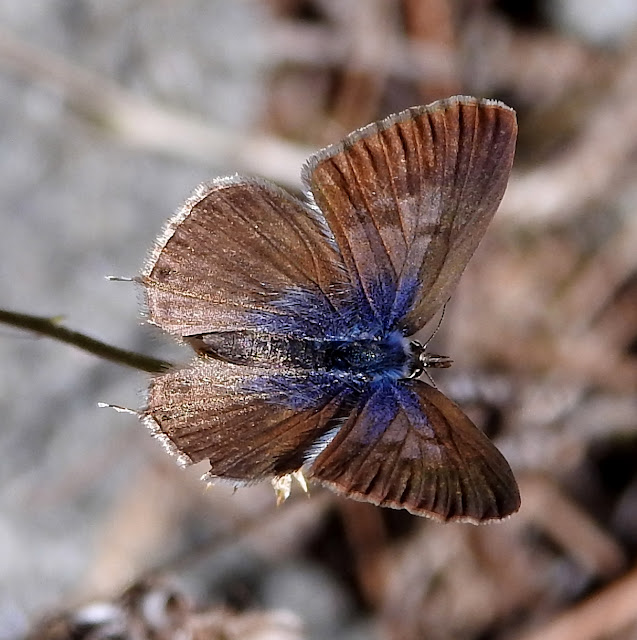
14-2-2022 CALPE, ALICANTE - LANG'S SHORT TAILED BLUE BUTTERFLY (Leptotes pirithous)

https://www.inaturalist.org/taxa/209691-Leptotes-pirithous


14-2-2022 CALPE, ALICANTE - RED ADMIRAL BUTTERFLY


Sunday, 13 February 2022

6-4-2019 LINYANTI, BOTSWANA - CROWNED HORNBILL (Lophoceros alboterminatus)


4-6-2019 LINYANTI CAMP, BOTSWANA - TAWNY EAGLE (Aquila rapax)


4-6-2019 LINYANTI CAMP, BOTSWANA - LILAC BREASTED ROLLER (Coracias caudatus)


4-6-2019 LINYANTI CAMP, BOTSWANA - AFRICAN SAVANNA ELEPHANT (Loxodonta Africana)


The African bush elephant (Loxodonta africana), also known as the African savanna elephant, is a species of elephant native to sub-Saharan Africa. It is one of three extant elephant species and, along with the African forest elephant, one of two extant species of African elephant. It is the largest living terrestrial animal, with fully grown bulls reaching an average shoulder height of 3.04–3.36 metres (10.0–11.0 ft) and a body mass of 5.2–6.9 tonnes (5.7–7.6 short tons); the largest recorded specimen had a shoulder height of 3.96 metres (13.0 ft) and an estimated body mass of 10.4 tonnes (11.5 short tons). The African bush elephant is characterised by its long prehensile trunk with two finger-like processes; a convex back; large ears which help reduce body heat; and sturdy tusks that are noticeably curved. The skin is grey with scanty hairs, and bending cracks which support thermoregulation by retaining water.


The African bush elephant inhabits a variety of habitats such as forests, grasslands, woodlands, wetlands and agricultural land. It is a mixed herbivore feeding mostly on grasses, creepers, herbs, leaves, and bark. The average adult consumes about 150 kg (330 lb) of vegetation and 230 L (51 imp gal; 61 US gal) of water each day. A social animal, the African bush elephant often travels in herds composed of cows and their offspring. Adult bulls usually live alone or in small bachelor groups. During the mating season, males go through a process called musth, a period of high testosterone levels and heightened aggression. For females, the menstrual cycle lasts three to four months, and gestation around 22 months, the longest of any mammal.

Since 2021, the African bush elephant has been listed as Endangered on the IUCN Red List. It is threatened foremost by habitat destruction, and in parts of its range also by poaching for meat and ivory. Between 2003 and 2015, the illegal killing of 14,606 African bush elephants was reported by rangers across 29 range countries. Chad is a major transit country for smuggling of ivory in West Africa. This trend was curtailed by raising penalties for poaching and improving law enforcement. Poaching of the elephant has dated back to the 1970s and 80s, which were considered the largest killings in history. In human culture, elephants have been extensively featured in literature, folklore and media, and are most valued for their large tusks in many places.


13-2-2022 BELLUS, VALENCIA - CETTI'S WARBLER (Cettia cetti)


6-4-2019 LINYANTI, BOTSWANA - BURCHELL'S STARLING (Lamprotornis australis)


Saturday, 12 February 2022

4-6-2019 LINYANTI CAMP, BOTSWANA - LAUGHING DOVE (Streptopelia senegalensis)


The laughing dove (Spilopelia senegalensis) is a small pigeon that is a resident breeder in Africa, the Middle East, South Asia, and Western Australia where it has established itself in the wild after being released from Perth Zoo in 1898. This small long-tailed dove is found in dry scrub and semi-desert habitats where pairs can often be seen feeding on the ground. It is closely related to the spotted dove (Spilopelia chinensis) which is distinguished by a white and black chequered necklace. Other names include laughing turtle dove, palm dove and Senegal dove while in Asia the name little brown dove is often used.

4-6-2019 LINYANTI CAMP, BOTSWANA - CROWNED LAPWING (Vanellus coronatus)


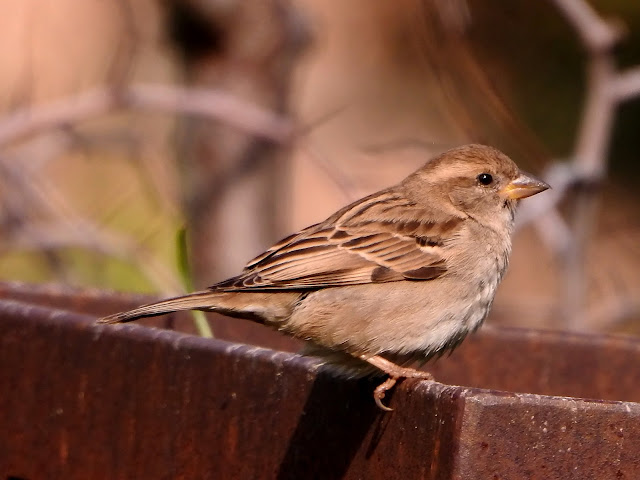
12-2-2022 GANDIA SERPIS, VALENCIA - HOUSE SPARROW (FEMALE) (Passer domesticus)


12-2-2022 GANDIA SERPIS, VALENCIA - EUROPEAN ROBIN (Erithacus rubecula)


12-2-2022 GANDIA SERPIS, VALENCIA - EURASIAN COLLARED DOVE (Streptopelia decaocto)


12-2-2022 GANDIA SERPIS, VALENCIA - EUROPEAN SERIN (MALE) (Serinus serinus)


12-2-2022 GANDIA SERPIS, VALENCIA - SPOTLESS STARLING (Sturnus unicolor)


12-2-2022 GANDIA SERPIS, VALENCIA - EURASIAN BLACKBIRD (MALE) (Turdus merula)