
Monday, 2 May 2022


Sunday, 1 May 2022


16-4-2022 MANDINA LODGE, GAMBIA - AFRICAN GOLDEN ORIOLE (Oriolus auratus)


The African golden oriole (Oriolus auratus), or African oriole, is a member of the oriole family of passerine birds which is a resident breeder in Africa south of the Sahara desert.
It is a bird of thick bush and other well-wooded areas. The hanging basket-shaped nest is built in a tree, and contains two eggs. The food is insects and fruit, especially figs, found in the tree canopies where the orioles spend much of their time.
The male is striking in the typical oriole black and yellow plumage, although the plumage is predominantly yellow, with solid black only in the flight feathers and tail centre. There is a great deal of gold in the wings, which is a distinction from the Eurasian golden oriole, which winters in Africa.
The female is a drabber green bird, distinguished from the European species by more contrasting wings and black around the eye. Orioles are shy, and even the male is remarkably difficult to see in the dappled yellow and green leaves of the canopy.
The flight is somewhat like a thrush, strong and direct with some shallow dips over longer distances.
The call is a screech like a jay, but the song is a beautiful fluting fee-ooo fee-ooo, unmistakable once heard.


Wednesday, 27 April 2022


Tuesday, 12 April 2022
18-5-2019 BUMI HILLS, ZIMBABWE - AFRICAN GREY HORNBILL (Lophoceros nasutus)
%2020.jpg)
The African grey hornbill (Lophoceros nasutus) is a member of the hornbill family of mainly tropical near-passerine birds found in the Old World. It is a widespread resident breeder in much of sub-Saharan Africa and the southwest of the Arabian Peninsula. The African grey hornbill has escaped or been deliberately released into Florida, USA, but there is no evidence that the population is breeding and may only persist due to continuing releases or escapes.
18-5-2019 BUMI HILLS, ZIMBABWE - RAINBOW SKINK (Trachylepis margaritifera)

The Rainbow Skink, or Five-lined Skink, is an active lizard occurring in rocky terrain in savanna habitats from Kwazulu-Natal, through the Lowveld and Limpopo Valley to as far north as Kenya. They feed primarily on insects and other invertebrates. Males are territorial. Females lay one, perhaps two, clutches of 6-10 eggs in summer, with the baby skinks emerging around two months later.

Females, adolescents and immature males exhibit the distinct lines and brilliant blue tails associated with this species, while the adult males have an olive base-colouration speckled with tiny white spots. Adults may grow to 20cm in length, including the tail. The IUCN lists the Rainbow Skink as being of least concern.
The Rainbow Skink (trachylepis margaritifera) is found in southern Africa, from KwaZulu-Natal in South Africa to southern Malawi. Some isolated populations occur in central to southeastern Tanzania and southern Kenya.


18-5-2019 BUMI HILLS, ZIMBABWEE - YELLOW BELLIED GREENBUL (Chlorocichla flaviventris)
%2020.jpg)
The Yellow-bellied Greenbul, with its scientific name Chlorocichla flaviventris, is a charming songbird belonging to the bulbul family, Pycnonotidae. This species exhibits a delightful contrast of colors with its yellow underparts and greenish upper body, making it a visual treat for birdwatchers.
When trying to identify the Yellow-bellied Greenbul, look for its distinctive yellow belly which gives this bird its name. The greenish hue of its feathers blends seamlessly with the foliage, providing excellent camouflage in its natural habitat.
The Yellow-bellied Greenbul thrives in a variety of environments, including subtropical or tropical dry forests, moist lowland forests, and the dry savanna. These diverse habitats provide the bird with ample opportunities for foraging and nesting.
This species is widely distributed across eastern, southern, and west-central Africa. Its presence is a testament to the adaptability of the species across a range of African landscapes.
Observing the Yellow-bellied Greenbul in its natural setting, one might note its active foraging behavior and the agility with which it moves through the understory, a behavior typical of many bulbul species.
%2021.jpg)
The vocalizations of the Yellow-bellied Greenbul are characteristic of its family, contributing to the rich tapestry of sounds that one might experience in the African forests and savannas.
Information on the breeding habits of the Yellow-bellied Greenbul is essential for understanding its life cycle and ensuring the protection of its nesting sites.
The Yellow-bellied Greenbul may be confused with other bulbuls, but its unique coloration and distribution help to distinguish it from its relatives. Careful observation and familiarity with its characteristics can aid in proper identification.
The diet of the Yellow-bellied Greenbul is not specified, but as with many bulbuls, it likely includes a variety of insects and fruits, which are abundant in its habitats.
The IUCN Red List classifies the Yellow-bellied Greenbul as Least Concern, indicating that, for now, this species does not face immediate threats to its survival. However, continued monitoring is essential to ensure that it remains a thriving member of the avian community.
18-5-2019 BUMI HILLS, ZIMBABWE - SMITH'S BUSH SQUIRREL (Paraderus Cepapi)
%2020.jpg)
Smith's bush squirrel (Paraxerus cepapi), also known as the yellow-footed squirrel or tree squirrel, is an African bush squirrel which is native to woodlands of the southern Afrotropics.
It is found in Angola, Botswana, the DRCongo, Malawi, Mozambique, Namibia, South Africa, Tanzania, Zambia, and Zimbabwe. It is a common rodent which is diurnal by nature.
Its total length is 350 mm (14 in), half of which is tail; weight 200 g (7.1 oz). The coat colour varies throughout the region. In the western and arid parts of its range, it is pale grey, and in the eastern localities, more brown. Its head and legs are a rusty colour. Colouration on the chest varies from yellowish to buff in the east, to white in the west. This squirrel's belly is white. These alert and ever busy creatures carry their long tails extended backwards.
Smith's bush squirrels are primarily vegetarian, but like most rodents, they take insect prey and use their front feet to manipulate food items when feeding. They scatter-hoard seeds next to tree trunks or grass tufts, thereby facilitating tree regeneration.
%2011.jpg)
Essentially arboreal animals, they also spend a great deal of time on the ground, foraging for food. When disturbed, Smith's bush squirrels always seek the refuge of trees. At night, territorial family groups nest together in holes in trees. Offspring become sexually mature between six and nine months old, when they are forcibly evicted by the breeding pair. The males are mainly responsible for territorial defense, although females also chase intruders when they care for dependent pups. To promote group cohesion, a common scent is shared by mutual grooming, which is an important facet of the social fibre of this species. Smith's bush squirrels are diligent in their grooming and a mother tree squirrel holds her offspring down with her fore legs while grooming it with licks, nibbles, and scratches with her claws.
A conspicuous feature of their behaviour when under threat is 'mobbing': all the members of the colony make harsh clicking sounds while they flick their tails, building up momentum and gradually getting louder. In some areas, they are solitary, or are found in small family groups; a lone tree squirrel relies on its wits when in danger and always keeps a branch or the trunk of a tree between it and the enemy. Smith's bush squirrels are always alert, and when alarmed, run away with great speed, making for the nearest tree where they lie motionless, flattened against a branch.
%2010.jpg)
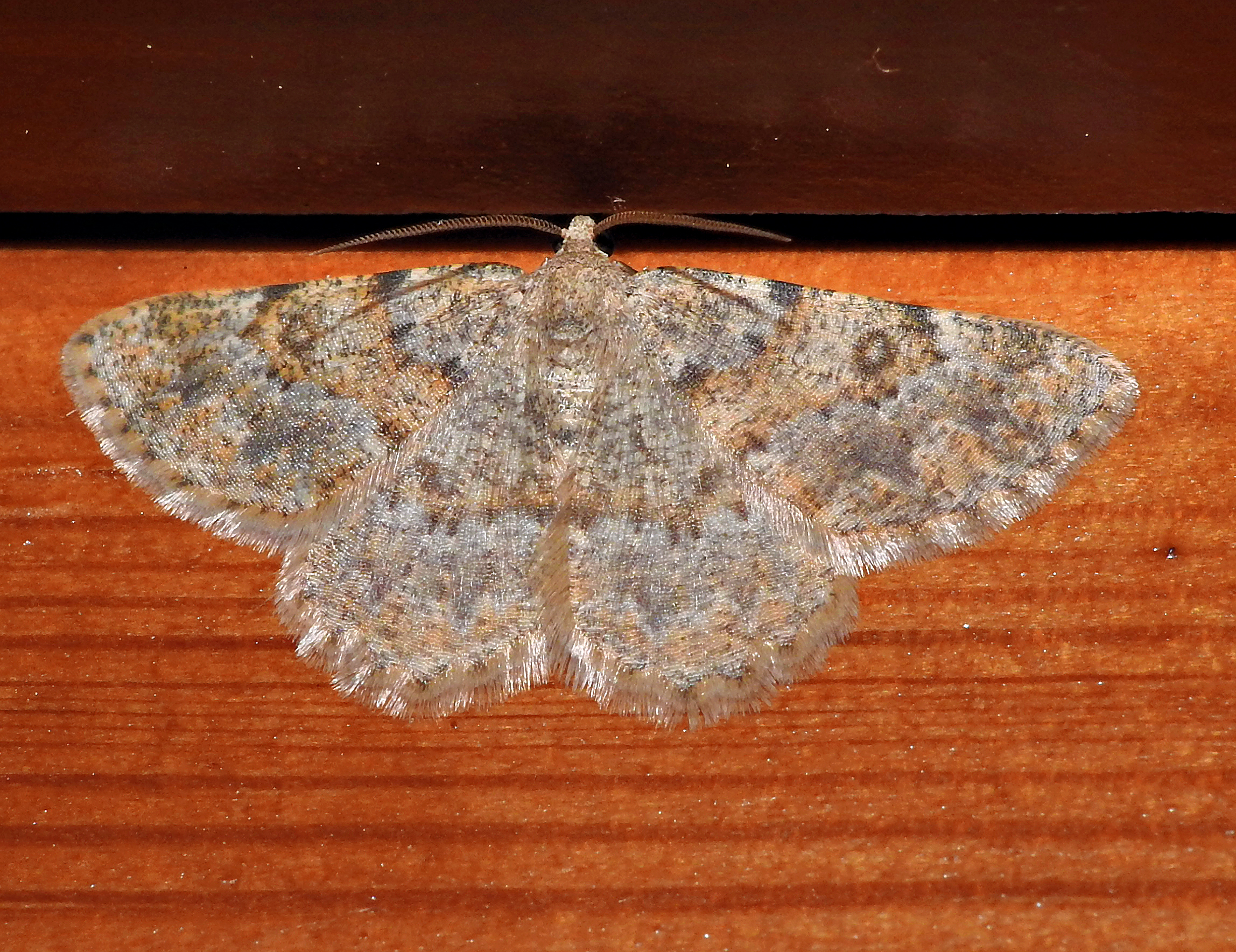
19-5-2019 BUMI HILLS, ZIMBABWE - 19-5-2019 BUMI HILLS, ZIMBABWE - GLOOMY ANTLION MOTH Lachlathetes moestus)
%2021.jpg)
Lachlathetes moestus, also known as the Gloomy Antlion, is a very large insect from southern Africa that is one of the biggest antlions in the world. Key facts include its impressive size (wingspan up to 160mm), distinct appearance with a grey, hairy thorax and reddish-pink legs, and its large, black larvae that live freely in the soil. It is common in northern South Africa, Mozambique, Zimbabwe, and Malawi, with adults active in late summer (March to April).
Identification and appearance
Size: Very large, with a wingspan up to 160mm. It is one of the largest antlion species globally.
Thorax: Grey and very hairy, with a lighter coloration on top compared to the sides.
Abdomen: Dark grey.
Legs: Dull to bright reddish-pink.
Wings: Long and broad-tipped.
%2010.jpg)
%209.jpg)
%2010.jpg)
%2011.jpg)
%2012.jpg)
%2015.jpg)
%2016.jpg)
Monday, 11 April 2022
20-5-2019 BUMI HILLS, ZIMBABWE - WESTERN GREY HERON (Ardea cinerea ssp. cinerea)
%2010.jpg)
The term "western grey heron" is a variation of Grey Heron (Ardea cinerea), a large, long-legged wading bird found in wetlands across much of Europe, Asia, and Africa. It has grey upperparts, a white head with black stripes leading to a crest, and a yellowish-pink bill. Known for its calm foraging behavior, it hunts by standing still and striking quickly at fish, amphibians, and small mammals.
%2011.jpg)
Appearance
Plumage: Ashy-grey on the back and wings, with a greyish-white underside.
Head: White with a black stripe running from above the eye to the back of the head, where it forms a crest.
Neck: Light colored with dark streaks on the front.
Bill: Long, strong, and yellowish-pink, becoming brighter in the breeding season.
Legs: Long and brownish.
Size: Stands about 1 meter tall with a wingspan of around 1.75 meters.
Behavior and diet
Foraging: Stalks or stands motionless in the water, waiting for prey to come close.
20-5-2019 BUMI HILLS, ZIMBABWE - PANAFRICAN PIED WAGTAIL (Motacilla aguimp ssp. vidua)
%2020.jpg)
The African pied wagtail, or African wagtail, (Motacilla aguimp) is a species of bird in the family Motacillidae.
A striking black and white wagtail with black upperparts contrasting with white underparts, it has a white supercilium and a white patch in the folded wing. Juvenile birds are greyer, while birds of the nominate subspecies show grey flanks. They are 20 cm (7.9 in) long.
The African pied wagtail is found in sub-Saharan Africa from the Eastern Cape north to extreme southern Egypt and from Guinea to western Eritrea and Somalia. It is a vagrant to Burkina Faso, Gambia, Mauritania, and the Western Cape.
%2021.jpg)
The African pied wagtail inhabits subtropical or tropical, seasonally wet or flooded, lowland grassland, rivers, and sometimes freshwater marshes. In some areas, it is commensal with humans in towns and villages.
In Malawi, African pied wagtails start breeding before the rains and continue to breed into the rainy season; they breed during six months, peaking in March and October. Both the males and females participate in nest building, but only the females incubate, and both sexes feed the young. The mean clutch in Malawi was found to be 3.9 eggs.
%2022.jpg)
The African pied wagtail is monogamous; the cup-shaped nest is lined with grass and feathers and is usually situated near water in a convenient tangle of sticks. In settlements, the nest may be located on buildings. The nests of the African pied wagtail are parasitised by the red-chested cuckoo Cuculus solitarius and the diderick cuckoo Chrysococcyx caprius. The chicks have been recorded as prey of Burchell's coucal Centropus burchellii.
The African pied wagtail is mainly insectivorous, but also feeds on other invertebrates, grass seeds, tadpoles, small fish, and scraps of human food.
Among the wagtails, the African pied wagtail is most similar in appearance to the recently discovered Mekong wagtail, and genetic evidence suggests that the two are each other's closest relatives and are each just as related to other black-and-white wagtails such as the white wagtail M. alba complex or the white-browed wagtail M. maderaspatensis.
20-5-2019 BUMI HILLS, ZIMBABWE - AFRICAN DARTER (Anhinga rufa)
%2020.jpg)
The African darter is a waterbird native to sub-Saharan Africa, known for its long neck and ability to dive and hunt fish. It is also called a "snakebird" because it swims with only its S-shaped neck and head visible above the water. The African darter's specialized feathers allow it to remain submerged, and it can immediately take flight after emerging from the water.
Physical characteristics
Size: They range from about 80 to 95 cm long and weigh 1 to 1.4 kg.
Plumage: Adult males are glossy black with a rusty-orange neck and a white stripe from the eye down the side of the neck. Females and juveniles are duller brown.
Bill: They have a long, dagger-like bill with tiny, backward-pointing notches to help hold onto prey.
Feet: Their webbed feet have four toes and are set far back on their body, making them excellent swimmers but clumsy on land.
%201.jpg)
%202.jpg)

%201.jpg)

Subscribe to:
Comments (Atom)