TOTAL PAGEVIEWS

TRANSLATE

Wednesday, 26 June 2024

26-6-2024 RACO DE OLLA, VALENCIA - COMMON SHELDUCK (MALE) (Tadorna tadorna)


The common shelduck (Tadorna tadorna ) is a waterfowl species of the shelduck genus, Tadorna. It is widespread and common in the Euro-Siberian region of the Palearctic, mainly breeding in temperate and wintering in subtropical regions; in winter, it can also be found in the Maghreb.

Fossil bones from Dorkovo (Bulgaria) described as Balcanas pliocaenica may actually belong to this species. More likely, they are an extinct species of Tadorna (if not a distinct genus) due to their Early Pliocene age; the present species is not unequivocally attested from the fossil record until some 2–3 million years later (Late Pliocene/Early Pleistocene).

The common shelduck resembles a small short-necked goose in size and shape. It is a striking bird, with a reddish-pink bill, pink feet, a white body with chestnut patches and a black belly, and a dark green head and neck. The wing coverts are white, the primary remiges black, and the secondaries green (only showing in flight) and chestnut. The underwings are almost entirely white. Sexes are similar, but the female is smaller, with some white facial markings, while the male is particularly crisply coloured in the breeding season, his bill bright red and bearing a prominent knob at the forehead.

Ducklings are white, with black cap, hindneck and wing and back patches. Juveniles are similarly coloured, greyish above and mostly white below, but already have the adult's wing pattern.

The call is a loud honk.

26-6-2024 RACO DE OLLA, VALENCIA - BLACK HEADED GULL (Chroicocephalus ridibundus)

The Black-headed gull (Chroicocephalus ridibundus) is a small and one of the most abundant gulls in much of Europe and Asia, and also in eastern Canada. It displays a variety of compelling behaviors and adaptations. Some of these include removing eggshells from one's nest after hatching, begging co-ordination between siblings, differences between sexes, conspecific brood parasitism, and extra-pair paternity.

The summer adult has a chocolate-brown head (not black, although does look black from a distance), a pale grey body, black tips to the primary wing feathers, and a red bill and legs. The hood is lost in winter, leaving just two dark spots. Immature birds have a mottled pattern of brown spots over most of the body and a black band on the tail. There is no difference in plumage between the sexes. In flight, the white leading edge to the wing is a good field mark. First-year birds have a black terminal tail band, more dark areas in the wings, and, in summer, a less fully developed dark hood.

Black-headed gulls breed in much of Europe, Asia, and in coastal eastern Canada. Most of their populations are migratory and winter further south, but some birds reside in the milder westernmost areas of Europe. Some Black-headed gulls also spend the winter in northeastern North America. They breed in large reed beds or marshes, or on islands in lakes, rivers, lagoons, deltas, and estuaries. They may also occur in ponds, canals, and flood lands, nesting on the heather moors, sand dunes, or beaches. During the winter these birds are found in estuaries with sandy or muddy beaches, ploughed fields, moist grasslands, reservoirs, urban parks, farmland, and gardens.

Black-headed gulls are highly gregarious birds, both when feeding or in evening roosts; they also breed in colonies. They are rarely seen at sea far from coasts. Black-headed gulls are active during the day and feed mainly by taking prey from the surface while swimming, or by dipping the head under the surface. They also walk along the coasts and probe for aquatic prey or catch flying insects on the wings. Black-headed birds are noisy, especially in colonies, with a familiar "kree-ar" call. When feeding they utter a sharp “kek-kek”.

26-6-2024 RACO DE OLLA, VALENCIA - GREATER FLAMINGO (Phoenicopterus roseus)


The Greater flamingo (Phoenicopterus roseus) is the most widespread and largest species of the flamingo family. It was described by Peter Simon Pallas in 1811. The Greater flamingo was previously thought to be the same species as the American flamingo, but because of coloring differences of its head, neck, body, and bill, the two flamingos are now most commonly considered separate species.

Greater flamingos have an attractive coloration and appearance. Their feathers are pinkish/white, the wing coverts are red and the primary and secondary flight feathers are black. They have long pink bills with a black tip, yellow eyes and long pink legs. The male is bigger than the female, and juveniles have a gray-brown coloration, with some pink on their underparts, tail and wings, with the legs and beak being mainly brown.


The Greater flamingo inhabits Africa, the Middle East, southern Europe, and the Indian subcontinent. They occur in relatively shallow water bodies, such as saline lagoons, salt pans, large alkaline or saline lakes, and estuaries. Breeding takes place on sandbanks, mudflats, sandy or rocky islands, or open beaches.

Greater flamingos are very social. They travel in groups numbering up to thousands and they communicate by using visual and auditory cues. Greater flamingos are partially dispersive and migratory. They are traveling constantly, seeking areas with enough resources to sustain the whole flock, especially during the mating season. Greater flamingos keep their chicks together in crèches. Adults supervising crèches tend to act in a hostile way toward hatchlings if their own young are not in that crèche. Greater flamingos are diurnal, feeding during the day. Being bottom feeders, they rely on water levels that are low, and they move to new areas to find appropriate feeding conditions. They often bathe in fresh shallow water and preen their feathers to remove salt from them. They are not territorial birds but during breeding season they do defend their nests.


Greater flamingos are serially monogamous birds, forming pair bonds that remain together only for a single breeding season. They breed in dense colonies numbering up to 20,000 or more pairs. They perform spectacular group displays of courtship, involving ritualized preening, synchronized wing-raising, and head-flagging, where they raise their necks and beaks and turn their heads from side to side. Breeding seasons vary with location, occurring in some areas at irregular intervals, following the rains. Nest-building is done in pairs. A single chalky-white egg is laid, rarely two. Both parents share the incubation of 27-31 days. After several days of being brooded by both parents, the chick joins a crèche with many other chicks. Both parents feed the chick, with the typical milk that is secreted in the adults' upper digestive tract. Chicks fledge between 65 and 90 days after hatching and become reproductively mature between 4 and 6 years of age.

Greater flamingos are threatened by human disturbance and lowering water levels, which increases the salinity of sites where they feed and so can affect food resources, or cause thick soda deposits which can harm the legs of chicks. The potential effects of climate change on rainfall and sea level may therefore impact breeding sites seriously in the future. Further threats to greater flamingos include disease, pollution, lead poisoning (from the ingesting of lead shot), and habitat loss as a result of industrial and harbor development or drainage of the wetlands for agriculture. Large numbers of greater flamingos in Egypt are shot or captured for sale in markets, and the collection of eggs remains a threat in some areas, such as Algeria.

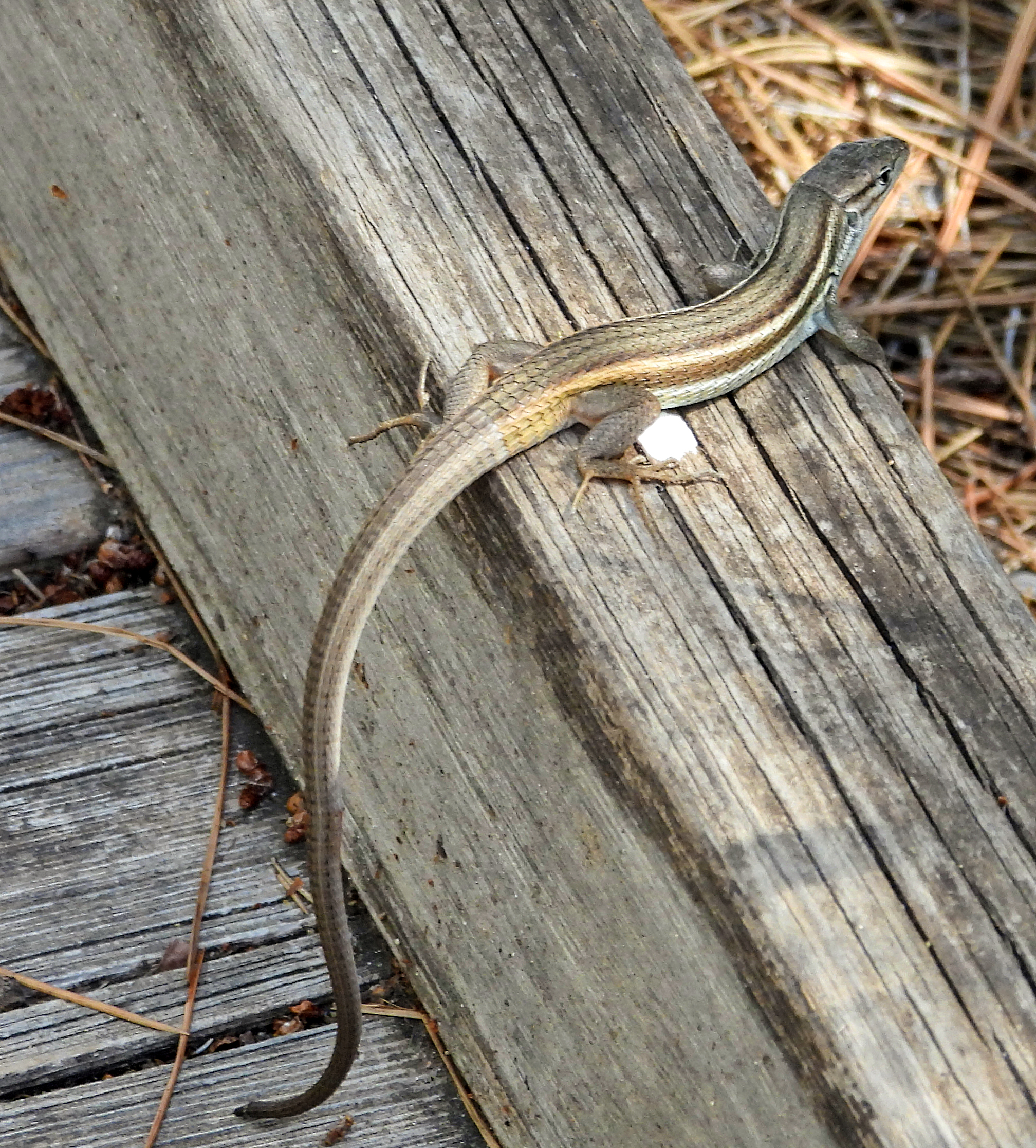
26-6-2024 RACO DE OLLA, VALENCIA - LARGE PSAMMODROMUS LIZARD (Psammodromus algirus)

Psammodromus algirus, known commonly as the Algerian psammodromus or the large psammodromus, is a species of lizard in the family Lacertidae. The species is found in southwestern Europe and northwestern Africa.

Subspecies

There are four subspecies:

Psammodromus algirus algirus (Linnaeus, 1758)

Psammodromus algirus doriae Bedriaga, 1886

Psammodromus algirus nollii Fischer, 1887

Psammodromus algirus ketamensis Galán, 1931

Geographic range

Psammodromus algirus is found in North Africa (Morocco, Algeria, and Tunisia) and in Southwestern Europe (Iberian Peninsula: Portugal, Spain, Andorra, Gibraltar; southernmost France, and Italy near Lampedusa).

The IUCN assessment from 2009 treats Psammodromus algirus nollii and Psammodromus algirus ketamensis as full species and restricts Psammodromus algirus to North Africa.

P. algirus typically occurs in dense bushy vegetation, but it can also venture to more open areas. It can be found at at elevations up to 2,600 m (8,500 ft) above sea level, but it is more common at lower elevations.

Psammodromus algirus mainly feeds on terrestrial arthropods, specifically Orthoptera, Formicidae, Coleoptera, Hemiptera, and Araneae.

P. algirus is threatened by habitat loss.

P. algirus commonly reaches a snout–vent length of about 7.5 cm (3.0 in), occasionally 9 cm (3.5 in). The tail is 2–3 times the body length. Dorsal colouration is usually metallic brownish with a pair of conspicuous white or yellowish stripes on both sides.

26-6-2024 RACO DE OLLA, VALENCIA - SANDWICH TERN (JUVENILE)(Thalasseus sandvicensis)

The Sandwich tern (Thalasseus sandvicensis ) is a tern in the family Laridae. It is very closely related to the lesser crested tern (T. bengalensis ), Chinese crested tern (T. bernsteini ), Cabot's tern (T. acuflavidus ), and elegant tern (T. elegans ) and has been known to interbreed with the lesser crested. It breeds in the Palearctic from Europe to the Caspian Sea wintering to South Africa, India and Sri Lanka.

The Sandwich tern is a medium-large tern with grey upperparts, white underparts, a yellow-tipped black bill and a shaggy black crest which becomes less extensive in winter with a white crown. Young birds bear grey and brown scalloped plumage on their backs and wings. It is a vocal bird. It nests in a ground scrape and lays one to three eggs.

Like all Thalasseus terns, the Sandwich tern feeds by plunge diving for fish, usually in marine environments, and the offering of fish by the male to the female is part of the courtship display.


The Sandwich tern (Thalasseus sandvicensis ) is a tern in the family Laridae. It is very closely related to the lesser crested tern (T. bengalensis ), Chinese crested tern (T. bernsteini ), Cabot's tern (T. acuflavidus ), and elegant tern (T. elegans ) and has been known to interbreed with the lesser crested. It breeds in the Palearctic from Europe to the Caspian Sea wintering to South Africa, India and Sri Lanka.

The Sandwich tern is a medium-large tern with grey upperparts, white underparts, a yellow-tipped black bill and a shaggy black crest which becomes less extensive in winter with a white crown. Young birds bear grey and brown scalloped plumage on their backs and wings. It is a vocal bird. It nests in a ground scrape and lays one to three eggs.

Like all Thalasseus terns, the Sandwich tern feeds by plunge diving for fish, usually in marine environments, and the offering of fish by the male to the female is part of the courtship display.

This is a medium-large tern, 37–43 cm (15–17 in) long with an 85–97 cm (33–38 in) wingspan, which is unlikely to be confused within most of its range, although the South American race could be confused with the elegant tern. The Sandwich tern's weight ranges from 180-300 g (6.3-10.6 oz).

The Sandwich tern's thin sharp bill is black with a yellow tip, except in the yellow or orange billed South American race. Its short legs are black. Its upperwings are pale grey and its underparts white, and this tern looks very pale in flight, although the primary flight feathers darken during the summer.

The lesser crested tern and elegant tern differ in having all-orange bills; lesser crested also differs in having a grey rump and marginally stouter bill, and elegant in having a slightly longer, more slender bill. The Chinese crested tern is the most similar to the Sandwich tern, but has a reversal of the bill colour, yellow with a black tip; it does not overlap in range with the Sandwich tern so confusion is unlikely.

In winter, the adult Sandwich tern's forehead becomes white. Juvenile Sandwich terns have dark tips to their tails, and a scaly appearance on their back and wings, like juvenile roseate terns.

The Sandwich tern is a vocal bird; its call is a characteristic loud grating kear-ik or kerr ink.

26-6-2024 RACO DE OLLA, VALENCIA - SANDWICH TERN (Thalasseus sandvicensis)


The Sandwich tern (Thalasseus sandvicensis ) is a tern in the family Laridae. It is very closely related to the lesser crested tern (T. bengalensis ), Chinese crested tern (T. bernsteini ), Cabot's tern (T. acuflavidus ), and elegant tern (T. elegans ) and has been known to interbreed with the lesser crested. It breeds in the Palearctic from Europe to the Caspian Sea wintering to South Africa, India and Sri Lanka.

The Sandwich tern is a medium-large tern with grey upperparts, white underparts, a yellow-tipped black bill and a shaggy black crest which becomes less extensive in winter with a white crown. Young birds bear grey and brown scalloped plumage on their backs and wings. It is a vocal bird. It nests in a ground scrape and lays one to three eggs.

Like all Thalasseus terns, the Sandwich tern feeds by plunge diving for fish, usually in marine environments, and the offering of fish by the male to the female is part of the courtship display.

26-6-2024 LAGUNA DE SILLA, VALENCIA - IBERIAN BLUE DAMSELFLY (Ischnura graellsii)


The Iberian Bluetail – Ischnura graellsii – Cola azul ibérico is a small slender damselfly species. It is possibly the most commonly encountered and frequently the most numerous damselfly on the Iberian peninsula.

Total length: 26 to 31mm

Hind Wing length: 13 to 19mm

Flight period in Iberia: early June to early November

Habitat: Any wetland habitat with plentiful emergent vegetation including rivers, ditches and pools. Can sometimes be numerous around coastal lagoons & saltmarshes.

Distribution: The Mediterranean regions of Morocco, Algeria & Tunisia, Portugal & most of Spain

Similar species: Very similar to the Common Bluetail (Ischnura elegans) and the Scarce Bluetail (Ischnura pumilio) both of which occur on the Iberian peninsula.

26-6-2024 LAGUNA DE SILLA, VALENCIA - IBERIAN BLUETAIL DAMSELFLY (MALE AND FEMALE) (Ischnura elegans)


The Iberian Bluetail – Ischnura graellsii – Cola azul ibérico is a small slender damselfly species. It is possibly the most commonly encountered and frequently the most numerous damselfly on the Iberian peninsula.

Total length: 26 to 31mm

Hind Wing length: 13 to 19mm

Flight period in Iberia: early June to early November

Habitat: Any wetland habitat with plentiful emergent vegetation including rivers, ditches and pools. Can sometimes be numerous around coastal lagoons & saltmarshes.

Distribution: The Mediterranean regions of Morocco, Algeria & Tunisia, Portugal & most of Spain

Similar species: Very similar to the Common Bluetail (Ischnura elegans) and the Scarce Bluetail (Ischnura pumilio) both of which occur on the Iberian peninsula.

26-6-2024 RACO DE OLLA, VALENCIA - COMMON TERN (Sterna hirundo)

The Common tern (Sterna hirundo) is a seabird that has a circumpolar distribution. it has four subspecies breeding in temperate and subarctic regions of Europe, Asia, and North America. Its large population and huge breeding range mean that this species is classed as being of least concern, although numbers in North America have declined sharply in recent decades.

Known for its attractive plumage and graceful flight, Common terns have a slender body and a smoothly rounded head, and long pointed wings. Their breeding plumage is light silvery-gray upperparts and clear black outer primaries on its wingtips. Outside the breeding season, the birds keep some of their distinguishable black cap, but their forehead and face turn white. Their legs and bill turn black, losing their orange-red coloration. Male and female are similar in appearance throughout the year. Juvenile Common terns have pale grey upper wings with a dark carpal bar. The crown and nape are brown, and the forehead is ginger, wearing to white by autumn. The upper parts are ginger with brown and white scaling, and the tail lacks the adult's long outer feathers. Birds in their first post-juvenile plumage, which normally remain in their wintering areas, resemble the non-breeding adult but have a duskier crown, dark carpal bar, and often very worn plumage. By their second year, most young terns are either indistinguishable from adults, or show only minor differences such as a darker bill or white forehead.

Common terns occur from northern Canada to the Caribbean Sea in the south, throughout Europe, Northern Asia, the Middle East and North Africa. Outside of the mating season, these birds winter along the coasts of South America and Central America, along Africa’s coast and the Arabian Peninsula, as well as on islands in the Indian Ocean and throughout Australasia and much of Southeast Asia. They breed on sand spits, beaches and low-lying inshore islands. They also nest inland near slow-flowing rivers, and lakes in open country. This species favors areas that have close shallow waters where they can fish. During migration, they are mainly seen along coasts, at freshwater inland lakes and in estuaries. During winter, they are mostly coastal, in warm tropical and subtropical waters.

Common terns are diurnal birds and they live in colonies with no clear hierarchy among them, with all seeming to be equal. Although Common terns all migrate and live together, the family unit is responsible to feed and care for its own eggs and chicks, and individuals will often defend feeding territories. This species forages by flying above water and hovering, often plunge-diving to catch prey under the surface. It will also swim as it picks up food from the surface of the water or just below it. A highly migratory bird, it leaves the breeding grounds for the wintering sites typically from August to October, soon after all the chicks fledge. These birds communicate mostly by means of their unusual, hoarse voices, having three different and distinct calls. Communication during mating is mainly visual and/or tactile.

Common terns are monogamous, which means they mate with only one partner during a breeding season. At the time of courtship, which starts in April, males establish their territories within the colony before commencing what is known as "courtship feeding," where a male brings a fish to a female to court her. Courtship displays include the male posturing followed by the pair circling each other. Eggs are laid from April to June. Common terns usually breed in huge colonies, though there may be some isolated pairs. Both parents construct their nest on bare ground, sometimes with low vegetation surrounding it or on dead floating vegetation. 2-3 eggs are laid and are incubated by both parents for 21-25 days. Chicks leave their nest after several days, but remain nearby and their parents still feed them. They fledge at around 22-28 days old, remaining in the family group for at least another two months. Common terns become reproductively mature at 3 years of age.

26-6-2024 RACO DE OLLA, VALENCIA - COMMON TERN (JUVENILE) (Sterna hirundo)


The Common tern (Sterna hirundo) is a seabird that has a circumpolar distribution. it has four subspecies breeding in temperate and subarctic regions of Europe, Asia, and North America. Its large population and huge breeding range mean that this species is classed as being of least concern, although numbers in North America have declined sharply in recent decades.

Known for its attractive plumage and graceful flight, Common terns have a slender body and a smoothly rounded head, and long pointed wings. Their breeding plumage is light silvery-gray upperparts and clear black outer primaries on its wingtips. Outside the breeding season, the birds keep some of their distinguishable black cap, but their forehead and face turn white. Their legs and bill turn black, losing their orange-red coloration. Male and female are similar in appearance throughout the year. Juvenile Common terns have pale grey upper wings with a dark carpal bar. The crown and nape are brown, and the forehead is ginger, wearing to white by autumn. The upper parts are ginger with brown and white scaling, and the tail lacks the adult's long outer feathers. Birds in their first post-juvenile plumage, which normally remain in their wintering areas, resemble the non-breeding adult but have a duskier crown, dark carpal bar, and often very worn plumage. By their second year, most young terns are either indistinguishable from adults, or show only minor differences such as a darker bill or white forehead.

Tuesday, 25 June 2024

25-6-2024 MONTE CORONA, VALENCIA - GRASS CRAB SPIDER (Runcinia grammica)


Runcinia grammica (sometimes also referred to as Runcinia lateralis) is a species of spiders of the genus Runcinia, with a distribution of "Europa, Near East to Iran, Russia, Central Asia, China, Japan. Introduced to St. Helena, South Africa."

The species generally lives in peat bogs, fens, and meadows, although it has also been known to inhabit urban areas They usually mature to adulthood in the summer. They have short, broad bodies, which are covered in hair and spines. They have clear muscular corrugation on their sides, and, on small raised bumps on their heads, eight small eyes. Males are usually 2.5–3.5mm in length, females 4-6mm. They are predators, and eat various species of insects.

Unlike many spiders, they do not spin a web of any kind. Instead, they prowl on the ground, as well as climbing plants and flowers, to find their prey. They can move forwards, backwards, and sideways.

Runcina grammica has reportedly been sighted in various areas of Southeastern Spain and Southwestern Portugal. They are also known to inhabit Armenia, Georgia, Azerbaijan, Caucasus, Italy, India, South Africa, St. Helena, Turkey, France, and in the Carpathian Basin. They are among the most common species of spiders in Portugal. They are one of the many species preserved at the Mountain Zebra National Park, in South Africa.

Monday, 24 June 2024

24-6-2026 PEGO MARJAL, ALICANTE - VIOLET DROPWING DRAGONFLY (MALE) (Trithemis annulata)


Rithemis annulata is a robust medium-sized species with a wingspan of 60 mm (2.4 in). The mature male has a dark red head and a yellow labium with brown central spot. The eyes are red with white spots on the rear edge, and the frons is dark metallic purplish-red. The prothorax is violet with slightly darker longitudinal stripes. The membranous wings have distinctive red veins, the pterostigma is orange-brown and there is a large orange-brown splash at the base of the hind wings. The abdomen is fairly broad and is pinkish-violet, with purple markings on the top of each segment and blackish markings on the terminal three segments. Females are a similar size to males but the thorax is brownish and the abdomen is yellow with dark brown markings. The wings of females lack the red veins of males but have similar orange-brown patches. It is very similar in appearance to the red-veined dropwing (Trithemis arteriosa), but that species has a more slender abdomen and a wedge-shaped black area on either side of the tip of the abdomen.

24-6-2026 PEGO MARJAL, ALICANTE - PLAIN TIGER BUTTERFLY (Danaus chrysippus)

Danaus chrysippus, also known as the plain tiger, African queen, or African monarch, is a medium-sized butterfly widespread in Asia, Australia and Africa. It belongs to the Danainae subfamily of the brush-footed butterfly family Nymphalidae. Danainae primarily consume plants in the genus Asclepias, more commonly called milkweed. Milkweed contains toxic compounds, cardenolides, which are often consumed and stored by many butterflies. Because of their emetic properties, the plain tiger is unpalatable to most predators. As a result, its coloration is widely mimicked by other species of butterflies. The plain tiger inhabits a wide variety of habitats, although it is less likely to thrive in jungle-like conditions and is most often found in drier, wide-open areas.

24-6-2026 PEGO MARJAL, ALICANTE - BARN SWALLOW (Hirundo rustica)

The Barn swallow (Hirundo rustica) is the most widespread species of swallow in the world. In fact, it has the largest natural distribution of any of the world's passerines, ranging over 251 million square kilometers globally. In Anglophone Europe it is just called the swallow; in northern Europe, it is the only common species called a "swallow" rather than a "martin".

The Barn swallow is a distinctive songbird with blue upperparts and a long, deeply forked tail. There is a line of white spots across the outer end of the upper tail. The female is similar in appearance to the male, but the tail streamers are shorter, the blue of the upperparts and breast band is less glossy, and the underparts paler. The juvenile is browner and has a paler rufous face and whiter underparts. It also lacks the long tail streamers of the adult.

Barn swallows are found in Europe, Asia, Africa, and the Americas. These birds are long-distance migrants and their wintering grounds cover much of the Southern Hemisphere as far south as central Argentina, the Cape Province of South Africa, and northern Australia. 

The preferred habitat of Barn swallows is open country with low vegetation, such as pasture, meadows, and farmland, preferably with nearby water. These birds avoid heavily wooded or precipitous areas and densely built-up locations. On their wintering grounds, Barn swallows avoid only dense forests and deserts. They are most common in open, low vegetation habitats, such as savanna and ranch land, and in Venezuela, South Africa, and Trinidad and Tobago the birds are particularly attracted to burnt or harvested sugarcane fields and the waste from the cane.

Barn swallows are gregarious birds and in the absence of suitable roost sites, they sometimes roost on wires where they are more exposed to predators. Individual birds tend to return to the same wintering locality each year and congregate from a large area to roost in reed beds. These roosts can be extremely large and are thought to be a protection from predators. Barn swallows typically feed by day in open areas 7-8 m (23-26 ft) above shallow water or the ground often following animals, humans, or farm machinery to catch disturbed insects; they may also pick prey items from the water surface, walls, and plants. During the breeding, season Barn swallows hunt in pairs, but otherwise form often large flocks. These birds are usually fairly quiet on the wintering grounds. At other times they communicate with constant twittering and chattering. The song of the male Barn swallow is a cheerful warble, often ending with 'su-seer'. Other calls include 'witt' or 'witt-witt' and a loud 'splee-plink' when excited (or trying to chase intruders away from the nest). The alarm calls include a sharp 'siflitt' for predators like cats and a 'flitt-flitt' for birds of prey like the hobby.

24-6-2026 MONTE CORONA, VALENCIA - MADAGASCAN PALM (Pachypodium lamerei)

Pachypodium lamerei is a species of flowering plant in the family Apocynaceae. It is a stem succulent, photosynthesizing mainly through its trunk, and comes from the island of Madagascar, off the east coast of Africa. It has large thorns and leaves mostly just at the top of the plant, and large, fragrant flowers. The species has become one of the best known pachypodiums in cultivation, being relatively easy to propagate and grow. In cultivation it is often marketed as the Madagascar palm, despite its not being a palm at all. A variety called "Ramosum" has been described. It is distinguished mostly by a dwarf growth habit and its more rounded corolla lobe.

Pachypodium lamerei has a tall, silvery-gray trunk covered with sharp 6.25 cm spines. Long, narrow leaves grow only at the top of the trunk, like a palm tree. It rarely branches. Plants grown outdoors will reach up to 6 m (20 ft), but when grown indoors it will slowly reach 1.2–1.8 m (3.9–5.9 ft) tall.

Plants grown outdoors develop large, white, fragrant flowers at the top of the plant. They rarely flower indoors.

Pachypodium lamerei grows best in warm climates and full sun. It will not tolerate hard frosts, and will likely drop most of its leaves if exposed to even a light frost. It is easy to grow as a houseplant, if you can provide the sunlight it needs. Use a fast-draining potting mix, such as a cactus mix and pot in a container with drainage holes to prevent root rot.

This plant has gained the Royal Horticultural Society's Award of Garden Merit.

Sunday, 23 June 2024

22-6-2024 MONTE CORONA, VALENCIA - TRUE CRICKET (Petaloptila bolivari)


Gryllomorpha dalmatina, common name wingless house-cricket, is a species of cricket belonging to the family Gryllidae subfamily Gryllomorphinae.

This cricket is mainly present in France, Italy, Slovenia, Spain, Switzerland, in the Near East and in North Africa.

Gryllomorpha dalmatina is the largest species of the genus Gryllomorpha. The adults grow up to 15–20 millimetres (0.59–0.79 in). They are wingless. The basic coloration of the body is pale brown, with dark-brown markings on the body and the legs. The antennae are very long. Also legs are rather long. The female ovipositor is long and thin and can reach a length of about 12–17 millimetres (0.47–0.67 in).

They can commonly be encountered in nature from April through early Autumn, but in the domestic environment they are active all year round. They can be found in buildings, especially in dark moist places, as caves, cellars, basements, but also under stones and bark.  As a matter of fact, these crickets fear the light and feed on organic debris.

23-6-2024 POTRIES, VALENCIA - EPAULET SKIMMER DRAGONFLY (MALE) (Orthetrum chrysostigma)

Orthetrum chrysostigma, the epaulet skimmer, is a species of dragonfly in the family Libellulidae. It is found in Algeria, Angola, Benin, Botswana, Burkina Faso, Cameroon, Central African Republic, Chad, the Democratic Republic of the Congo, Ivory Coast, Egypt, Equatorial Guinea, Ethiopia, Gambia, Ghana, Guinea, Kenya, Liberia, Libya, Malawi, Mali, Mauritania, Morocco, Mozambique, Namibia, Niger, Nigeria, Senegal, Sierra Leone, Somalia, South Africa, Sudan, Tanzania, Togo, Uganda, Zambia, Zimbabwe, and possibly Burundi as well as Canary Islands, Israel, and Portugal. It was recorded in the Maltese Islands in 2010. One was also spotted in Tel Aviv, Israel in August 2022.


Its natural habitats are subtropical or tropical moist lowland forests, dry savanna, moist savanna, subtropical or tropical dry shrubland, subtropical or tropical moist shrubland, rivers, intermittent rivers, shrub-dominated wetlands, swamps, freshwater lakes, intermittent freshwater lakes, freshwater marshes, intermittent freshwater marshes, and freshwater springs. The adults prey on various flying insects. The bodies of adult males are blue, and those of young and females are yellow and brown.

23-6-2024 ADOR CAMPO, VALENCIA - EUROPEAN SERIN (MALE) (Serinus serinus)

The European serin is a small short-tailed bird, 11–12 cm in length. The upper parts are dark-streaked greyish green, with a yellow rump. The yellow breast and white belly are also heavily streaked. The male has a brighter yellow face and breast, yellow wing bars and yellow tail sides. The song of this bird is a buzzing trill, very familiar in Mediterranean countries.

It breeds across southern and central Europe and North Africa. Southern and Atlantic coast populations are largely resident, but the northern breeders migrate further south in Europe for the winter. Open woodland and cultivation, often with some conifers, is favoured for breeding. It builds its nest in a shrub or tree, laying 3–5 eggs. It forms flocks outside the breeding season, sometimes mixed with other finches.

The food is mainly seeds, and, in the breeding season, insects. This small serin is an active and often conspicuous bird.

Saturday, 22 June 2024

22-6-2024 RIO SERPIS, GANDIA - BROAD SCARLET DRAGONFLY (MALE) (Crocothemis erythraea)


The scarlet dragonfly is a common species in southern Europe and throughout Africa. It also occurs across western Asia as far as southern China. It is a very rare vagrant in Britain. Its first record in the country was at Hayle Kimbro Pool, The Lizard, Cornwall, on 7 August 1995. Since then there have been a few further records at scattered locations throughout Britain.

A wide range of both running and standing waters, except those that are shaded. Adults may be found some distance from water in habitats ranging from desert to open woodland; absent from dense forest.


The scarlet dragonfly (Crocothemis erythraea) is a species of dragonfly in the family Libellulidae. Its common names include broad scarlet, common scarlet-darter, and scarlet darter.
Crocothemis erythraea can reach a length of 33–44 millimetres (1.3–1.7 in). These dragonflies haves a flattened and rather broad abdomen. The adult male scarlet dragonfly has a bright scarlet red, widened abdomen, with small amber patches at the bases of the hindwings. Also the veins on the leading edges of the wings are red. Females and immatures are yellow-brown and have a conspicuous pale stripe along the top of the thorax.

22-6-2024 RIO SERPIS, GANDIA - SARDINIAN WARBLER (MALE) (Sylvia melanocephala)


The Sardinian warbler (Curruca melanocephala ) is a common and widespread typical warbler from the Mediterranean region. Like most Curruca species, it has distinct male and female plumages. The adult male has a grey back, whitish underparts, black head, white throat and red eyes. Plumages are somewhat variable even in the same locality, with the intensity of a reddish hue on upper- and/or underside that varies from absent to (in some subspecies) pronounced. The female is mainly brown above and buff below, with a grey head. The Sardinian warbler's song is fast and rattling, and is very characteristic of the Mediterranean areas where this bird breeds.

It breeds in the southernmost areas of Europe and just into Asia in Turkey and the eastern end of the Mediterranean. This small passerine bird, unlike most "warblers", is not particularly migratory, but some birds winter in north Africa, and it occurs as a vagrant well away from the breeding range, as far as Great Britain. 

Friday, 21 June 2024

19-6-2024 CREU DE LONGA, ALBUFERA - GREY HERON (Ardea cinerea)


The Grey heron (Ardea cinerea) is a large long-legged wading bird of the heron native to Europe and Asia and also parts of Africa. It lives in wetland areas and feeds on various aquatic creatures which it catches after standing stationary beside or in the water.

The plumage of the Grey heron is largely ashy-grey above, and greyish-white below with some black on the flanks. Adults have a head and neck white with a broad black supercilium that terminates in the slender, dangling crest, and bluish-black streaks on the front of the neck. The scapular feathers are elongated and the feathers at the base of the neck are also somewhat elongated. Immature birds lack the dark stripe on the head and are generally duller in appearance than adults, with a grey head and neck, and a small, dark grey crest. The pinkish-yellow beak is long, straight, and powerful, and is brighter in color in breeding adults. The iris is yellow and the legs are brown and very long.

19-6-2024 MUNTANYETA DEL SANS, ALBUFERA - BLACK WINGED STILT (Himantopus himantopus)


Black-winged stilts (Himantopus himantopus) are very long-legged wading birds. They are found in both warm and hot climates, feed on small aquatic creatures, and nest on the ground surface in small colonies.

Adult Black-winged stilts have long, pink legs, and a long, rather thin black bill. They are generally black above and white below, with a white head and neck. Males have a black back, often with a greenish gloss or sheen. Females' backs have a brownish hue, contrasting with the black remiges. In populations where the top of the head is normally white (at least in winter), females tend to have less black on the head and neck the entire year round, while males often have much more black, particularly in summer. This difference is not clear-cut, however, and males usually grow all-white head feathers in winter. Immature birds are grey, instead of black, and have a markedly sandy hue on their wings, with light feather fringes appearing as a whitish line in flight.

19-6-2024 CREU DE LONGA, ALBUFERA - SQUACCO HERON (Ardeola ralloides)


The squacco heron (Ardeola ralloides ) is a small heron, 44–47 cm (17+1⁄2–18+1⁄2 in) long, of which the body is 20–23 cm (8–9 in), with 80–92 cm (31+1⁄2–36 in) wingspan. It is of Old World origins, breeding in southern Europe and the Greater Middle East.

The English common name squacco comes via Francis Willughby (c. 1672) quoting a local Italian name sguacco. The current spelling comes from John Hill in 1752.

The scientific name comes from Latin ardeola, a small heron (ardea ), and ralloides, Latin rallus, a rail and Greek -oides, "resembling".

The squacco heron is a migrant, wintering in Africa. It is rare north of its breeding range. The species has been recorded in Fernando de Noronha islands, and more rarely in mainland South America, as a vagrant. This is a stocky species with a short neck, short thick bill and buff-brown back. In summer, adults have long neck feathers. Its appearance is transformed in flight, when it looks very white due to the colour of the wings.

The squacco heron's breeding habitat is marshy wetlands in warm countries. The birds nest in small colonies, often with other wading birds, usually on platforms of sticks in trees or shrubs. Three to four eggs are laid. They feed on fish, frogs and insects.

Thursday, 20 June 2024

19-6-2024 MUNTANYETA DEL SANS, ALBUFERA - BLACK WINGED STILT (JUVENILE) (Himantopus himantopus)

Black-winged stilts (Himantopus himantopus) are very long-legged wading birds. They are found in both warm and hot climates, feed on small aquatic creatures, and nest on the ground surface in small colonies.

Adult Black-winged stilts have long, pink legs, and a long, rather thin black bill. They are generally black above and white below, with a white head and neck. Males have a black back, often with a greenish gloss or sheen. Females' backs have a brownish hue, contrasting with the black remiges. In populations where the top of the head is normally white (at least in winter), females tend to have less black on the head and neck the entire year round, while males often have much more black, particularly in summer. This difference is not clear-cut, however, and males usually grow all-white head feathers in winter. Immature birds are grey, instead of black, and have a markedly sandy hue on their wings, with light feather fringes appearing as a whitish line in flight.

Black-winged stilts are found across Europe, Asia, Africa, Australia, and North, Central and South Americas. Some populations are migratory and move to the ocean coasts in winter; those in warmer regions are generally resident or short-range vagrants. Black-winged stilts breed in freshwater and brackish marshes, shallow lakes, ponds, and flooded fields. They can also be found in mountainous areas near lakes, river deltas, estuaries, coastal lagoons and marshes, salt meadows, and mudflats.

Black-winged stilts are very gregarious birds. They often gather in groups of around 20 individuals and may migrate or roost in large flocks of several thousand birds. Black-winged tilts are mainly diurnal; however, they are also adapted to nocturnal vision and may also forage even on moonless nights. Black-winged stilts feed in shallow water, wading slowly picking up their food from the water surface or sand.

19-6-2024 MUNTANYETA DEL SANS, ALBUFERA - BLACK WINGED STILT (FEMALE) (Himantopus himantopus)


Black-winged stilts (Himantopus himantopus) are very long-legged wading birds. They are found in both warm and hot climates, feed on small aquatic creatures, and nest on the ground surface in small colonies.

Adult Black-winged stilts have long, pink legs, and a long, rather thin black bill. They are generally black above and white below, with a white head and neck. Males have a black back, often with a greenish gloss or sheen. Females' backs have a brownish hue, contrasting with the black remiges. In populations where the top of the head is normally white (at least in winter), females tend to have less black on the head and neck the entire year round, while males often have much more black, particularly in summer. This difference is not clear-cut, however, and males usually grow all-white head feathers in winter. Immature birds are grey, instead of black, and have a markedly sandy hue on their wings, with light feather fringes appearing as a whitish line in flight.


Black-winged stilts are found across Europe, Asia, Africa, Australia, and North, Central and South Americas. Some populations are migratory and move to the ocean coasts in winter; those in warmer regions are generally resident or short-range vagrants. Black-winged stilts breed in freshwater and brackish marshes, shallow lakes, ponds, and flooded fields. They can also be found in mountainous areas near lakes, river deltas, estuaries, coastal lagoons and marshes, salt meadows, and mudflats.

Black-winged stilts are very gregarious birds. They often gather in groups of around 20 individuals and may migrate or roost in large flocks of several thousand birds. Black-winged tilts are mainly diurnal; however, they are also adapted to nocturnal vision and may also forage even on moonless nights. Black-winged stilts feed in shallow water, wading slowly picking up their food from the water surface or sand.