This Blog contains Wildlife, Plants and Bird Photos from Walks, Safaris, Birding Trips and Vacations. Most of the pictures have been taken with my Nikon P900 and P950X cameras. Just click on any image for a larger picture. On the right column under the Blog Archive are the entries by date. Below that under Animal categories all the diffent species of Animals, Birds, Insects and Plants contained in the website are listed. Clicking on any entry will show all the entries for that species.
TOTAL PAGEVIEWS
TRANSLATE
Tuesday, 13 June 2023
13-6-2023 MADRID ZOO PARK, ESPANA - ASIAN BLACK BEAR (Ursus thibetanus)
The Asian black bear (Ursus thibetanus), also known as the Asiatic black bear, moon bear and white-chested bear, is a medium-sized bear species native to Asia that is largely adapted to an arboreal lifestyle. It lives in the Himalayas, southeastern Iran, the northern parts of the Indian subcontinent, the Korean Peninsula, China, the Russian Far East, the islands of Honshū and Shikoku in Japan, and Taiwan. It is listed as vulnerable on the IUCN Red List, and is threatened by deforestation and poaching for its body parts, which are used in traditional medicine.
13-6-2023 MADRID ZOO PARK, ESPANA - WHITE STORK (Ciconia ciconia)
The White Stork is a migratory bird that heralds the end of winter with its arrival (around February).
Very similar to the American Stork (also called "White Stork" or "Common Stork"), it neither one of the largest nor the smallest of its species. It can reach 115 centimeters in length, with a wing span of up to 195 centimeters.
Adults have orange and red beaks and legs (the beak measures between 14 and 19 centimeters). In young individuals, these parts are dark gray.
When it returns, it always goes back to the nest it abandoned the previous year. Nests are usually built on top of towers and on churches: they are platforms of twigs up to two meters in diameter.
First the males arrive, then the females: first they rebuild their nest, then they pair up. The sound made by the stork to communicate with other storks is the noisy clattering of its beak..
13-6-2023 MADRID ZOO PARK, ESPANA - EURASIAN WREN (Troglodytes troglodytes)
The Eurasian wren (Troglodytes troglodytes) or northern wren is a very small insectivorous bird, and the only member of the wren family Troglodytidae found in Eurasia and Africa (Maghreb). In Anglophone Europe, it is commonly known simply as the wren. It has a very short tail which is often held erect, a short neck and a relatively long thin bill. It is russet brown above, paler buff-brown below and has a cream buff supercilium. The sexes are alike.
31-5-2023 HANDARA GOLF COURSE, BALI - JAVAN GRAY THROATED WHITE-EYE (Heleia javanica)
Monday, 12 June 2023
9-6-2023 MANDAI BIRD PARADISE, SINGAPORE - CHINESE HWAMEI (Garrulax canorus)
9-6-2023 MANDAI BIRD PARADISE, SINGAPORE - INDIAN PIED MYNA (Gracupica contra)
9-6-2023 MANDAI BIRD PARADISE, SINGAPORE - AMERICAN FLAMINGO (Phoenicopterus ruber)
The American flamingo (Phoenicopterus ruber) is a large species of flamingo closely related to the greater flamingo and Chilean flamingo native to the neotropics. It was formerly considered conspecific with the greater flamingo, but that treatment is now widely viewed (e.g. by the American and British Ornithologists' Unions) as incorrect due to a lack of evidence. It is also known as the Caribbean flamingo, although it is also present in the Galápagos Islands. It is the only flamingo that naturally inhabits North America.
Sunday, 11 June 2023
9-6-2023 MANDAI BIRD PARADISE, SINGAPORE - LESSER ORIENTAL CHEVROTAIN (Tragulus kanchil)
9-6-2023 MANDAI BIRD PARADISE, SINGAPORE - COCONUT LORIKEET (Trichoglossus haematodus)
9-6-2023 MANDAI BIRD PARADISE, SINGAPORE - NICOBAR PIGEON (Caloenas nicobarica)
9-6-2023 MANDAI BIRD PARADISE, SINGAPORE - STRAW NECKED IBIS (Threskiornis spinicollis)
9-6-2023 MANDAI BIRD PARADISE, SINGAPORE - AUSTRALIAN WOOD DUCK (Chenonetta jubata)
The Australian wood duck, maned duck or maned goose (Chenonetta jubata) is a dabbling duck found throughout much of Australia. It is the only living species in the genus Chenonetta. Traditionally placed in the subfamily Anatinae (dabbling ducks), it might belong to the subfamily Tadorninae (shelducks); the ringed teal may be its closest living relative.
9-6-2023 MANDAI BIRD PARADISE, SINGAPORE - FRECKLED DUCK (Stictonetta naevosa)
10-6-2023 SINGAPORE GARDENS - COMMON LEOPARD BUTTERFLY (Phalanta phalantha),
Phalanta phalantha, the common leopard or spotted rustic, is a sun-loving butterfly of the nymphalid or brush-footed butterfly family.
Saturday, 10 June 2023
Friday, 9 June 2023
26-5-2023 TABIN RESERVE, BORNEO - MALAYSIAN HAWK CUCKOO (Hierococcyx fugax)
The Malaysian hawk-cuckoo or Malay hawk-cuckoo (Hierococcyx fugax) is a bird in the family Cuculidae formerly considered conspecific with Hodgson's hawk-cuckoo and the rufous hawk-cuckoo. All three species were previously assigned as Cuculus fugax.
Hierococcyx fugax is found in far southern Burma, southern Thailand, Malaya, Singapore, Borneo, Sumatra and western Java.
The Malaysian hawk-cuckoo occurs in a variety of forest types from plains level up to 1700 metres on Sumatra. It can also be found in cocoa and rubber plantations.
Insects, mainly caterpillars, but also cicadas, beetles, small butterflies and locusts, in addition fruits and berries. Active in bushes and understorey, gleaning prey from foliage.
Hawk-cuckoos are brood parasites and recorded hosts include the white-rumped shama and the grey-headed canary flycatcher.
17-5-2023 PORING HOT SPRINGS, BORNEO - FERRUGINOUS FLYCATCHER (Muscicapa ferruginea)
The ferruginous flycatcher (Muscicapa ferruginea) is a species of bird in the family Muscicapidae.
It is found in Bangladesh, Bhutan, China, Indonesia, Japan, Laos, Malaysia, Myanmar, Nepal, the Philippines, India, Singapore, Taiwan, Thailand, and Vietnam. Its natural habitat is subtropical or tropical moist montane forests.
9-6-2023 MANDAI BIRD PARADISE, SINGAPORE - RED CRESTED CARDINAL (Paroaria coronata)
9-6-2023 MANDAI BIRD PARADISE, SINGAPORE - TAWNY FROGMOUTH (Podargus strigoides)
Thursday, 8 June 2023
18-5-2023 SEPILOK, BORNEO - YELLOW RUMPED FLOWERPECKER (Prionochilus xanthopygius)
The yellow-rumped flowerpecker (Prionochilus xanthopygius) is a species of bird in the family Dicaeidae. It is found in Brunei, Indonesia, and Malaysia on the island of Borneo, to which it is endemic. Its natural habitats are subtropical or tropical moist lowland forests and subtropical or tropical moist montane forests.
9-6-2023 MANDAI BIRD PARADISE, SINGAPORE - HYACINTH MACAW (Anodorhynchus hyacinthinus)
The hyacinth macaw (Anodorhynchus hyacinthinus), or hyacinthine macaw, is a parrot native to central and eastern South America. With a length (from the top of its head to the tip of its long pointed tail) of about one meter it is longer than any other species of parrot. It is the largest macaw and the largest flying parrot species; the flightless kākāpō of New Zealand outweighs it at up to 3.5 kg. While generally easily recognized, it could be confused with the smaller Lear's macaw. Habitat loss and the trapping of wild birds for the pet trade have taken a heavy toll on their population in the wild, so the species is classified as Vulnerable on the International Union for Conservation of Nature's Red List.
22-5-2023 RANAU, BORNEO - BLUE AND WHITE FLYCATCHER (Cyanoptila cyanomelana)
Wednesday, 7 June 2023
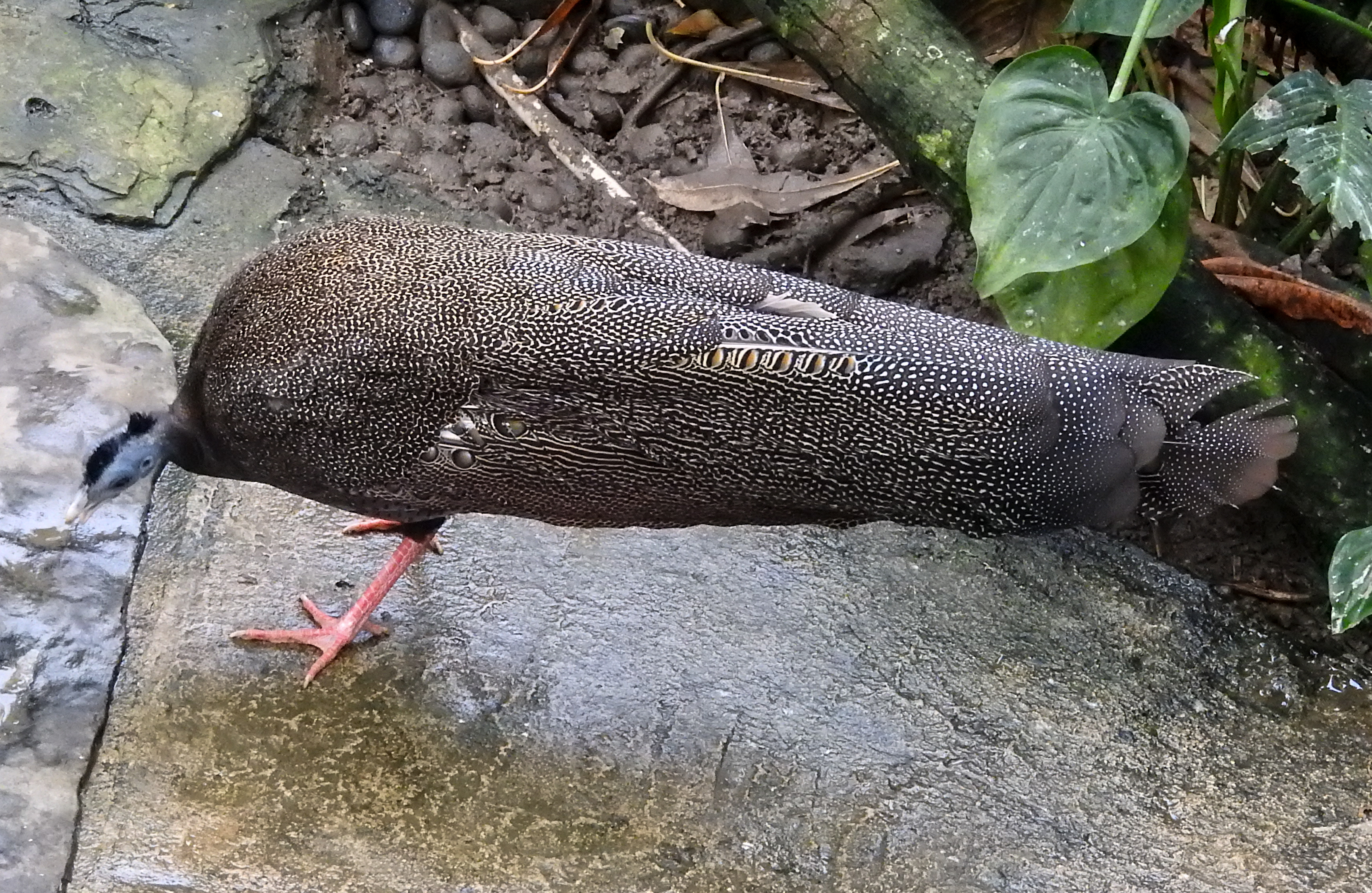
2-6-2023 BALI BIRD PARK, BALI - GREAT ARGUS (Argusianus argus)
The great argus (Argusianus argus) is a species of pheasant from Southeast Asia.
Description
The great argus is a brown-plumaged pheasant with a blue head and neck, rufous red upper breast, black hair-like feathers on the crown and nape, and red legs.
Unusual among Galliformes, the great argus has no uropygial gland.
The male clears an open spot in the forest and prepares a dancing ground. He announces himself with loud calls to attract females, then he dances before her with his wings spread into two enormous fans, revealing hundreds of "eyes" while his real eyes are hidden behind it, staring at her.
Breeding
Despite displays similar to polygamous birds and though the great argus was thought to be polygamous in the wild, it has been discovered that it is actually monogamous. The hen lays only two eggs.
Distribution and habitat
The great argus is native to the jungles of Borneo, Sumatra and the Malay Peninsula in southeast Asia.
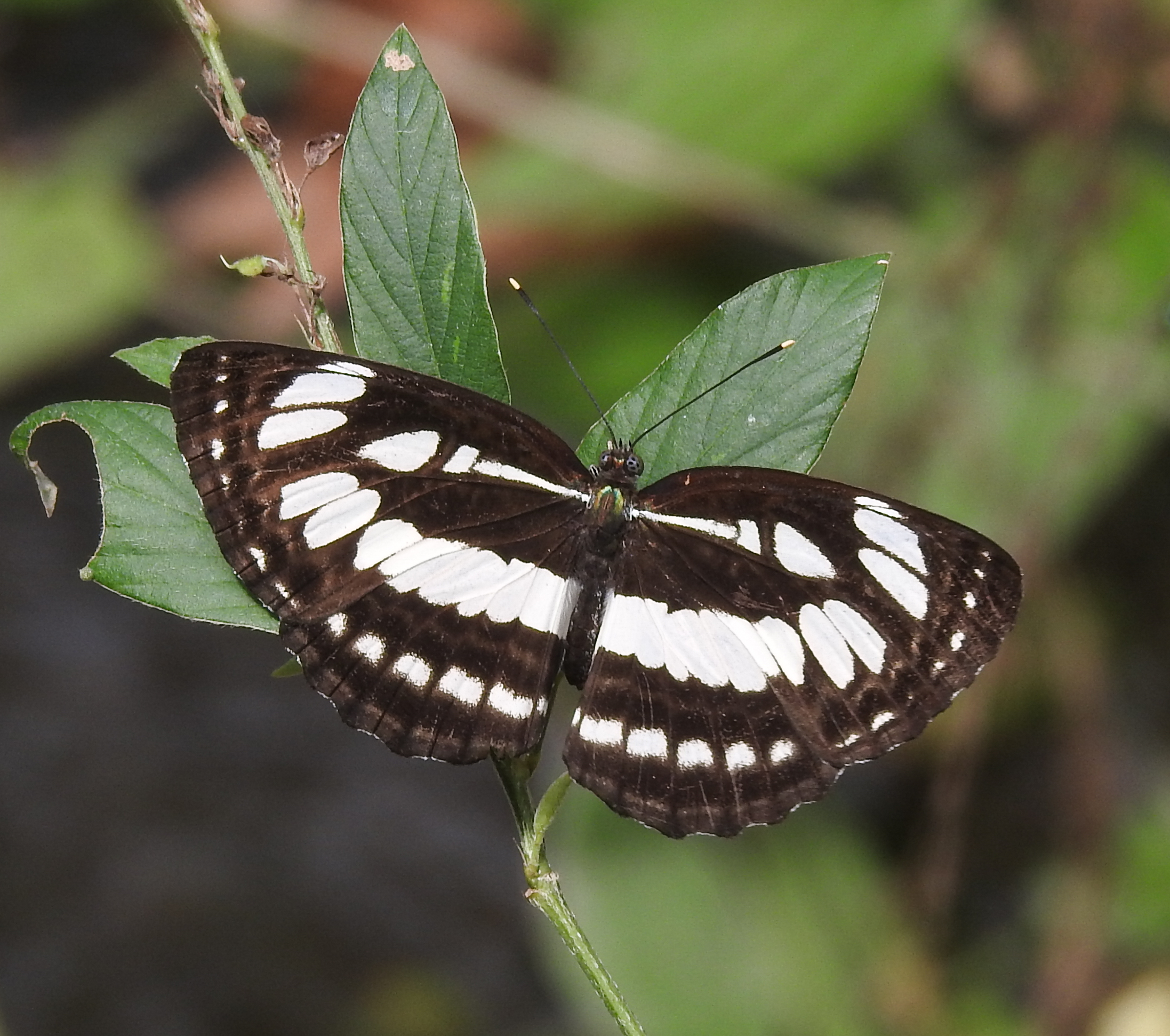
7-6-2023 UBUD, BALI - COMMON SAILOR BUTTERFLY (Neptis hylas)
Neptis hylas, the common sailor, is a species of nymphalid butterfly found in the Indian subcontinent and southeast Asia. It has a characteristic stiff gliding flight achieved by short and shallow wingbeats just above the horizontal.
Tuesday, 6 June 2023
2-6-2023 BALI BIRD PARK, BALI - MALAYAN EGGFLY BUTTERFLY (Hypolimnas anomala)
Hypolimnas anomala, commonly known as the Malayan eggfly or crow eggfly, is a species of eggfly. Distribution and habitat
Distribution and habitat
This species is present as various subspecies in South East Asia (Moluccas, New Guinea, Australia). It especially occurs in lowlands and tropical rainforests, wastelands, hill parks and natural reserves.
Description
Hypolimnas anomala can reach a wingspan of 65–75 mm (2.6–3.0 in). These butterflies have brown forewings with a purple sheen. They show variable white markings. Usually there are a double row of white marginal spots and three pale streaks on each forewings. The hindwings are rather paler, with dark brown veins. The undersides of both wings are similar to the uppersides. In the adult butterflies only four legs are present. These butterflies mimic Euploea species.
Biology
Females lay golden in colour globular eggs in a large cluster on the underside of the leaves. They hatch after about 3–4 days. The 6th (and final) instarcaterpillars are black with yellow spots and spines. Also the head is yellow. with long black cephalic horns. They are gregarious and usually occur in large numbers.
They feed on leaves of Urticaceae (Pipturus argenteus, Pipturus arboresceus, Pouzolzia, Villebrunea species ) and Euphorbiaceae (Claoxylon).


%201.jpg)


%201.jpg)
%202.jpg)
%201.jpg)
%202.jpg)
%201.jpg)
%202.jpg)


%201.jpg)
%202.jpg)