TOTAL PAGEVIEWS

TRANSLATE

Thursday, 2 December 2021

2-6-2019 LINYANTI CAMP, BOTSWANA - NAMIBIAN GIRAFFE (Giraffa camelopardalis ssp. angolensis)


The Angolan giraffe (Giraffa giraffa angolensis), formerly (Giraffa camelopardalis angolensis) also known as the Namibian giraffe or smokey giraffe, is a subspecies of the Southern Giraffe that is found in northern Namibia, south-western Zambia, Botswana, western Zimbabwe and since mid-2023 again in Angola, after its reintroduction to Iona National Park.

In August 2025 after reviewing the scientific evidence the IUCN's Giraffe and Okapi Specialist Group recognised four distinct species of giraffe, the Northern Giraffe, Reticulated Giraffe, Masai Giraffe and Southern Giraffe. The Angolan Giraffe is now one of two subspecies of the Southern Giraffe. A previous 2009 genetic study on this subspecies suggests the northern Namib Desert and Etosha National Park populations each form a separate subspecies. 


However, genetic studies based on mitochondrial DNA do not support the division into two subspecies., but could identify giraffes in southern Zimbabwe as the Angolan giraffe, suggesting a further eastward distribution than expected.

This subspecies has large brown blotches with edges that are either somewhat notched or have angular extensions. The spotting pattern extends throughout the legs but not the upper part of the face. The neck and rump patches tend to be fairly small. The subspecies also has a white ear patch.


Home range size of giraffes was found to be larger in unproductive areas such as the Namib Desert and much smaller in more productive areas such as Lake Manyara National Park. However, that home range size could be affected by abiotic(e.g climate), biotic(e.g forage availability, predator densities) and human influence(e.g population growth).


As far as seasonal movements of giraffes were concerned, they were not as distinctive as those in other giraffe populations around the world. Male giraffe moves longer than female giraffe and also it has longer average daily movement (5.64 km compared to 1.87 km in 180 days during hot-dry season).

Angolan Giraffe tends to forage into the mountain during the cold-dry and early hot-dry season. It mainly eats Commiphora for living.

Approximately 13,000 animals are estimated to remain in the wild; and about 20 are kept in zoos.

1-12-2021 EL PALMAR, VALENCIA - EUROPEAN STONECHAT (MALE) (Saxicola rubicola)


1-12-2021 EL PALMAR, VALENCIA - EUROPEAN STONECHAT (FEMALE) (Saxicola rubicola)


1-12-2021 EL PALMAR, VALENCIA - GLOSSY IBIS (Plegadis falcinellus)


Wednesday, 1 December 2021

1-12-2021 EL PALMAR, VALENCIA - LITTLE EGRET (Egretta garzetta)


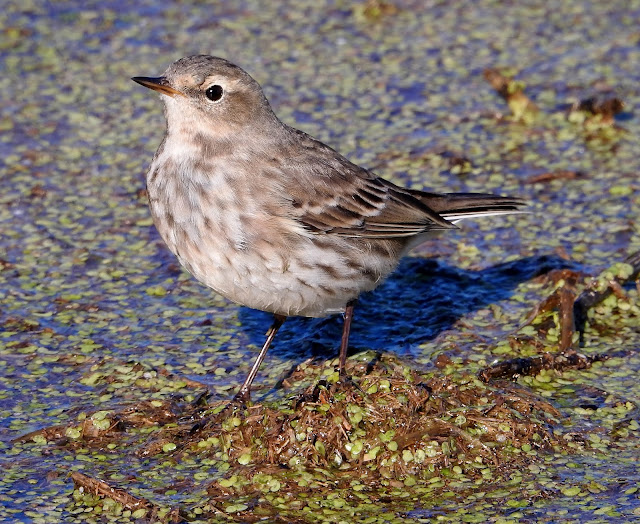
1-12-2021 EL PALMAR, VALENCIA - WATER PIPIT (Anthus spinoletta)


1-12-2021 MARJAL DE INTERIOR, ALBUFERA - CATTLE EGRET (Bubulcus ibis)


1-12-2021 MARJAL DE INTERIOR, ALBUFERA - LITTLE EGRET (Egretta garzetta)


1-12-2021 MARJAL DE INTERIOR, ALBUFERA - MEADOW PIPIT (Anthus pratensis)


1-12-2021 MARJAL DE INTERIOR, ALBUFERA - EUROPEAN STARLING (Sturnus vulgaris)


1-12-2021 RACO DE OLLA, VALENCIA - COMMON DARTER DRAGONFLY (FEMALE) (Sympetrum striolatum)


1-12-2021 EL PALMAR, VALENCIA - EUROPEAN ROBIN (Erithacus rubecula)


1-12-2021 MARJAL DE INTERIOR, ALBUFERA - NORTHERN LAPWING (Vanellus vanellus)


1-12-2021 LES PALMERES, VALENCIA - EUROPEAN STONECHAT (MALE) (Saxicola rubicola)


1-12-2021 SOLLANA, VALENCIA - EURASIAN KESTREL (Falco tinnunculus)


1-12-2021 MARJAL DE INTERIOR, ALBUFERA - EURASIAN KESTREL (Falco tinnunculus)


Tuesday, 30 November 2021

2-6-2019 LINYANTI CAMP, BOTSWANA - COMMON HAMERKOP (Scopus umbretta ssp. umbretta)


The hamerkop (Scopus umbretta), also called the umbrette, is a medium-sized bird. It is the only living species in the genus Scopus and the family Scopidae. The species and family was long thought to sit with the Ciconiiformes but is now placed with the Pelecaniformes, and its closest relatives are thought to be the pelicans and the shoebill. The shape of its head with a long bill and crest at the back is reminiscent of a hammer, which has given this species its name after the Afrikaans word for hammerhead. It is a medium-sized waterbird with brown plumage. It is found in mainland Africa, Madagascar and Arabia, living in a wide variety of wetlands, including estuaries, lakesides, fish ponds, riverbanks, and rocky coasts. The hamerkop is a sedentary bird that often shows local movements.


The hamerkop takes a wide range of prey, mostly fish and amphibians, but shrimps, insects and rodents are taken too. Prey is usually hunted in shallow water, either by sight or touch, but the species is adaptable and will take any prey it can. The species is renowned for its enormous nests, several of which are built during the breeding season. Unusually for a wading bird the nest has an internal nesting chamber where the eggs are laid. Both parents incubate the eggs, and raise the chicks.

The species is not globally threatened and is locally abundant in mainland Africa and Madagascar. The International Union for Conservation of Nature (IUCN) has assessed it as being of least concern.

30-11-2021 MONTE CORONA, VALENCIA - STINK BUG (Acrosternum heegeri)


30-11-2021 MONTE CORONA, VALENCIA - NORTHERN CADDISFLIES (Tribe Stenophylacini)


30-11-2021 MONTE CORONA, VALENCIA - SHIELDBACK KATYDID (Genus Thyreonotus)


30-11-2021 MONTE CORONA, VALENCIA - SHIELDBACK KATYDID (Thyreonotus corsicus)