TOTAL PAGEVIEWS

TRANSLATE

Tuesday, 7 December 2021

2-6-2019 LINYANTI, BOTSWANA - SENEGAL COUCAL (Centropus senegalensis)


2-6-2019 LINYANTI CAMP, BOTSWANA - GREATER BLUE EARED STARLING (Lamprotornis chalybaeus)


The Greater Blue-eared Starling is a medium-sized bird from sub-Saharan Africa known for its iridescent blue-green plumage, dark ear-patch, and bright yellow to orange eyes. They are omnivorous, feeding on fruit and insects, and are highly social, often forming large flocks. Their distinctive call is a nasal "squee-ar". 

Appearance
Size: About 22 cm long with a short tail.
Plumage: Glossy blue-green body with iridescent blue to purple flanks and belly. The feathers' color shifts with the light.
Distinctive features: A dark, mask-like patch around the eyes and a bright yellow or orange iris.
Sexes: Are similar in appearance, though juveniles are duller and have brown underparts. 

Diet
Omnivorous: Eats a variety of food, including fruit, insects, seeds, and nectar.
Foraging: Often forages on the ground and in trees. 

Monday, 6 December 2021

6-12-2021 BELLUS, VALENCIA - EURASIAN GREAT CORMORANT (Phalacrocorax carbo)


6-12-2021 BELLUS, VALENCIA - EURASIAN SISKIN (FEMALE) (Spinus spinus)


6-12-2021 BELLUS, VALENCIA - EURASIAN SISKIN (MALE)


6-12-2021 BELLUS, VALENCIA - GREY HERON (Ardea cinerea)


6-12-2021 BELLUS, VALENCIA - EURASIAN SISKIN (FEMALE) (Spinus spinus)


6-12-2021 BELLUS, VALENCIA - PAINTED LADY BUTTERFLY (Vanessa cardui)


Sunday, 5 December 2021

1-6-2019 LINYANTI CAMP, BOTSWANA - GREY GO AWAY BIRD (Corythaixoides concolor)


1-6-2019 LINYANTI CAMP, BOTSWANA - CHACMA BABOON (Papio ursinus)


Chacma baboons are found throughout southern Africa, ranging from South Africa north to Angola, Zambia, and Mozambique. They live in diverse habitats from woodlands to savannas, steppes, and sub-deserts. Chacma baboons are found in the Kalahari Desert as well as on the alpine slopes of the Drakensberg. They usually sleep on hills, cliffs, or large trees and during the day, avoid arid areas with a lack of water.

The Chacma baboon (Papio ursinus) is a member of the Old World monkey family. It is one of the largest of all monkeys. Located primarily in southern Africa, the chacma baboon has a wide variety of social behaviors, including a dominance hierarchy, collective foraging, adoption of young by females, and friendship pairings. In general, the species is not threatened, but hunting, trapping, and accidents kill or remove many baboons from the wild, thereby reducing their numbers and disrupting their social structure.

2-6-2019 LINYANTI CAMP, BOTSWANA - WESTERN LITTLE EGRET (Egretta garzetta ssp. garzetta)


The Little Egret, Egretta garzetta, is a dainty heron adorned in pure white plumage. It is characterized by a slender black beak, long black legs, and, notably in the western race, yellow feet. This elegant bird is a sight to behold with its graceful neck and poised stance.

Adult Little Egrets measure between 55–65 cm in length with a wingspan of 88–106 cm, and weigh 350–550 g. Their plumage is predominantly white, though some may exhibit bluish-grey coloration. Breeding adults boast ornate nape plumes reaching about 150 mm, along with distinctive feathers on the breast and elongated scapulars. The bill and lores are black, with greenish-grey skin at the base of the lower mandible and around the eye, which houses a yellow iris. Legs are black with contrasting yellow feet, though juveniles may have greenish-black legs and duller feet. The subspecies E. g. nigripes is distinguished by yellow skin between the bill and eye, and blackish feet. 

1-6-2019 LINYANTI CAMP, BOTSWANA - SOUTHERN GREATER KUDU (MALE) (Tragelaphus Strepsiceros)


5-12-2021 LLUTXENT, VALENCIA - EURASIAN BLACKCAP (MALE) (Sylvia atricapilla)


5-12-2021 LLUTXENT, VALENCIA - COMMON CHAFFINCH (FEMALE) (Fringilla coelebs)


5-12-2021 BELLUS, VALENCIA - SARDINIAN WARBLER (MALE)


5-12-2021 BELLUS, VALENCIA - EURASIAN RED SQUIRREL


Saturday, 4 December 2021

1-6-2019 LINYANTI CAMP, BOTSWANA - BLACKSMITH LAPWING (Vanellus armatus)


2-6-2019 LINYANTI, BOTSWANA - LITTLE BEE-EATER (Merops pasillas)


2-6-2019 LINYANTI CAMP, BOTSWANA - SOUTHERN CORDONBLEU (MALE) (Uraeginthus angolensis)


The blue waxbill (Uraeginthus angolensis), also called southern blue waxbill, blue-breasted waxbill, southern cordon-bleu, blue-cheeked cordon-bleu, blue-breasted cordon-bleu and Angola cordon-bleu, is a common species of estrildid finch found in Southern Africa. It is also relatively commonly kept as an aviary bird.

The blue waxbill has powder-blue face, breast, rump, and flanks with pale brown upperparts. The female is paler than the male and the blue is confined to the rump, tail, head, and upper breast, with the rest of the underparts being buffy brown. They measure 12–13 cm in length.


The call is a soft 'seee-seee', often repeated as bird flits through the lower parts of bush and scrub.
The blue waxbill occurs in southern Africa from Cabinda and the Congo to Kenya and Tanzania in the east south to northern South Africa. It may have been introduced to the islands of São Tomé and to Zanzibar.

The blue waxbill occurs in a variety of habitats but generally prefers well-watered and semi-arid savanna, particularly where umbrella thorns Vachellia tortilis grow, also occupying natural growth in cultivated land, mopane Colosphermum mopane and forest edges.

4-12-2021 BENIARBEIG, ALICANTE - COMMON COMMON CHIFFCHAFF (Phylloscopus collybita)


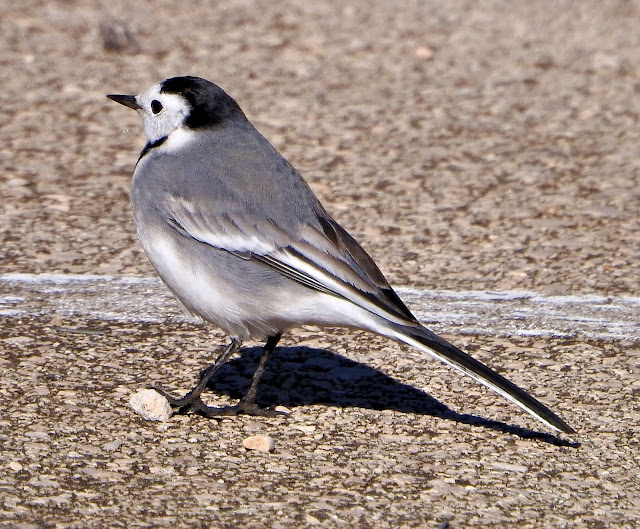
4-12-2021 RIO SERPIS GANDIA, VALENCIA - WHITE WAGTAIL (Motacilla alba)


Friday, 3 December 2021

2-6-2019 LINYANTI, BOTSWANA - NILE MONITOR (Varanus niloticus)


The Nile monitor (Varanus niloticus) is a large member of the monitor family (Varanidae) found throughout most of Sub-Saharan Africa, particularly in drier regions, and along the Nile River and its tributaries in East Africa. Additionally, there are modern, invasive populations in North America. The population found in West African forests and savannahs is sometimes recognized as a separate species, the West African Nile monitor (V. stellatus). While it is dwarfed by its larger relatives, such as the Komodo dragon, the Asian water monitor or the crocodile monitor, it is still one of the largest lizards in the world, reaching (and even surpassing) Australia's perentie in size. Other common names include the African small-grain lizard, as well as iguana and various forms derived from it, such as guana, water leguaan[6] or river leguaan (leguan, leguaan, and likkewaan mean monitor lizard in South African English, and can be used interchangeably).


A feral population of Nile monitors (descended from escaped or intentionally-released pets) has become established in several locations in South Florida. In addition to any illegally-released animals, it is speculated that during particularly intense hurricane seasons in Florida, many reptiles potentially escape when their enclosures are damaged or inadvertently unlocked; as Florida has a semi-tropical to tropical climate, many reptiles are housed outdoors, and poorly-secured enclosures may become damaged during bad storms. Along with Nile monitors, Florida is infamous for its feral populations of agamas, Argentine black and white tegus, Burmese pythons, green iguanas, Madagascar giant day geckos, and panther and veiled chameleons, among others. Many of these species are thought to be descendants of hurricane escapees.


Nile monitors are native to Sub-Saharan Africa and along the Nile. They are not found in any of the desert regions of Africa (notably Sahara, Kalahari and much of the Horn of Africa), however, they thrive around rivers. Nile monitors were reported to live in and around the Jordan River, Dead Sea, and wadis of the Judaean Desert in Israel until the late 19th century, though they are now extinct in the region.

There are few lizards less suited to life in captivity than the Nile monitor. Buffrenil (1992) considered that, when fighting for its life, a Nile monitor was a more dangerous adversary than a crocodile of a similar size. Their care presents particular problems on account of the lizards' enormous size and lively dispositions. Very few of the people who buy brightly-coloured baby Nile monitors can be aware that, within a couple of years, their purchase will have turned into an enormous, ferocious carnivore, quite capable of breaking the family cat's neck with a single snap and swallowing it whole.

3-12-2021 MARXUQUERA, VALENCIA - BLACK REDSTART (FEMALE) (Phoenicurus ochruros)