This Blog contains Wildlife, Plants and Bird Photos from Walks, Safaris, Birding Trips and Vacations. Most of the pictures have been taken with my Nikon P900 and P950X cameras. Just click on any image for a larger picture. On the right column under the Blog Archive are the entries by date. Below that under Animal categories all the diffent species of Animals, Birds, Insects and Plants contained in the website are listed. Clicking on any entry will show all the entries for that species.
TOTAL PAGEVIEWS
TRANSLATE
Wednesday, 26 February 2020
26-2-2020 PEGO MARJAL, ALICANTE - YELLOW IRIS (Iris pseudacorus)
26-2-2020 FONT EN CARROS, VALENCIA - EURASIAN KESTREL (Falco tinnunculus)
Males and females exhibit sexual dimorphism in their plumage. The male has a blue-grey cap and tail with a black tip bordered by a narrow white rim. Its back is chestnut with black spots, and the underside is buff with black streaks. The female is larger and lacks the blue-grey coloring, having a brown back with black bars and a similar underside to the male. Both sexes have a prominent black malar stripe, bright yellow cere, feet, and eye-ring, with dark toenails, bill, and iris.
The common kestrel favors open habitats such as fields, heaths, shrubland, and marshland. It does not require woodland but needs alternative perching and nesting sites like rocks or buildings. It thrives in treeless steppes and can adapt to human settlements and various landscapes, from wetlands to arid savannas.
The common kestrel is diurnal and can be sedentary or migratory, depending on the region. It is known for its characteristic hunting behavior, hovering 10-20 meters above the ground before diving steeply onto prey. It is also capable of seeing ultraviolet light, which aids in detecting the urine trails of small mammals.
Breeding occurs in spring or the start of the dry season, with the kestrel preferring cavity nests in cliffs, trees, or buildings. Clutches typically consist of 3-7 eggs, which are incubated by both parents. The young fledge after 4-5 weeks and stay with the family for a short period thereafter.
The common kestrel's diet consists almost exclusively of mouse-sized mammals, such as voles, shrews, and true mice. It may also consume small birds, particularly during the summer when fledglings are abundant. Invertebrates and arthropods can be significant food sources seasonally.
Tuesday, 25 February 2020
25-2-2020 MONTE CORONA, VALENCIA - CATALONIA WALL LIZARD (Podarcis liolepis)
Monday, 24 February 2020
24-2-2020 TORMOS, ALICANTE - ALMOND BLOSSOM (Prunus dulcis)
The almond (Prunus amygdalus, syn. Prunus dulcis) is a species of small tree from the genus Prunus, cultivated worldwide for its seed, a culinary nut. Along with the peach, it is classified in the subgenus Amygdalus, distinguished from the other subgenera by corrugations on the shell (endocarp) surrounding the seed.
The fruit of the almond is a drupe, consisting of an outer hull and a hard shell with the seed, which is not a true nut. Shelling almonds refers to removing the shell to reveal the seed. Almonds are sold shelled or unshelled. Blanched almonds are shelled almonds that have been treated with hot water to soften the seedcoat, which is then removed to reveal the white embryo. Once almonds are cleaned and processed, they can be stored over time. Almonds are used in many cuisines, often featuring prominently in desserts, such as marzipan.
The almond tree prospers in a moderate Mediterranean climate with cool winter weather. Native to Iran and surrounding countries including the Levant, today it is rarely found wild in its original setting. Almonds were one of the earliest domesticated fruit trees, due to the ability to produce quality offspring entirely from seed, without using suckers and cuttings. Evidence of domesticated almonds in the Early Bronze Age has been found in the archeological sites of the Middle East, and subsequently across the Mediterranean region and similar arid climates with cool winters.
California produces over half of the world's almond supply. Due to high acreage and water demand for almond cultivation, and need for pesticides, California almond production may be unsustainable, especially during the persistent drought and heat from climate change in the 21st century. Droughts in California have caused some producers to leave the industry, leading to lower supply and increased prices.
24-2-2020 TORMOS, ALICANTE - SPECKLED WOOD BUTTERFLY (Pararge aegeria)
The speckled wood (Pararge aegeria) is a butterfly found in and on the borders of woodland areas throughout much of the Palearctic realm. The species is subdivided into multiple subspecies, including Pararge aegeria aegeria, Pararge aegeria tircis, Pararge aegeria oblita, and Pararge aegeria insula. The color of this butterfly varies between subspecies. The existence of these subspecies is due to variation in morphology down a gradient corresponding to a geographic cline.
The background of the wings ranges from brown to orange, and the spots are either pale yellow, white, cream, or a tawny orange. The speckled wood feeds on a variety of grass species. The males of this species exhibit two types of mate locating behaviors: territorial defense and patrolling. The proportion of males exhibiting these two strategies changes based on ecological conditions. The monandrous female must choose which type of male can help her reproduce successfully. Her decision is heavily influenced by environmental conditions.
24-2-2020 TORMOS, ALICANTE - LARGE WHITE BUTTERFLY (Pieris brassicae)
The large white is common throughout Europe, North Africa and Asia.
The large white is common throughout Europe, north Africa, and Asia to the Himalayas often in agricultural areas, meadows and parkland. It has managed to establish a population in South Africa and in 1995 it was predicted to spread to Australia and New Zealand.
The large white is a strong flier and the British population has been reinforced in most years by migrations from the continent. Scattered reports of the large white from the north-eastern United States (New York, Rhode Island and Maine) over the past century are of a dubious nature and indicate either accidental transport or intentional release. Such introductions threaten to establish this agricultural pest in North America.
In 2010 the butterfly was found in Nelson, New Zealand where it is known as the great white butterfly.
24-2-2020 TORMOS, ALICANTE - PRINCESS TREE (Paulownia tomentosa)
This tree grows 10–25 m (33–82 ft) tall, with large heart-shaped to five-lobed leaves 15–40 cm (6–16 in) across, arranged in opposite pairs on the stem. On young growth, the leaves may be in whorls of three and be much bigger than the leaves on more mature growth. The leaves can be mistaken for those of the catalpa.
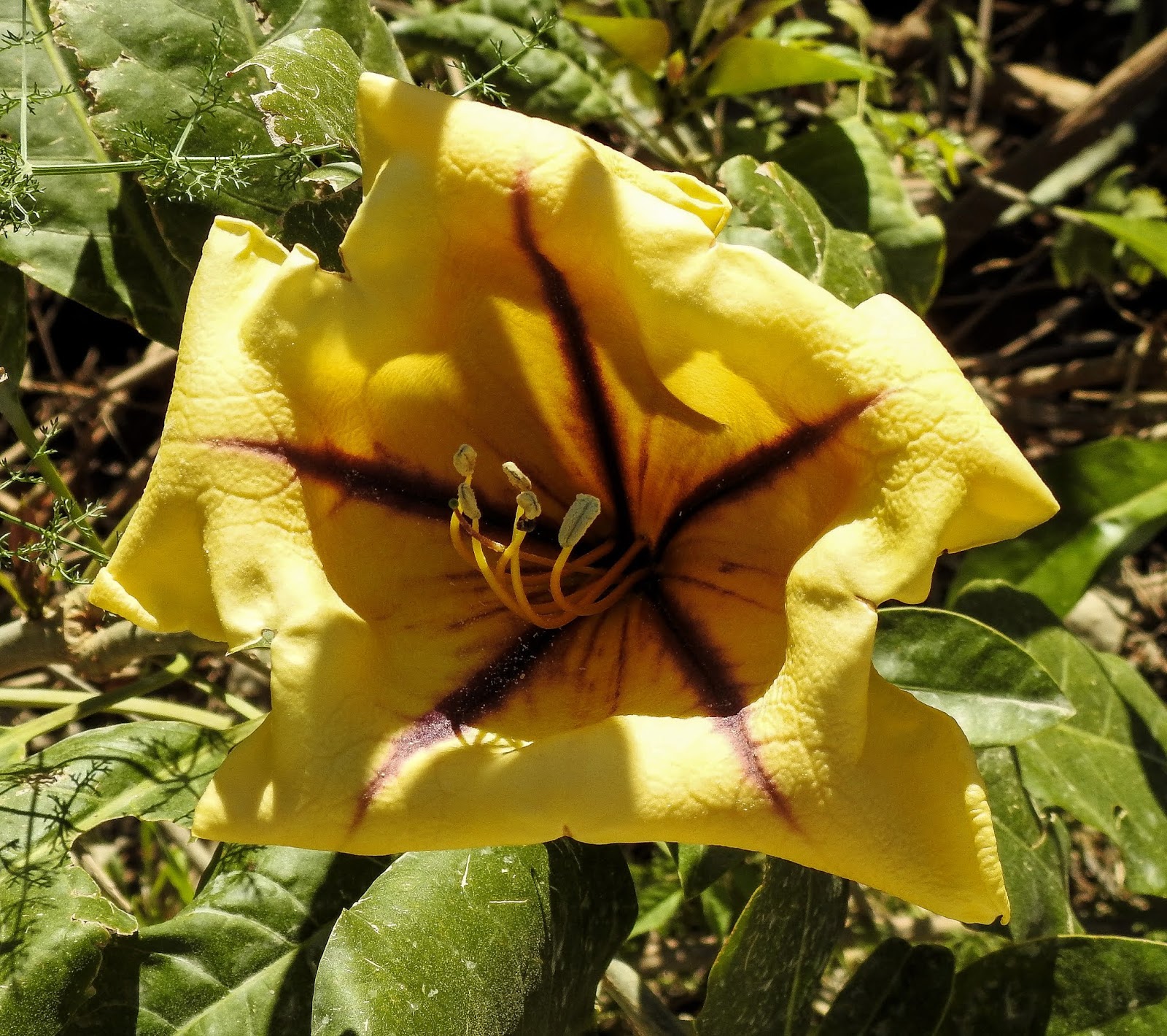
24-2-2020 TORMOS, ALICANTE - GOLDEN CHALICE VINE (Solandra maxima)
Sunday, 23 February 2020
2-8-2017 CENTRAL PARK, BUDAPEST - CLIPPER BUTTERFLY (Parthenos sylvia)
2-8-2017 BUDAPEST ZOO, HUNGARY - CENTRAL BEARDED DRAGON (Pogona vitticeps)
23-2-2020 MONTE CORONA, VALENCIA - EUROPEAN GREENFINCH (Chloris chloris)
Saturday, 22 February 2020
21-2-2020 VILLALONGA CAMPO, VALENCIA - HOUSE SPARROW (FEMALE) (Passer domesticus)
Males can be identified by their bright black, white, and brown markings, with a distinctive black bib, white cheeks, and a grey crown. Females lack the striking head patterns of males and are predominantly buffish with softer coloration. Juveniles resemble adult females but are generally paler with less defined markings.
The house sparrow is highly adaptable and can thrive in both urban and rural environments. It is commonly found in close association with human habitation and avoids dense forests, grasslands, polar regions, and deserts far from human development.
Native to Europe, the Mediterranean Basin, and much of Asia, the house sparrow has been introduced to various regions worldwide, including parts of Australasia, Africa, and the Americas, making it one of the most widely distributed wild birds.
22-2-2020 MONTE CORONA, VALENCIA - COTTON BOLLWORM MOTH (Carpocoris mediterraneus)
Friday, 21 February 2020
20-2-2020 OLIVA CANAL LES FONTS, VALENCIA - COMMON CHIFFCHAFF (Phylloscopus collybita)
In the field, look for the Common Chiffchaff's short whitish supercilium, fine dark bill, and dark legs. Its primary projection is short, and the plumage may appear duller and browner as it wears. Juveniles are browner above with yellow-white underparts, but they soon acquire brighter plumage after their first moult.
This species has a vast breeding range, extending from Europe to eastern Siberia and northward to about 70 N. It winters in southern and western Europe, southern Asia, and north Africa. The Common Chiffchaff is one of the earliest spring migrants to return to its breeding grounds and one of the last to depart in autumn.
The male Common Chiffchaff is fiercely territorial during the breeding season, defending its core territory against rivals. It exhibits a fearless nature, even attacking predators that threaten its nest. Outside the breeding season, these birds may form small flocks with other warblers.
The song is a cheerful "chiff-chaff," which heralds the arrival of spring. Calls include a "hweet" sound, less disyllabic than the calls of closely related warblers. The song is a key distinguishing feature from similar species, such as the Iberian Chiffchaff.
The Common Chiffchaff is classified as "Least Concern" by the IUCN, with an extensive range and large population. While one subspecies is likely extinct, the overall species does not face significant threats at present, and populations in some areas are increasing.


%2020.jpg)
%2021.jpg)