This Blog contains Wildlife, Plants and Bird Photos from Walks, Safaris, Birding Trips and Vacations. Most of the pictures have been taken with my Nikon P900 and P950X cameras. Just click on any image for a larger picture. On the right column under the Blog Archive are the entries by date. Below that under Animal categories all the diffent species of Animals, Birds, Insects and Plants contained in the website are listed. Clicking on any entry will show all the entries for that species.
TOTAL PAGEVIEWS
TRANSLATE
Thursday, 17 September 2020
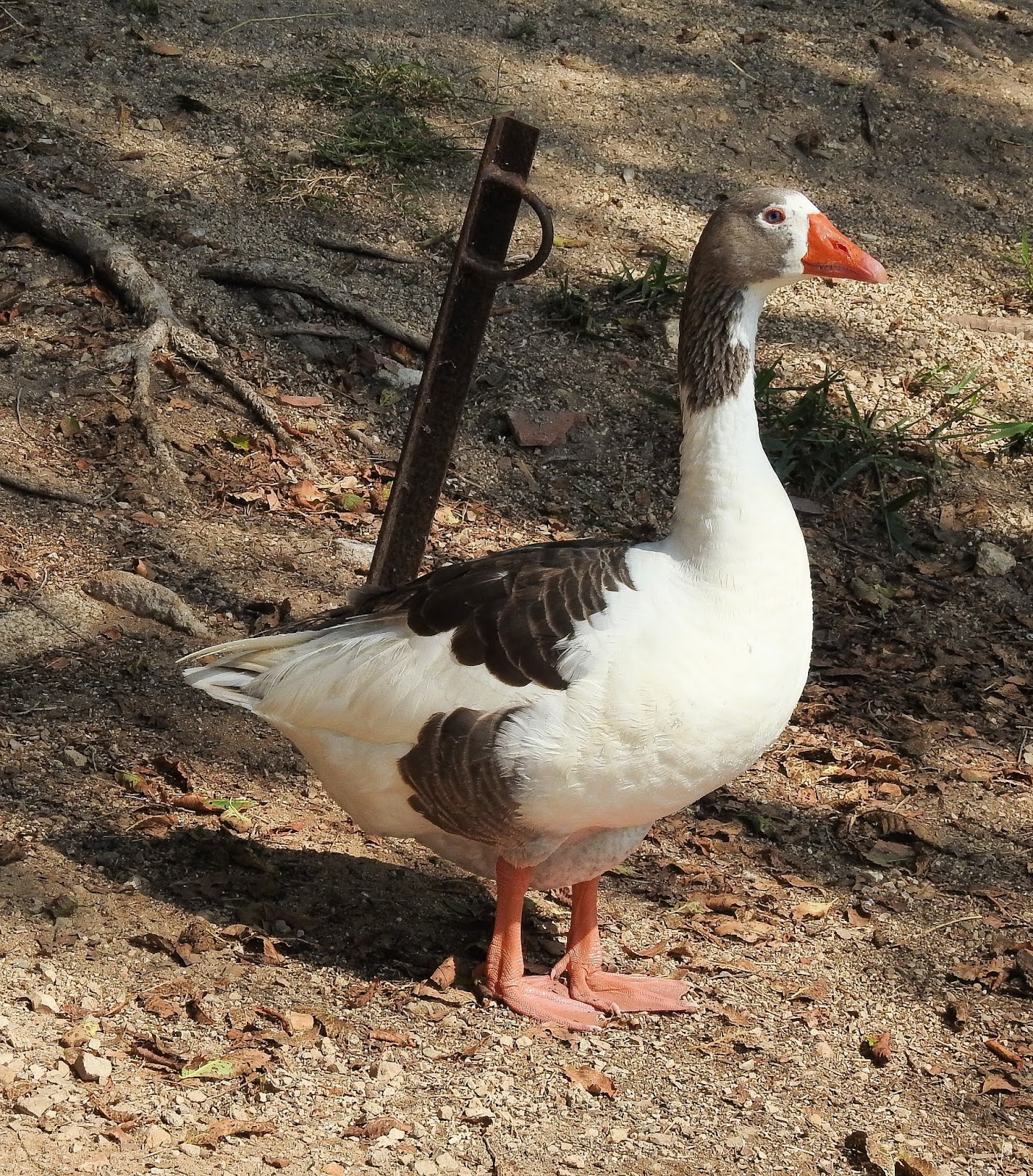
16-9-2020 L'ESTANY CULLERA, VALENCIA - GREYLAG GOOSE (Anser anser)
16-9-2020 RACO DE OLLA, VALENCIA - PIED AVOCET (Recurvirostra avosetta)
Adult pied avocets measure approximately 16.5–17.75 inches in length, with a wingspan stretching around 30–31.5 inches. Their long legs and upturned bills, measuring about 2.95–3.35 inches and 3–4 inches respectively, are key features for identification. Both sexes appear similar, while juveniles can be distinguished by their more greyish and sepia tones.
The pied avocet breeds across temperate Europe and extends across the Palearctic to Central Asia and the Russian Far East. It is a migratory species, with most individuals wintering in Africa or southern Asia. Some, however, remain in the milder parts of their range during winter, such as southern Spain and southern England.
Pied avocets forage in shallow waters or on mudflats, often employing a unique side-to-side scything motion with their bills to capture prey. They primarily consume crustaceans and insects. During the breeding season, they nest on open ground, often forming small groups and sometimes associating with other wader species. Their nests are typically lined scrapes or mounds of vegetation, where they lay three to five eggs.
16-9-2020 RACO DE OLLA, VALENCIA - RUFF (Calidris pugnax)
Ruffs are highly gregarious, especially during migration when they form large flocks. Males display at leks, with territorial males occupying small areas and satellite males attempting to mate within these territories. A third, rare male type mimics females to gain mating opportunities.
The ruff is generally silent, but during display, a soft "gue-gue-gue" may be heard.
Females lay four eggs in a well-hidden ground nest and incubate them alone. Chicks are mobile soon after hatching and are reared solely by the female. Males leave the breeding grounds early in the season.
Ruffs feed on insects, especially during the breeding season, and consume plant material, including rice and maize, during migration and winter. They forage in wet grassland and soft mud, probing or searching by sight for edible items.
Globally, the ruff is classified as "Least Concern" due to its large breeding numbers in Scandinavia and the Arctic. However, European populations are contracting and are listed as "Near Threatened" due to habitat loss and over-hunting. The species is protected under the Agreement on the Conservation of African-Eurasian Migratory Waterbirds (AEWA).
16-9-2020 RACO DE OLLA, VALENCIA - GREATER FLAMINGO (Phoenicopterus roseus)
16-9-2020 RACO DE OLLA, VALENCIA - MALLARD (MALE) (Anas platyrhynchos)
The Mallard, or wild duck (Anas platyrhynchos), is a familiar and widespread dabbling duck with a presence across temperate and subtropical regions of the Americas, Eurasia, and North Africa. It has also been introduced to parts of the Southern Hemisphere. The male is renowned for its iridescent green head and white collar, while the female sports a brown-speckled plumage. Both sexes boast a speculum—a patch of feathers with iridescent purple or blue hues bordered by white. The Mallard's length ranges from 50 to 65 cm, with a wingspan of 81 to 98 cm, and it typically weighs between 0.7 and 1.6 kg.
Males during the breeding season are unmistakable with their glossy green heads, white collars, and purple-tinged brown breasts. Females are mottled brown with buff cheeks and an eye-stripe. Both sexes have the distinctive speculum on their wings. The male's bill is yellowish-orange tipped with black, while the female's is darker, ranging from black to mottled orange and brown.
Mallards are found in a variety of wetlands, including parks, small ponds, rivers, lakes, and estuaries. They prefer water depths less than 0.9 meters and are drawn to areas with aquatic vegetation.
16-9-2020 RACO DE OLLA, VALENCIA - MALLARD (FEMALE) (Anas platyrhynchos)
The Mallard, or wild duck (Anas platyrhynchos), is a familiar and widespread dabbling duck with a presence across temperate and subtropical regions of the Americas, Eurasia, and North Africa. It has also been introduced to parts of the Southern Hemisphere. The male is renowned for its iridescent green head and white collar, while the female sports a brown-speckled plumage. Both sexes boast a speculum—a patch of feathers with iridescent purple or blue hues bordered by white. The Mallard's length ranges from 50 to 65 cm, with a wingspan of 81 to 98 cm, and it typically weighs between 0.7 and 1.6 kg.
Males during the breeding season are unmistakable with their glossy green heads, white collars, and purple-tinged brown breasts. Females are mottled brown with buff cheeks and an eye-stripe. Both sexes have the distinctive speculum on their wings. The male's bill is yellowish-orange tipped with black, while the female's is darker, ranging from black to mottled orange and brown.
Mallards are found in a variety of wetlands, including parks, small ponds, rivers, lakes, and estuaries. They prefer water depths less than 0.9 meters and are drawn to areas with aquatic vegetation.
16-9-2020 EMBARCADERO CATAROJA, VALENCIA - EURASIAN COLLARED DOVE (Streptopelia decaocto)
The Eurasian collared dove, also known as the collared dove or Turkish dove (Streptopelia decaocto), is a bird of modest size, presenting a grey-buff to pinkish-grey plumage that is slightly darker above than below. It is recognized by its distinctive black half-collar edged with white on its nape, from which it derives its name. The species exhibits a blue-grey underwing patch and a tail that is grey-buff above, with dark grey and white-tipped feathers below. The sexes appear similar, with juveniles displaying a less developed collar and a brown iris.
To identify the Eurasian collared dove, look for its medium size, slimmer and longer-tailed body compared to a rock pigeon, and a shorter stature than the wood pigeon. The red legs, black bill, and red iris surrounded by a small area of bare skin, which may appear white or yellow, are key features. The bird's song, a three-part cooing "goo-GOO-goo," and a harsh screeching call are also distinctive identifiers.
16-9-2020 ESTANY CULLERA, VALENCIA - EURASIAN COOT (Fulica atra)
16-9-2020 ULLAL DE BALDOVI, VALENCIA - LITTLE GREBE (Tachybaptus ruficollis)
The Little Grebe, or Tachybaptus ruficollis, known colloquially as the dabchick, is the smallest European member of the grebe family. This diminutive water bird measures a mere 23 to 29 centimeters in length and is a common sight in open bodies of water across its range.
Like all grebes, it nests at the water's edge, since its legs are set very far back and it cannot walk well. Usually four to seven eggs are laid. When the adult bird leaves the nest it usually takes care to cover the eggs with weeds. This makes it less likely to be detected by predators. The young leave the nest and can swim soon after hatching, and chicks are often carried on the backs of the swimming adults. In India, the species breeds during the rainy season.
16-9-2020 EL PALMAR, VALENCIA - RED SWAMP CRAYFISH (Procambarus clarkii)
16-9-2020 EL PALMAR, VALENCIA - WESTERN CATTLE EGRET (Bubulcus ibis ssp. ibis)
The western cattle egret (Bubulcus ibis) is a species of heron (family Ardeidae) found in the tropics, subtropics and warm temperate zones. Most taxonomic authorities lump this species and the eastern cattle egret together (called the cattle egret), but some (including the International Ornithologists' Union) separate them. Despite the similarities in plumage to the egrets of the genus Egretta, it is more closely related to the herons of Ardea. Originally native to parts of Asia, Africa and Europe, it has undergone a rapid expansion in its distribution and successfully colonised much of the rest of the world in the last century.
It is a white bird adorned with buff plumes in the breeding season. It nests in colonies, usually near bodies of water and often with other wading birds. The nest is a platform of sticks in trees or shrubs. Western cattle egrets exploit drier and open habitats more than other heron species. Their feeding habitats include seasonally inundated grasslands, pastures, farmlands, wetlands and rice paddies. They often accompany cattle or other large mammals, catching insect and small vertebrate prey disturbed by these animals. Some populations of the cattle egret are migratory and others show post-breeding dispersal.
Wednesday, 16 September 2020
16-9-2020 CATARROJA, VALENCIA - EURASIAN MAGPIE (Pica pica)
The range of the magpie extends across temperate Eurasia from Portugal, Spain and Ireland in the west to the Kamchatka Peninsula.
16-9-2020 RACO DE OLLA, VALENCIA - RUFF (Calidris pugnax)
The ruff is generally silent, but during display, a soft "gue-gue-gue" may be heard.
Females lay four eggs in a well-hidden ground nest and incubate them alone. Chicks are mobile soon after hatching and are reared solely by the female. Males leave the breeding grounds early in the season.
Ruffs feed on insects, especially during the breeding season, and consume plant material, including rice and maize, during migration and winter. They forage in wet grassland and soft mud, probing or searching by sight for edible items.
Globally, the ruff is classified as "Least Concern" due to its large breeding numbers in Scandinavia and the Arctic. However, European populations are contracting and are listed as "Near Threatened" due to habitat loss and over-hunting. The species is protected under the Agreement on the Conservation of African-Eurasian Migratory Waterbirds (AEWA).
Tuesday, 15 September 2020
15-9-2020 MONTE CORONA, VALENCIA - ROSY TABBY MOTH (Endotricha flammealis)
14-9-2020 MONTE CORONA, VALENCIA - CATALONIA WALL LIZARD (Podarcis liolepis)
Monday, 14 September 2020
15-9-2020 EL HONDO, MURCIA - EURASIAN DOTTERAL (Charadrius morinellus)
14-9-2020 MONTE CORONA, VALENCIA - MEDITERRANEAN KATYDID (Phaneroptera nana)
This bush cricket is native to mainland Europe, the Near East and North Africa. The Indo-Malayan species Phaneropera subcarinata, described by Bolívar, is morphologically similar to P. nana, and was classified under the P. nana name by Carl Brunner von Wattenwyl. As an invasive species, it has spread to the San Francisco Bay Area and may be widespread in the Los Angeles Basin, with records of its presence in California dating from at least 1952. In addition, it has been recorded in South America and hypothesized in the Annals of Carnegie Museum to have spread via shipping.
It mainly inhabits sunny and dry habitats, especially shrubs and low branches of trees.
13-9-2020 MONTE CORONA, VALENCIA - MEDITERRANEAN MANTIS (MALE) (Iris oratoria)
%20(Iris%20oratoria)%2020.jpg)
In Germany, M. religiosa is listed as Gefährdet on the German Red List on the basis of an assessment from 1998. It is not supposed to be caught or held as a pet. At a global level, it is assessed by the IUCN as least concern.
14-9-2020 MONTE CORONA, VALENCIA - GEOMETER MOTH (Charissa mucidaria)
Sunday, 13 September 2020
13-9-2020 MONTAVERNER, VALENCIA - EUROPEAN STONECHAT (FEMALE) (Saxicola rubicola)
European stonechats breed in heathland, coastal dunes and rough grassland with scattered small shrubs and bramble, open gorse, tussocks or heather. They are short-distance migrants or non-migratory, with part of the population (particularly from northeastern parts of the range, where winters are colder) moving south to winter further south in Europe and more widely in north Africa.
12-9-2020 MONTE CORONA, VALENCIA - MOORISH GECKO (Tarentola mauritanica)
The species was first described by Carl Linnaeus in 1758. It is also known as moorish gecko, crocodile gecko, European common gecko, and, regionally, as osga (in Portuguese), salamanquesa (in Spanish) and dragó (in Catalan).
Saturday, 12 September 2020
9-9-2020 BIOPARC, VALENCIA - DAMA GAZELLE (MALE) (Nanger dama)
The dama gazelle (Nanger dama), also known as the addra gazelle or mhorr gazelle, is a species of gazelle. It lives in Africa, in the Sahara desert and the Sahel. A critically endangered species, it has disappeared from most of its former range due to overhunting and habitat loss, and natural populations only remain in Chad, Mali, and Niger. Its habitat includes grassland, shrubland, semi-deserts, open savanna and mountain plateaus. Its diet includes shrubs, herbs, grasses, leaves (especially Acacia leaves), shoots, and fruit.
In Niger, the dama gazelle has become a national symbol. Under the Hausa name meyna or ménas, the dama gazelle appears on the badge of the Niger national football team, who are popularly called the Ménas.
9-9-2020 BIOPARC, VALENCIA - SUPERB STARLING (Lamprotornis superbus)
This species is 18 to 19 cm (7.1 to 7.5 in) in height. These small short-tailed starlings have a long narrow bill, robust bodies, strong feet and a distinctive plumage pattern. Their spectacular iridescent plumage is due to the arrangement of melanin granules within the feathers, resulting in structural blues and greens, rather than colors derived from pigments. The appearance of the superb starling is very similar to the Hildebrandt's starling, also found in East Africa. The superb starling is distinguished by having pale creamy-white eyes, as opposed to red eyes in the Hildebrandt's. Moreover, only adult superb starlings have a white breast band.


%2020.jpg)
%2021.jpg)
%2020.jpg)
%2021.jpg)


%2020.jpg)
%2021.jpg)


%2020.jpg)

%2020.jpg)

%2022.jpg)
%2020-topaz-upscale-1.4x.jpg)

%2020-topaz-upscale-1.7x.jpg)

%2020.jpg)


