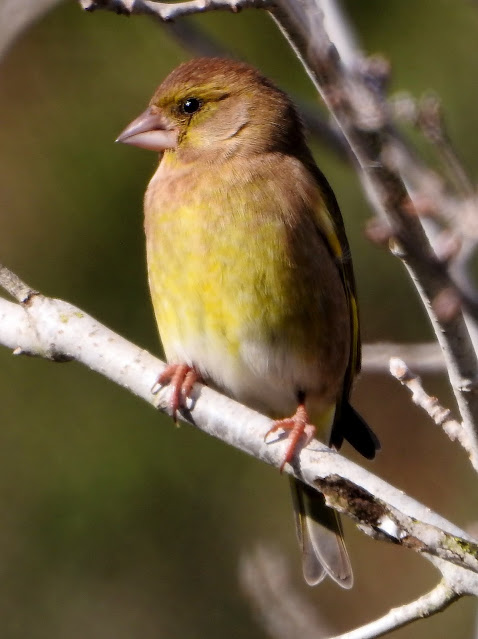
This Blog contains Wildlife, Plants and Bird Photos from Walks, Safaris, Birding Trips and Vacations. Most of the pictures have been taken with my Nikon P900 and P950X cameras. Just click on any image for a larger picture. On the right column under the Blog Archive are the entries by date. Below that under Animal categories all the diffent species of Animals, Birds, Insects and Plants contained in the website are listed. Clicking on any entry will show all the entries for that species.
TOTAL PAGEVIEWS
TRANSLATE
Tuesday, 30 November 2021
Monday, 29 November 2021
Sunday, 28 November 2021
2-6-2019 LINYANTI CAMP, BOTSWANA - COMMON BULBUL (Pycnonotus barbatus)
The common bulbul, or Pycnonotus barbatus, is a passerine bird belonging to the bulbul family. It is characterized by a fairly short, thin bill with a slightly downward curve on the upper mandible. The plumage is similar for both sexes, featuring a dark brown head and upperparts. The bird's bill, legs, and feet are black, and it possesses a dark brown eye with an inconspicuous dark eye-ring. With a length of about 18 cm (7.1 in), the common bulbul has a notably long tail.
When identifying the common bulbul, look for its dark brown head and upperparts, and its long tail. The black bill, legs, and feet are also distinctive, as is the dark brown eye. The eye-ring may be difficult to discern. The bird's overall length and silhouette are key features to observe.
The common bulbul is adaptable and can be found in a variety of habitats including woodland, coastal bush, forest edges, riverine bush, montane scrub, and mixed farming areas. It also thrives in exotic thickets, gardens, and parks.
This species is a widespread resident breeder across much of Africa, and has even been found breeding as far north as southern Spain. Its range extends from Morocco to Tunisia, southern Mauritania to western Chad and northern Cameroon, central Nigeria to Gabon and southern Congo, eastern Chad to northern and central Sudan and eastern Egypt, and in southeastern Sudan, western, central, and eastern Ethiopia, and Eritrea.
2-6-2019 LINYANTI CAMP, BOTSWANA - ZAMBESI CRESTED BARBET (Trachyphonus vaillantii ssp. nobilis)
Saturday, 27 November 2021
2-6-2019 LINYANTI, BOTSWANA - MAGPIE SHRIKE (Corvinella melanoleuca)
The magpie shrike is a long-tailed, black and white bird native to African savannas that hunts insects and small vertebrates by dropping onto them from a perch. It is known for its large size, glossy black head, white wing patches, and very long tail, which can be nearly as long as its body. These birds are social, live in small family groups, and are listed as a species of "least concern".
Physical characteristics
Size: 34–50 cm in length, including the long tail.
Plumage: Glossy black with white patches on the wings and a long, floppy, graduated tail.
Sexual dimorphism: The flanks are white in females and black in males.
Habitat and distribution
Habitat: Found in dry and moist savannas and sparse broadleaf woodlands. They often move into recently burned areas to forage.
Distribution: Native to eastern and southeastern Africa, including areas in Kenya, Tanzania, Angola, Namibia, Zambia, Zimbabwe, Botswana, and South Africa.
Behavior and diet
Hunting: Perch-and-wait predators that drop down on prey like insects, small lizards, and nestlings.
Social Structure: Live in small, non-migratory family groups of 3 to 10 birds.
Vocalizations: Noisy birds that make a shrill, starling- or parrot-like "pleeee-eouuu" and harsh, grating cries.
Food storage: Like other shrikes, they are known to impale prey on thorns or barbed wire to store for later, which is why some shrikes are informally called "butcher birds".
Reproduction
Courtship: Includes dancing and flight displays, with the male offering food to the female.
Nesting: Lays 2–6 eggs in a cup-shaped nest.
Incubation and care: The female incubates the eggs for about 16 days, often with food provided by the male and other group members. Both parents and previous offspring help care for the chicks, who leave the nest after 15–19 days.
Conservation status
Global status: Least Concern (LC) according to the IUCN.
Local status: Also listed as Least Concern in South Africa.
Subscribe to:
Comments (Atom)
%2020.jpg)
%2021.jpg)