TOTAL PAGEVIEWS

TRANSLATE

Wednesday, 8 December 2021

9-12-2021 CITY OF ARTS AND SCIENCES, VALENCIA - EURASIAN WIGEON (MALE) (Mareca penelope)


9-12-2021 CITY OF ARTS AND SCIENCES, VALENCIA - COMMON SHELDUCK (MALE) (Tadorna tadorna)


The common shelduck (Tadorna tadorna ) is a waterfowl species of the shelduck genus, Tadorna. It is widespread and common in the Euro-Siberian region of the Palearctic, mainly breeding in temperate and wintering in subtropical regions; in winter, it can also be found in the Maghreb.
Fossil bones from Dorkovo (Bulgaria) described as Balcanas pliocaenica may actually belong to this species. More likely, they are an extinct species of Tadorna (if not a distinct genus) due to their Early Pliocene age; the present species is not unequivocally attested from the fossil record until some 2–3 million years later (Late Pliocene/Early Pleistocene).


The common shelduck resembles a small short-necked goose in size and shape. It is a striking bird, with a reddish-pink bill, pink feet, a white body with chestnut patches and a black belly, and a dark green head and neck. The wing coverts are white, the primary remiges black, and the secondaries green (only showing in flight) and chestnut. The underwings are almost entirely white. Sexes are similar, but the female is smaller, with some white facial markings, while the male is particularly crisply coloured in the breeding season, his bill bright red and bearing a prominent knob at the forehead.


Ducklings are white, with black cap, hindneck and wing and back patches. Juveniles are similarly coloured, greyish above and mostly white below, but already have the adult's wing pattern.

The call is a loud honk.

Habitat The species shows a preference for saline habitats and frequents mudflats and muddy or sandy estuaries in coastal regions, and occurs inland on saline and brackish lakes in steppe or semi-desert.  Asiatic populations also occupy freshwater rivers or marshes and other populations utilise freshwater habitats on migration. 


Diet Its diet consists predominantly of salt-water molluscs (e.g. Hydrobia spp.) as well as other aquatic invertebrates (e.g. insects, crustaceans and worms), small fish, fish spawn and plant material (e.g. algae, seeds and agricultural grain)

Breeding site The nest is commonly positioned in a tree-hollow up to 8 m above the ground or in a mammal burrow (e.g. of European rabbit Oryctolagus cuniculus).  Rarely nests may also be placed in the open or in dense vegetation up to 1 km from water. The species will also nest in artificial nest-boxes.

9-12-2021 CITY OF ARTS AND SCIENCES, VALENCIA - COMMON SHELDUCK (FEMALE) (Tadorna tadorna)


The common shelduck (Tadorna tadorna ) is a waterfowl species of the shelduck genus, Tadorna. It is widespread and common in the Euro-Siberian region of the Palearctic, mainly breeding in temperate and wintering in subtropical regions; in winter, it can also be found in the Maghreb.
Fossil bones from Dorkovo (Bulgaria) described as Balcanas pliocaenica may actually belong to this species. More likely, they are an extinct species of Tadorna (if not a distinct genus) due to their Early Pliocene age; the present species is not unequivocally attested from the fossil record until some 2–3 million years later (Late Pliocene/Early Pleistocene).


The common shelduck resembles a small short-necked goose in size and shape. It is a striking bird, with a reddish-pink bill, pink feet, a white body with chestnut patches and a black belly, and a dark green head and neck. The wing coverts are white, the primary remiges black, and the secondaries green (only showing in flight) and chestnut. The underwings are almost entirely white. Sexes are similar, but the female is smaller, with some white facial markings, while the male is particularly crisply coloured in the breeding season, his bill bright red and bearing a prominent knob at the forehead.


Ducklings are white, with black cap, hindneck and wing and back patches. Juveniles are similarly coloured, greyish above and mostly white below, but already have the adult's wing pattern.

The call is a loud honk.

Habitat The species shows a preference for saline habitats and frequents mudflats and muddy or sandy estuaries in coastal regions, and occurs inland on saline and brackish lakes in steppe or semi-desert.  Asiatic populations also occupy freshwater rivers or marshes and other populations utilise freshwater habitats on migration. 

Tuesday, 7 December 2021

2-6-2019 LINYANTI CAMP, BOTSWANA - GREATER BLUE EARED STARLING (Lamprotornis chalybaeus)


The Greater Blue-eared Starling is a medium-sized bird from sub-Saharan Africa known for its iridescent blue-green plumage, dark ear-patch, and bright yellow to orange eyes. They are omnivorous, feeding on fruit and insects, and are highly social, often forming large flocks. Their distinctive call is a nasal "squee-ar". 

Appearance
Size: About 22 cm long with a short tail.
Plumage: Glossy blue-green body with iridescent blue to purple flanks and belly. The feathers' color shifts with the light.
Distinctive features: A dark, mask-like patch around the eyes and a bright yellow or orange iris.
Sexes: Are similar in appearance, though juveniles are duller and have brown underparts. 

Diet
Omnivorous: Eats a variety of food, including fruit, insects, seeds, and nectar.
Foraging: Often forages on the ground and in trees. 

Monday, 6 December 2021

6-12-2021 BELLUS, VALENCIA - EURASIAN GREAT CORMORANT (Phalacrocorax carbo)


6-12-2021 BELLUS, VALENCIA - EURASIAN SISKIN (FEMALE) (Spinus spinus)


6-12-2021 BELLUS, VALENCIA - EURASIAN SISKIN (MALE)


6-12-2021 BELLUS, VALENCIA - GREY HERON (Ardea cinerea)


6-12-2021 BELLUS, VALENCIA - EURASIAN SISKIN (FEMALE) (Spinus spinus)


6-12-2021 BELLUS, VALENCIA - PAINTED LADY BUTTERFLY (Vanessa cardui)


Sunday, 5 December 2021

1-6-2019 LINYANTI CAMP, BOTSWANA - CHACMA BABOON (Papio ursinus)


Chacma baboons are found throughout southern Africa, ranging from South Africa north to Angola, Zambia, and Mozambique. They live in diverse habitats from woodlands to savannas, steppes, and sub-deserts. Chacma baboons are found in the Kalahari Desert as well as on the alpine slopes of the Drakensberg. They usually sleep on hills, cliffs, or large trees and during the day, avoid arid areas with a lack of water.

The Chacma baboon (Papio ursinus) is a member of the Old World monkey family. It is one of the largest of all monkeys. Located primarily in southern Africa, the chacma baboon has a wide variety of social behaviors, including a dominance hierarchy, collective foraging, adoption of young by females, and friendship pairings. In general, the species is not threatened, but hunting, trapping, and accidents kill or remove many baboons from the wild, thereby reducing their numbers and disrupting their social structure.

2-6-2019 LINYANTI CAMP, BOTSWANA - WESTERN LITTLE EGRET (Egretta garzetta ssp. garzetta)


The Little Egret, Egretta garzetta, is a dainty heron adorned in pure white plumage. It is characterized by a slender black beak, long black legs, and, notably in the western race, yellow feet. This elegant bird is a sight to behold with its graceful neck and poised stance.

Adult Little Egrets measure between 55–65 cm in length with a wingspan of 88–106 cm, and weigh 350–550 g. Their plumage is predominantly white, though some may exhibit bluish-grey coloration. Breeding adults boast ornate nape plumes reaching about 150 mm, along with distinctive feathers on the breast and elongated scapulars. The bill and lores are black, with greenish-grey skin at the base of the lower mandible and around the eye, which houses a yellow iris. Legs are black with contrasting yellow feet, though juveniles may have greenish-black legs and duller feet. The subspecies E. g. nigripes is distinguished by yellow skin between the bill and eye, and blackish feet. 

1-6-2019 LINYANTI CAMP, BOTSWANA - SOUTHERN GREATER KUDU (MALE) (Tragelaphus Strepsiceros)


The Greater kudu (Tragelaphus strepsiceros) is a woodland antelope found in Africa. Despite occupying such widespread territory, Greater kudus are sparsely populated in most areas due to declining habitat, deforestation, and poaching.

Greater kudus have a narrow body with long legs, and their coats can range from brown/bluish-grey to reddish-brown. They possess between 4 and 12 vertical white stripes along their torso. The head is usually darker in color than the rest of the body and exhibits a small white v-shaped mark that runs between the eyes. Bulls tend to be much larger than cows, and vocalize much more; they also have beards running along their throats and large horns with two and a half twists.

The range of Greater kudu extends from the east in Ethiopia, Tanzania, Eritrea, and Kenya into the south where they are found in Zambia, Angola, Namibia, Botswana, Zimbabwe, and South Africa. Other regions where they occur are the Central African Republic, Chad, the Democratic Republic of the Congo, Djibouti, Malawi, Mozambique, Somalia, Swaziland, and Uganda. These antelopes live in mixed scrub woodlands and bush on abandoned fields and degraded pastures, mopane bush, and acacia in lowlands, hills, and mountains. They will occasionally venture onto plains only if there is a large abundance of bushes but normally avoid such open areas to avoid becoming an easy target for their predators.

5-12-2021 LLUTXENT, VALENCIA - EURASIAN BLACKCAP (MALE) (Sylvia atricapilla)


5-12-2021 LLUTXENT, VALENCIA - COMMON CHAFFINCH (FEMALE) (Fringilla coelebs)


5-12-2021 BELLUS, VALENCIA - SARDINIAN WARBLER (MALE) (Sylvia melanocephala)


The Sardinian warbler (Curruca melanocephala) is a common and widespread Sylviidae warbler from the Mediterranean region. Like most Curruca species, it has distinct male and female plumages. The adult male has a grey back, whitish underparts, black head, white throat and red eyes. Plumages are somewhat variable even in the same locality, with the intensity of a reddish hue on upper- and/or underside that varies from absent to (in some subspecies) pronounced. The female is mainly brown above and buff below, with a grey head. The Sardinian warbler's song is fast and rattling, and is very characteristic of the Mediterranean areas where this bird breeds.

5-12-2021 BELLUS, VALENCIA - EURASIAN RED SQUIRREL


Saturday, 4 December 2021

2-6-2019 LINYANTI CAMP, BOTSWANA - BLACKSMITH LAPWING (Vanellus armatus)


The Blacksmith Lapwing, known scientifically as Vanellus armatus, is a striking bird with a bold pattern of black, grey, and white, which may serve as a warning to predators. Its red eyes are a distinctive feature, shared with only four other lapwing species across the globe. Adorning the wrist joint is a carpal spur, a sharp black protrusion used in defense of their young, with aggressive aerial dives often aimed at the heads of intruders.

When identifying the Blacksmith Lapwing, look for its red eyes and the contrasting pied plumage. The bill and portions of the legs are black, with the legs sometimes showing a white-grey mottling. The sexes appear similar, though females tend to be slightly larger and heavier.


This lapwing species is commonly found in association with wetlands of varying sizes, from expansive marshes to the smallest damp areas caused by spilling water troughs. In South Africa, they are particularly abundant in mesic grassland regions.

The Blacksmith Lapwing is a common sight from Kenya through central Tanzania to southern and southwestern Africa. They have expanded their range in the 20th century, notably establishing a presence in the western Cape region of South Africa since the 1930s.

Partially migratory, the Blacksmith Lapwing does not engage in large-scale, regular migrations. They are known to be aggressive during the breeding season, particularly towards other lapwings or African jacanas entering their territory.


Breeding occurs in spring, with nests being shallow depressions on bare ground or short grass near water. The nests are typically spaced at least 400 meters apart. After breeding, the young gradually separate from their parents and do not return to their natal areas.

The diet of the Blacksmith Lapwing consists of aquatic and terrestrial invertebrates, which they forage for in their wetland habitats.

The IUCN Red List classifies the Blacksmith Lapwing as Least Concern, indicating that the species does not currently face a significant risk of extinction.

2-6-2019 LINYANTI, BOTSWANA - LITTLE BEE-EATER (Merops pasillas)


The Little Bee-eater, scientifically known as Merops pusillus, is a diminutive and vibrant member of the bee-eater family, Meropidae. This species is adorned with green upper parts and a yellow throat, complemented by a striking black gorget. The upper breast is a rich brown, which gently transitions to a buffish ochre on the belly. Their wings exhibit a blend of green and brown hues, while their beaks and legs are a stark black. Measuring a mere 15–17 cm in length, they hold the title of the smallest African bee-eater. Both males and females are similar in appearance.

When identifying the Little Bee-eater, look for its bright green upper parts, yellow throat, and the distinctive black gorget. The rich brown of the upper breast and the buffish ochre belly are also key characteristics. Their small size and black beak and legs can help distinguish them from other bee-eaters.

These birds favor open country with an abundance of bushes, showing a preference for areas near water sources.

The Little Bee-eater is a resident of Sub-Saharan Africa. Their movements are seasonal, often dictated by the patterns of rainfall rather than long-distance migration.


Little Bee-eaters are known for their abundance and tame nature within their range. They are often seen perched low, sometimes just a meter above the ground. They roost communally, aligning themselves neatly on a tree branch.

Typically a quiet species, the Little Bee-eater's call is a soft "seep," which can be heard intermittently.

Solitary nesters by nature, Little Bee-eaters excavate tunnels in sandy banks for their nests, occasionally utilizing the entrance of an Aardvark den. They lay a clutch of 4 to 6 spherical white eggs, with both parents sharing the responsibility of egg care.

True to their name, Little Bee-eaters primarily consume insects, with a particular fondness for bees, wasps, and hornets. They exhibit remarkable agility, capturing their prey mid-air from an open perch and then removing the stinger by striking the insect against a hard surface before consumption.

The Little Bee-eater is currently classified as Least Concern on the IUCN Red List, with an estimated population of 60 to 80 million individuals.

2-6-2019 LINYANTI CAMP, BOTSWANA - SOUTHERN CORDONBLEU (MALE) (Uraeginthus angolensis)


The blue waxbill (Uraeginthus angolensis), also called southern blue waxbill, blue-breasted waxbill, southern cordon-bleu, blue-cheeked cordon-bleu, blue-breasted cordon-bleu and Angola cordon-bleu, is a common species of estrildid finch found in Southern Africa. It is also relatively commonly kept as an aviary bird.

The blue waxbill has powder-blue face, breast, rump, and flanks with pale brown upperparts. The female is paler than the male and the blue is confined to the rump, tail, head, and upper breast, with the rest of the underparts being buffy brown. They measure 12–13 cm in length.


The call is a soft 'seee-seee', often repeated as bird flits through the lower parts of bush and scrub.
The blue waxbill occurs in southern Africa from Cabinda and the Congo to Kenya and Tanzania in the east south to northern South Africa. It may have been introduced to the islands of São Tomé and to Zanzibar.

The blue waxbill occurs in a variety of habitats but generally prefers well-watered and semi-arid savanna, particularly where umbrella thorns Vachellia tortilis grow, also occupying natural growth in cultivated land, mopane Colosphermum mopane and forest edges.

4-12-2021 BENIARBEIG, ALICANTE - COMMON COMMON CHIFFCHAFF (Phylloscopus collybita)


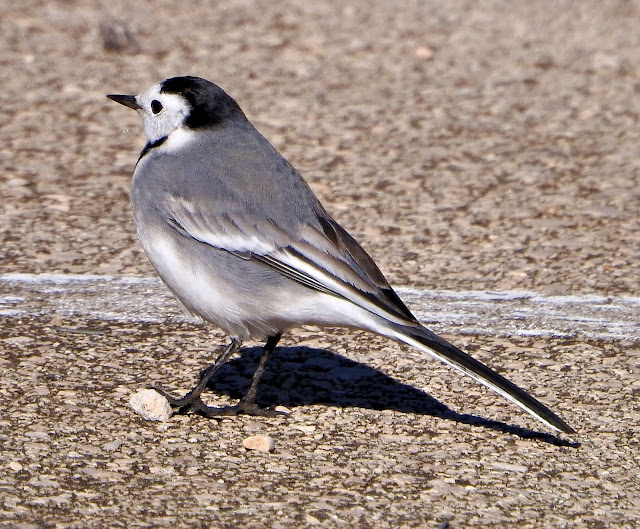
4-12-2021 RIO SERPIS GANDIA, VALENCIA - WHITE WAGTAIL (Motacilla alba)