TOTAL PAGEVIEWS

TRANSLATE

Sunday, 13 June 2021

30-5-2021 PERALVILLO, LA MANCHA - GREAT CRESTED GREBE (Podiceps cristatus)


The great crested grebe, Podiceps cristatus, is a water bird of the grebe family, notable for its striking black and white plumage and elaborate courtship displays. It is the largest grebe species found in the Old World, with some larger species in the Americas.

Adults are unmistakable in summer with ornate head and neck decorations. In winter, they are whiter than most grebes, with a distinctive white above the eye and a pink bill. Juveniles can be identified by their black and white striped heads, which they lose upon reaching adulthood.


This species prefers vegetated areas of freshwater lakes for breeding.

The great crested grebe has three subspecies: P. c. cristatus in Eurasia, P. c. infuscatus in Africa, and P. c. australis in Australia, Tasmania, and the South Island of New Zealand. The European subspecies migrates from colder regions, while the African and Australasian subspecies are mainly sedentary.

The call of the great crested grebe is a loud barking "rah-rah-rah," complemented by a clicking "kek" and deep growls.


The great crested grebe is an excellent swimmer and diver, pursuing fish underwater. Its mating display is particularly elaborate, involving synchronized dances and poses.

The call of the great crested grebe is a loud barking "rah-rah-rah," complemented by a clicking "kek" and deep growls.

Both sexes build the nest at the water's edge, and the average clutch consists of four chalky-white eggs. Incubation is shared, starting with the first egg and lasting 27 to 29 days. The precocial young are capable of swimming and diving almost immediately and are taught by the adults.


Both sexes build the nest at the water's edge, and the average clutch consists of four chalky-white eggs. Incubation is shared, starting with the first egg and lasting 27 to 29 days. The precocial young are capable of swimming and diving almost immediately and are taught by the adults.

Their diet mainly consists of fish, supplemented by small crustaceans, insects, small frogs, and newts.

The great crested grebe is listed as Least Concern by the IUCN. Conservation efforts in places like New Zealand's Lake Wānaka have been ongoing since 2013. The species has also been a beneficiary of early protection efforts by the Royal Society for the Protection of Birds in the United Kingdom.

30-5-2021 PERALVILLO, LA MANCHA - LITTLE EGRET (Egretta garzetta)


30-5-2021 TABLAS DE DAIMIEL, LA MANCHA - EURASIAN HOOPOE (Upupa epops)


The Eurasian hoopoe, with its scientific name Upupa epops, is a bird of unmistakable appearance. It boasts a warm cinnamon plumage, contrasted by striking black and white wings, and a prominent black-tipped, fan-like crest which it can raise and lower. Its tail features a broad white band across a black background. The hoopoe's long, narrow bill curves downwards, adept for probing the soil, and is black with a fawn base.

When identifying the Eurasian hoopoe, look for its unique silhouette, characterized by its long, tapering bill and erectile crest. In flight, its broad and rounded wings display a bold black and white pattern, and its undulating flight is reminiscent of a large butterfly. The hoopoe's size ranges from 25 to 32 cm in length, with a wingspan of 44 to 48 cm, and it weighs between 46 and 89 grams.


While the hoopoe's appearance is quite distinctive, its call can be confused with that of the Himalayan cuckoo in certain regions.

The hoopoe's diet consists mainly of insects, but it may also consume small reptiles, frogs, seeds, and berries. It uses its bill to probe the soil for larvae, pupae, and insects, which are then beaten against a surface to remove indigestible parts.

The Eurasian hoopoe is classified as "Least Concern" by the IUCN. However, there has been a noted decline in populations since 2008, attributed to habitat loss and over-hunting in certain areas. Conservation efforts are in place in regions where the species is threatened.

30-5-2021 TABLAS DE DAIMIEL, LA MANCHA - WHITE HEADED DUCK (MALE) (Oxyura leucocephala)


30-5-2021 PERALVILLO, LA MANCHA - CETTI'S WARBLER (Cettia cetti)


The Cetti's Warbler (Cettia cetti) is a small, elusive bird with a rich chestnut or dark reddish-brown upperparts and pale grey underparts. It has a rounded head with a narrow pale grey stripe over its conspicuous black eyes, and short, rounded wings. The tail is notably longer and broader than many other warblers, and this species is unique among passerines for having ten tail feathers instead of the usual twelve.


Males and females of the Cetti's Warbler are similar in plumage, but males are significantly heavier and have longer wings. The male's wing length exceeds 60 mm, while the female's is shorter than 55 mm. Juveniles resemble adults but can be distinguished by their fresher plumage and two dark spots on the tongue.

Cetti's Warblers are typically found in damp environments such as ponds, lakes, marshes, and riversides, where they can be heard if not always seen.


This species breeds across southern and central Europe, northwest Africa, and eastward to Afghanistan and northwest Pakistan. Since 1990, their numbers have increased across Europe, with stable or growing populations in Italy and Turkey. The UK saw its first record in 1961, and it is now a rare vagrant in Ireland.

Cetti's Warblers are known for their skulking habits, making them a challenge to observe. They are territorial, especially during the breeding season, with males establishing their domains and attracting multiple females.

30-5-2021 PERALVILLO, LA MANCHA - COMMON MALLOW (Malva sylvestris)


Malva sylvestris is a species of the mallow genus Malva, of which it the type species. Known as common mallow to English-speaking Europeans, it acquired the common names of cheeses, high mallow and tall mallow (mauve des bois by the French as it migrated from its native home in Western Europe, North Africa and Asia through the English-speaking world.

M. sylvestris is a vigorous plant with showy flowers of bright mauve-purple, with dark veins, standing 0.91–1.22 metres (3–4 ft) high and growing freely in meadows, hedgerows and in fallow fields.

30-5-2021 TABLAS DE DAIMIEL, LA MANCHA - CRESTED LARK (Galerida cristata)


The crested lark (Galerida cristata) is a small, non-migratory songbird (17–19 cm) known for its distinctive spiky, long crest and cheerful, musical warbling song. They thrive in dry, open habitats, including arid plains, agricultural fields, and disturbed urban areas, feeding primarily on seeds and insects. 

Habitat: They prefer dry, open, sparse vegetation like steppe, farmland, and semi-deserts, and are often seen near coastal areas and roadsides.

Appearance: A medium-sized lark with brownish streaking, a short tail, and a prominent crest that rises during display.


 Eggs & Breeding: Monogamous breeders that nest on the ground. They lay clutches of 3 to 5 eggs that are gray-white to brownish and finely speckled. They often raise two broods per year.

Diet: Primarily granivorous (seeds and grains) but also consume invertebrates like beetles, often digging for food in the ground.

Behavior: They are known to be non-migratory (sedentary) and often show high adaptability to human-modified landscapes, including airports and urban outskirts.

30-5-2021 PERALVILLO, LA MANCHA - MEADOW BROWN BUTTERFLY (Maniola jurtina)


The meadow brown (Maniola jurtina) is a butterfly found in the Palearctic realm. Its range includes Europe south of 62°N, Russia eastwards to the Urals, Asia Minor, Iraq, Iran, North Africa and the Canary Islands. The larvae feed on grasses.

There is marked sexual dimorphism in this species. The upperside of the male is uniformly light brown with a black ocellus centered white at the apex of the forewing, while the female has a tawny patch more or less extended around this ocella. The underside forewing is ochre-colored bordered with dark beige with the same ocelli at the apex in the male, while the hindwing is greyish to brown with a more or less orange band in the female. The males are also much more active and range far about, while females fly less and often may not move away from the area where they grew up.


 A variable number of smaller eyespots are usually found on the hindwing undersides. These may number up to twelve per butterfly, with up to six on each wing, but sometimes none. The factors that govern polymorphism in this trait are not resolved, although a number of theories have been proposed (Stevens 2005). On the other hand, the evolutionary significance of the upperwing eyespots is more obvious: The more active males have a markedly more cryptic upperside pattern, whereas the females have more opportunity to present their eyespots in a sudden display of colors and patterns that presumably startle predators so the butterfly has a better chance of escaping. Some specimens are bi-pupilled.

Saturday, 12 June 2021

29-5-2021 MORAL DE CALATRAVA, LA MANCHA - CRESTED LARK (Galerida cristata)


11-6-2021 MONTE CORONA, VALENCIA - WHITE WAGTAIL (Motacilla alba)


The White Wagtail (Motacilla alba) is a small, elegant passerine bird, a member of the family Motacillidae, which includes pipits and longclaws. This slender bird measures between 16.5 to 19 cm in length, with East Asian subspecies reaching up to 21 cm. It is characterized by its long, constantly wagging tail, a behavior that has become synonymous with the genus. Weighing an average of 25 g, the White Wagtail can live up to 12 years in the wild.

Adult White Wagtails exhibit a distinctive plumage with a combination of grey, black, and white. The bird's upper parts are generally grey, with a white face, belly, and breast. Males during the breeding season may show a darker back, and the species is known for its sharp, brisk call and more melodious song during courtship.

The White Wagtail is commonly found in open country, often in close proximity to human habitation and water sources. It shows a preference for bare areas which facilitate the sighting and pursuit of prey. This bird has adapted well to urban environments, utilizing paved areas such as parking lots for foraging.

12-6-2021 MONTE CORONA, VALENCIA - SPOTTED FLYCATCHER (Muscicapa striata)


12-6-2021 GANDIA, VALENCIA - SPECKLED WOOD BUTTERFLY (Pararge aegeria)


The speckled wood (Pararge aegeria) is a butterfly found in and on the borders of woodland areas throughout much of the Palearctic realm. The species is subdivided into multiple subspecies, including Pararge aegeria aegeria, Pararge aegeria tircis, Pararge aegeria oblita, and Pararge aegeria insula. The color of this butterfly varies between subspecies. The existence of these subspecies is due to variation in morphology down a gradient corresponding to a geographic cline.

The background of the wings ranges from brown to orange, and the spots are either pale yellow, white, cream, or a tawny orange. The speckled wood feeds on a variety of grass species. The males of this species exhibit two types of mate locating behaviors: territorial defense and patrolling. The proportion of males exhibiting these two strategies changes based on ecological conditions. The monandrous female must choose which type of male can help her reproduce successfully. Her decision is heavily influenced by environmental conditions.

Friday, 11 June 2021

30-5-2021 PERALVILLO, LA MANCHA - CORN BUNTING (Emberiza calandra)


30-5-2021 PERALVILLO, LA MANCHA - LOMATE BEE FLY (Genus Lomatia)


The term "Lomate Bee Flies" refers to the genus Lomatia, a group of bee flies belonging to the family Bombyliidae. These flies are classified within the subfamily Lomatiinae. Lomatia is a genus with numerous species, including Lomatia belzebul, Lomatia grajugena, and Lomatia shanguii.

Here's a more detailed breakdown:

Bee Flies (Bombyliidae):
This is a large family of flies known for their hairy bodies and often their ability to hover like bees while feeding on nectar. 
Lomatiinae:
This is a subfamily within the Bombyliidae, and Lomatia is a genus within this subfamily. 

Lomatia:
This genus contains numerous species of bee flies, characterized by their distinctive appearance and behavior. 
Species examples:
Some examples of Lomatia species include Lomatia belzebul, Lomatia grajugena, and Lomatia shanguii. 

29-5-2021 MERIDA, LA MANCHA - EURASIAN COLLARED DOVE (Streptopelia decaocto)


The Eurasian collared dove, also known as the collared dove or Turkish dove (Streptopelia decaocto), is a bird of modest size, presenting a grey-buff to pinkish-grey plumage that is slightly darker above than below. It is recognized by its distinctive black half-collar edged with white on its nape, from which it derives its name. The species exhibits a blue-grey underwing patch and a tail that is grey-buff above, with dark grey and white-tipped feathers below. The sexes appear similar, with juveniles displaying a less developed collar and a brown iris.

To identify the Eurasian collared dove, look for its medium size, slimmer and longer-tailed body compared to a rock pigeon, and a shorter stature than the wood pigeon. The red legs, black bill, and red iris surrounded by a small area of bare skin, which may appear white or yellow, are key features. The bird's song, a three-part cooing "goo-GOO-goo," and a harsh screeching call are also distinctive identifiers.

This species is often found in proximity to human habitation, particularly where food is plentiful and trees are available for nesting. It is not uncommon to see these doves frequenting bird tables and farms.

28-5-2021 MERIDA, ESTEMADURA - EUROPEAN GREENFINCH (Chloris chloris)


28-5-2021 MERIDA, ESTEMADURA - EUROPEAN GREENFINCH (Chloris chloris)


The European greenfinch, or simply greenfinch, is a small passerine bird belonging to the finch family Fringillidae. Exhibiting a predominantly green plumage with yellow accents on the wings and tail, the male is a vibrant sight, while the female and juveniles are more subdued with brownish tones. This bird measures approximately 15 cm in length with a wingspan ranging from 24.5 to 27.5 cm, resembling the size and shape of a house sparrow.

To identify the European greenfinch, look for its thick and conical bill, a characteristic of seed-eating birds. The male's plumage is a striking green with yellow flashes on the wings and tail, whereas the female and young birds are more muted with brownish backs. The male's display flight is akin to a butterfly, a dance to charm its mate.

The greenfinch favors woodland edges, farmland hedges, and gardens with dense vegetation for breeding. It nests in trees or bushes within these habitats.

This bird has a broad range across Europe, North Africa, and Southwest Asia. It is mainly sedentary, but some populations in the northernmost regions migrate southwards in colder months. The species has also been introduced to Australia, New Zealand, Uruguay, and Argentina.


The greenfinch is known for its social nature, often seen in flocks outside the breeding season. It exhibits a breeding season from March to June, with fledglings emerging in early July. The species is capable of producing multiple broods annually.

The song of the greenfinch is a delightful mix of trills and twitters, interspersed with distinctive wheezes, contributing to the rich tapestry of sounds in its natural environment.

The female greenfinch constructs the nest and incubates the eggs, typically laying 4-6 eggs per clutch. Eggs are incubated for about 13-14 days, with chicks being fed an insect larva-rich diet initially, followed by a seed paste as they grow.

Greenfinches have a varied diet consisting of seeds, berries, fruits, buds, flowers, and some arthropods. They forage in trees, bushes, and on the ground, adapting to available food sources.

28-5-2021 MERIDA, ESTEMADURA - MUSKOVY DUCK (Cairina moschata)


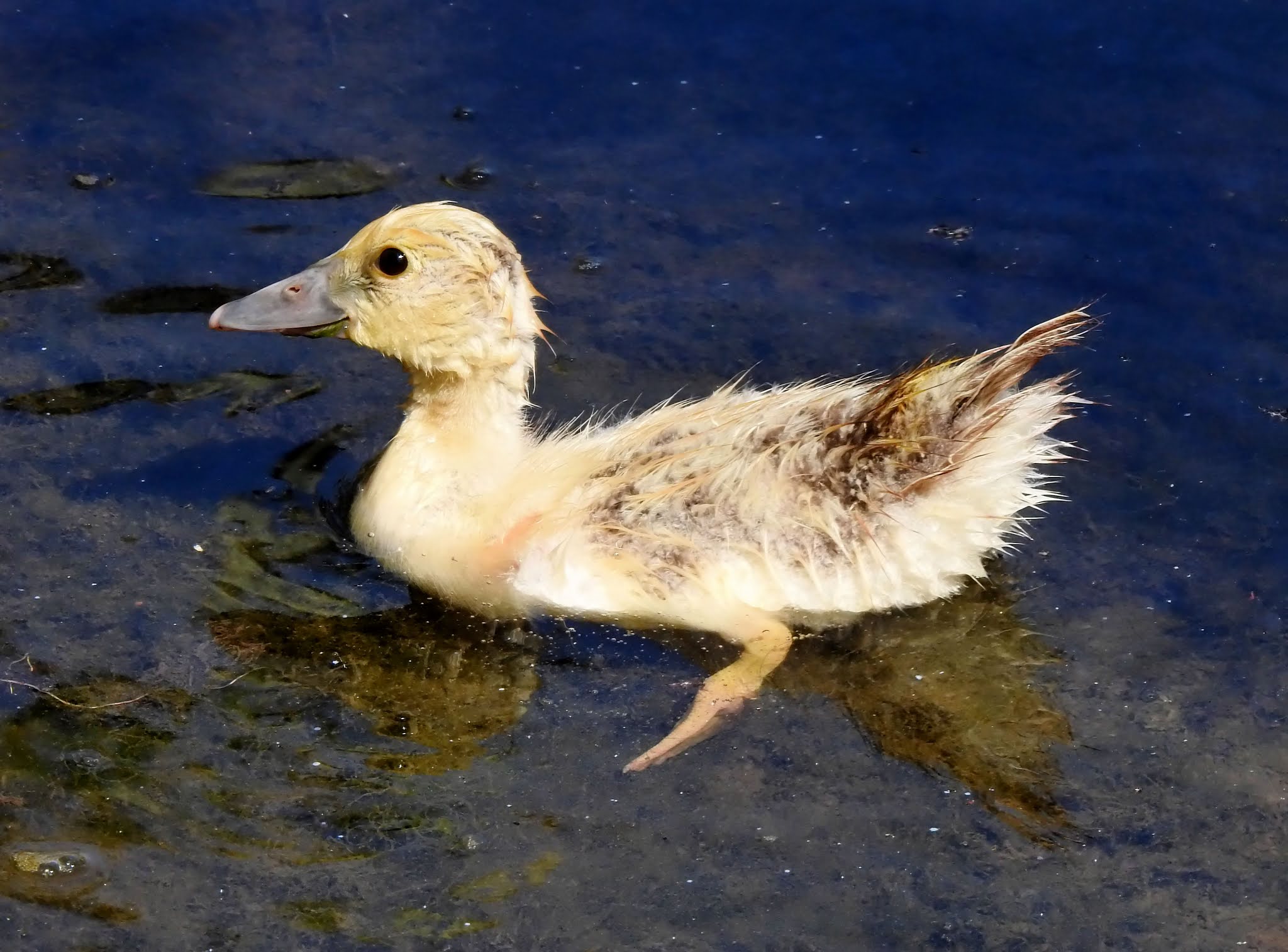
28-5-2021 MERIDA, ESTEMADURA - MUSKOVY DUCK (JUVENILE) (Cairina moschata)


28-5-2021 MERIDA, ESTEMADURA - EURASIAN COLLARED DOVE (JUVENILE) (Streptopelia decaocto)


 The Eurasian collared dove, also known as the collared dove or Turkish dove (Streptopelia decaocto), is a bird of modest size, presenting a grey-buff to pinkish-grey plumage that is slightly darker above than below. It is recognized by its distinctive black half-collar edged with white on its nape, from which it derives its name. The species exhibits a blue-grey underwing patch and a tail that is grey-buff above, with dark grey and white-tipped feathers below. The sexes appear similar, with juveniles displaying a less developed collar and a brown iris.

To identify the Eurasian collared dove, look for its medium size, slimmer and longer-tailed body compared to a rock pigeon, and a shorter stature than the wood pigeon. The red legs, black bill, and red iris surrounded by a small area of bare skin, which may appear white or yellow, are key features. The bird's song, a three-part cooing "goo-GOO-goo," and a harsh screeching call are also distinctive identifiers.

This species is often found in proximity to human habitation, particularly where food is plentiful and trees are available for nesting. It is not uncommon to see these doves frequenting bird tables and farms.

Thursday, 10 June 2021

8-6-2021 MONTE CORONA, VALENCIA - PEA BLUE BUTTERFLY (Lampides boeticus)


Lampides boeticus, the pea blue, or long-tailed blue, is a small butterfly that belongs to the lycaenids or gossamer-winged family.

The Latin species name boeticus refers to Baetica, a province of the Roman Empire in the Iberian Peninsula . Its common name refers to the long streamers on its hind wings, the male's bright iridescent blue colour, and peas, which is the typical host plant of the butterfly.

This species was first described by Carl Linnaeus in 1767 and was initially named Papilio boeticus.

This species can be found in Europe, Africa, South and Southeast Asia, and Australia. It is also found in the Hawaiian islands. It is also found in the Maldives.In New Zealand this species is regarded as being self introduced as was first observed in November 1965.

This species inhabits the edge of forests, mountain meadows and hot flowery places at an elevation up to 2,700 metres (8,900 ft) above sea level.

9-6-2021 CREU DE LONGA, ALBUFERA - SQUACCO HERON (Ardeola ralloides)


The Squacco Heron is a tawny buff brown heron with a streaked head and back, and in breeding a black and white mane.
Adult: The adult nonbreeding Squacco Heron has a head that is finely streaked in black, brown, and grey, forming a modest crown but no elongated plumes in nonbreeding season. The relatively large and powerful bill is pale green yellow with a black tip and top. The lores are dull yellow green. The irises are yellow. The hind neck, like the head, is finely streaked in black, brown and grey. The upperparts are buff brown with slight tawny tinge. The wings are white and are mostly concealed at rest by the back plumes. The plumes are shorter than in the breeding season. The rump and tail are white. Foreneck and breast are bright buff coarsely streaked in dark brown. The remaining underparts are white. The relatively short legs and the feet are dull yellow green.


In breeding plumage, the upper parts become brighter and deeper. The crown is a mane of yellow buff or straw-colored feathers. The crown feathers are slightly elongated (1-5 cm) and are bordered with black. Several very elongated feathers (13-14 cm long) occur on the back of the crown. These are white bordered with black, and extend over the upper back. The lores are green or blue. The lower neck and back plumes are golden to cinnamon buff. The foreneck and breast are red gold. During courtship, the bill becomes bright blue except for the dark to black tip. The lores turn briefly blue before reverting via emerald to yellow green. The irises in courtship are richer yellow. The back is pink brown, with longest back feathers being golden and drooping over the wings. The legs are bright red in courtship, fading to pink after pairing. The other soft parts colors return to normal after the eggs are laid.