TOTAL PAGEVIEWS

TRANSLATE

Monday, 8 November 2021

3-11-2021 BIOPARC, VALENCIA - EUROPEAN MOORHEN (Gallinula chloropus)


24-10-2021 ATTICA ZOO ATHENS, GREECE - KRI-KRI (Capra hircus ssp. cretica)


24-10-2021 ATTICA ZOO ATHENS, GREECE - AFRICAN PENGUIN (Spheniscus demersus)


5-11-2021 MONTE CORONA, VALENCIA - GEOMETER MOTH (Compsoptera opacaria)


8-11-2021 MARXUQUERA, VALENCIA - CATALONIA WALL LIZARD (Podarcis liolepis)


Podarcis liolepis, the Columbretes wall lizard or Catalan wall lizard, is very similar to the other lizards in the genus Podarcis. This species was formerly described as a subspecies of the Iberian wall lizard, but has now been elevated to species status. These are slender lizards with long tails, narrow tapered heads and long thin toes, and stout legs. Colours are variable, although generally grey-brown. Often very subtle spots and stripes along the back and flanks can be seen and these can be more distinguished in the female. The underside is a much lighter cream or beige with sometimes a reddish tint. Adults grow 15–20 cm in length from the nose to tip of the tail. Body length can be a little as one third of the total body length, the tail making up the other two thirds.

8-11-2021 MARXUQUERA, VALENCIA - CATALONIA WALL LIZARD (Podarcis liolepis)


8-11-2021 MARXUQUERA, VALENCIA - EUROPEAN ROBIN (Erithacus rubecula)


8-11-2021 MARXUQUERA, VALENCIA - RED ADMIRAL BUTTERFLY (Vanessa atalanta)


Sunday, 7 November 2021

3-11-2021 BIOPARC, VALENCIA - DAMA GAZELLE (Nanger dama)


The dama gazelle (Nanger dama), also known as the addra gazelle or mhorr gazelle, is a species of gazelle. It lives in Africa, in the Sahara desert and the Sahel. A critically endangered species, it has disappeared from most of its former range due to overhunting and habitat loss, and natural populations only remain in Chad, Mali, and Niger. Its habitat includes grassland, shrubland, semi-deserts, open savanna and mountain plateaus. Its diet includes shrubs, herbs, grasses, leaves (especially Acacia leaves), shoots, and fruit.

In Niger, the dama gazelle has become a national symbol. Under the Hausa name meyna or ménas, the dama gazelle appears on the badge of the Niger national football team, who are popularly called the Ménas.

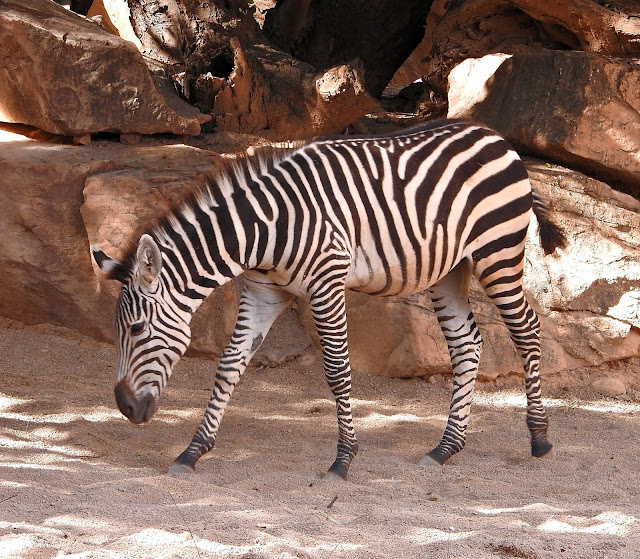
3-11-2021 BIOPARC, VALENCIA - GRANT'S ZEBRA (Equus quagga ssp. boehmi)


3-11-2021 BIOPARC, VALENCIA - WESTERN CATTLE EGRET (Bubulcus ibis ssp. ibis)


The western cattle egret (Bubulcus ibis) is a species of heron (family Ardeidae) found in the tropics, subtropics and warm temperate zones. Most taxonomic authorities lump this species and the eastern cattle egret together (called the cattle egret), but some (including the International Ornithologists' Union) separate them. Despite the similarities in plumage to the egrets of the genus Egretta, it is more closely related to the herons of Ardea. Originally native to parts of Asia, Africa and Europe, it has undergone a rapid expansion in its distribution and successfully colonised much of the rest of the world in the last century.

It is a white bird adorned with buff plumes in the breeding season. It nests in colonies, usually near bodies of water and often with other wading birds. The nest is a platform of sticks in trees or shrubs. Western cattle egrets exploit drier and open habitats more than other heron species. Their feeding habitats include seasonally inundated grasslands, pastures, farmlands, wetlands and rice paddies. They often accompany cattle or other large mammals, catching insect and small vertebrate prey disturbed by these animals. Some populations of the cattle egret are migratory and others show post-breeding dispersal.

3-11-2021 BIOPARC, VALENCIA - SPOTTED HYENA (Crocuta crocuta)


7-11-2021 MONTE CORONA, VALENCIA - SPECKLED WOOD BUTTERFLY (Pararge aegeria)


7-11-2021 MONTE CORONA, VALENCIA - MEDITERRANEAN MANTIS (FEMALE) (Iris oratoria)


7-11-2021 EL PALMAR, VALENCIA - HOUSE SPARROW (FEMALE) (Passer domesticus)


7-11-2021 EL PALMAR, VALENCIA - EUROPEAN STONECHAT (MALE) (Saxicola rubicola)


7-11-2021 EL PALMAR, VALENCIA - EUROPEAN STONECHAT (FEMALE) (Saxicola rubicola)


The female European Stonechat (Saxicola rubicola) is a small, perky songbird found across Europe. Unlike the striking, black-headed male, she has a mottled brown head and back with a subtle paler eyebrow and a warm, dull orange-tinged chest. Females are known for their habit of frequently flicking their wings while perched on low bushes or fences.

Physical Appearance & Identification

Size: Approximately 13 to 15 cm in length.

Head & Chest: Features a brown head (lacking the male's stark black hood) and a dull, washed-out orangey breast.

Plumage: Brown back, white patches on the wings and sides of the neck, and a paler rump in flight that contrasts with a solidly blackish tail.

Saturday, 6 November 2021

3-11-2021 BIOPARC, VALENCIA - RED CRESTED POCHARD (FEMALE) (Netta rufina)


3-11-2021 BIOPARC, VALENCIA - RED CRESTED POCHARD (MALE) (Netta rufina)


3-11-2021 BIOPARC, VALENCIA - EGYPTIAN GOOSE (Alopochen aegyptiaca)


3-11-2021 BIOPARC, VALENCIA - SOUTHERN LION (MALE) (Panthera leo ssp. melanochaita)


The Southern lion (Panthera leo melanochaita) is a subspecies inhabiting Southern and East Africa, often characterized by large males with dark, extensive manes. As Africa's largest cat, they live in social prides, with females acting as primary hunters. They are classified as Vulnerable, facing threats from habitat loss and human conflict.Physical and Biological FactsAppearance: 

They are the largest of Africa's big cats, with males often weighing over 190kg (up to 225kg+ in some regions) and standing over 3 meters from nose to tail.Manes: Southern males often possess large, dark manes, though color varies from blond to black based on age and climate.Adaptability: They are found in diverse habitats, including savanna grasslands, open woodlands, and semi-arid deserts.


The Southern lion is a lion subspecies from Southern and East Africa. In this region, lion populations were referred to by several regional names, including Katanga lion, Transvaal lion, Kalahari lion, Southeast African lion, Southwest African lion, Masai lion, Serengeti lion, Tsavo lion, and Uganda lion. It has also been referred to as 'Eastern-Southern African lion', 'Southern lion', and as 'southern subspecies'.


The fur of Southern lions varies in color from light buff to dark brown. They have rounded ears and a black tail tuft. Mane color varies from sandy, tawny, isabelline, and light reddish yellow to dark brown and black. Mane length varies from short to extending to knee joints and under the belly. Lions without a mane were observed in the Tsavo area. Mane development is related to age: older males have more extensive manes than younger ones; manes continue to grow up to the age of four to five years, long after lions become reproductively mature. 

Males living in the Kenyan highlands develop heavier manes than lions in the more humid and warmer lowlands of eastern and northern Kenya. White lions have occasionally been encountered in and around South Africa's Kruger National Park and the adjacent Timbavati Private Game Reserve. Their whitish fur is a rare morph caused by a double recessive allele. It has normal pigmentation in the eyes and skin. They were removed from the wild in the 1970s, thus decreasing the white lion gene pool.