TOTAL PAGEVIEWS

TRANSLATE

Wednesday, 10 November 2021

19-10-2021 KUSADASI, TURKEY - EGYPTIAN BIRD GRASSHOPPER (Anacridium aegyptium)


Anacridium aegyptium, the Egyptian grasshopper or Egyptian locust, is a species of insect belonging to the subfamily Cyrtacanthacridinae.

A fairly common species, the Egyptian grasshopper is present in most of Europe, the Afrotropical realm, eastern Palearctic realm, the Near East, and North Africa, and has recently been observed in Cape Town, South Africa.

These grasshoppers inhabit trees and shrubs, scrub land, maquis, and orchards in warm and bright environments, at an elevation from sea level to 1,500 m.

Anacridium aegyptium is one of the largest European grasshoppers. Adult males grow up to 30–56 mm (1.2–2.2 in) long, while females reach 46–70 mm (1.8–2.8 in) in length. Their bodies are usually gray, brown, or olive-coloured, and their antennae are relatively short and robust. The tibiae of the hind legs are blue, while the femora are orange. The hind femora have characteristic dark marks. They are also easily identified by their characteristic eyes, which have vertical black and white stripes. Their pronota show a dorsal orange stripe and several small white spots. The wings are clear with dark marks.

This species is a folivore, essentially feeding on leaves of various plants. It is a solitary species, harmless to crops. Adults are mainly seen in August and September, but they are active throughout the year. After mating, these grasshoppers overwinter as adults. Spawning occurs in spring just under the soil surface and the nymphs appear in April. These grasshoppers undergo several molts.  Nymphs differ from adults in appearance; their color varies from yellow to bright green and ocher and the wings are absent or small, as they are gradually developed after each molt.

19-10-2021 KUSADASI, TURKEY - SMALL WHITE BUTTERFLY (Pieris rapae)


Pieris rapae is a small-to-medium-sized butterfly species of the whites-and-yellows family Pieridae. It is known in Europe as the small white, in North America and the United Kingdom as the cabbage white or cabbage butterfly, on several continents as the small cabbage white, and in New Zealand as the white butterfly. The butterfly is recognizable by its white color with small black dots on its wings, and it can be distinguished from P. brassicae by the latter's larger size and black band at the tip of the forewings.


The caterpillar of this species, often referred to as the "imported cabbageworm", is a pest to crucifer crops such as cabbage, kale, bok choy and broccoli. Pieris rapae is widespread in Europe and Asia; it is believed to have originated in the Eastern Mediterranean region of Europe and to have spread across Eurasia thanks to the diversification of brassicaceous crops and the development of human trade routes. Over the past two centuries, it spread to North Africa (about 1800), North America (1860s), Hawaii (1897), New Zealand (1930), and Australia (1937), as a result of accidental introductions.

Tuesday, 9 November 2021

16-10-2021 AXIOS NAT PARK THESSALONIKI, GREECE - WESTERN MEDITERRANEAN HOUSE SPARROW (MALE)(Passer domesticus ssp .balearoibericus)


16-10-2021 AXIOS NAT PARK THESSALONIKI, GREECE - GREATER FLAMINGO (Phoenicopterus roseus)


The greater flamingo (Phoenicopterus roseus) is the most widespread and largest species of the flamingo family. Common in the Old World, they are found in Northern (coastal) and Sub-Saharan Africa, the Indian subcontinent (south of the Himalayas), the Middle East, the Levant, the Persian Gulf, the Gulf of Aden, the Red Sea, and the Mediterranean countries of Southern Europe.

It is found in parts of Northern Africa (including coastal areas of northern Algeria, Egypt further inland along the Nile River, Libya, Morocco, and Tunisia), portions of Sub-Saharan Africa (Kenya, Madagascar, Rwanda, Tanzania, Uganda), Southern Asia (coastal Bangladesh,India, Pakistan, and Sri Lanka), the Western Asia (Bahrain, Cyprus, Iraq, Iran, Oman, Israel, Palestine, Kuwait, Lebanon, Qatar, and the United Arab Emirates) and Southern Europe (including Albania, Bulgaria, Croatia, France in the Camargue and Corsica, Greece, Italy, Slovenia, Malta, Monaco, Montenegro, North Macedonia, Portugal, Spain and the Balearic Islands, and Turkey).

16-10-2021 AXIOS NAT PARK THESSALONIKI, GREECE - RED BACKED SHRIKE (JUVENILE) (Lanius collurio)


16-10-2021 AXIOS NAT PARK THESSALONIKI, GREECE - COMMON SHELDUCK (MALE) (Tadorna tadorna)


The common shelduck (Tadorna tadorna ) is a waterfowl species of the shelduck genus, Tadorna. It is widespread and common in the Euro-Siberian region of the Palearctic, mainly breeding in temperate and wintering in subtropical regions; in winter, it can also be found in the Maghreb.
Fossil bones from Dorkovo (Bulgaria) described as Balcanas pliocaenica may actually belong to this species. More likely, they are an extinct species of Tadorna (if not a distinct genus) due to their Early Pliocene age; the present species is not unequivocally attested from the fossil record until some 2–3 million years later (Late Pliocene/Early Pleistocene).


The common shelduck resembles a small short-necked goose in size and shape. It is a striking bird, with a reddish-pink bill, pink feet, a white body with chestnut patches and a black belly, and a dark green head and neck. The wing coverts are white, the primary remiges black, and the secondaries green (only showing in flight) and chestnut. The underwings are almost entirely white. Sexes are similar, but the female is smaller, with some white facial markings, while the male is particularly crisply coloured in the breeding season, his bill bright red and bearing a prominent knob at the forehead.


Ducklings are white, with black cap, hindneck and wing and back patches. Juveniles are similarly coloured, greyish above and mostly white below, but already have the adult's wing pattern.

The call is a loud honk.

Habitat The species shows a preference for saline habitats and frequents mudflats and muddy or sandy estuaries in coastal regions, and occurs inland on saline and brackish lakes in steppe or semi-desert.  Asiatic populations also occupy freshwater rivers or marshes and other populations utilise freshwater habitats on migration. 

16-10-2021 AXIOS NAT PARK THESSALONIKI, GREECE - CATTLE EGRET (Bubulcus ibis)


16-10-2021 AXIOS NAT PARK THESSALONIKI, GREECE - CRESTED LARK (Galerida cristata)


The crested lark (Galerida cristata) is a small, non-migratory songbird (17–19 cm) known for its distinctive spiky, long crest and cheerful, musical warbling song. They thrive in dry, open habitats, including arid plains, agricultural fields, and disturbed urban areas, feeding primarily on seeds and insects. 

Habitat: They prefer dry, open, sparse vegetation like steppe, farmland, and semi-deserts, and are often seen near coastal areas and roadsides.

Appearance: A medium-sized lark with brownish streaking, a short tail, and a prominent crest that rises during display.


Eggs & Breeding: Monogamous breeders that nest on the ground. They lay clutches of 3 to 5 eggs that are gray-white to brownish and finely speckled. They often raise two broods per year.

Diet: Primarily granivorous (seeds and grains) but also consume invertebrates like beetles, often digging for food in the ground.

Behavior: They are known to be non-migratory (sedentary) and often show high adaptability to human-modified landscapes, including airports and urban outskirts.

Monday, 8 November 2021

3-11-2021 BIOPARC, VALENCIA - FULVOUS WHISTLING DUCK (Dendrocygna bicolor)


3-11-2021 BIOPARC, VALENCIA - EUROPEAN MOORHEN (Gallinula chloropus)


24-10-2021 ATTICA ZOO ATHENS, GREECE - KRI-KRI (Capra hircus ssp. cretica)


24-10-2021 ATTICA ZOO ATHENS, GREECE - AFRICAN PENGUIN (Spheniscus demersus)


5-11-2021 MONTE CORONA, VALENCIA - GEOMETER MOTH (Compsoptera opacaria)


8-11-2021 MARXUQUERA, VALENCIA - CATALONIA WALL LIZARD (Podarcis liolepis)


Podarcis liolepis, the Columbretes wall lizard or Catalan wall lizard, is very similar to the other lizards in the genus Podarcis. This species was formerly described as a subspecies of the Iberian wall lizard, but has now been elevated to species status. These are slender lizards with long tails, narrow tapered heads and long thin toes, and stout legs. Colours are variable, although generally grey-brown. Often very subtle spots and stripes along the back and flanks can be seen and these can be more distinguished in the female. The underside is a much lighter cream or beige with sometimes a reddish tint. Adults grow 15–20 cm in length from the nose to tip of the tail. Body length can be a little as one third of the total body length, the tail making up the other two thirds.

8-11-2021 MARXUQUERA, VALENCIA - CATALONIA WALL LIZARD (Podarcis liolepis)


Podarcis liolepis, the Columbretes wall lizard or Catalan wall lizard, is very similar to the other lizards in the genus Podarcis. This species was formerly described as a subspecies of the Iberian wall lizard, but has now been elevated to species status. These are slender lizards with long tails, narrow tapered heads and long thin toes, and stout legs. Colours are variable, although generally grey-brown. Often very subtle spots and stripes along the back and flanks can be seen and these can be more distinguished in the female. The underside is a much lighter cream or beige with sometimes a reddish tint. Adults grow 15–20 cm in length from the nose to tip of the tail. Body length can be a little as one third of the total body length, the tail making up the other two thirds.


Physical characteristics Size: Adults grow to about \(15-20\) cm long, with the tail making up two-thirds of the total length.Body shape: They are slender with a long tail, a narrow head, and long, thin toes.Color: Dorsal colors are typically grey-brown with varied patterns. Females tend to have more prominent longitudinal stripes, while males are often smaller. Some individuals also have ventral color variations, including yellow, orange/red, and white morphs. 

Habitat and behavior Habitat: The species is adaptable and can be found in various environments, including rocky areas, shrubby vegetation, and even human settlements.Distribution: Its range extends from the Rhône Valley in France to the Sierra Nevada in Spain.

Activity: They are diurnal and active, often seen basking, foraging, and hiding in vegetation.Diet: They feed on small invertebrates and sometimes fruit.Reproduction: As an oviparous (egg-laying) species, females lay an average of 2.80 eggs per clutch in continental populations. 

8-11-2021 MARXUQUERA, VALENCIA - RED ADMIRAL BUTTERFLY (Vanessa atalanta)


Sunday, 7 November 2021

3-11-2021 BIOPARC, VALENCIA - DAMA GAZELLE (Nanger dama)


The dama gazelle (Nanger dama), also known as the addra gazelle or mhorr gazelle, is a species of gazelle. It lives in Africa, in the Sahara desert and the Sahel. A critically endangered species, it has disappeared from most of its former range due to overhunting and habitat loss, and natural populations only remain in Chad, Mali, and Niger. Its habitat includes grassland, shrubland, semi-deserts, open savanna and mountain plateaus. Its diet includes shrubs, herbs, grasses, leaves (especially Acacia leaves), shoots, and fruit.

In Niger, the dama gazelle has become a national symbol. Under the Hausa name meyna or ménas, the dama gazelle appears on the badge of the Niger national football team, who are popularly called the Ménas.

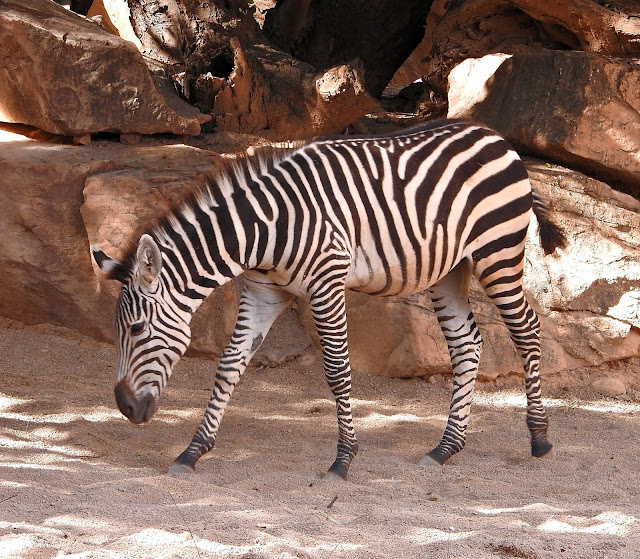
3-11-2021 BIOPARC, VALENCIA - GRANT'S ZEBRA (Equus quagga ssp. boehmi)


Grant's zebra (Equus quagga boehmi ) is the smallest of the seven subspecies of the plains zebra. This subspecies represents the zebra form of the Serengeti-Mara ecosystem.

This northern subspecies is vertically striped in front, horizontally on the back legs, and diagonally on the rump and hind flanks. Shadow stripes are absent or only poorly expressed. The stripes, as well as the inner spaces, are broad and well defined. Northerly specimens may lack a mane. Grant’s zebras grow to be about 182 to 243 cm (6-8 ft) long and 120 to 140 cm (3.9 to 4.6 ft) tall, and generally weigh about 300 kg (660 lb). The zebras live in family groups of up to 18 zebras, and they are led by a single stallion. Grant’s zebras typically live 20 years.


The distribution of this subspecies is in Zambia west of the Luangwa river and west to Kariba, Katanga Province of the Democratic Republic of the Congo, north to the Kibanzao Plateau, and in Tanzania north from Nyangaui and Kibwezi into southwestern Kenya as far as Sotik. It can also be found in eastern Kenya and east of the Great Rift Valley into southernmost Ethiopia. It also occurs as far as the Juba River in Somalia.

Zambia is an ideal place for zebras. These animals prefer living in savanna woodlands and grasslands; they are not found in deserts, wetlands, or rainforests. The mountain variety lives in rocky mountainous areas. Unfortunately, the availability of habitat for all species of zebras is shrinking, resulting in population decline.


Duncan (1992) recognized the Upper Zambezi zebra (Equus quagga zambeziensis Prazak, 1898[2]). Groves and Bell (2004) came to the conclusion that the zebras from West Zambia and Malawi cannot be distinguished cranially and that they differ only slightly from other northern plains zebras. The minor size difference does not justify a separate subspecific status for the Upper Zambezi zebra. Therefore, they combine these zebras with Grant's zebra (Equus quagga boehmi).

3-11-2021 BIOPARC, VALENCIA - WESTERN CATTLE EGRET (Bubulcus ibis ssp. ibis)


The western cattle egret (Bubulcus ibis) is a species of heron (family Ardeidae) found in the tropics, subtropics and warm temperate zones. Most taxonomic authorities lump this species and the eastern cattle egret together (called the cattle egret), but some (including the International Ornithologists' Union) separate them. Despite the similarities in plumage to the egrets of the genus Egretta, it is more closely related to the herons of Ardea. Originally native to parts of Asia, Africa and Europe, it has undergone a rapid expansion in its distribution and successfully colonised much of the rest of the world in the last century.

It is a white bird adorned with buff plumes in the breeding season. It nests in colonies, usually near bodies of water and often with other wading birds. The nest is a platform of sticks in trees or shrubs. Western cattle egrets exploit drier and open habitats more than other heron species. Their feeding habitats include seasonally inundated grasslands, pastures, farmlands, wetlands and rice paddies. They often accompany cattle or other large mammals, catching insect and small vertebrate prey disturbed by these animals. Some populations of the cattle egret are migratory and others show post-breeding dispersal.

3-11-2021 BIOPARC, VALENCIA - SPOTTED HYENA (Crocuta crocuta)


7-11-2021 MONTE CORONA, VALENCIA - SPECKLED WOOD BUTTERFLY (Pararge aegeria)


7-11-2021 MONTE CORONA, VALENCIA - MEDITERRANEAN MANTIS (FEMALE) (Iris oratoria)


7-11-2021 EL PALMAR, VALENCIA - HOUSE SPARROW (FEMALE) (Passer domesticus)


7-11-2021 EL PALMAR, VALENCIA - EUROPEAN STONECHAT (MALE) (Saxicola rubicola)


The European stonechat, Saxicola rubicola, is a small, charming passerine bird, once thought to be a member of the thrush family but now placed within the Old World flycatcher family, Muscicapidae. This species exhibits a striking sexual dimorphism, with males donning a black plumage with vibrant orange throats and females wearing a more subdued brown.

Males in their summer plumage are unmistakable with their black heads, orange throats, and white bellies. They also sport a distinctive white half-collar and small white patches on the wings and rump. Females, on the other hand, are predominantly brown with less pronounced white wing patches. Both sexes have notably short wings, which are shorter than those of their migratory relatives.

The European stonechat favors heathlands, coastal dunes, and open grasslands dotted with shrubs, brambles, and heather. These habitats provide the perfect backdrop for their active foraging and breeding behaviors.

This species is widely distributed across Europe, reaching as far east as Ukraine and the South Caucasus, and can also be found in parts of North Africa.

Stonechats are known for their lively presence, often perching conspicuously as they keep a vigilant eye on their surroundings. They exhibit a partial migratory pattern, with some populations moving southward to escape the colder winters.

The male stonechat's song is a delightful, high-pitched twitter, reminiscent of a dunnock's melody. Both sexes communicate with a distinctive call that evokes the sound of two stones being tapped together.

European stonechats are monogamous during the breeding season and commence their reproductive efforts at one year of age. They raise two to three broods per season, with the female constructing the nest and both parents tending to the young.

The European stonechat can be confused with the Siberian stonechat and the African stonechat, but genetic evidence supports their distinction as separate species.

These birds are adept insectivores, gleaning a variety of invertebrates from their environment to sustain themselves and their offspring.

7-11-2021 EL PALMAR, VALENCIA - EUROPEAN STONECHAT (FEMALE) (Saxicola rubicola)


The female European Stonechat (Saxicola rubicola) is a small, perky songbird found across Europe. Unlike the striking, black-headed male, she has a mottled brown head and back with a subtle paler eyebrow and a warm, dull orange-tinged chest. Females are known for their habit of frequently flicking their wings while perched on low bushes or fences.

Physical Appearance & Identification

Size: Approximately 13 to 15 cm in length.

Head & Chest: Features a brown head (lacking the male's stark black hood) and a dull, washed-out orangey breast.

Plumage: Brown back, white patches on the wings and sides of the neck, and a paler rump in flight that contrasts with a solidly blackish tail.