TOTAL PAGEVIEWS

TRANSLATE

Tuesday, 2 November 2021

24-10-2021 ATTICA ZOO ATHENS, GREECE - YELLOW BIBBED LORY (Lorius chlorocercus)


The yellow-bibbed lory (Lorius chlorocercus) is a species of parrot in the family Psittaculidae. It is endemic to the southern Solomon Islands.

The yellow-bibbed lory is 28 cm (11 in) long. It is mostly red with black on top of head and green wings. It has a yellow transverse band on upper chest and a crescent-shaped black patch on each side of neck. It has blue/green thighs and dark-grey legs. It has an orange-red beak, dark-grey eyerings, and orange irises. Under its wings the bird has blue feathers.


The yellow-bibbed lory is endemic to the eastern Solomon Islands. Its natural habitats are subtropical or tropical moist lowland forest and subtropical or tropical moist montane forest.

Yellow-bibbed Lories mimic a wide range of sounds, including the human voice, in other words they are 'talking parrots'. Providing a permit is obtained, it is exempt from export prohibition under the Solomon Islands Wildlife Protection and Management Act (1998).


24-10-2021 ATTICA ZOO ATHENS, GREECE - HOODED PARROT (Psephotus dissimilis)


The hooded parrot (Psephotellus dissimilis) is a species of parrot native to the Northern Territory in Australia. It is found in savannah and open woodland and is one of two extant species in its genus that breed in termite mounds. It has declined from much of its original range.

An Australian endemic, the hooded parrot inhabits to semi-arid areas of northeast Northern Territory, and is separated from the golden-shouldered parrot by the Carpentarian faunal barrier.


Though this species has disappeared from most of its original range, it remains common in protected areas. The hooded parrot is evaluated as Least Concern on IUCN Red List of Threatened Species.

The diet consists mainly of seeds, berries and vegetables.

The hooded parrot digs cavities in termite mounds. It generally chooses conical termite mounds, only successful in flat two dimensional mounds if it digs at the edge rather than on the face of the mound. Excavation takes around three weeks. The tunnel is roughly horizontal and around 50 to 80 cm long.
Breeding takes place once or twice a year between April and August. The female lays four or five white, slightly shiny eggs that are 21 long by 19 mm wide.

The hooded parrot has a close ecological relationship with the moth species Trisyntopa neossophila. The female moth lays eggs in the parrot nesting cavity, so that the eggs hatch at the same time as the baby hooded parrots. The moth larvae live in small tunnels at the base of the cavity and emerge to eat the dark material of parrot feces, leaving the white uric acid deposits. They build a silk layer across the base of the cavity to protect themselves from chicks. They pupate in the cavity walls once the juvenile parrots leave the nest.

24-10-2021 ATTICA ZOO ATHENS, GREECE - YELLOW COLLARED LOVEBIRD


2-11-2021 MONTAVERNER, VALENCIA - HOUSE SPARROW (MALE) (Passer domesticus)


2-11-2021 LLUTXENT, VALENCIA - WINTER SQUASH (Cucurbita maxima)


2-11-2021 LLUTXENT, VALENCIA - MEADOW PIPIT (Anthus pratensis)


2-11-2021 LLUTXENT, VALENCIA - BLACK REDSTART (FEMALE) (Phoenicurus ochruros)


2-11-2021 LLUTXENT, VALENCIA - MARVEL OF PERU (Mirabilis jalapa)


Monday, 1 November 2021

24-10-2021 ATTICA ZOO ATHENS, GREECE - MARGINATED TORTOISE (Testudo marginata)


31-10-2021 MONTE CORONA, VALENCIA - HAIRY ROSE BEETLE (Tropinota squalida)


1-11-2021 LLUXENT, VALENCIA - EUROPEAN MANTIS (MALE) (Mantis religiosa)


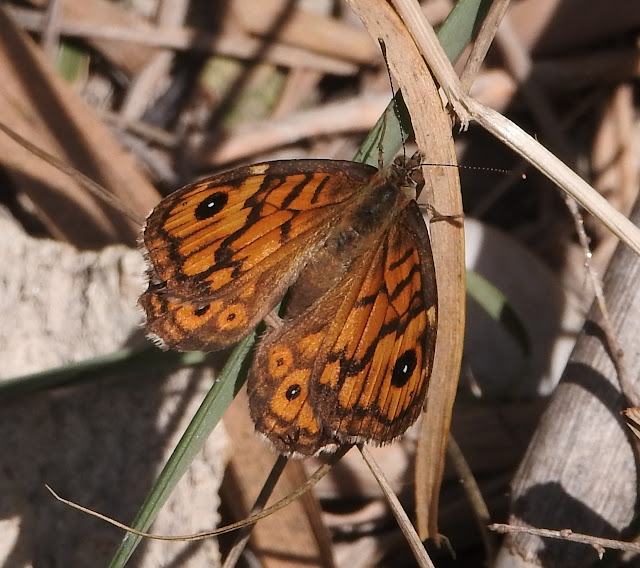
1-11-2021 LLUXENT, VALENCIA - WALL BROWN BUTTERFLY (Lasiommata megera)


1-11-2021 LLUXENT, VALENCIA - OLD WORLD SWALLOWTAIL BUTTERFLY (Papilio machaon)


1-11-2021 LLUXENT, VALENCIA - EURASIAN SISKIN (Spinus spinus)


Sunday, 31 October 2021

24-10-2021 ATTICA ZOO ATHENS, GREECE - KOMODO DRAGON (Varanus komodoensis)


24-10-2021 ATTICA ZOO ATHENS, GREECE - RADIATED TORTOISE (Astrochelys radiata)


24-10-2021 ATTICA ZOO ATHENS, GREECE - GOULDIAN FINCH (Zenaida auriculata)


24-10-2021 ATTICA ZOO ATHENS, GREECE - BROWN BEAR (Ursus arctos)


24-10-2021 ATTICA ZOO ATHENS, GREECE - EUROPEAN - PERSIAN FALLOW DEER (JUVENILE) (Genus Dama)


24-10-2021 ATTICA ZOO ATHENS, GREECE - BARNACLE GOOSE (Branta leucopsis)


24-10-2021 ATTICA ZOO ATHENS, GREECE - GREATER WHITE FRONTED GOOSE (Anser albifrons)


24-10-2021 ATTICA ZOO ATHENS, GREECE - SOUTHERN CASSOWARY (Casuarius casuarius)


The southern cassowary is a solitary bird, which pairs only in breeding season, in late winter or spring. The male builds a nest on the ground, a mattress of herbaceous plant material 5 to 10 centimetres (2–4 in) thick and up to 100 centimetres (39 in) wide. This is thick enough to let moisture drain away from the eggs. The male also incubates the eggs and raises the chicks alone. A clutch of three or four eggs are laid measuring 138 by 95 millimetres (5.4 in × 3.7 in). They have a granulated surface and are initially bright pea-green in colour although they fade with age. Southern cassowaries make a thunderous call during mating season, and hissing and rumblings otherwise. Chicks will make frequent high-pitched contact whistles and chirps to call the male.


Southern cassowaries have a reputation for being dangerous to humans and animals, and are often regarded as aggressive. The birds can jump quite high and kick powerfully with their blade-like claws. However, deadly encounters with southern cassowaries are rare. Only two human deaths have been reported since 1900. A 2003 historical study of 221 southern cassowary attacks showed that 150 had been against humans: 75% of these had been from southern cassowaries that had been fed by people, 71% of the time the bird had chased or charged the victim, 15% of the time they kicked. Of the attacks, 73% involved the birds expecting or snatching food, 5% involved defending their natural food sources, 15% involved defending themselves from attack, and 7% involved defending their chicks or eggs. Only one human death was reported among those 150 attacks.

The first documented human death caused by a southern cassowary was on 6 April 1926. In Australia, 16-year-old Phillip McClean and his brother, age 13, came across a southern cassowary on their property and decided to try and kill it by striking it with clubs. The bird kicked the younger boy, who fell and ran away as his older brother struck the bird. The older McClean then tripped and fell to the ground. While he was on the ground, the cassowary kicked him in the neck, opening a 1.25 cm (0.5 in) wound that may have severed his jugular vein. The boy died of his injuries shortly thereafter.

Another human death due to a southern cassowary was recorded in Florida on 12 April 2019. The bird's owner, a 75-year-old man who had raised the animal, was apparently clawed to death after he fell to the ground.

Being fed by people tempts southern cassowaries into closer associations with human-inhabited areas, increasing the already high risk of vehicle strikes – a major cause of southern cassowary mortality – and increasing the likelihood of encounters with humans. Many "aggressive" birds are simply responding to having been fed by humans in the past. Unfortunately the poor reputation of this species leads to confusion and misinformation among the public, which hampers conservation efforts of this shy bird.