
Showing posts with label GEOMETER MOTH (Genus Dyscia). Show all posts
Showing posts with label GEOMETER MOTH (Genus Dyscia). Show all posts
Friday, 14 April 2023
Thursday, 20 January 2022


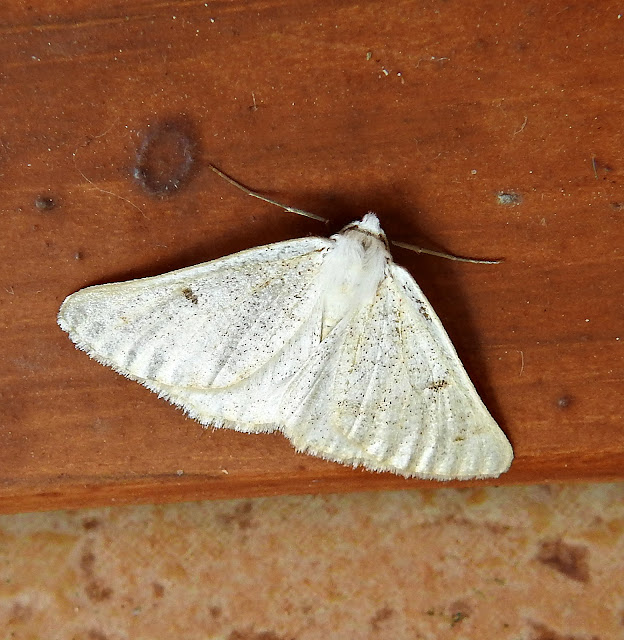
Thursday, 18 March 2021


Friday, 13 November 2020
13-11-2020 MONTE CORONA, VALENCIA - GEOMETER MOTH (Genus Dyscia)

Dyscia is a genus of moths belonging to the large family Geometridae. These moths are part of the subfamily Ennominae, known for their specific larval, adult, and genetic characteristics.
Here are key facts regarding the genus Dyscia and its characteristics:
Taxonomy and DistributionScientific Name: Dyscia (Family Geometridae).
Origin: The genus was established by Jacob Hübner in 1825.Distribution: Species in this genus are primarily found in Europe and Asia Minor, with specialized species found in regions such as the Balkan Peninsula.Species
Examples: Dyscia conspersaria (found in southeastern Central Europe/Asia Minor) and Dyscia intermedia (a species identified in Serbia).
Physical Characteristics and Behavior
Appearance: Like other geometer moths, Dyscia moths tend to have thin, slender bodies and broad wings, which they often hold flat against surfaces.
Coloration: They frequently feature cryptic, mottled, or grayish-brown patterns designed to blend in with their environment, such as rocks or twigs.

Antennae: Males in this genus often have feathered or pectinate antennae to detect female pheromones.
Habits: These moths are primarily nocturnal but can be found resting on vegetation or surfaces during the day.
Habitat Preference: They are often found in dry or rocky areas, with many species classified as xerophilic (preferring dry environments) or xero-mesophilic.
Life Cycle (Inchworms)Larvae (Inchworms): The caterpillars are called "inchworms" or "spanworms" because they appear to "measure the earth" by moving in a distinctive looping motion.
Looping Motion: Unlike most caterpillars, they lack many of the middle prolegs, possessing them only at the very rear.
Camouflage: The larvae often mimic twigs, standing erect and motionless to avoid predators.
Similar SpeciesDyscia intermedia is specifically noted to be very similar in appearance to Dyscia raunaria and Dyscia royaria, making it difficult to distinguish them without examining the genitalia.Dyscia moths, like many geometer species, are important ecological components of their habitats, acting as pollinators and food sources for birds and other predators.

Sunday, 11 October 2020
11-10-2020 MONTE CORONA, VALENCIA - GEOMETER MOTH (Genus Dyscia)

The genus Dyscia is a distinct group of geometer moths within the massive family Geometridae and the subfamily Ennominae. These moths are best known for their incredible camouflage, highly specialized habitat choices, and their unique larval stage—the "inchworm".
Physical Characteristics
Adult Dyscia moths generally display muted, earthy tones that make them look like dried leaves or lichen-covered rocks.
Wingspan: Typically ranges from 22 mm to 42 mm depending on the specific species.
Coloration: Their wings come in shades of sandy beige, chalky white, or light brownish-grey. They are heavily peppered with fine, dark scales and usually feature a distinct central spot on the forewings.
Resting Posture: Like most geometer moths, they rest with their broad wings held completely flat and spread out, creating continuous pattern lines across their forewings and hindwings.
Antennae: Males possess noticeably feathery antennae used to detect female pheromones, while females feature simple, thread-like antennae.
Monday, 23 March 2020
22-3-2020 MONTE CORONA, VALENCIA - GEOMETER MOTH (Genus Dyscia)

Dyscia is a genus of moths in the family Geometridae (subfamily Ennominae), first described by Jacob Hübner in 1825. These moths are generally medium-sized, with a wingspan typically ranging from 28 to 42 mm.
Here are key facts regarding the genus Dyscia:
Appearance and Characteristics
Coloration: Individuals range from pale grey or sandy beige to brownish-grey, often with numerous black spots or scales.
Wing Shape: A key identifier is the slightly concave outer margin of the forewings.
Physical Features: They lack a proboscis (tongue).
Distinct Species: While most are grey/beige, Dyscia nobiliaria is noted for its reddish coloration.

Environment: They inhabit open moorland, heathland, peat bogs, limestone ground, macchia shrubland, and olive groves.
Activity: They are nocturnal, with both sexes often attracted to light.
Flight Period: Depending on the species and region, they can be found flying from January to December, with peak activity often in spring and summer (e.g., May to July for D. conspersaria).
Diet and Life Cycle
Larval Foodplants: The larvae are oligophagous (feeding on a limited range of plants), primarily feeding on Fabaceae (Genista), Asteraceae (Artemisia, Achillea), Lamiaceae (Salvia), and Ericaceae (Calluna, Erica).
Overwintering: Species may overwinter as larvae, pupae, or adults.
Taxonomy and Species
Species Count: There are approximately 19 recognized species within the genus.
Monday, 21 May 2018
21-5-2018 VAL DE LUGUAR, ALICANTE - GEOMETER MOTH (21-5-2018 VAL DE LUGUAR, ALICANTE - GEOMETER MOTH (Genus Dyscia)

The geometer moths are moths belonging to the family Geometridae of the insect order Lepidoptera, the moths and butterflies. Their scientific name derives from the Ancient Greek geo γεω (derivative form of γῆ or γαῖα "the earth"), and metron μέτρον "measure" in reference to the way their larvae, or inchworms, appear to measure the earth as they move along in a looping fashion. Geometridae is a very large family, containing around 23,000 described species; over 1400 species from six subfamilies are indigenous to North America alone. A well-known member is the peppered moth, Biston betularia, which has been the subject of numerous studies in population genetics. Several other geometer moths are notorious pests.
Subscribe to:
Posts (Atom)