TOTAL PAGEVIEWS

TRANSLATE

Thursday, 17 September 2020

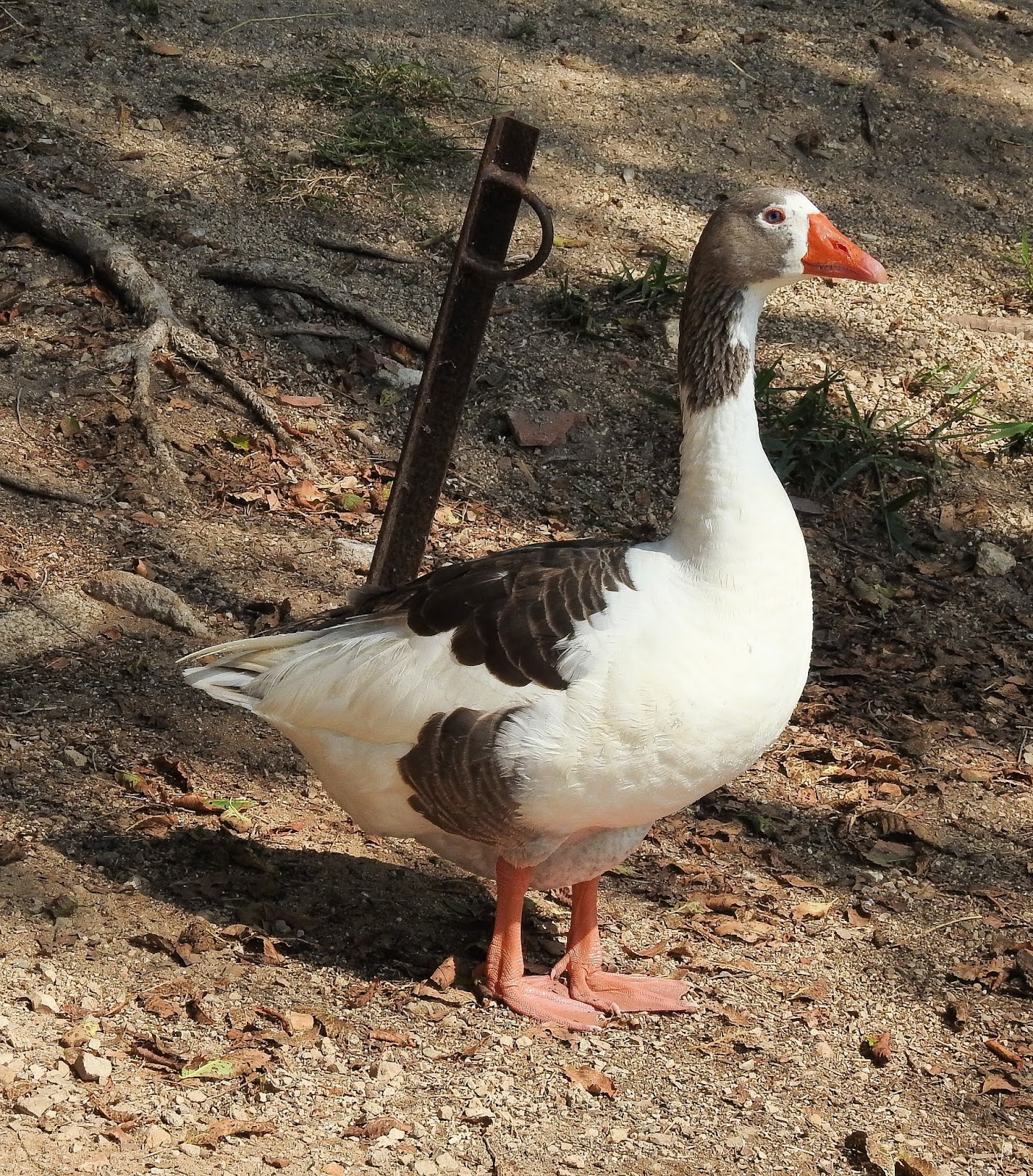
16-9-2020 L'ESTANY CULLERA, VALENCIA - GREYLAG GOOSE (Anser anser)


The Greylag Goose (Anser anser) is a large and robust member of the waterfowl family Anatidae, easily recognized by its mottled and barred grey and white plumage. It boasts an orange beak, pink legs, and a sizeable stature, measuring between 74 and 91 centimeters in length and weighing an average of 3.3 kilograms. This species is the progenitor of most domestic goose breeds and exhibits a wide distribution across Europe and Asia.

Adult Greylag Geese have a rotund body, a thick and long neck, and a large head and bill. Their legs and feet are pink, and their bill is orange or pink with a white or brown nail. The wingspan ranges from 147 to 180 centimeters. Males are typically larger than females, and the eastern subspecies rubirostris is larger than the nominate subspecies. The plumage is greyish brown with a darker head and paler underparts, with black spotting that varies among individuals. Juveniles can be identified by their lack of black speckling and greyish legs.

Greylag Geese breed in a variety of wetland habitats, including moorlands, marshes, lakes, and coastal islands. They prefer areas with dense vegetation for cover. In winter, they occupy semi-aquatic habitats such as estuaries, marshes, flooded fields, and agricultural lands.


The Greylag Goose has a Palearctic distribution, with the western subspecies breeding from Iceland to central Europe and the eastern subspecies from Romania to northeastern China. Northern populations often migrate southwards to spend the winter in warmer regions, while many populations are resident year-round.

Greylag Geese are known for their lifelong monogamous pair bonds. They are gregarious and form flocks, which provides safety in numbers. Family groups stay together, migrating southwards in autumn and separating the following year. They are herbivorous, feeding mainly on grasses, and can cause damage to agricultural crops.

The call of the Greylag Goose is a loud cackling, similar to that of domestic geese. They use various calls for different situations and can recognize individual geese by voice. Flocks produce a sound reminiscent of baying hounds.

Greylag Geese mate for life and nest on the ground among vegetation. They lay a clutch of three to five eggs, which the female incubates. Both parents defend and rear the young, who are precocial and leave the nest shortly after hatching..

16-9-2020 RACO DE OLLA, VALENCIA - PIED AVOCET (Recurvirostra avosetta)

16-9-2020 RACO DE OLLA, VALENCIA - RUFF (Calidris pugnax)

16-9-2020 RACO DE OLLA, VALENCIA - GREATER FLAMINGO (Phoenicopterus roseus)


The greater flamingo, Phoenicopterus roseus, stands as the most widespread and largest member of the flamingo family. This majestic bird is adorned with pinkish-white plumage, save for the red wing coverts and contrasting black primary and secondary flight feathers. The bill is a striking pink with a black tip, and the legs are a uniform pink, completing the iconic look of this species.

Adult greater flamingos can be identified by their height, ranging from 110 to 150 cm, and their weight between 2 and 4 kg. The largest males can reach up to 187 cm tall and weigh 4.5 kg. Observers should note the distinctive coloration, with the majority of the body being pinkish-white, red wing coverts, and black flight feathers. The pink bill with a black tip and entirely pink legs are also key identification features. The call of the greater flamingo is reminiscent of a goose-like honking.

Greater flamingos favor mudflats and shallow coastal lagoons with saline water, where they can be seen stirring the mud with their feet in search of food.

This species is common in the Old World, with a range that includes Northern and Sub-Saharan Africa, the Indian Subcontinent, the Middle East, the Levant, and Southern Europe. Notably, they are found in coastal regions and along water bodies such as the Nile River, the Persian Gulf, the Gulf of Aden, the Red Sea, and the Mediterranean.

16-9-2020 RACO DE OLLA, VALENCIA - MALLARD (MALE) (Anas platyrhynchos)

16-9-2020 RACO DE OLLA, VALENCIA - MALLARD (FEMALE) (Anas platyrhynchos)

16-9-2020 EMBARCADERO CATAROJA, VALENCIA - EURASIAN COLLARED DOVE (Streptopelia decaocto)

16-9-2020 ESTANY CULLERA, VALENCIA - EURASIAN COOT (Fulica atra)


The Eurasian coot, Fulica atra, also known as the common coot or Australian coot, is a distinctive waterbird with a slaty-black body, a glossy black head, and a striking white bill topped with a white frontal shield. This bird is a member of the Rallidae family, which includes rails and crakes. Both sexes exhibit similar plumage, making them indistinguishable in the field.

Adult Eurasian coots measure 36–38 cm in length with a wingspan of 70–80 cm. Males are slightly heavier than females, weighing around 890 g compared to the females' 750 g. The species is characterized by its white bill and frontal shield, which contrast sharply with its all-black body. Juveniles are paler with a whitish breast and lack the facial shield, which develops fully by one year of age.


The Eurasian coot is found on freshwater lakes and ponds and has adapted well to urban environments, often seen in city parks and gardens with water bodies.

This bird has a broad range across the Old World, including Europe, Asia, Australia, New Zealand, and parts of North Africa. It is a resident in milder regions but migrates south and west from much of Asia during winter.

The Eurasian coot is less secretive than many rails, often visible on open water or grasslands. It is territorial and aggressive during the breeding season, with both parents defending their territory. In non-breeding seasons, coots may form large flocks. They are reluctant flyers, preferring to run across water surfaces, and are known for bobbing their heads while swimming.

This species is known for its noisy demeanor, producing a variety of crackling, explosive, or trumpeting calls, which are often heard at night.


Coots build bulky, sometimes floating nests, concealed in vegetation or in the open. Both sexes construct the nest, with the male gathering materials. Clutches typically contain 6-10 buff-colored eggs speckled with black or dark brown. Both parents incubate the eggs, which hatch after 21-24 days. Chicks are precocial and nidifugous, with distinctive orange-red tips on their down.

Omnivorous in nature, the Eurasian coot consumes small live prey, including other birds' eggs, as well as algae, vegetation, seeds, and fruit. It employs various feeding techniques, both on land and in water.

The Eurasian coot is classified as Least Concern by the IUCN and is protected under the Agreement on the Conservation of African-Eurasian Migratory Waterbirds (AEWA).

16-9-2020 ULLAL DE BALDOVI, VALENCIA - LITTLE GREBE 11

16-9-2020 EL PALMAR, VALENCIA - RED SWAMP CRAYFISH (Procambarus clarkii)

16-9-2020 EL PALMAR, VALENCIA - CATTLE EGRET (Bubulcus ibis)

16-9-2020 EL PALMAR, VALENCIA - WESTERN YELLOW WAGTAIL (FEMALE) (Motacilla flava)