TOTAL PAGEVIEWS

TRANSLATE

Monday, 11 April 2022

20-5-2019 BUMI HILLS, ZIMBABWE - AFRICAN DARTER (Anhinga rufa)


The African darter is a waterbird native to sub-Saharan Africa, known for its long neck and ability to dive and hunt fish. It is also called a "snakebird" because it swims with only its S-shaped neck and head visible above the water. The African darter's specialized feathers allow it to remain submerged, and it can immediately take flight after emerging from the water. 

Physical characteristics
Size: They range from about 80 to 95 cm long and weigh 1 to 1.4 kg.
Plumage: Adult males are glossy black with a rusty-orange neck and a white stripe from the eye down the side of the neck. Females and juveniles are duller brown.
Bill: They have a long, dagger-like bill with tiny, backward-pointing notches to help hold onto prey.
Feet: Their webbed feet have four toes and are set far back on their body, making them excellent swimmers but clumsy on land. 

11-4-2022 GANDIA MARJAL, VALENCIA - MALLARD (FEMALE) (Anas platyrhynchos)


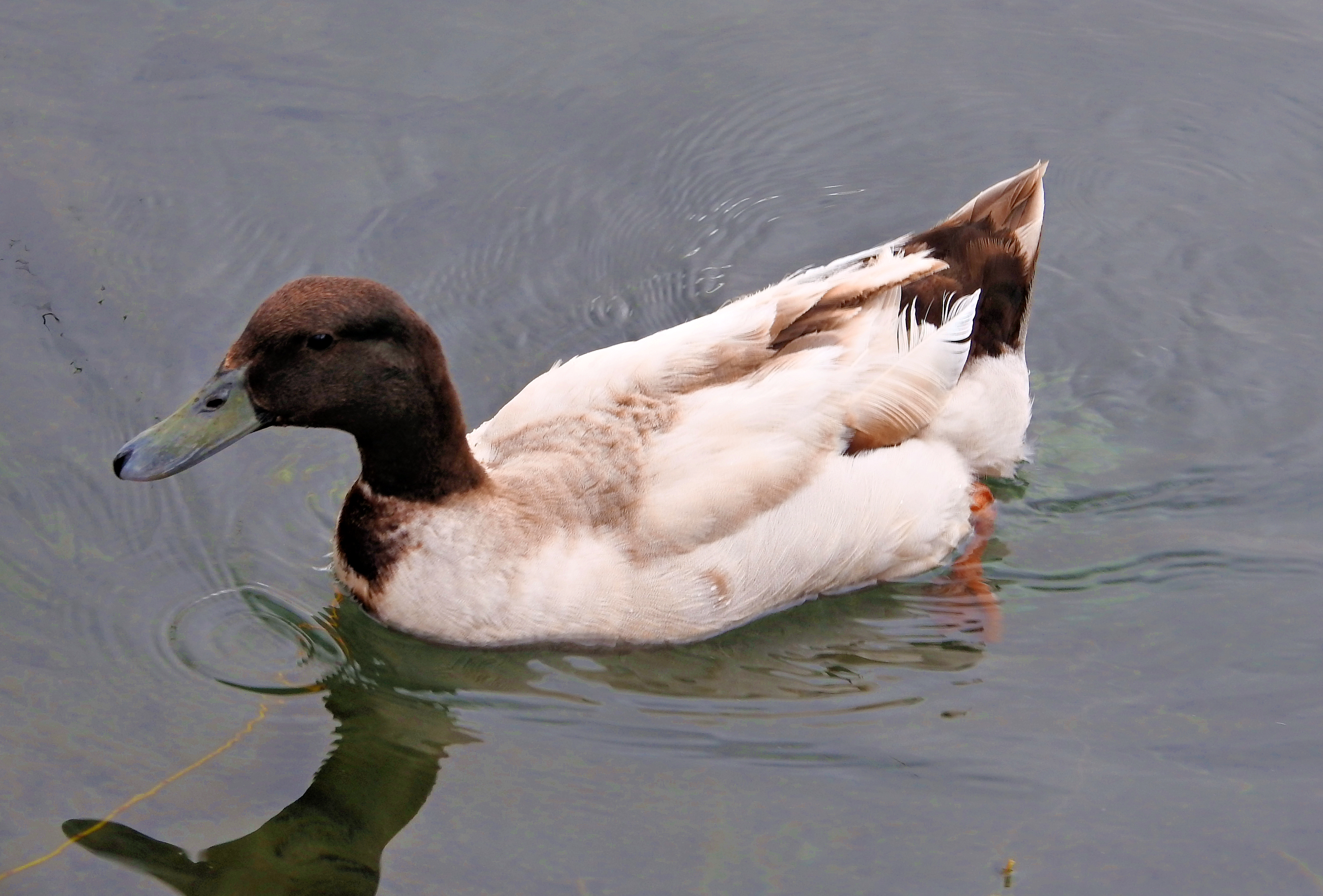
11-4-2022 GANDIA MARJAL, VALENCIA - DOMESTIC MALLARD (Anas platyrhynchos var. domesticus)


11-4-2022 GANDIA MARJAL, VALENCIA - HOUSE SPARROW (MALE) (Passer domesticus)


11-4-2022 MONTE CORONA, VALENCIA - WAVE MOTH (Idaea eugeniata)


Sunday, 10 April 2022

19-5-2019 BUMI HILLS, ZIMBABWE - BROWN CROWNED TCHAGRA (Tchagra australis)


The brown-crowned tchagra (Tchagra australis) is a species of bird in the family Malaconotidae.

It is found in Angola, Benin, Botswana, Burundi, Cameroon, Central African Republic, Republic of the Congo, DRC, Eswatini, Ivory Coast, Gabon, Ghana, Guinea, Kenya, Liberia, Malawi, Mali, Mozambique, Namibia, Nigeria, Rwanda, Sierra Leone, South Africa, South Sudan, Tanzania, Togo, Uganda, Zambia, and Zimbabwe. Its natural habitats are subtropical or tropical dry forests and dry savanna.

19-5-2019 BUMI HILLS, ZIMBABWE - AFRICAN SAVANNA ELEPHANT (Loxodonta Africana)


The African bush elephant (Loxodonta africana), also known as the African savanna elephant, is a species of elephant native to sub-Saharan Africa. It is one of three extant elephant species and, along with the African forest elephant, one of two extant species of African elephant. It is the largest living terrestrial animal, with fully grown bulls reaching an average shoulder height of 3.04–3.36 metres (10.0–11.0 ft) and a body mass of 5.2–6.9 tonnes (5.7–7.6 short tons); the largest recorded specimen had a shoulder height of 3.96 metres (13.0 ft) and an estimated body mass of 10.4 tonnes (11.5 short tons). The African bush elephant is characterised by its long prehensile trunk with two finger-like processes; a convex back; large ears which help reduce body heat; and sturdy tusks that are noticeably curved. The skin is grey with scanty hairs, and bending cracks which support thermoregulation by retaining water.

19-5-2019 BUMI HILLS, ZIMBABWE - SMITH'S BUSH SQUIRREL (Paraderus Cepapi)


Smith's bush squirrel (Paraxerus cepapi), also known as the yellow-footed squirrel or tree squirrel, is an African bush squirrel which is native to woodlands of the southern Afrotropics.

It is found in Angola, Botswana, the DRCongo, Malawi, Mozambique, Namibia, South Africa, Tanzania, Zambia, and Zimbabwe. It is a common rodent which is diurnal by nature.

Its total length is 350 mm (14 in), half of which is tail; weight 200 g (7.1 oz). The coat colour varies throughout the region. In the western and arid parts of its range, it is pale grey, and in the eastern localities, more brown. Its head and legs are a rusty colour. Colouration on the chest varies from yellowish to buff in the east, to white in the west. This squirrel's belly is white. These alert and ever busy creatures carry their long tails extended backwards.

Smith's bush squirrels are primarily vegetarian, but like most rodents, they take insect prey and use their front feet to manipulate food items when feeding. They scatter-hoard seeds next to tree trunks or grass tufts, thereby facilitating tree regeneration.

20-5-2019 BUMI HILLS, ZIMBABWE - SOUTHERN RED BILLED HORNBILL (Tockus rufirostris)


The southern red-billed hornbill (Tockus rufirostris) is a species of hornbill in the family Bucerotidae, which is native to the savannas and dryer bushlands of southern Africa. It is replaced by a near-relative, the Damara red-billed hornbill, in the arid woodlands of western Namibia. All five red-billed hornbills were formerly considered conspecific.

The sexes are similar, but males are larger and heavier. Males also have somewhat longer bills, with the lower mandible coloured black to a variable extent. It is distinguishable from other red-billed hornbills by the combination of yellow iris and pale orbital skin (pink to greyish), and the ample blackish plumage streaking from the ear coverts to the side of the neck. The throat is white, and the wing coverts clearly spotted.


The call consists of an accelerating series notes, kuk kuk kuk ... which ends in a crescendo of double notes, kuk-we kuk-we. Unlike other red-billed hornbills, Southern red-billed hornbills do not raise their wings in display.

It is found from Malawi and Zambia to southern Angola, northeastern Namibia, Botswana, Zimbabwe, eastern Eswatini and northern South Africa (Transvaal and northern KZN province). It occurs in the upper Zambezi valley of Mozambique, but is mostly absent from the eastern lowlands.

19-5-2019 BUMI HILLS, ZIMBABWE - WHITE BROWED SPARROW WEAVER (Plocepasser mahili)


The white-browed sparrow-weaver (Plocepasser mahali) is a predominantly brown, sparrow-sized bird found throughout central and north-central southern Africa. It is found in groups of two to eleven individuals consisting of one breeding pair and other non-reproductive individuals.

The white-browed sparrow-weaver (Plocepasser mahali) is a predominantly brown, sparrow-sized bird found throughout central and north-central southern Africa. It is found in groups of two to eleven individuals consisting of one breeding pair and other non-reproductive individuals.

During his expedition to the interior of southern Africa in 1834–35, Andrew Smith collected specimens of the white-browed sparrow weaver at the Modder River, which he described in 1836, giving it the scientific name Plocepasser mahali.

19-5-2019 BUMI HILLS, ZIMBABWE - LAUGHING DOVE (Streptopelia senegalensis)


The Laughing Dove (Spilopelia senegalensis) is a small, graceful pigeon with a long tail, known for its gentle, unassuming presence across a vast range. Exhibiting a pinkish-brown underside with a lilac-tinged head and neck, this dove carries an air of delicate beauty. The species is recognized by its pinkish head and underparts, transitioning to buff on the lower abdomen. Adults boast a distinctive chequered rufous and grey patch on the neck, composed of split feathers, while the upper parts are brownish with a bluish-grey wing band.

When observing the Laughing Dove, look for its slim profile, about 25 cm in length, and the graduated tail with white-tipped outer feathers. Both sexes appear similar, making field identification by gender challenging. Juveniles can be identified by the absence of the chequered neck markings. The red legs are another characteristic feature to note.

This species thrives in dry scrub and semi-desert regions, often seen in pairs as they forage on the ground. It has adapted well to human habitation, becoming quite tame in areas where people are present.

The Laughing Dove has a broad range that includes Sub-Saharan Africa, the Middle East, South Asia, and Western Australia. It is a resident breeder in these areas, with some populations showing sedentary behavior, while others may exhibit local movements.

19-5-2019 BUMI HILLS, ZIMBABWE - SOUTHERN DARK CAPPED BULBUL (Pycnonotus barbatus ssp. layardi)


The Dark-capped Bulbul (Pycnonotus tricolor), also known as the Black-eyed Bulbul or Common Bulbul, is a widespread and conspicuous bird found throughout much of sub-Saharan Africa. 

Key Facts

Appearance: A medium-sized (around 20 cm) bird with grayish-brown upperparts and a distinctive dark head that has a short, pointy crest. The underparts are a paler greyish-white, but a key feature is its bright yellow vent (undertail coverts). Sexes look similar in plumage.

Habitat: Highly adaptable, it thrives in a variety of wooded and bushy environments, including riverine forests, orchards, parks, and suburban gardens. It avoids only dense, evergreen forests or treeless deserts.

Diet: Omnivorous and highly flexible in its diet. It primarily feeds on fruits, berries, seeds, nectar, and flower petals, but also hawks for insects and small invertebrates, especially when breeding.


Behavior: It is a social and noisy bird, typically seen in pairs or small groups. They are known for being alert and are often one of the first species to sound an alarm when a predator is spotted. Their flight is described as bouncy.Vocalization: Possesses a loud, cheerful, and varied call, which has been transcribed as "doctor-quick doctor-quick be-quick be-quick" or a phrase sounding like "Wake-up, Gregory". They also have harsh chattering alarm calls.

Breeding: They are monogamous and territorial during the breeding season. The female builds a neat, cup-shaped nest well-concealed in dense foliage using twigs, grass, and roots. She typically lays a clutch of two to three eggs, which she incubates for about two weeks. The male brings food to the female at the nest and helps feed the chicks after they hatch. Their nests are sometimes parasitized by the Jacobin Cuckoo. 

10-4-2022 TARRAGONA, SPAIN - SAVI'S WARBLER (Locustella luscinioides)


This small passerine bird is found in reed beds, usually with some bushes. Three to six eggs are laid in a nest in reeds. The adult has an unstreaked grey-brown back, whitish grey underparts and a lack of throat streaks, which is a distinction from the river warbler. The sexes are identical, as with most warblers, but young birds are yellower below. Like most warblers, it is insectivorous. This is not a shy species, but can be difficult to see in the reeds except sometimes when singing.

The "song"ⓘ is a monotonous mechanical insect-like reeling, often given at dusk. It is similar to the song of other species in the group, but is generally faster and deeper and bears a strong resemblance to that of Roesel's bush-cricket.


10-4-2022 MONTE CORONA, VALENCIA - YELLOW BELLIED SLIDER TERRAPIN (Trachemys scripta)


10-4-2022 MONTE CORONA, VALENCIA - SAGE LEAVED ROCK ROSE (Cistus salviifolius)


10-4-2022 MONTE CORONA, VALENCIA - BLUE ROCK THRUSH (MALE) (Monticola solitarius)


10-4-2022 MONTE CORONA, VALENCIA - JUMPING BRISTLETAIL (Genus Dilta)


Friday, 8 April 2022

7-4-2022 MONTE CORONA, VALENCIA - MOORISH GECKO (Tarentola mauritanica)


7-3-2020 THATTEKAD, INDIA - MALABAR PARAKEET (Psittacula columboides)


The blue-winged parakeet (Psittacula columboides), also known as the Malabar parakeet, is a species of parakeet endemic to the Western Ghats of southern India. Found in small flocks, they fly rapidly in forest clearings while making screeching calls that differ from those of other parakeet species within their distribution range. Their long blue tails tipped in yellow and the dark wings with blue contrast with the dull grey of their head and body. Adult males and females can be easily told apart from the colour of their beak.

The blue-winged parakeet is bluish grey with a long yellow-tipped tail. The black neck ring is complete in both males and females. The male has a bluish-green lower edge to the black collar and the upper mandible is red with a white tip while the female has an all black bill and has only the black collar. The female looks similar to the female of the plum-headed parakeet which however can be told apart by its broad yellow collar. Flocks move through the forest while calling out in a series of screeching keek-keek-keek calls.


They breed in the dry season after the northeast Monsoon and the chicks fledge before the southwest Monsoon in June. They nest in holes in trees (often tall Mesua ferrea species[6]), especially old woodpecker and barbet nests. The birds begin breeding in December and eggs are laid in December and January. The usual clutch was 4 eggs which hatch after about 23 days. The female initially broods with the male bringing food and later the male takes over. The chicks fledge in about a month and leave the nest. Chicks are sometimes trapped for trade. Individuals have been observed feeding on the leaves of Loranthus longiflorus.

The closest living relative of this species is Layard's parakeet which is endemic to Sri Lanka.

This parakeet is restricted to the Western Ghats south of about 19°N (Kasa, north of Bombay) to Kerala, extending into the hills of the Palnis and Nilgiris as well as the adjoining Eastern Ghats including the Biligirirangan range and possibly further east in the Kolli Hills in India.

Wednesday, 6 April 2022

6-4-2022 OLIVA PLAYA, VALENCIA - HOUSE SPARROW (MALE) (Passer domesticus)


6-4-2022 OLIVA PLAYA, VALENCIA - EURASIAN GREAT CORMORANT (Phalacrocorax carbo)


6-4-2022 OLIVA PLAYA, VALENCIA - SANDERLING (Calidris alba)


4-4-2022 VILLALONGA, VALENCIA - SARDINIAN WARBLER (MALE) (Sylvia melanocephala)


6-4-2022 MONTE CORONA, VALENCIA - SARDINIAN WARBLER (FEMALE)


6-4-2022 MONTE CORONA, VALENCIA - WESTERN CONIFER SEED BUG (Leptoglossus occidentalis)