
Tuesday, 3 May 2022
%201.jpg)


Monday, 2 May 2022


Sunday, 1 May 2022


16-4-2022 MANDINA LODGE, GAMBIA - AFRICAN GOLDEN ORIOLE (Oriolus auratus)


The African golden oriole (Oriolus auratus), or African oriole, is a member of the oriole family of passerine birds which is a resident breeder in Africa south of the Sahara desert.
It is a bird of thick bush and other well-wooded areas. The hanging basket-shaped nest is built in a tree, and contains two eggs. The food is insects and fruit, especially figs, found in the tree canopies where the orioles spend much of their time.
The male is striking in the typical oriole black and yellow plumage, although the plumage is predominantly yellow, with solid black only in the flight feathers and tail centre. There is a great deal of gold in the wings, which is a distinction from the Eurasian golden oriole, which winters in Africa.
The female is a drabber green bird, distinguished from the European species by more contrasting wings and black around the eye. Orioles are shy, and even the male is remarkably difficult to see in the dappled yellow and green leaves of the canopy.
The flight is somewhat like a thrush, strong and direct with some shallow dips over longer distances.
The call is a screech like a jay, but the song is a beautiful fluting fee-ooo fee-ooo, unmistakable once heard.


Wednesday, 27 April 2022


Tuesday, 12 April 2022
18-5-2019 BUMI HILLS, ZIMBABWE - AFRICAN GREY HORNBILL (Lophoceros nasutus)
%2020.jpg)
The African grey hornbill (Lophoceros nasutus) is a member of the hornbill family of mainly tropical near-passerine birds found in the Old World. It is a widespread resident breeder in much of sub-Saharan Africa and the southwest of the Arabian Peninsula. The African grey hornbill has escaped or been deliberately released into Florida, USA, but there is no evidence that the population is breeding and may only persist due to continuing releases or escapes.
18-5-2019 BUMI HILLS, ZIMBABWE - RAINBOW SKINK (Trachylepis margaritifera)

The Rainbow Skink, or Five-lined Skink, is an active lizard occurring in rocky terrain in savanna habitats from Kwazulu-Natal, through the Lowveld and Limpopo Valley to as far north as Kenya. They feed primarily on insects and other invertebrates. Males are territorial. Females lay one, perhaps two, clutches of 6-10 eggs in summer, with the baby skinks emerging around two months later.

Females, adolescents and immature males exhibit the distinct lines and brilliant blue tails associated with this species, while the adult males have an olive base-colouration speckled with tiny white spots. Adults may grow to 20cm in length, including the tail. The IUCN lists the Rainbow Skink as being of least concern.
The Rainbow Skink (trachylepis margaritifera) is found in southern Africa, from KwaZulu-Natal in South Africa to southern Malawi. Some isolated populations occur in central to southeastern Tanzania and southern Kenya.

18-5-2019 BUMI HILLS, ZIMBABWE - WHITE CRESTED HELMETSHRIKE (Prionops plumatus)

The White-crested Helmetshrike, Prionops plumatus, also known as the White Helmetshrike, is a striking passerine bird belonging to the Vanga family Vangidae. It is characterized by its prominent white crest and the contrasting black plumage that adorns its body.
This species can be identified by its distinctive white crest, which stands out against its predominantly black body. The wings, when closed, are largely black, and the bird exhibits a curly-crested appearance, particularly noticeable in the subspecies P. p. cristatus.
The White-crested Helmetshrike inhabits a variety of environments, including subtropical or tropical dry forests, dry and moist savannas, as well as subtropical or tropical dry shrublands.
The bird's range extends across a vast swath of Africa, from Angola to Zimbabwe, including countries such as Benin, Botswana, Burkina Faso, and many others. It is a common sight in these regions, adapting well to its diverse habitats.
A gregarious creature, the White-crested Helmetshrike is often seen in small, active parties. These groups are constantly on the move, foraging among foliage or on the ground. They maintain a noisy chatter amongst themselves as they traverse their territory.
18-5-2019 BUMI HILLS, ZIMBABWEE - YELLOW BELLIED GREENBUL (Chlorocichla flaviventris)
%2020.jpg)
The Yellow-bellied Greenbul, with its scientific name Chlorocichla flaviventris, is a charming songbird belonging to the bulbul family, Pycnonotidae. This species exhibits a delightful contrast of colors with its yellow underparts and greenish upper body, making it a visual treat for birdwatchers.
When trying to identify the Yellow-bellied Greenbul, look for its distinctive yellow belly which gives this bird its name. The greenish hue of its feathers blends seamlessly with the foliage, providing excellent camouflage in its natural habitat.
The Yellow-bellied Greenbul thrives in a variety of environments, including subtropical or tropical dry forests, moist lowland forests, and the dry savanna. These diverse habitats provide the bird with ample opportunities for foraging and nesting.
This species is widely distributed across eastern, southern, and west-central Africa. Its presence is a testament to the adaptability of the species across a range of African landscapes.
Observing the Yellow-bellied Greenbul in its natural setting, one might note its active foraging behavior and the agility with which it moves through the understory, a behavior typical of many bulbul species.
%2021.jpg)
The vocalizations of the Yellow-bellied Greenbul are characteristic of its family, contributing to the rich tapestry of sounds that one might experience in the African forests and savannas.
Information on the breeding habits of the Yellow-bellied Greenbul is essential for understanding its life cycle and ensuring the protection of its nesting sites.
The Yellow-bellied Greenbul may be confused with other bulbuls, but its unique coloration and distribution help to distinguish it from its relatives. Careful observation and familiarity with its characteristics can aid in proper identification.
The diet of the Yellow-bellied Greenbul is not specified, but as with many bulbuls, it likely includes a variety of insects and fruits, which are abundant in its habitats.
The IUCN Red List classifies the Yellow-bellied Greenbul as Least Concern, indicating that, for now, this species does not face immediate threats to its survival. However, continued monitoring is essential to ensure that it remains a thriving member of the avian community.
18-5-2019 BUMI HILLS, ZIMBABWE - SMITH'S BUSH SQUIRREL (Paraderus Cepapi)
%2020.jpg)
Smith's bush squirrel (Paraxerus cepapi), also known as the yellow-footed squirrel or tree squirrel, is an African bush squirrel which is native to woodlands of the southern Afrotropics.
It is found in Angola, Botswana, the DRCongo, Malawi, Mozambique, Namibia, South Africa, Tanzania, Zambia, and Zimbabwe. It is a common rodent which is diurnal by nature.
Its total length is 350 mm (14 in), half of which is tail; weight 200 g (7.1 oz). The coat colour varies throughout the region. In the western and arid parts of its range, it is pale grey, and in the eastern localities, more brown. Its head and legs are a rusty colour. Colouration on the chest varies from yellowish to buff in the east, to white in the west. This squirrel's belly is white. These alert and ever busy creatures carry their long tails extended backwards.
Smith's bush squirrels are primarily vegetarian, but like most rodents, they take insect prey and use their front feet to manipulate food items when feeding. They scatter-hoard seeds next to tree trunks or grass tufts, thereby facilitating tree regeneration.
%2011.jpg)
Essentially arboreal animals, they also spend a great deal of time on the ground, foraging for food. When disturbed, Smith's bush squirrels always seek the refuge of trees. At night, territorial family groups nest together in holes in trees. Offspring become sexually mature between six and nine months old, when they are forcibly evicted by the breeding pair. The males are mainly responsible for territorial defense, although females also chase intruders when they care for dependent pups. To promote group cohesion, a common scent is shared by mutual grooming, which is an important facet of the social fibre of this species. Smith's bush squirrels are diligent in their grooming and a mother tree squirrel holds her offspring down with her fore legs while grooming it with licks, nibbles, and scratches with her claws.
A conspicuous feature of their behaviour when under threat is 'mobbing': all the members of the colony make harsh clicking sounds while they flick their tails, building up momentum and gradually getting louder. In some areas, they are solitary, or are found in small family groups; a lone tree squirrel relies on its wits when in danger and always keeps a branch or the trunk of a tree between it and the enemy. Smith's bush squirrels are always alert, and when alarmed, run away with great speed, making for the nearest tree where they lie motionless, flattened against a branch.
18-5-2019 BUMI HILLS, ZIMBABWE - FORK TAILED DRONGO (Dicrurus adsimilis)
%2030.jpg)
The fork-tailed drongo (Dicrurus adsimilis), also called the common drongo or African drongo, is a small bird found from the Sahel to South Africa that lives in wooded habitats, particularly woodlands and savannas. They are part of the family Dicruridae and have four recognized subspecies, D. a adsimilis, D. a. apivorus, D. a. fugax and D. a. jubaensis. Like other drongos, the fork-tailed is mostly insectivorous; its diet mainly consists of butterflies, termites, and grasshoppers.
Physically, this species is characterized with a narrow fork-shaped tail, red-brownish eyes, and black plumage throughout all of its body.
The fork-tailed drongo is known for its ability to deceptively mimic other bird alarm calls in order for a certain animal to flee the scene so it can steal their food (kleptoparasitism). They are also notorious for displaying an aggressive and fearless behaviour by attacking and chasing off much larger animals, including birds of prey, when their nest or young are threatened. Due to its extensive range and stable population, the fork-tailed drongo is classified by the IUCN Red List as a least-concern species.
%2031.jpg)
The fork-tailed drongo is a common and widespread resident breeder in Africa south of the Sahara. These insect-eating birds are usually found in open woodland, savanna and forest edge and are tolerant of arid climates. Its range was formerly considered to include Asia, but the Asian species is now called the black drongo (D. macrocercus). The bird can be found at heights as high as 2200 meters.
The bird has a robust black beak and red eyes. Young birds are born without feathers, with reddish skin, an orange mouth, yellow gape flanges, brown eyes and a black beak. Adolescent birds are dark brown with a few buff-colored feather tips, less defined tail fork, brown or grey eyes, and a pale-colored mouth. They look similar to adults but lack shine on the lower body and have pale feathers on certain parts. Both males and females have black bodies with a blue-green sheen on certain areas. The belly and lower body are entirely black in contrast to the glossy black-blue upper body. The long tail is deeply forked and black. The tail measures around 115–126 mm in length and 19–23 mm in depth. They have short legs and a wingspan of 134 mm. These birds have a bill depth of 0,4 mm and a bill length of 2.8 mm.
After breeding, adult birds undergo a full molt, typically occurring from December to March in Southern Africa and varying months in other regions. Young birds retain their immature plumage until the next breeding season. The post-juvenile molt is a partial process that begins before the growth of new wing and tail feathers after the nesting period. Leucism has been spotted in the fork-tailed drongo.
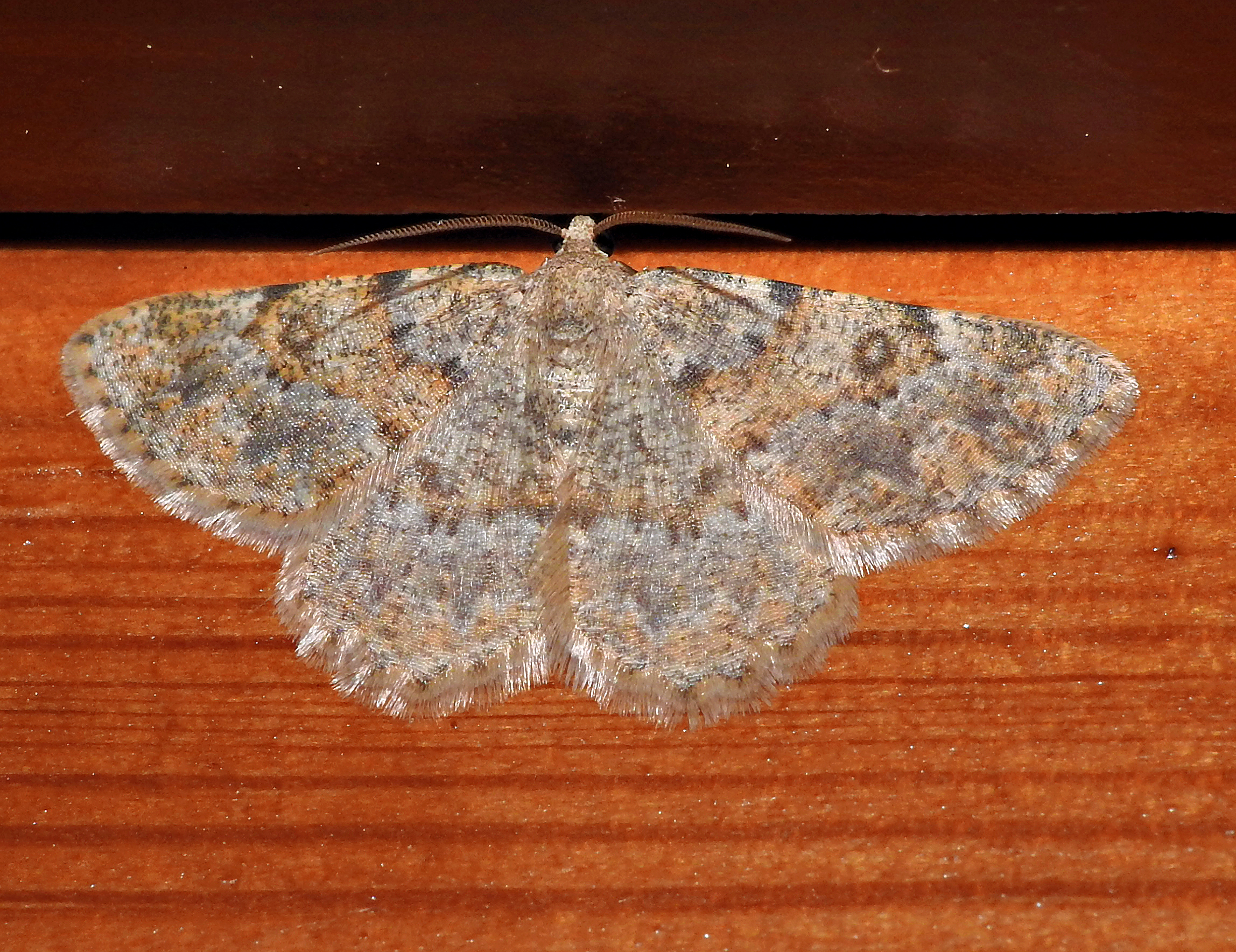
19-5-2019 BUMI HILLS, ZIMBABWE - 19-5-2019 BUMI HILLS, ZIMBABWE - GLOOMY ANTLION MOTH Lachlathetes moestus)
%2021.jpg)
Lachlathetes moestus, also known as the Gloomy Antlion, is a very large insect from southern Africa that is one of the biggest antlions in the world. Key facts include its impressive size (wingspan up to 160mm), distinct appearance with a grey, hairy thorax and reddish-pink legs, and its large, black larvae that live freely in the soil. It is common in northern South Africa, Mozambique, Zimbabwe, and Malawi, with adults active in late summer (March to April).
Identification and appearance
Size: Very large, with a wingspan up to 160mm. It is one of the largest antlion species globally.
Thorax: Grey and very hairy, with a lighter coloration on top compared to the sides.
Abdomen: Dark grey.
Legs: Dull to bright reddish-pink.
Wings: Long and broad-tipped.
19-5-2019 BUMI HILLS, ZIMBABWE - SOUTHERN GREATER KUDU (FEMALE) (Tragelaphus Strepsiceros)
%2010.jpg)
The Greater kudu (Tragelaphus strepsiceros) is a woodland antelope found in Africa. Despite occupying such widespread territory, Greater kudus are sparsely populated in most areas due to declining habitat, deforestation, and poaching.
Greater kudus have a narrow body with long legs, and their coats can range from brown/bluish-grey to reddish-brown. They possess between 4 and 12 vertical white stripes along their torso. The head is usually darker in color than the rest of the body and exhibits a small white v-shaped mark that runs between the eyes. Bulls tend to be much larger than cows, and vocalize much more; they also have beards running along their throats and large horns with two and a half twists.
The range of Greater kudu extends from the east in Ethiopia, Tanzania, Eritrea, and Kenya into the south where they are found in Zambia, Angola, Namibia, Botswana, Zimbabwe, and South Africa. Other regions where they occur are the Central African Republic, Chad, the Democratic Republic of the Congo, Djibouti, Malawi, Mozambique, Somalia, Swaziland, and Uganda. These antelopes live in mixed scrub woodlands and bush on abandoned fields and degraded pastures, mopane bush, and acacia in lowlands, hills, and mountains. They will occasionally venture onto plains only if there is a large abundance of bushes but normally avoid such open areas to avoid becoming an easy target for their predators.
19-5-2019 BUMI HILLS, ZIMBABWE - AFRICAN SAVANNA ELEPHANT (Loxodonta Africana)
%209.jpg)
The African bush elephant (Loxodonta africana), also known as the African savanna elephant, is a species of elephant native to sub-Saharan Africa. It is one of three extant elephant species and, along with the African forest elephant, one of two extant species of African elephant. It is the largest living terrestrial animal, with fully grown bulls reaching an average shoulder height of 3.04–3.36 metres (10.0–11.0 ft) and a body mass of 5.2–6.9 tonnes (5.7–7.6 short tons); the largest recorded specimen had a shoulder height of 3.96 metres (13.0 ft) and an estimated body mass of 10.4 tonnes (11.5 short tons). The African bush elephant is characterised by its long prehensile trunk with two finger-like processes; a convex back; large ears which help reduce body heat; and sturdy tusks that are noticeably curved. The skin is grey with scanty hairs, and bending cracks which support thermoregulation by retaining water.
%2010.jpg)
The African bush elephant inhabits a variety of habitats such as forests, grasslands, woodlands, wetlands and agricultural land. It is a mixed herbivore feeding mostly on grasses, creepers, herbs, leaves, and bark. The average adult consumes about 150 kg (330 lb) of vegetation and 230 L (51 imp gal; 61 US gal) of water each day. A social animal, the African bush elephant often travels in herds composed of cows and their offspring. Adult bulls usually live alone or in small bachelor groups. During the mating season, males go through a process called musth, a period of high testosterone levels and heightened aggression. For females, the menstrual cycle lasts three to four months, and gestation around 22 months, the longest of any mammal.
%2011.jpg)
Since 2021, the African bush elephant has been listed as Endangered on the IUCN Red List. It is threatened foremost by habitat destruction, and in parts of its range also by poaching for meat and ivory. Between 2003 and 2015, the illegal killing of 14,606 African bush elephants was reported by rangers across 29 range countries. Chad is a major transit country for smuggling of ivory in West Africa. This trend was curtailed by raising penalties for poaching and improving law enforcement. Poaching of the elephant has dated back to the 1970s and 80s, which were considered the largest killings in history. In human culture, elephants have been extensively featured in literature, folklore and media, and are most valued for their large tusks in many places.
%2012.jpg)
Savanna elephants live in a rather complex social hierarchy. These animals gather into family units, consisting of about 10 females and their offspring. Reaching maturity, male calves usually leave the family unit, forming bachelor herds or living solitarily. As a general rule, males socialize with these family groups only when mating. Meanwhile, several family herds may gather together, making up a 'clan'. Each clan is dominated by a female matriarch and can consist of as many as several hundred elephants. African bush elephants are very careful and protective animals. Allomothering is a common practice in this species: females can raise calves of other females of their herd.
%2015.jpg)
They protect and care for the calves of the herd, while all adults are sleeping. If a calf strays too far, these allomothers are responsible for retrieving the baby. These active animals are constantly on the move. These elephants forage during the daytime hours, wandering the home range of their herd. Savanna elephants freely communicate with conspecifics both verbally and non-verbally.
The African bush elephant is the largest and heaviest living land animal. Under optimal conditions where individuals are capable of reaching full growth potential, fully grown mature males are about 3.20 m (10.5 ft) tall at the shoulder and weigh 6.0 t (6.6 short tons) on average (with 90% of fully grown males under optimal conditions being between 3.04–3.36 m (10.0–11.0 ft) and 5.2–6.9 t (5.7–7.6 short tons).
%2016.jpg)
Mature fully grown females are smaller at about 2.60 m (8 ft 6 in) tall at the shoulder and 3.0 t (3.3 short tons) in weight on average under optimal growth conditions (with 90% of fully grown females ranging between 2.47–2.73 m (8 ft 1 in – 8 ft 11 in) and 2.6–3.5 t (2.9–3.9 short tons) in optimal conditions).
The maximum recorded shoulder height of an adult bull is 3.96 m (13.0 ft), with this individual having an estimated weight of 10.4 t (11.5 short tons). Another individual with a similar weight of more than 10 t (9.8 long tons; 11 short tons) was found in Kenya in 2025, making it one of the largest elephants ever recorded. Elephants attain their maximum stature when they complete the fusion of long-bone epiphyses, occurring in males around the age of 40 and females around 25 years of age.
Monday, 11 April 2022
20-5-2019 BUMI HILLS, ZIMBABWE - WESTERN GREY HERON (Ardea cinerea ssp. cinerea)
%2010.jpg)
The term "western grey heron" is a variation of Grey Heron (Ardea cinerea), a large, long-legged wading bird found in wetlands across much of Europe, Asia, and Africa. It has grey upperparts, a white head with black stripes leading to a crest, and a yellowish-pink bill. Known for its calm foraging behavior, it hunts by standing still and striking quickly at fish, amphibians, and small mammals.
%2011.jpg)
Appearance
Plumage: Ashy-grey on the back and wings, with a greyish-white underside.
Head: White with a black stripe running from above the eye to the back of the head, where it forms a crest.
Neck: Light colored with dark streaks on the front.
Bill: Long, strong, and yellowish-pink, becoming brighter in the breeding season.
Legs: Long and brownish.
Size: Stands about 1 meter tall with a wingspan of around 1.75 meters.
Behavior and diet
Foraging: Stalks or stands motionless in the water, waiting for prey to come close.
Subscribe to:
Comments (Atom)