TOTAL PAGEVIEWS

TRANSLATE

Tuesday, 30 November 2021

2-6-2019 LINYANTI CAMP, BOTSWANA - COMMON HAMERKOP (Scopus umbretta ssp. umbretta)


The hamerkop (Scopus umbretta), also called the umbrette, is a medium-sized bird. It is the only living species in the genus Scopus and the family Scopidae. The species and family was long thought to sit with the Ciconiiformes but is now placed with the Pelecaniformes, and its closest relatives are thought to be the pelicans and the shoebill. The shape of its head with a long bill and crest at the back is reminiscent of a hammer, which has given this species its name after the Afrikaans word for hammerhead. It is a medium-sized waterbird with brown plumage. It is found in mainland Africa, Madagascar and Arabia, living in a wide variety of wetlands, including estuaries, lakesides, fish ponds, riverbanks, and rocky coasts. The hamerkop is a sedentary bird that often shows local movements.


The hamerkop takes a wide range of prey, mostly fish and amphibians, but shrimps, insects and rodents are taken too. Prey is usually hunted in shallow water, either by sight or touch, but the species is adaptable and will take any prey it can. The species is renowned for its enormous nests, several of which are built during the breeding season. Unusually for a wading bird the nest has an internal nesting chamber where the eggs are laid. Both parents incubate the eggs, and raise the chicks.

The species is not globally threatened and is locally abundant in mainland Africa and Madagascar. The International Union for Conservation of Nature (IUCN) has assessed it as being of least concern.

30-11-2021 MONTE CORONA, VALENCIA - STINK BUG (Acrosternum heegeri)


30-11-2021 MONTE CORONA, VALENCIA - NORTHERN CADDISFLIES (Tribe Stenophylacini)


30-11-2021 MONTE CORONA, VALENCIA - SHIELDBACK KATYDID (Genus Thyreonotus)


30-11-2021 MONTE CORONA, VALENCIA - SHIELDBACK KATYDID (Thyreonotus corsicus)


Sunday, 28 November 2021

2-6-2019 LINYANTI CAMP, BOTSWANA - COMMON BULBUL (Pycnonotus barbatus)


The common bulbul, or Pycnonotus barbatus, is a passerine bird belonging to the bulbul family. It is characterized by a fairly short, thin bill with a slightly downward curve on the upper mandible. The plumage is similar for both sexes, featuring a dark brown head and upperparts. The bird's bill, legs, and feet are black, and it possesses a dark brown eye with an inconspicuous dark eye-ring. With a length of about 18 cm (7.1 in), the common bulbul has a notably long tail.

When identifying the common bulbul, look for its dark brown head and upperparts, and its long tail. The black bill, legs, and feet are also distinctive, as is the dark brown eye. The eye-ring may be difficult to discern. The bird's overall length and silhouette are key features to observe.

The common bulbul is adaptable and can be found in a variety of habitats including woodland, coastal bush, forest edges, riverine bush, montane scrub, and mixed farming areas. It also thrives in exotic thickets, gardens, and parks.

This species is a widespread resident breeder across much of Africa, and has even been found breeding as far north as southern Spain. Its range extends from Morocco to Tunisia, southern Mauritania to western Chad and northern Cameroon, central Nigeria to Gabon and southern Congo, eastern Chad to northern and central Sudan and eastern Egypt, and in southeastern Sudan, western, central, and eastern Ethiopia, and Eritrea.

2-6-2019 LINYANTI CAMP, BOTSWANA - ZAMBESI CRESTED BARBET (Trachyphonus vaillantii ssp. nobilis)


It is found in forests, savannah, suburban gardens, woodland thickets and watercourses in Angola, Botswana, Burundi, Democratic Republic of the Congo, Eswatini, Malawi, Mozambique, Namibia, Rwanda, South Africa, Tanzania, Uganda, Zambia, and Zimbabwe.

2-6-2021 LINYANTI, BOTSWANA - VERREAUX'S EAGLE OWL (Bubo lacteus)


28-11-2021 LLUTXENT, VALENCIA - EURASIAN BLACKCAP (MALE) (Sylvia atricapilla)


28-11-2021 LLUTXENT, VALENCIA - EUROPEAN GOLDFINCH (Carduelis carduelis)


28-11-2021 LLUTXENT, VALENCIA - COMMON CHAFFINCH (FEMALE) (Fringilla coelebs)


28-11-2021 LLUTXENT, VALENCIA - EUROPEAN STONECHAT (MALE) (Saxicola rubicola)


28-11-2021 LLUTXENT, VALENCIA - EUROPEAN ROBIN (Erithacus rubecula)


28-11-2021 LLUTXENT, VALENCIA - EUROPEAN STONECHAT (FEMALE) (Saxicola rubicola)


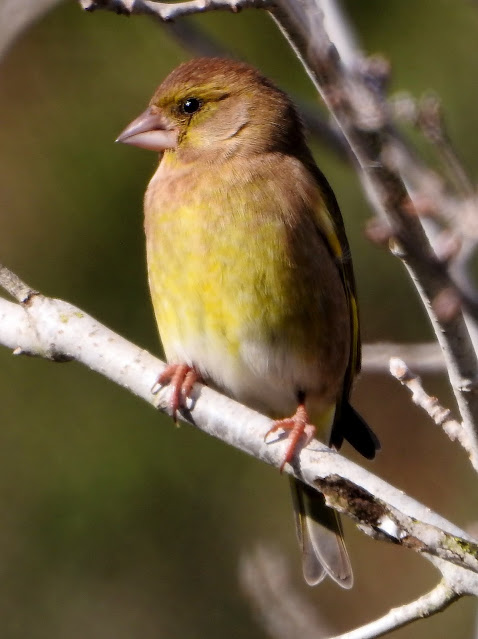
28-11-2021 LLUTXENT, VALENCIA - EUROPEAN GREENFINCH (Chloris chloris)


Saturday, 27 November 2021

2-6-2019 LINYANTI CAMP, BOTSWANA - SOUTHERN LION (MALE) (Panthera leo ssp. melanochaita)


The Southern Lion (*Panthera leo melanochaita) is a subspecies covering East & Southern African lions, known for diverse manes (sandy to black, variable length), powerful hunting (mostly by females), social pride life, and being Vulnerable due to habitat loss and human conflict, with threats including poaching, though some protected populations thrive. They are big, meaty carnivores, using roars for communication, and rare white lions appear in this group. 


Key Characteristics
Range & Classification: Includes lions from Southern & East Africa, distinct from West/Central African populations, covering areas like Kruger, Maasai Mara, and Zambia.
Appearance: Varies from light buff to dark brown fur; manes differ greatly in color and length; males develop heavier manes in cooler highlands.
White Lions: A rare genetic variation (leucism) occasionally seen in the Kruger/Timbavati area, not albinos.
Size: Males are large, with longer manes as they age, sometimes reaching knee length, notes Fandom. 


Behavior & Diet
Social Structure: Live in prides with related females and dominant males, with young males eventually pushed out.
Hunting: Females do most hunting (90%), targeting wildebeest, zebra, antelope; they stalk and suffocate prey.
Vocalization: Roars can travel 8km; communicate with meows, grunts, growls, and body language. 


Conservation Status & Threats

IUCN Status: Classified as Vulnerable due to significant population decline (around 33%).
Major Threats: Habitat loss, human-lion conflict (retaliatory killings), snaring, poaching, and prey depletion.
Conservation: While populations decline overall, some areas (Botswana, Namibia, South Africa) see increases due to focused conservation efforts. 

2-6-2019 LINYANTI CAMP, BOTSWANA - BROWN SNAKE EAGLE (Circaetus cinereus)


The Brown Snake Eagle, with its scientific name Circaetus cinereus, is a robust bird of prey belonging to the Accipitridae family. It is characterized by its predominantly dark brown plumage, which may exhibit a purplish sheen under certain lighting conditions. The wings are similarly colored, save for the contrasting whitish-grey unmarked flight feathers. A relatively short tail displays brown and grayish cream bars, visible during flight.

This medium-sized eagle is distinguished by its large head and bare legs, setting it apart from other brownish eagles in Africa. Juveniles resemble adults but may show sparse white feather bases, with southern individuals displaying more pronounced white speckling. The species can be confused with a juvenile Bateleur in poor light, but the Bateleur has more varied coloration, brown eyes, a shorter tail, and shorter legs.


The Brown Snake Eagle inhabits open woods and wooded savanna, often favoring areas with gulleys or wooded hillocks that interrupt flat terrain. It shows a preference for more densely wooded areas compared to related snake eagles and can be found from sea level up to elevations of 2,000 meters.

Widely distributed across Africa, this species is found from southeastern Mauritania and Senegal to Guinea, Sierra Leone, and across to southern Chad, Sudan, South Sudan, and into southern Somalia, Kenya, Uganda, and the southern Democratic Republic of the Congo. Its range extends down through southern Africa to parts of Namibia, Botswana, Zimbabwe, and northeastern and eastern South Africa.


The Brown Snake Eagle is a solitary bird, with breeding pairs rarely seen together. It exhibits territorial display flights, which can escalate to erratic butterfly-like movements and, in intense situations, talon interlocking and cartwheeling. This species is not migratory but may exhibit nomadic tendencies.

Its vocalizations include a hoarse, guttural "hok-hok-hok-hok," often used in territorial displays, and a softer "kwee-oo" likely serving as a contact call at the nest.

Breeding occurs from November to July in the northern part of its range and mainly from December to July in Zimbabwe and February to October in Kenya. Nests are relatively small and placed in flat-topped trees or on electric pylons. A single egg is laid and incubated primarily by the female for about 50 days. The juvenile remains in the nest for 60-100 days before fledging.


The Brown Snake Eagle may be confused with the juvenile Bateleur or other medium-sized brown eagles, but its large head, bare legs, and specific tail barring help differentiate it.

This eagle preys predominantly on snakes, both venomous and non-venomous, using its thick-skinned legs as protection against bites. It hunts from perches or hillocks, often decapitating large snakes before bringing them to the nest. Alternate prey includes monitor lizards, toads, francolins, guineafowl, chickens, rats, and possibly other mammals.

The Brown Snake Eagle is classified as Least Concern by the IUCN, with a broad range and a presence over 23.3 thousand square kilometers. Although it may be naturally scarce and potentially declining, it does not currently require immediate conservation attention.

27-11-2021 MONTE CORONA, VALENCIA - TEQUILA AGAVE (Agave tequilana)


2-6-2019 LINYANTI, BOTSWANA - MAGPIE SHRIKE (Corvinella melanoleuca)


The magpie shrike is a long-tailed, black and white bird native to African savannas that hunts insects and small vertebrates by dropping onto them from a perch. It is known for its large size, glossy black head, white wing patches, and very long tail, which can be nearly as long as its body. These birds are social, live in small family groups, and are listed as a species of "least concern". 

Physical characteristics
Size: 34–50 cm in length, including the long tail.
Plumage: Glossy black with white patches on the wings and a long, floppy, graduated tail.
Sexual dimorphism: The flanks are white in females and black in males. 

Habitat and distribution
Habitat: Found in dry and moist savannas and sparse broadleaf woodlands. They often move into recently burned areas to forage.
Distribution: Native to eastern and southeastern Africa, including areas in Kenya, Tanzania, Angola, Namibia, Zambia, Zimbabwe, Botswana, and South Africa. 


Behavior and diet
Hunting: Perch-and-wait predators that drop down on prey like insects, small lizards, and nestlings.
Social Structure: Live in small, non-migratory family groups of 3 to 10 birds.
Vocalizations: Noisy birds that make a shrill, starling- or parrot-like "pleeee-eouuu" and harsh, grating cries.
Food storage: Like other shrikes, they are known to impale prey on thorns or barbed wire to store for later, which is why some shrikes are informally called "butcher birds". 

Reproduction
Courtship: Includes dancing and flight displays, with the male offering food to the female.
Nesting: Lays 2–6 eggs in a cup-shaped nest.
Incubation and care: The female incubates the eggs for about 16 days, often with food provided by the male and other group members. Both parents and previous offspring help care for the chicks, who leave the nest after 15–19 days. 

Conservation status
Global status: Least Concern (LC) according to the IUCN.
Local status: Also listed as Least Concern in South Africa. 

26-11-2021 MONTE CORONA, VALENCIA - CARPET MOTH (Catarhoe basochesiata)


26-11-2021 MONTE CORONA, VALENCIA - SHIELDBACK KATYDID