TOTAL PAGEVIEWS

TRANSLATE

Wednesday, 26 January 2022

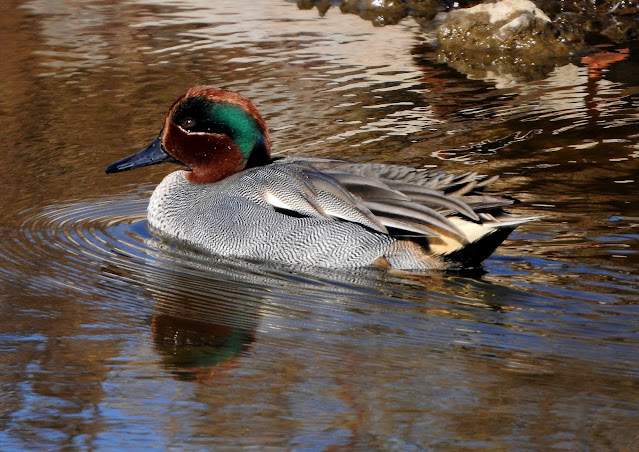
26-1-2022 MOROS MARJAL. VALENCIA - GREEN WINGED TEAL (FEMALE) (Anas crecca)


26-1-2022 MOROS MARJAL. VALENCIA - NORTHERN SHOVELER (FEMALE) (Spatula clypeata)


26-1-2022 MOROS MARJAL. VALENCIA - NORTHERN SHOVELER (MALE) (Spatula clypeata)


26-1-2022 MOROS MARJAL. VALENCIA - EURASIAN GREAT CORMORANT (Phalacrocorax carbo)


26-1-2022 MOROS MARJAL. VALENCIA - EURASIAN COOT (Fulica atra)


26-1-2022 MOROS MARJAL. VALENCIA - EUROPEAN ROBIN (Erithacus rubecula)


26-1-2022 MOROS MARJAL. VALENCIA - COMMON CHIFFCHAFF (Phylloscopus collybita)


Tuesday, 25 January 2022

28-5-2019 SOMALISA CAMP, ZIMBABWE - LILAC BREASTED ROLLER (Coracias caudatus)


The lilac-breasted roller (Coracias caudatus) is a member of the roller family, Coraciidae, resplendent in a panoply of pastel hues. This African bird is a sight to behold, with its lilac throat and breast, olive crown to mantle, and cheeks of lilac-rufous. The species is further adorned with long, black tail streamers, which juveniles lack. Unofficially, it is considered the national bird of Kenya.
In the field, the lilac-breasted roller is almost unmistakable. Adults boast a lilac throat that deepens into a darker lilac breast, with an olive crown and mantle. The cheeks and ear coverts are a lilac-rufous. Juveniles and immatures can be identified by their lack of tail streamers and a throat and breast of rufous-tawny with broad diffuse buffy-white streaks. The species is not sexually dimorphic, though males may be slightly larger.

The lilac-breasted roller favors open woodland and savanna, typically avoiding treeless expanses. They are often seen perched high, surveying the landscape for prey.

28-5-2019 SOMALISA CAMP, ZIMBABWE - SMITH'S BUSH SQUIRREL (Paraderus Cepapi)


Smith's bush squirrel (Paraxerus cepapi), also known as the yellow-footed squirrel or tree squirrel, is an African bush squirrel which is native to woodlands of the southern Afrotropics.

It is found in Angola, Botswana, the DRCongo, Malawi, Mozambique, Namibia, South Africa, Tanzania, Zambia, and Zimbabwe. It is a common rodent which is diurnal by nature.

Its total length is 350 mm (14 in), half of which is tail; weight 200 g (7.1 oz). The coat colour varies throughout the region. In the western and arid parts of its range, it is pale grey, and in the eastern localities, more brown. Its head and legs are a rusty colour. Colouration on the chest varies from yellowish to buff in the east, to white in the west. This squirrel's belly is white. These alert and ever busy creatures carry their long tails extended backwards.

Smith's bush squirrels are primarily vegetarian, but like most rodents, they take insect prey and use their front feet to manipulate food items when feeding. They scatter-hoard seeds next to tree trunks or grass tufts, thereby facilitating tree regeneration.


Essentially arboreal animals, they also spend a great deal of time on the ground, foraging for food. When disturbed, Smith's bush squirrels always seek the refuge of trees. At night, territorial family groups nest together in holes in trees. Offspring become sexually mature between six and nine months old, when they are forcibly evicted by the breeding pair. The males are mainly responsible for territorial defense, although females also chase intruders when they care for dependent pups. To promote group cohesion, a common scent is shared by mutual grooming, which is an important facet of the social fibre of this species. Smith's bush squirrels are diligent in their grooming and a mother tree squirrel holds her offspring down with her fore legs while grooming it with licks, nibbles, and scratches with her claws.

A conspicuous feature of their behaviour when under threat is 'mobbing': all the members of the colony make harsh clicking sounds while they flick their tails, building up momentum and gradually getting louder. In some areas, they are solitary, or are found in small family groups; a lone tree squirrel relies on its wits when in danger and always keeps a branch or the trunk of a tree between it and the enemy. Smith's bush squirrels are always alert, and when alarmed, run away with great speed, making for the nearest tree where they lie motionless, flattened against a branch.

28-5-2019 SOMALISA CAMP, ZIMBABWE - SOUTHERN WHITE CROWNED SHRIKE (Eurocephalus angustimens)


The southern white-crowned shrike (Eurocephalus anguitimens) is a species of bird in the family Laniidae. It is found in Angola, Botswana, Mozambique, Namibia, South Africa, and Zimbabwe. Its natural habitats are subtropical or tropical dry forests and dry savannah.

The southern white-crowned shrike grows to a length of about 24 cm (9 in). The sexes are alike; in the adult bird the crown and forehead are white, and the mask is black and extends above and below the eye to the side of the neck. The nape and upper parts are ashy-brown and the wings and tail are dark brown. The underparts are off-white, the upper breast being tinged with buff. The lower belly and vent areas are ashy-brown. The beak is black, the eyes brown and the legs dark brown. Juveniles are similar to adult birds but the crown is slightly mottled and barred and grey rather than white. The chin and throat are white but the remaining parts of the underparts are tinged with ashy brown.

24-1-2022 MONTE CORONA, VALENCIA - GREAT TIT (Parus major)


25-1-2022 GANDIA PLAYA, VALENCIA - YELLOW LEGGED GULL (JUVENILE) (Larus michahellis)

                                    https://www.inaturalist.org/taxa/59202-Larus-michahellis


25-1-2022 GANDIA PLAYA, VALENCIA - YELLOW LEGGED GULL (JUVENILE) (Larus michahellis)


Monday, 24 January 2022

28-5-2019 SOMALISA CAMP, ZIMBABWE - CINAMON BREASTED BUNTING (Emberiza tahapisi)


The cinnamon-breasted bunting (Emberiza tahapisi) or cinnamon-breasted rock-bunting is a species of bird in the family Emberizidae. It is widespread in Africa south of the Sahara.

They weigh between 11.6 and 21 grams with a length of 13-15 centimeters. Although plumage differs between juveniles, males, and females, cinnamon-breasted buntings can be identified by their striped head and cinnamon brown underparts. Males have black and white stripes whereas the female stripes are less dark and browner in color. The throat patch is uniformly black on males but smaller, grayish, and densely blotched on females. Juveniles are similar to females but with buffier head stripes and a paler, browner throat. After the breeding season, juveniles moult partially and adults moult completely so all primaries and secondaries are the same age.

Cinnamon-breasted bunting songs are composed of short, high-pitched, rapid trills. Males are known to have eight distinct songs with 40 discrete syllables. Song similarity decreases with distance between local populations but all end with a characteristic final whistle syllable. Individuals perform songs from elevated positions such as from trees, bushes, or rocks.

Sunday, 23 January 2022

28-5-2019 SOMALISA CAMP, ZIMBABWE - WAHLBERG STRIPED SKINK (Trachylepis striata ssp. wahlbergi)


Trachylepis wahlbergii, also known commonly as Wahlberg's striped skink, is a species of lizard in the family Scincidae. The species is native to Southern Africa.

Trachylepis wahlbergii has been considered a subspecies of Trachylepis striata. Whether T. wahlbergii is truly distinct from T. striata is not fully settled.

T. wahlbergii occurs in southern Angola, northern Botswana, northern Namibia, western Mozambique, Zambia, and northern, western and southern Zimbabwe.

The specific name, wahlbergi, is in honour of Swedish Naturalist Johan August Wahlberg.

T. wahlbergii is viviparous.

28-5-2019 SOMALISA, ZIMBABWE - DICKINSON'S KESTREL (Falco dickinsonii)


The Dickinson's kestrel, or Falco dickinsoni, is a bird of prey from the falcon family Falconidae, named in honor of John Dickinson, an English physician and missionary. This species, also known as the white-rumped kestrel, is a relatively small and robust kestrel with a distinctive large, square head. Adults measure between 27 to 30 centimeters in length, with a wingspan of 61 to 68 centimeters, and weigh from 167 to 246 grams. The females are marginally larger and heavier than the males. Their plumage is predominantly dark grey, with a paler head and rump. The tail features grey with narrow black bars and a broad subterminal band, while the underside of the flight feathers are barred. The cere and feet are a striking yellow, with bare yellow skin encircling the eye. The bill is dark grey, and the eyes are a deep brown. Juvenile birds present a grey-brown coloration with barred flanks, lacking the paler head and rump of adults, and have a greenish cere and eye-ring.


The Dickinson's kestrel, or Falco dickinsoni, is a bird of prey from the falcon family Falconidae, named in honor of John Dickinson, an English physician and missionary. This species, also known as the white-rumped kestrel, is a relatively small and robust kestrel with a distinctive large, square head. Adults measure between 27 to 30 centimeters in length, with a wingspan of 61 to 68 centimeters, and weigh from 167 to 246 grams. The females are marginally larger and heavier than the males. Their plumage is predominantly dark grey, with a paler head and rump. The tail features grey with narrow black bars and a broad subterminal band, while the underside of the flight feathers are barred. The cere and feet are a striking yellow, with bare yellow skin encircling the eye. The bill is dark grey, and the eyes are a deep brown. Juvenile birds present a grey-brown coloration with barred flanks, lacking the paler head and rump of adults, and have a greenish cere and eye-ring.


When identifying Dickinson's kestrel, look for the pale head and rump contrasting with the darker grey body. The yellow cere and feet, as well as the yellow skin around the eye, are key features. In flight, observe the barred underside of the wings and the broad subterminal band on the tail.

This kestrel favors savanna and open woodland habitats, particularly those that are swampy and near water. It has a strong association with miombo woodland and is often seen around palm trees, such as Hyphaene and Borassus species, as well as baobab trees. It can also be found in coconut plantations in certain regions.

The Dickinson's kestrel's range extends across much of Mozambique, Zimbabwe, Zambia, and Malawi, with its presence also noted in northeastern South Africa, northern Botswana, northeast Namibia, eastern Angola, southern Democratic Republic of the Congo, and parts of Tanzania. It is an occasional visitor to Kenya, with a total range of about 3.4 million square kilometers.

This kestrel typically hunts from a perch rather than by hovering. It preys on large insects like grasshoppers, as well as lizards, amphibians, and occasionally birds, bats, rodents, and snakes. It is known to be attracted to grass fires, seizing the opportunity to capture insects and other prey in flight.

28-5-2019 SOMALISA CAMP, ZIMBABWE - SOUTHERN GIRAFFE (Giraffa giraffa)


The southern giraffe (Giraffa giraffa), also known as two-horned giraffe, is a species of giraffe native to Southern Africa. The IUCN recognises four giraffe species, with several recognised subspecies.

Southern giraffes have rounded or blotched spots, some with star-like extensions on a light tan background, running down to the hooves. They range from South Africa, Angola, Namibia, Botswana, Zambia, Zimbabwe, Mozambique. Their approximate population is composed of 44,500 to 50,000 individuals.

Giraffes are considered Vulnerable to extinction by the IUCN.


Living giraffes were originally classified as one species by Carl Linnaeus in 1758, under the binomial name Cervus camelopardalis. Morten Thrane Brünnich classified the genus Giraffa in 1772. Once considered a subspecies of the conglomerate Giraffa camelopardalis species, recent studies proposed the southern giraffe as a separate species of a reorganised genus Giraffa, under the binomial name Giraffa giraffa.


Angolan giraffe (G. g. angolensis), also known as Namibian Giraffe Is found in Southern Angola, northern Namibia, south-western Zambia, Botswana, and western Zimbabwe. A 2009 genetic study on this subspecies suggests the northern Namib Desert and Etosha National Park populations each form a separate subspecies. This subspecies has large brown blotches with edges that are either somewhat notched or have angular extensions. The spotting pattern extends throughout the legs but not the upper part of the face. The neck and rump patches tend to be fairly small. The subspecies also has a white ear patch.  Around 13,000 animals are estimated to remain in the wild; and about 20 are kept in zoos.


South African giraffe (G. g. giraffa), also known as Cape giraffe Is found in northern South Africa, southern Botswana, southern Zimbabwe, Eswatini, south-western Mozambique. and Malawi It has dark, somewhat rounded patches "with some fine projections" on a tawny background colour. The spots extend down the legs and get smaller. The median lump of males is less developed.  Approximately 31,500 are estimated to remain in the wild, and around 45 are kept in zoos.


The South African subspecies of the southern giraffe has dark, somewhat rounded patches "with some fine projections" on a tawny background colour. The spots extend down the legs and get smaller. The median lump of bulls is less developed.

The southern giraffes live in the savannahs and woodlands of northern South Africa, Angola, southern Botswana, southern Zimbabwe, Zambia and south-western Mozambique. After local extinctions in various places, South African giraffes have been reintroduced in many parts of Southern Africa, including Eswatini, Majete Game Reserve in Malawi, and Maputo and Zinave National Parks in Mozambique, the Angolan giraffe has been reintroduced to the Cuatir Conservation Area in Southern Angola and starting in 2023 Iona National Park on the north bank of the Cunene River.


They are common in both inside and outside of protected areas.

Southern giraffes usually live in savannahs and woodlands where food plants are available. Southern giraffes are herbivorous mammals. They feed on leaves, flowers, fruits and shoots of woody plants such as Acacia.
 
Southern giraffes are not threatened, as their population is increasing.