TOTAL PAGEVIEWS

TRANSLATE

Sunday, 13 February 2022

6-4-2019 LINYANTI, BOTSWANA - BRADFIELD'S HORNBILL (Lophoceros bradfieldi)


Bradfield's hornbill (Lophoceros bradfieldi) is an African hornbill. It is a medium-sized bird, 50–57 cm (20–22 in) in length, characterized by black back and wings and a white belly. The tip feathers of the long tail are white. Females are smaller than males and can be recognized by turquoise facial skin. The eyes are yellow and the beak is red. The beak is long and presents no casque.

This is an uncommon resident of the mopane woodlands and mixed thorn fields of northeastern Namibia (especially on the Waterberg plateau), northern Botswana, southern Angola and eastern Zimbabwe. They feed on fruits, large insects, nuts and small reptiles.

The common name and Latin binomial commemorate the South African naturalist R. D. Bradfield (1882-1949).


Bradfield's Hornbill (*Lophoceros bradfieldi) is a Southern African woodland bird known for its black & white plumage, red beak (no casque), piping calls, and insect-heavy diet, nesting in tree cavities where the female seals herself in to incubate eggs. They're found in mopane/teak woodlands of Namibia, Botswana, Angola, Zambia, and Zimbabwe, usually solitary or in pairs, and are identified by white tail corners in flight and a black eye mask. 


Key Characteristics

Appearance: Medium-sized (50-57cm) with a black back, white belly, yellow eyes, and a red bill without a casque. Females have turquoise facial skin.
Distinguishing Marks: White tips on the tail feathers, visible when flying.
Call: A distinctive, loud, rising and falling series of piping notes, often heard in summer.
Habitat: Prefers broad-leaved woodlands, especially those with Mopane, Zambezi Teak (Baikiaea), and Bloodwood (Pterocarpus) on sandy soils.
Diet: Primarily large insects (locusts, beetles, termites) but also eats fruits, nuts, and small vertebrates like lizards. 


Behavior & Breeding
Social Structure: Usually seen alone, in pairs, or small family groups.
Nesting: Nests in natural tree cavities; the female seals herself in with mud, leaving a slit for the male to feed her.
Incubation: Female incubates for at least 28 days; she leaves when chicks are a few weeks old.
Fledging: Chicks stay in the nest for about 50 days, becoming independent around 3 months old. 

Conservation & Name
Status: Least Concern, though facing threats from habitat loss.
Distribution: Near-endemic to Southern Africa (Namibia, Botswana, Angola, Zambia, Zimbabwe).

Named After: R.D. Bradfield, a South African naturalist who collected the first specimen. 

4-6-2019 LINYANTI CAMP, BOTSWANA - TAWNY EAGLE (Aquila rapax)


The tawny eagle (Aquila rapax) is a large bird of prey. Like all eagles, it belongs to the family Accipitridae. Its heavily feathered legs mark it as a member of the subfamily Aquilinae, also known as booted eagles. Tawny eagles have an extensive but discontinuous breeding range that constitutes much of the African continent as well as the Indian subcontinent, with rare residency in the southern Middle East. Throughout its range, it favours open dry habitats such as semideserts, deserts steppes, or savanna plains. Despite its preference for arid areas, the species seldom occurs in areas where trees are entirely absent. It is a resident breeder which lays one to three eggs in a stick nest most commonly in the crown of a tree. 


The tawny eagle is perhaps the most highly opportunistic of all Aquilinae, and often scavenges on carrion or engages in kleptoparasitism towards other carnivorous animals but is also a bold and active predator, often of relatively large and diverse prey. It is estimated that tawny eagles can reach the age of 16 years old. Nonetheless, precipitous declines have been detected throughout the tawny eagle's range. Numerous factors, particularly loss of nesting habitat due to logging and global warming, as well as persecution (largely via poisoning) and other anthropogenic mortality (largely through contact with various manmade objects) are driving the once numerous tawny eagle perhaps to the brink of extinction.


The tawny eagle is considered to appear "inelegant, scruffy-looking" but has a fairly characteristic aquiline silhouette. The species has a fairly long neck and long deep bill with a gape line level with the eye, moderately long wings with fairly pronounced "fingers" and a slightly rounded to almost square-ended and shortish tail, which can be more reminiscent of the tail of a vulture than that of other eagles. The feathering on the legs is extensive and can appear almost baggy-looking. The bill and head are strong and bold, the body well-proportioned and feet are powerful while the countenance is quite fierce-looking. While perching, the tawny eagle tends to sit rather upright, often on stumps, posts, low trees or treetops for long periods of the day or may descend to the ground to walk somewhat unsteadily with a more horizontal posture. The wingtips when perched are roughly even with the tip of the tail. Adults have variably colored eyes, ranging from yellow to pale brown to yellow brown, while those of juveniles are dark brown. Both the cere and feet are yellow at all ages. 


The tawny eagle is polymorphic with considerable individual variation in plumage, resulting in occasional disparities in plumages that can engender confusion in some. In adulthood, they can vary in coloration from all dark grey-brown to an occasionally streaky (or more plain) foxy-rufous to buffish-yellow. Most adults are usually a general grey-brown or rufous-tawny color, with occasional pale spotting visible at close quarters on the nape and belly, coverts uniformly toned as the body. The nape is consistently dark and uniform despite the feathers often being tipped paler with other feathers in adults, lacking the contrasting paler feathers often seen in other Aquila. Females, in addition to being slightly larger, may tend to be slightly darker and more streaked than the males. The most blackish-brown individuals tend to occur in India. Adults often show relatively little varying colors apart from their somewhat blacker wing and tail feathers, though when freshly molted great wing coverts and secondaries may show small pale tips which may form pale lines along closed wing has tawny upper parts and blackish flight feathers and tail.

4-6-2019 LINYANTI CAMP, BOTSWANA - LILAC BREASTED ROLLER (Coracias caudatus)


The lilac-breasted roller (Coracias caudatus) is an African bird of the roller family, Coraciidae. It is widely distributed in Southern and Eastern Africa, and is a vagrant to the southern Arabian Peninsula. It prefers open woodland and savanna, and it is for the most part absent from treeless places. Usually found alone or in pairs, it perches at the tops of trees, poles or other high vantage points from where it can spot insects, amphibians and small birds moving about on the ground. Nesting takes place in a natural hole in a tree where a clutch of 2–4 eggs are laid, and incubated by both parents, who are extremely aggressive in defence of their nest, taking on raptors and other birds. During the breeding season the male will rise to a fair height (69 to 144 metres), descending in swoops and dives, while uttering harsh, discordant cries. The sexes are different in coloration, and juveniles lack the long tail streamers of adults. This species is unofficially considered the national bird of Kenya. Alternative names for the lilac-breasted roller include the fork-tailed roller, lilac-throated roller (also used for a subspecies of purple roller) and Mosilikatze's roller.


Lilac-breasted rollers are found throughout eastern and southern Africa, and occurs locally at sea level, and up to 2,000 metres above sea level or over. Their range extends from the Red Sea coast of Eritrea through East Africa (including Zanzibar) to southern Africa, where they occur commonly in Namibia (excluding the Namib Desert), Botswana, Zimbabwe, and northeastern South Africa. The nominate subspecies C. c. caudatus is non-migratory, but a measure of post-breeding dispersal occurs into miombo woodland or sandy areas, before they return to the breeding areas at the start of the rains. Its counterpart, the lilac-throated roller (C. c. lorti) migrates from northeast Kenya to northwest Somalia to breed from late April to mid-September. The latter subspecies is also a vagrant to Eritrea, Oman and Yemen. Lilac-breasted rollers are most abundant in Kenya, though the species is less abundant than in former times.

Both subspecies live in open savannah habitats with scattered trees and shrubs, as the birds require higher perches for feeding and nesting. Less often they frequent riverine vegetation and light forest, and may enter subdesert steppe or open grassland where any elevated perches may be used. In protected areas, lilac-breasted rollers are among the bird species that frequent the verges of roads, especially during fires, when the small animals and insects that emerge from cover are easily predated. However, lilac-breasted rollers avoid other human-influenced areas and are not found in urban or rural areas unless they are abandoned. Outside of protected areas such as national parks, lilac-breasted rollers may infrequently be seen when farmers burn land for agricultural use. Such brush fires stir up insects and other invertebrates, and birds can be seen swooping in for easy prey.

4-6-2019 LINYANTI CAMP, BOTSWANA - AFRICAN SAVANNA ELEPHANT (Loxodonta Africana)


The African bush elephant (Loxodonta africana), also known as the African savanna elephant, is a species of elephant native to sub-Saharan Africa. It is one of three extant elephant species and, along with the African forest elephant, one of two extant species of African elephant. It is the largest living terrestrial animal, with fully grown bulls reaching an average shoulder height of 3.04–3.36 metres (10.0–11.0 ft) and a body mass of 5.2–6.9 tonnes (5.7–7.6 short tons); the largest recorded specimen had a shoulder height of 3.96 metres (13.0 ft) and an estimated body mass of 10.4 tonnes (11.5 short tons). The African bush elephant is characterised by its long prehensile trunk with two finger-like processes; a convex back; large ears which help reduce body heat; and sturdy tusks that are noticeably curved. The skin is grey with scanty hairs, and bending cracks which support thermoregulation by retaining water.


The African bush elephant inhabits a variety of habitats such as forests, grasslands, woodlands, wetlands and agricultural land. It is a mixed herbivore feeding mostly on grasses, creepers, herbs, leaves, and bark. The average adult consumes about 150 kg (330 lb) of vegetation and 230 L (51 imp gal; 61 US gal) of water each day. A social animal, the African bush elephant often travels in herds composed of cows and their offspring. Adult bulls usually live alone or in small bachelor groups. During the mating season, males go through a process called musth, a period of high testosterone levels and heightened aggression. For females, the menstrual cycle lasts three to four months, and gestation around 22 months, the longest of any mammal.

Since 2021, the African bush elephant has been listed as Endangered on the IUCN Red List. It is threatened foremost by habitat destruction, and in parts of its range also by poaching for meat and ivory. Between 2003 and 2015, the illegal killing of 14,606 African bush elephants was reported by rangers across 29 range countries. Chad is a major transit country for smuggling of ivory in West Africa. This trend was curtailed by raising penalties for poaching and improving law enforcement. Poaching of the elephant has dated back to the 1970s and 80s, which were considered the largest killings in history. In human culture, elephants have been extensively featured in literature, folklore and media, and are most valued for their large tusks in many places.


13-2-2022 BELLUS, VALENCIA - CETTI'S WARBLER (Cettia cetti)


6-4-2019 LINYANTI, BOTSWANA - BURCHELL'S STARLING (Lamprotornis australis)


Burchell's Starling (*Lamprotornis australis), a large, iridescent blue-green bird of Southern African savannas, is known for its glossy plumage, long tail, and ground-foraging habits, often seen in pairs or flocks, scavenging for insects, fruits, and even picnic scraps near humans, nesting in tree cavities. These monogamous birds have long, broad tails with rounded tips, bronze ear-coverts, and purple rumps, distinguishing them from other glossy starlings, and are generally considered Least Concern by the IUCN. 

Identification & Appearance

Color: Iridescent blue-green to purple body, with bronze ear-coverts and a purple rump.

Tail: Long, broad, rounded-tip tail with dark bars.

Size: A large starling, about 30-34 cm long.

Eyes: Dark brown. 


Habitat & Behavior

Range: Found in dry woodlands and savannas of Southern Africa (Namibia, Botswana, South Africa, etc.).

Social: Lives singly, in pairs, or in small flocks, often with other starlings.
Foraging: Walks with long strides on the ground for insects, small vertebrates, flowers, and fruit; also scavenges at human sites.

Vocalization: Sings a harsh, croaking song and has throaty, musical calls. 


Breeding & Nesting

Mating: Monogamous.

Nests: In tree cavities, like old woodpecker holes, lined with grass, feathers, and sometimes human waste.

Eggs: Lays 2-4 eggs.

Parental Care: Both parents feed chicks for about three weeks after hatching. 

Conservation Status
IUCN: Listed as "Least Concern" due to its large range and stable population. 

Saturday, 12 February 2022

4-6-2019 LINYANTI CAMP, BOTSWANA - LAUGHING DOVE (Streptopelia senegalensis)


The laughing dove (Spilopelia senegalensis) is a small pigeon that is a resident breeder in Africa, the Middle East, South Asia, and Western Australia where it has established itself in the wild after being released from Perth Zoo in 1898. This small long-tailed dove is found in dry scrub and semi-desert habitats where pairs can often be seen feeding on the ground. It is closely related to the spotted dove (Spilopelia chinensis) which is distinguished by a white and black chequered necklace. Other names include laughing turtle dove, palm dove and Senegal dove while in Asia the name little brown dove is often used.

4-6-2019 LINYANTI CAMP, BOTSWANA - CROWNED LAPWING (Vanellus coronatus)


The crowned lapwing (Vanellus coronatus), or crowned plover, is a bird of the lapwing subfamily that occurs contiguously from the Red Sea coast of Somalia to southern and southwestern Africa. It is an adaptable and numerous species, with bold and noisy habits. It is related to the more localized black-winged and Senegal lapwings, with which it shares some plumage characteristics.

The crowned lapwing is easily recognized by its combination of brown and white colours, with most tellingly, a black crown intersected by an annular white halo. Adults are noisy and conspicuous.

Males measure on average 3% larger than females. Juveniles are dull versions of adults, vermiculated on the wings and mantle, the legs yellowy rather than red and the bill lacking the red base.


Crowned lapwings prefer short, dry grassland which may be overgrazed or burnt, but avoid mountains. In higher-rainfall areas such as parts of Zambia and Zimbabwe, they occur mainly as dry-season visitors. In dry regions of northern Botswana, however, they are attracted in large numbers when good rainfall occurs. In southern Africa their highest concentrations are to be found in the dry central Kalahari region.

Although generally outnumbered by blacksmith lapwings, they are the most widespread and locally the most numerous lapwing species in their area of distribution. Their numbers have increased in the latter part of the 20th century after benefiting from a range of human activities. They live up to 20 years.

The crowned lapwing is one of the species to which the Agreement on the Conservation of African-Eurasian Migratory Waterbirds (AEWA) applies.

 
Crowned lapwings and the more localized black-winged lapwings sometimes associate and do not show mutual aggression, even within breeding territories. Different crowned lapwing males do however posture aggressively when nesting territories are established. The loser in an encounter assumes a special posture to signal his defeat.

Bare-part colours of males brighten in the breeding season. Different types of display flights lure the female to the defended territory. A female accepting the male and territory will follow the male during his display flight. Mates may be retained for life. Egg-laying is timed to precede the rainy season and most incubating is done by the female. The male assists only on hot days, when he either incubates or shades the nest.

Their diet consists of a variety of insects, but termites and ants form an important component. These insects are often extracted from the dung of large mammals. They feed mainly by surface pecking as opposed to digging.

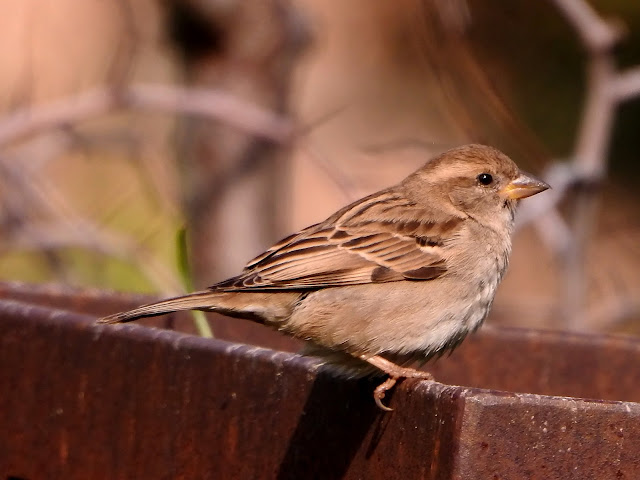
12-2-2022 GANDIA SERPIS, VALENCIA - HOUSE SPARROW (FEMALE) (Passer domesticus)


12-2-2022 GANDIA SERPIS, VALENCIA - EUROPEAN ROBIN (Erithacus rubecula)


12-2-2022 GANDIA SERPIS, VALENCIA - EURASIAN COLLARED DOVE (Streptopelia decaocto)


12-2-2022 GANDIA SERPIS, VALENCIA - EUROPEAN SERIN (MALE) (Serinus serinus)


12-2-2022 GANDIA SERPIS, VALENCIA - SPOTLESS STARLING (Sturnus unicolor)


12-2-2022 GANDIA SERPIS, VALENCIA - EURASIAN BLACKBIRD (MALE) (Turdus merula)


Friday, 11 February 2022

3-6-2019 LINYANTI CAMP, BOTSWANA - ANGOLAN GIRAFFE (Giraffa giraffa ssp. angolensis)


The Angolan giraffe (Giraffa giraffa angolensis), formerly (Giraffa camelopardalis angolensis) also known as the Namibian giraffe or smokey giraffe, is a subspecies of the Southern Giraffe that is found in northern Namibia, south-western Zambia, Botswana, western Zimbabwe and since mid-2023 again in Angola, after its reintroduction to Iona National Park.

In August 2025 after reviewing the scientific evidence the IUCN's Giraffe and Okapi Specialist Group recognised four distinct species of giraffe, the Northern Giraffe, Reticulated Giraffe, Masai Giraffe and Southern Giraffe. The Angolan Giraffe is now one of two subspecies of the Southern Giraffe. A previous 2009 genetic study on this subspecies suggests the northern Namib Desert and Etosha National Park populations each form a separate subspecies. However, genetic studies based on mitochondrial DNA do not support the division into two subspecies., but could identify giraffes in southern Zimbabwe as the Angolan giraffe, suggesting a further eastward distribution than expected.

This subspecies has large brown blotches with edges that are either somewhat notched or have angular extensions. The spotting pattern extends throughout the legs but not the upper part of the face. The neck and rump patches tend to be fairly small. The subspecies also has a white ear patch.

3-6-2019 LINYANTI CAMP, BOTSWANA - AFRICAN SAVANNA ELEPHANT (Loxodonta Africana)


The African bush elephant (Loxodonta africana), also known as the African savanna elephant, is a species of elephant native to sub-Saharan Africa. It is one of three extant elephant species and, along with the African forest elephant, one of two extant species of African elephant. It is the largest living terrestrial animal, with fully grown bulls reaching an average shoulder height of 3.04–3.36 metres (10.0–11.0 ft) and a body mass of 5.2–6.9 tonnes (5.7–7.6 short tons); the largest recorded specimen had a shoulder height of 3.96 metres (13.0 ft) and an estimated body mass of 10.4 tonnes (11.5 short tons). The African bush elephant is characterised by its long prehensile trunk with two finger-like processes; a convex back; large ears which help reduce body heat; and sturdy tusks that are noticeably curved. The skin is grey with scanty hairs, and bending cracks which support thermoregulation by retaining water.


The African bush elephant inhabits a variety of habitats such as forests, grasslands, woodlands, wetlands and agricultural land. It is a mixed herbivore feeding mostly on grasses, creepers, herbs, leaves, and bark. The average adult consumes about 150 kg (330 lb) of vegetation and 230 L (51 imp gal; 61 US gal) of water each day. A social animal, the African bush elephant often travels in herds composed of cows and their offspring. Adult bulls usually live alone or in small bachelor groups. During the mating season, males go through a process called musth, a period of high testosterone levels and heightened aggression. For females, the menstrual cycle lasts three to four months, and gestation around 22 months, the longest of any mammal.


Since 2021, the African bush elephant has been listed as Endangered on the IUCN Red List. It is threatened foremost by habitat destruction, and in parts of its range also by poaching for meat and ivory. Between 2003 and 2015, the illegal killing of 14,606 African bush elephants was reported by rangers across 29 range countries. Chad is a major transit country for smuggling of ivory in West Africa. This trend was curtailed by raising penalties for poaching and improving law enforcement. Poaching of the elephant has dated back to the 1970s and 80s, which were considered the largest killings in history. In human culture, elephants have been extensively featured in literature, folklore and media, and are most valued for their large tusks in many places.

3-6-2019 LINYANTI CAMP, BOTSWANA - KALAHARI YELLOW BILLED HORNBILL (Tockus leucomelas ssp. leucomelas)


The Southern Yellow-billed Hornbill, known scientifically as Tockus leucomelas, is a medium-sized bird, with a length ranging from 48 to 60 centimeters and a weight between 132 and 242 grams. Its most striking feature is the long, down-curved yellow beak, which is disproportionately large compared to its body, making up to one-sixth of its body length. Males boast a longer beak, averaging 90 millimeters, while females have a slightly shorter one, averaging 74 millimeters. The species exhibits sexual dimorphism, with males generally larger than females. The bird's plumage is a combination of white, grey, and black, with the white belly and grey neck contrasting against the black back adorned with white spots and stripes. The eyes are typically yellow, though brown variations exist, and the skin around the eyes and malar stripe is pinkish.

To identify the Southern Yellow-billed Hornbill, look for the long yellow beak and modest-sized casque that covers almost the entire length of the beak in males. The bird's white belly, grey neck with spots, and black back with white markings are also distinctive. The male's larger size and longer beak are reliable indicators for sex differentiation in the field.


This hornbill species is a common and widespread resident of the dry thornveldt and broad-leafed woodlands, often seen along roads and watercourses. They show a preference for acacia and broadleaved woodlands when available.

The Southern Yellow-billed Hornbill is near-endemic to the dry savannas of southern Africa, with its range extending from Angola and Namibia in the west to Mozambique and KwaZulu-Natal in the east, including Botswana, Zimbabwe, and northern South Africa.

Active during the day, these birds are often solitary, but may form couples or small groups, especially during breeding or nesting seasons, or when local migration occurs during the dry season. They are ground foragers, not digging but rather overturning debris to find food. They are sedentary but may roam in search of sustenance during dry spells. Monogamous pairs defend their territories with elaborate displays.

The Southern Yellow-billed Hornbill's vocal repertoire includes a piercing cry, whistles, grunts, and cackles. These calls are used for territory demarcation and long-distance communication, often accompanied by physical displays.

Their diet consists mainly of arthropods like termites, beetles, larvae, grasshoppers, and caterpillars, supplemented by small mammals, berries, fruits, nuts, and eggs from other species. They use their beak as forceps to grasp and toss food into their throat, with serrated inner edges aiding in crushing and fragmenting their prey.

3-6-2019 LINYANTI CAMP, BOTSWANA - GREATER BLUE EARED STARLING (Lamprotornis chalybaeus)


The greater blue-eared starling, or Lamprotornis chalybaeus, is a striking bird adorned in glossy blue-green plumage with a purple-blue belly and a distinctive blue ear patch. This bird measures approximately 22 cm in length and sports a short tail. The iris of this species is a vivid yellow or orange, adding to its captivating appearance. Both sexes exhibit similar coloration, though juveniles can be distinguished by their duller feathers and blackish-brown underparts.

When identifying the greater blue-eared starling, look for its glossy blue-green upperparts and purple-blue belly. The blue ear patch is a key feature, along with its bright yellow or orange iris. Juveniles are less lustrous and have darker underparts. This species can be confused with the lesser blue-eared starling, but the latter's blue belly does not extend forward of the legs.


The greater blue-eared starling is commonly found in open woodland environments, where it thrives and breeds.

This bird has a broad range across the African continent, from Senegal in the west, stretching east to Ethiopia, and then southward through eastern Africa to northeastern South Africa and Angola. It is known to undertake seasonal migrations within this range.

The greater blue-eared starling is a highly social bird, often seen in large flocks that may include other starling species. It is also known to roost communally in reedbeds, thorn bushes, or acacia trees, sometimes sharing these spaces with other birds.


The vocal repertoire of the greater blue-eared starling includes a variety of musical and grating calls. A commonly heard call is a nasal "squee-ar," which is quite distinctive.

Breeding pairs of greater blue-eared starlings make their nests in tree holes, which can be naturally occurring or previously excavated by woodpeckers or barbets. They are also known to utilize the large stick nests of the sacred ibis or Abdim's stork. Their nests typically contain three to five greenish-blue eggs adorned with brown or purple spots. These eggs hatch after about 13–14 days, and the fledglings leave the nest approximately 23 days post-hatching. The species is occasionally parasitized by the great spotted cuckoo and, less frequently, by the greater honeyguide.


An omnivorous bird, the greater blue-eared starling's diet is predominantly insectivorous, foraging mainly on the ground for a variety of invertebrates. It also consumes seeds and berries, with a particular fondness for figs. Additionally, these starlings are known to perch on livestock, picking off insects disturbed by the animals and sometimes removing ectoparasites.

The IUCN Red List classifies the greater blue-eared starling as Least Concern, indicating that the species does not currently face any significant threats to its survival.


A medium-sized iridescent blue-green glossy starling with a dark ear-patch and contrasting royal blue to violet flanks and belly. Pairs and small groups occupy savanna, where they feed on the ground and in trees on fruit and insects; occasionally up to 300 may gather at fruiting trees. Often the species scavenges from people. It gives a cat-like nasal “squuee-aar” contact call that is distinctive. 

The similar Lesser Blue-eared Starling differs from Greater Blue-eared Starling by being smaller with a more compact head and finer bill, by having a smaller ear-patch, and by preferring broadleaf woodland. The Cape Starling differs from the “blue-eared” starlings by having greener ear-patches, belly, and flanks.

3-6-2019 LINYANTI CAMP, BOTSWANA - AFRICAN JOKER BUTTERFLY (Byblia anvatara)


Byblia anvatara, the common joker, is a butterfly of the family Nymphalidae, found in Sub-Saharan Africa.

Wingspan: 38–43 mm in males and 40–45 mm in females. Its flight period is year round.

Larvae feed on Tragia glabrata and Dalechampia capensis.

3-6-2019 LINYANTI CAMP, BOTSWANA - SMITH'S BUSH SQUIRREL (Paraderus Cepapi)


Smith's bush squirrel (Paraxerus cepapi), also known as the yellow-footed squirrel or tree squirrel, is an African bush squirrel which is native to woodlands of the southern Afrotropics.

It is found in Angola, Botswana, the DRCongo, Malawi, Mozambique, Namibia, South Africa, Tanzania, Zambia, and Zimbabwe. It is a common rodent which is diurnal by nature.

Its total length is 350 mm (14 in), half of which is tail; weight 200 g (7.1 oz). The coat colour varies throughout the region. In the western and arid parts of its range, it is pale grey, and in the eastern localities, more brown. Its head and legs are a rusty colour. Colouration on the chest varies from yellowish to buff in the east, to white in the west. This squirrel's belly is white. These alert and ever busy creatures carry their long tails extended backwards.

Smith's bush squirrels are primarily vegetarian, but like most rodents, they take insect prey and use their front feet to manipulate food items when feeding. They scatter-hoard seeds next to tree trunks or grass tufts, thereby facilitating tree regeneration.


Essentially arboreal animals, they also spend a great deal of time on the ground, foraging for food. When disturbed, Smith's bush squirrels always seek the refuge of trees. At night, territorial family groups nest together in holes in trees. Offspring become sexually mature between six and nine months old, when they are forcibly evicted by the breeding pair. The males are mainly responsible for territorial defense, although females also chase intruders when they care for dependent pups. To promote group cohesion, a common scent is shared by mutual grooming, which is an important facet of the social fibre of this species. Smith's bush squirrels are diligent in their grooming and a mother tree squirrel holds her offspring down with her fore legs while grooming it with licks, nibbles, and scratches with her claws.

A conspicuous feature of their behaviour when under threat is 'mobbing': all the members of the colony make harsh clicking sounds while they flick their tails, building up momentum and gradually getting louder. In some areas, they are solitary, or are found in small family groups; a lone tree squirrel relies on its wits when in danger and always keeps a branch or the trunk of a tree between it and the enemy. Smith's bush squirrels are always alert, and when alarmed, run away with great speed, making for the nearest tree where they lie motionless, flattened against a branch.