TOTAL PAGEVIEWS

TRANSLATE

Tuesday, 15 February 2022

4-6-2019 LINYANTI, BOTSWANA - SMITH'S BUSH SQUIRREL (Paraderus Cepapi)


Smith's bush squirrel (Paraxerus cepapi), also known as the yellow-footed squirrel or tree squirrel, is an African bush squirrel which is native to woodlands of the southern Afrotropics.

It is found in Angola, Botswana, the DRCongo, Malawi, Mozambique, Namibia, South Africa, Tanzania, Zambia, and Zimbabwe. It is a common rodent which is diurnal by nature.

Its total length is 350 mm (14 in), half of which is tail; weight 200 g (7.1 oz). The coat colour varies throughout the region. In the western and arid parts of its range, it is pale grey, and in the eastern localities, more brown. Its head and legs are a rusty colour. Colouration on the chest varies from yellowish to buff in the east, to white in the west. This squirrel's belly is white. These alert and ever busy creatures carry their long tails extended backwards.

Smith's bush squirrels are primarily vegetarian, but like most rodents, they take insect prey and use their front feet to manipulate food items when feeding. They scatter-hoard seeds next to tree trunks or grass tufts, thereby facilitating tree regeneration.

4-6-2019 LINYANTI, BOTSWANA - COMMON WARTHOG (Phacochoerus Africus)


The Common warthog (Phacochoerus africanus) is a wild member of the pig family (Suidae) found in sub-Saharan Africa. It is the only pig species that has adapted to grazing and savanna habitats.

Common warthogs are found in sub-Saharan Africa. They live in grasslands, savanna, open bushlands, and woodlands. These animals prefer open areas and avoid rainforests, thickets, cool montane grasslands, and severe deserts.

A warthog has two pairs of tusks protruding from the mouth and curving upwards. The lower pair, which is far shorter than the upper pair, becomes razor-sharp by rubbing against the upper pair every time the mouth is opened and closed. The upper canine teeth can grow to 25.5 cm (10.0 in) long and have a wide elliptical cross-section, being about 4.5 cm (1.8 in) deep and 2.5 cm (0.98 in) wide. A tusk will curve 90° or more from the root, and will not lie flat on a table, as it curves somewhat backward as it grows. The tusks are not used for digging, but are used for combat with other hogs and in defense against predators - the lower set can inflict severe wounds.


Common warthogs are social animals and live in groups called sounders. Females live in sounders with their young and with other females. Females tend to stay in their natal groups, while males leave, but stay within the home range. Subadult males associate in bachelor groups but live alone when they become adults. Adult males only join sounders during the breeding season. Common warthogs are not territorial but instead occupy a home range. They have two facial glands: the tusk gland and the sebaceous gland. They mark sleeping and feeding areas and waterholes. 


Common warthogs use tusk marking for courtship, antagonistic behaviors, and to establish status. They are powerful diggers and use both their snouts and feet. Whilst feeding, they often bend their front feet backward and move around on the wrists. Although they can dig their own burrows, they usually occupy abandoned burrows of other animals. When temperatures are high Common warthogs enjoy wallowing in the mud in order to cool themselves and will huddle together to get warm when the temperatures get low. Although capable of fighting, the Common warthog's primary defense is to flee by means of fast sprinting. However, if a female has any piglets, she will defend them very aggressively.

4-6-2019 LINYANTI, BOTSWANA - ZAMBESI CRESTED BARBET (Trachyphonus vaillantii ssp. nobilis)


They nest in a hole in a tree or a log in a suburban garden. They are monogamous and territorial during breeding. Territory size varies according to their habitat. One to five eggs are laid at daily intervals between September and December. Incubation lasts between 13 and 17 days, beginning with the second or third egg and mainly by the female. The young hatch naked and blind. They are fed insects by both parents. Faecal material is removed regularly. They fledge after about 31 days. Up to five broods have been recorded in a breeding season.

They are found singly or in pairs. They like to bounce around on the ground looking for food, they usually call from a branch out in the open. They do not fly easily and then only for short distances. Crested barbets roost in holes in trees. They are very vocal, the call being a trill that can continue for long periods. Crested barbets are aggressive towards other birds in their territory and chase off both nest competitors such as other barbets and other birds such as doves and thrushes. They have also been recorded to have attacked rats and killed snakes.

4-6-2019 LINYANTI CAMP, BOTSWANA - CHOBE GREEN PIGEON (Treron calvus ssp. schalowi)


Chobe Green Pigeons (likely African Green-Pigeons, Treron calvus, found in Chobe) are vibrant, fruit-eating birds known for their stunning green and yellow plumage that offers excellent camouflage in woodland canopies, where they gather in small, gregarious groups to feast on figs and other fruits, using parrot-like agility, and are identified by their maroon wing patches, red feet, and distinctive, chattering calls. 

Key Facts

Appearance: A chunky pigeon with grey-green to yellow-green bodies, darker green wings with maroon shoulder patches, yellow thighs, red feet, and a pinkish-white beak with a white tip.

Diet: Primarily frugivores, they love figs, especially from Jackalberry trees, and other forest fruits, often hanging upside down to eat.


Habitat: Found in savanna, woodland, and riverine forests across Sub-Saharan Africa, often near fruiting fig trees.

Behavior: Gregarious, forming small groups. They have fast, direct flight but clamber awkwardly like parrots in trees, using wings for balance.

Nesting: Build frail stick nests in tree forks, laying 1-2 eggs; females incubate while males forage for materials.

Sound: Produce unique, comical calls described as whistles, cackles, and sputters.

Camouflage: Their green color provides superb camouflage in the leafy canopy, making them hard to spot until they move. 

4-6-2019 LINYANTI CAMP, BOTSWANA - AFRICAN RED EYED BULBUL (Pycnonotus nigricans)


The Red-eyed Bulbul, specifically the African Red-eyed Bulbul (Pycnonotus nigricans), is a common, crested songbird in arid African woodlands with distinctive orange-red eye rings, grey-brown upper parts, white underparts, and a bright yellow vent, feeding on fruits, nectar, and insects, known for its musical, bubbly song, often found in pairs, and generally of 'Least Concern' status. 

Its natural habitats are dry savanna, subtropical or tropical dry shrubland, and riverine scrub. It feeds on fruit (including Ficus), flowers, nectar, and insects.

Appearance & Identification
Eye Ring: A bright, fleshy orange-red ring around dark eyes is its most defining feature.
Plumage: Greyish-brown above, white below, with a dark head and crest.
Vent: A striking yellow patch under its tail.
Size: About 20 cm long, with males slightly larger. 


Habitat & Behavior
Range: Found in dry savannas, shrublands, and riverine thickets in southwestern Africa.
Social: Often seen in monogamous pairs, but also small flocks.
Vocalization: Sings a musical, bubbly song, slower than the Common Bulbul. 
Diet & Nesting
Diet: Primarily fruits, but also eats flowers, nectar, and insects (arthropods).
Nesting: Female builds a flimsy cup nest from plant fibers, bound with spiderwebs, hidden in a bush fork.
Breeding: Lays 2-3 speckled eggs, incubated by the female for 12-13 days; both parents feed hatchlings. 
Conservation
Status: Classified as 'Least Concern' by the IUCN, with a growing population.
Threats: Generally adaptable, but faces habitat loss in some areas. 

Monday, 14 February 2022

4-6-2019 LINYANTI CAMP, BOTSWANA - RED LECHWE (MALE) (Kobus leche ssp. leche)


The lechwe, red lechwe, or southern lechwe (Kobus leche) is an antelope found in wetlands of south-central Africa.

The lechwe is native to Botswana, Zambia, southeastern Democratic Republic of the Congo, northeastern Namibia, and eastern Angola, especially in the Okavango Delta, Kafue Flats, and Bangweulu Wetlands. The species is fairly common in zoos and wild animal farms.

Adult lechwe typically stand 90 to 100 cm (35 to 39 in) at the shoulder and generally weigh from 50 to 120 kg (110 to 260 lb), with males being larger than females. They are golden brown with white bellies. Males are darker in colour, but exact hue and amount of blackish on the front legs, chest and body varies depending on subspecies. The long, spiral horns are vaguely lyre-shaped and borne only by males. The hind legs are somewhat longer in proportion than in other antelopes to ease long-distance running on marshy soil.


Lechwe are found in marshy areas where they are an important herbivore of aquatic plants, as well as grasses that are found in flooded meadows. They use the knee-deep water as protection from predators. Their legs are covered in a water-repellant substance which allows them to run quite fast in knee-deep water. Lechwe are diurnal. They gather in herds which can include many thousands of individuals. Herds are usually all of one sex, but during mating season they mix.

Lechwe mate during rain seasons of November to February. They have a gestation period of seven to eight months so a majority of calves are born from July to September.

Although rare, hybrids between lechwe and waterbuck have been observed.

4-6-2019 LINYANTI CAMP, BOTSWANA - RED LECHWE (FEMALE) (Kobus leche ssp. leche)


The lechwe, red lechwe, or southern lechwe (Kobus leche) is an antelope found in wetlands of south-central Africa.

The lechwe is native to Botswana, Zambia, southeastern Democratic Republic of the Congo, northeastern Namibia, and eastern Angola, especially in the Okavango Delta, Kafue Flats, and Bangweulu Wetlands. The species is fairly common in zoos and wild animal farms.


Adult lechwe typically stand 90 to 100 cm (35 to 39 in) at the shoulder and generally weigh from 50 to 120 kg (110 to 260 lb), with males being larger than females. They are golden brown with white bellies. Males are darker in colour, but exact hue and amount of blackish on the front legs, chest and body varies depending on subspecies. The long, spiral horns are vaguely lyre-shaped and borne only by males. The hind legs are somewhat longer in proportion than in other antelopes to ease long-distance running on marshy soil.


Lechwe are found in marshy areas where they are an important herbivore of aquatic plants, as well as grasses that are found in flooded meadows. They use the knee-deep water as protection from predators. Their legs are covered in a water-repellant substance which allows them to run quite fast in knee-deep water. Lechwe are diurnal. They gather in herds which can include many thousands of individuals. Herds are usually all of one sex, but during mating season they mix.

Lechwe mate during rain seasons of November to February. They have a gestation period of seven to eight months so a majority of calves are born from July to September.

Although rare, hybrids between lechwe and waterbuck have been observed.

4-6-2019 LINYANTI, BOTSWANA - MEVES'S STARLING (Lamprotornis mevesii)


Meves's starling (Lamprotornis mevesii) or Meves's glossy-starling, is a species of starling in the family Sturnidae. It is found in Angola, Botswana, Malawi, Mozambique, Namibia, South Africa, Zambia, and Zimbabwe.

Its common name and Latin binomial commemorate the German ornithologist Friedrich Wilhelm Meves. 

A medium-large, iridescent glossy starling with a very long and graduated tail. The color of the iridescence is blue and purple in most of the range, but the southwestern Angola population shows yellowish bronzy gloss. Pairs, groups, and flocks are resident in open savanna, preferring broadleaf woodland like Brachystegia (miombo) and areas with baobabs. The species feeds on the ground, walking with long strides, and sits low in trees, searching mostly for insects to eat. The similar Burchell’s Starling differs from Meves’s Starling by being greener and larger, with a less graduated tail that is proportionately shorter.

4-6-2019 LINYANTI, BOTSWANA - DAMARA MEYER'S PARROT (Poicephalus meyeri ssp. damarensis)


Meyer's parrot (Poicephalus meyeri), also known as the brown parrot, is a species of parrot native to Africa. A Meyer's parrot has grey feathers, turquoise belly, blue rump, and bright yellow markings on the carpal joint of the wings. Most subspecies have some yellow on the top of the head as well. Forshaw (1989) recognizes six subspecies of P. meyeri which vary in home range, size and in markings, including the extent of yellow markings to the head and wings, and the intensity of turquoise markings on the belly and rump.

Meyer's parrots are native to the plateau woodlands of sub-Saharan Africa where they occur in several woodland types including miombo, savanna woodlands, wooded grasslands and forests bordering watercourses or agricultural land. They are found in high densities in the Okavango Delta region of Botswana. They are also found in southern and central Africa (Chad, Sudan, South Sudan, Ethiopia, Congo, Angola, Tanzania, Zambia, Zimbabwe, Mozambique, and Namibia.

Their wild diet includes fruit, seeds, nuts, berries and cultivated crops. Seeds of the various leguminous trees of the African woodlands are especially favoured, providing their staple food in some areas. Although they normally travel in pairs or small flocks, wild Meyer's parrots may gather in much larger numbers where food is plentiful. In drought years they wander in search of food.

The Meyer's parrot nests in tree cavities. The eggs are white and there are usually three or four in a clutch. The female incubates the eggs for about 28 days and the chicks leave the nest about 60 days after hatching.

6-4-2019 LINYANTI, BOTSWANA - COMMON IMPALA (FEMALE) (Aepyceros melampus ssp. melampus)


The impala (Aepyceros melampus) is a medium-sized antelope that is found in Africa. It was first described to European audiences by German zoologist Hinrich Lichtenstein in 1812. Active mainly during the day, the impala may be gregarious or territorial depending upon the climate and geography. The impala is known for two characteristic leaps that constitute an anti-predator strategy.

Impala is an elegant and magnificent species of antelope. The animal has slender body with the identifying "M"-like marking on the rear. This medium-sized antelope possesses thin, pointed horns with tips, lying far apart from each other. Males of this species are identified by the characteristic "S"-like horns. The elegant limbs of these animals have scent glands behind the ankles. The overall coloration of their fur is red-brown with paler sides. In addition, they have black and white colored areas on their body. Thus, the tail, belly, chin, lips, inside ears as well as the lines above the eyes are colored with white. Meanwhile, black bands cover their thighs, tail, forehead and ear tips.


Impalas are distributed throughout the northeastern part of South Africa, Angola, southern Rwanda, Uganda, and Kenya. Close proximity to a water source is an important life condition for these animals. Generally, they prefer woodland with little undergrowth as well as low to medium-height grassland.

Impalas have polygynous mating system, where each male mates with a number of females. The period of peak breeding activity is March-May. During this period, pregnant females live in isolation to give birth. The gestation period lasts from 194 to 200 days, yielding a single calf, which weighs about 5kgs (11 lbs). After a few days, the calf and the female rejoin the herd. Then, after a while, the calf joins a crèche of other young impalas. They are weaned at 4-5 months old. Male impalas reach reproductive maturity at 1 year of age, while females are ready to breed when they are between 1 and 2 years old. Becoming reproductively mature, they, however, do not rush to establish territories. They typically start mating only at 4 years old.

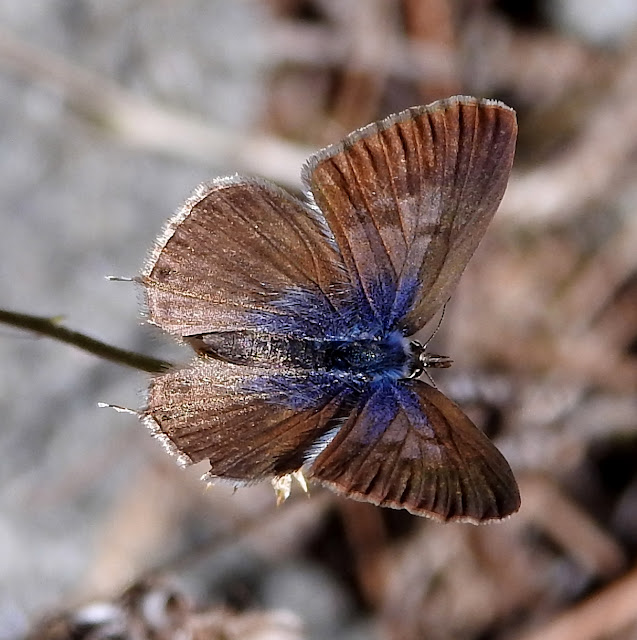
14-2-2022 CALPE, ALICANTE - LANG'S SHORT TAILED BLUE BUTTERFLY (Leptotes pirithous)

https://www.inaturalist.org/taxa/209691-Leptotes-pirithous


14-2-2022 CALPE, ALICANTE - RED ADMIRAL BUTTERFLY


Sunday, 13 February 2022

6-4-2019 LINYANTI, BOTSWANA - BRADFIELD'S HORNBILL (Lophoceros bradfieldi)


Bradfield's hornbill (Lophoceros bradfieldi) is an African hornbill. It is a medium-sized bird, 50–57 cm (20–22 in) in length, characterized by black back and wings and a white belly. The tip feathers of the long tail are white. Females are smaller than males and can be recognized by turquoise facial skin. The eyes are yellow and the beak is red. The beak is long and presents no casque.

This is an uncommon resident of the mopane woodlands and mixed thorn fields of northeastern Namibia (especially on the Waterberg plateau), northern Botswana, southern Angola and eastern Zimbabwe. They feed on fruits, large insects, nuts and small reptiles.

The common name and Latin binomial commemorate the South African naturalist R. D. Bradfield (1882-1949).


Bradfield's Hornbill (*Lophoceros bradfieldi) is a Southern African woodland bird known for its black & white plumage, red beak (no casque), piping calls, and insect-heavy diet, nesting in tree cavities where the female seals herself in to incubate eggs. They're found in mopane/teak woodlands of Namibia, Botswana, Angola, Zambia, and Zimbabwe, usually solitary or in pairs, and are identified by white tail corners in flight and a black eye mask. 


Key Characteristics

Appearance: Medium-sized (50-57cm) with a black back, white belly, yellow eyes, and a red bill without a casque. Females have turquoise facial skin.
Distinguishing Marks: White tips on the tail feathers, visible when flying.
Call: A distinctive, loud, rising and falling series of piping notes, often heard in summer.
Habitat: Prefers broad-leaved woodlands, especially those with Mopane, Zambezi Teak (Baikiaea), and Bloodwood (Pterocarpus) on sandy soils.
Diet: Primarily large insects (locusts, beetles, termites) but also eats fruits, nuts, and small vertebrates like lizards. 


Behavior & Breeding
Social Structure: Usually seen alone, in pairs, or small family groups.
Nesting: Nests in natural tree cavities; the female seals herself in with mud, leaving a slit for the male to feed her.
Incubation: Female incubates for at least 28 days; she leaves when chicks are a few weeks old.
Fledging: Chicks stay in the nest for about 50 days, becoming independent around 3 months old. 

Conservation & Name
Status: Least Concern, though facing threats from habitat loss.
Distribution: Near-endemic to Southern Africa (Namibia, Botswana, Angola, Zambia, Zimbabwe).

Named After: R.D. Bradfield, a South African naturalist who collected the first specimen. 

4-6-2019 LINYANTI CAMP, BOTSWANA - TAWNY EAGLE (Aquila rapax)


The tawny eagle (Aquila rapax) is a large bird of prey. Like all eagles, it belongs to the family Accipitridae. Its heavily feathered legs mark it as a member of the subfamily Aquilinae, also known as booted eagles. Tawny eagles have an extensive but discontinuous breeding range that constitutes much of the African continent as well as the Indian subcontinent, with rare residency in the southern Middle East. Throughout its range, it favours open dry habitats such as semideserts, deserts steppes, or savanna plains. Despite its preference for arid areas, the species seldom occurs in areas where trees are entirely absent. It is a resident breeder which lays one to three eggs in a stick nest most commonly in the crown of a tree. 


The tawny eagle is perhaps the most highly opportunistic of all Aquilinae, and often scavenges on carrion or engages in kleptoparasitism towards other carnivorous animals but is also a bold and active predator, often of relatively large and diverse prey. It is estimated that tawny eagles can reach the age of 16 years old. Nonetheless, precipitous declines have been detected throughout the tawny eagle's range. Numerous factors, particularly loss of nesting habitat due to logging and global warming, as well as persecution (largely via poisoning) and other anthropogenic mortality (largely through contact with various manmade objects) are driving the once numerous tawny eagle perhaps to the brink of extinction.


The tawny eagle is considered to appear "inelegant, scruffy-looking" but has a fairly characteristic aquiline silhouette. The species has a fairly long neck and long deep bill with a gape line level with the eye, moderately long wings with fairly pronounced "fingers" and a slightly rounded to almost square-ended and shortish tail, which can be more reminiscent of the tail of a vulture than that of other eagles. The feathering on the legs is extensive and can appear almost baggy-looking. The bill and head are strong and bold, the body well-proportioned and feet are powerful while the countenance is quite fierce-looking. While perching, the tawny eagle tends to sit rather upright, often on stumps, posts, low trees or treetops for long periods of the day or may descend to the ground to walk somewhat unsteadily with a more horizontal posture. The wingtips when perched are roughly even with the tip of the tail. Adults have variably colored eyes, ranging from yellow to pale brown to yellow brown, while those of juveniles are dark brown. Both the cere and feet are yellow at all ages. 


The tawny eagle is polymorphic with considerable individual variation in plumage, resulting in occasional disparities in plumages that can engender confusion in some. In adulthood, they can vary in coloration from all dark grey-brown to an occasionally streaky (or more plain) foxy-rufous to buffish-yellow. Most adults are usually a general grey-brown or rufous-tawny color, with occasional pale spotting visible at close quarters on the nape and belly, coverts uniformly toned as the body. The nape is consistently dark and uniform despite the feathers often being tipped paler with other feathers in adults, lacking the contrasting paler feathers often seen in other Aquila. Females, in addition to being slightly larger, may tend to be slightly darker and more streaked than the males. The most blackish-brown individuals tend to occur in India. Adults often show relatively little varying colors apart from their somewhat blacker wing and tail feathers, though when freshly molted great wing coverts and secondaries may show small pale tips which may form pale lines along closed wing has tawny upper parts and blackish flight feathers and tail.

4-6-2019 LINYANTI CAMP, BOTSWANA - LILAC BREASTED ROLLER (Coracias caudatus)


The lilac-breasted roller (Coracias caudatus) is an African bird of the roller family, Coraciidae. It is widely distributed in Southern and Eastern Africa, and is a vagrant to the southern Arabian Peninsula. It prefers open woodland and savanna, and it is for the most part absent from treeless places. Usually found alone or in pairs, it perches at the tops of trees, poles or other high vantage points from where it can spot insects, amphibians and small birds moving about on the ground. Nesting takes place in a natural hole in a tree where a clutch of 2–4 eggs are laid, and incubated by both parents, who are extremely aggressive in defence of their nest, taking on raptors and other birds. During the breeding season the male will rise to a fair height (69 to 144 metres), descending in swoops and dives, while uttering harsh, discordant cries. The sexes are different in coloration, and juveniles lack the long tail streamers of adults. This species is unofficially considered the national bird of Kenya. Alternative names for the lilac-breasted roller include the fork-tailed roller, lilac-throated roller (also used for a subspecies of purple roller) and Mosilikatze's roller.


Lilac-breasted rollers are found throughout eastern and southern Africa, and occurs locally at sea level, and up to 2,000 metres above sea level or over. Their range extends from the Red Sea coast of Eritrea through East Africa (including Zanzibar) to southern Africa, where they occur commonly in Namibia (excluding the Namib Desert), Botswana, Zimbabwe, and northeastern South Africa. The nominate subspecies C. c. caudatus is non-migratory, but a measure of post-breeding dispersal occurs into miombo woodland or sandy areas, before they return to the breeding areas at the start of the rains. Its counterpart, the lilac-throated roller (C. c. lorti) migrates from northeast Kenya to northwest Somalia to breed from late April to mid-September. The latter subspecies is also a vagrant to Eritrea, Oman and Yemen. Lilac-breasted rollers are most abundant in Kenya, though the species is less abundant than in former times.

Both subspecies live in open savannah habitats with scattered trees and shrubs, as the birds require higher perches for feeding and nesting. Less often they frequent riverine vegetation and light forest, and may enter subdesert steppe or open grassland where any elevated perches may be used. In protected areas, lilac-breasted rollers are among the bird species that frequent the verges of roads, especially during fires, when the small animals and insects that emerge from cover are easily predated. However, lilac-breasted rollers avoid other human-influenced areas and are not found in urban or rural areas unless they are abandoned. Outside of protected areas such as national parks, lilac-breasted rollers may infrequently be seen when farmers burn land for agricultural use. Such brush fires stir up insects and other invertebrates, and birds can be seen swooping in for easy prey.

4-6-2019 LINYANTI CAMP, BOTSWANA - AFRICAN SAVANNA ELEPHANT (Loxodonta Africana)


The African bush elephant (Loxodonta africana), also known as the African savanna elephant, is a species of elephant native to sub-Saharan Africa. It is one of three extant elephant species and, along with the African forest elephant, one of two extant species of African elephant. It is the largest living terrestrial animal, with fully grown bulls reaching an average shoulder height of 3.04–3.36 metres (10.0–11.0 ft) and a body mass of 5.2–6.9 tonnes (5.7–7.6 short tons); the largest recorded specimen had a shoulder height of 3.96 metres (13.0 ft) and an estimated body mass of 10.4 tonnes (11.5 short tons). The African bush elephant is characterised by its long prehensile trunk with two finger-like processes; a convex back; large ears which help reduce body heat; and sturdy tusks that are noticeably curved. The skin is grey with scanty hairs, and bending cracks which support thermoregulation by retaining water.


The African bush elephant inhabits a variety of habitats such as forests, grasslands, woodlands, wetlands and agricultural land. It is a mixed herbivore feeding mostly on grasses, creepers, herbs, leaves, and bark. The average adult consumes about 150 kg (330 lb) of vegetation and 230 L (51 imp gal; 61 US gal) of water each day. A social animal, the African bush elephant often travels in herds composed of cows and their offspring. Adult bulls usually live alone or in small bachelor groups. During the mating season, males go through a process called musth, a period of high testosterone levels and heightened aggression. For females, the menstrual cycle lasts three to four months, and gestation around 22 months, the longest of any mammal.

Since 2021, the African bush elephant has been listed as Endangered on the IUCN Red List. It is threatened foremost by habitat destruction, and in parts of its range also by poaching for meat and ivory. Between 2003 and 2015, the illegal killing of 14,606 African bush elephants was reported by rangers across 29 range countries. Chad is a major transit country for smuggling of ivory in West Africa. This trend was curtailed by raising penalties for poaching and improving law enforcement. Poaching of the elephant has dated back to the 1970s and 80s, which were considered the largest killings in history. In human culture, elephants have been extensively featured in literature, folklore and media, and are most valued for their large tusks in many places.


13-2-2022 BELLUS, VALENCIA - CETTI'S WARBLER (Cettia cetti)


6-4-2019 LINYANTI, BOTSWANA - BURCHELL'S STARLING (Lamprotornis australis)


Burchell's Starling (*Lamprotornis australis), a large, iridescent blue-green bird of Southern African savannas, is known for its glossy plumage, long tail, and ground-foraging habits, often seen in pairs or flocks, scavenging for insects, fruits, and even picnic scraps near humans, nesting in tree cavities. These monogamous birds have long, broad tails with rounded tips, bronze ear-coverts, and purple rumps, distinguishing them from other glossy starlings, and are generally considered Least Concern by the IUCN. 

Identification & Appearance

Color: Iridescent blue-green to purple body, with bronze ear-coverts and a purple rump.

Tail: Long, broad, rounded-tip tail with dark bars.

Size: A large starling, about 30-34 cm long.

Eyes: Dark brown. 


Habitat & Behavior

Range: Found in dry woodlands and savannas of Southern Africa (Namibia, Botswana, South Africa, etc.).

Social: Lives singly, in pairs, or in small flocks, often with other starlings.
Foraging: Walks with long strides on the ground for insects, small vertebrates, flowers, and fruit; also scavenges at human sites.

Vocalization: Sings a harsh, croaking song and has throaty, musical calls. 


Breeding & Nesting

Mating: Monogamous.

Nests: In tree cavities, like old woodpecker holes, lined with grass, feathers, and sometimes human waste.

Eggs: Lays 2-4 eggs.

Parental Care: Both parents feed chicks for about three weeks after hatching. 

Conservation Status
IUCN: Listed as "Least Concern" due to its large range and stable population. 

Saturday, 12 February 2022

4-6-2019 LINYANTI CAMP, BOTSWANA - LAUGHING DOVE (Streptopelia senegalensis)


The laughing dove (Spilopelia senegalensis) is a small pigeon that is a resident breeder in Africa, the Middle East, South Asia, and Western Australia where it has established itself in the wild after being released from Perth Zoo in 1898. This small long-tailed dove is found in dry scrub and semi-desert habitats where pairs can often be seen feeding on the ground. It is closely related to the spotted dove (Spilopelia chinensis) which is distinguished by a white and black chequered necklace. Other names include laughing turtle dove, palm dove and Senegal dove while in Asia the name little brown dove is often used.

4-6-2019 LINYANTI CAMP, BOTSWANA - CROWNED LAPWING (Vanellus coronatus)


The crowned lapwing (Vanellus coronatus), or crowned plover, is a bird of the lapwing subfamily that occurs contiguously from the Red Sea coast of Somalia to southern and southwestern Africa. It is an adaptable and numerous species, with bold and noisy habits. It is related to the more localized black-winged and Senegal lapwings, with which it shares some plumage characteristics.

The crowned lapwing is easily recognized by its combination of brown and white colours, with most tellingly, a black crown intersected by an annular white halo. Adults are noisy and conspicuous.

Males measure on average 3% larger than females. Juveniles are dull versions of adults, vermiculated on the wings and mantle, the legs yellowy rather than red and the bill lacking the red base.


Crowned lapwings prefer short, dry grassland which may be overgrazed or burnt, but avoid mountains. In higher-rainfall areas such as parts of Zambia and Zimbabwe, they occur mainly as dry-season visitors. In dry regions of northern Botswana, however, they are attracted in large numbers when good rainfall occurs. In southern Africa their highest concentrations are to be found in the dry central Kalahari region.

Although generally outnumbered by blacksmith lapwings, they are the most widespread and locally the most numerous lapwing species in their area of distribution. Their numbers have increased in the latter part of the 20th century after benefiting from a range of human activities. They live up to 20 years.

The crowned lapwing is one of the species to which the Agreement on the Conservation of African-Eurasian Migratory Waterbirds (AEWA) applies.

 
Crowned lapwings and the more localized black-winged lapwings sometimes associate and do not show mutual aggression, even within breeding territories. Different crowned lapwing males do however posture aggressively when nesting territories are established. The loser in an encounter assumes a special posture to signal his defeat.

Bare-part colours of males brighten in the breeding season. Different types of display flights lure the female to the defended territory. A female accepting the male and territory will follow the male during his display flight. Mates may be retained for life. Egg-laying is timed to precede the rainy season and most incubating is done by the female. The male assists only on hot days, when he either incubates or shades the nest.

Their diet consists of a variety of insects, but termites and ants form an important component. These insects are often extracted from the dung of large mammals. They feed mainly by surface pecking as opposed to digging.

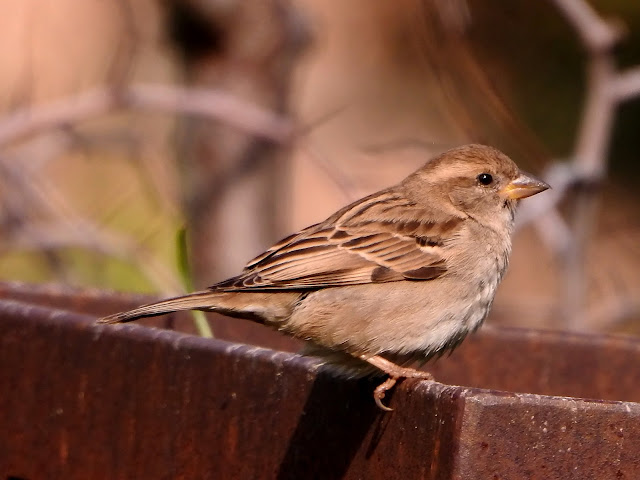
12-2-2022 GANDIA SERPIS, VALENCIA - HOUSE SPARROW (FEMALE) (Passer domesticus)


12-2-2022 GANDIA SERPIS, VALENCIA - EUROPEAN ROBIN (Erithacus rubecula)


12-2-2022 GANDIA SERPIS, VALENCIA - EURASIAN COLLARED DOVE (Streptopelia decaocto)