
The drill (Mandrillus leucophaeus) is a primate of the family Cercopithecidae (Old World monkeys), related to baboons and even more closely to mandrills.
Drills are found only in Cross River State in Nigeria, southwestern Cameroon (south to the Sanaga River), and on Bioko Island, part of Equatorial Guinea, in rainforest habitats. Their entire global range is less than 40,000 km2.
Drills are among Africa’s most endangered mammals, and are listed by the IUCN as the highest conservation priority of all African primates. Drill numbers have been declining in all known habitat areas for decades as a result of illegal commercial hunting, habitat destruction, and human development; as few as 3,000 drills may remain in the wild, with the highest population estimate only 8,000. A total of 174 drills recovered from illegal capture are in semicaptivity at the Drill Rehabilitation and Breeding Centre in Nigeria, with high success rates in breeding recorded there, and about 40 in other zoos internationally.
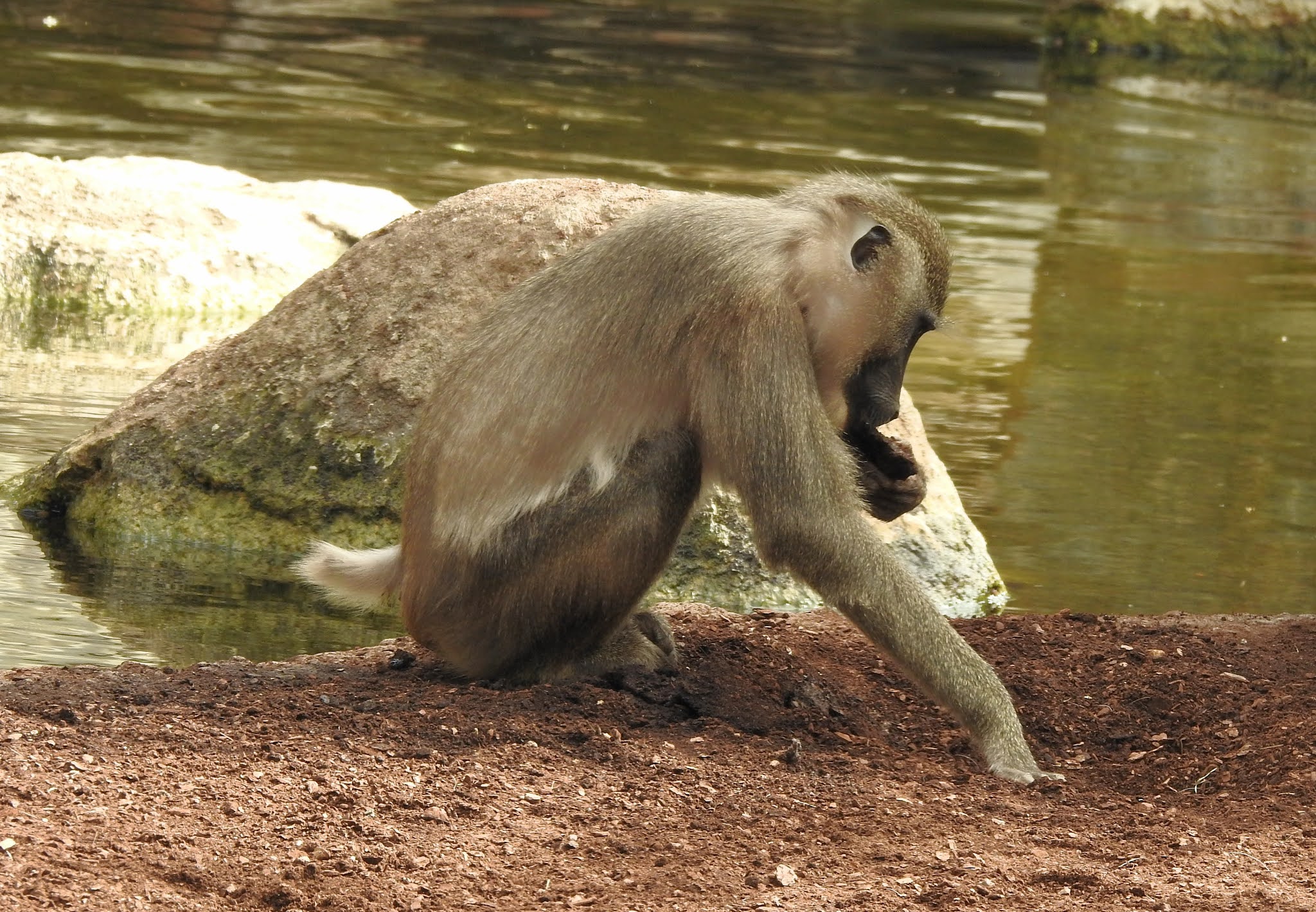
The drill (Mandrillus leucophaeus) is a highly endangered Old World monkey native to the tropical rainforests of Nigeria, Cameroon, and Bioko Island. Closely related to the mandrill, this striking primate is easily recognized by its jet-black face, crimson lower lip, and vividly colored purple and red buttocks.
Key Characteristics
Appearance: The drill has a short tail and stout body. Males are significantly larger, weighing around 25 kg, which is more than double the average size of females (11.5 kg).

Social Structure: They are gregarious and diurnal omnivores, living in groups (troops) that range from a single male and several females to aggregations of over 100 individuals.
Habitat: They are primarily terrestrial foragers but are adept climbers that forage for fruit, insects, and small prey.
Conservation StatusThe drill is considered one of the most threatened primates in the world. Its wild populations face severe decline due to intensive hunting for bushmeat and widespread deforestation.
