TOTAL PAGEVIEWS

TRANSLATE

Friday, 3 December 2021

2-6-2019 LINYANTI, BOTSWANA - NILE MONITOR (Varanus niloticus)


The Nile monitor (Varanus niloticus) is a large member of the monitor family (Varanidae) found throughout most of Sub-Saharan Africa, particularly in drier regions, and along the Nile River and its tributaries in East Africa. Additionally, there are modern, invasive populations in North America. The population found in West African forests and savannahs is sometimes recognized as a separate species, the West African Nile monitor (V. stellatus). While it is dwarfed by its larger relatives, such as the Komodo dragon, the Asian water monitor or the crocodile monitor, it is still one of the largest lizards in the world, reaching (and even surpassing) Australia's perentie in size. Other common names include the African small-grain lizard, as well as iguana and various forms derived from it, such as guana, water leguaan[6] or river leguaan (leguan, leguaan, and likkewaan mean monitor lizard in South African English, and can be used interchangeably).


A feral population of Nile monitors (descended from escaped or intentionally-released pets) has become established in several locations in South Florida. In addition to any illegally-released animals, it is speculated that during particularly intense hurricane seasons in Florida, many reptiles potentially escape when their enclosures are damaged or inadvertently unlocked; as Florida has a semi-tropical to tropical climate, many reptiles are housed outdoors, and poorly-secured enclosures may become damaged during bad storms. Along with Nile monitors, Florida is infamous for its feral populations of agamas, Argentine black and white tegus, Burmese pythons, green iguanas, Madagascar giant day geckos, and panther and veiled chameleons, among others. Many of these species are thought to be descendants of hurricane escapees.


Nile monitors are native to Sub-Saharan Africa and along the Nile. They are not found in any of the desert regions of Africa (notably Sahara, Kalahari and much of the Horn of Africa), however, they thrive around rivers. Nile monitors were reported to live in and around the Jordan River, Dead Sea, and wadis of the Judaean Desert in Israel until the late 19th century, though they are now extinct in the region.

There are few lizards less suited to life in captivity than the Nile monitor. Buffrenil (1992) considered that, when fighting for its life, a Nile monitor was a more dangerous adversary than a crocodile of a similar size. Their care presents particular problems on account of the lizards' enormous size and lively dispositions. Very few of the people who buy brightly-coloured baby Nile monitors can be aware that, within a couple of years, their purchase will have turned into an enormous, ferocious carnivore, quite capable of breaking the family cat's neck with a single snap and swallowing it whole.

3-12-2021 MARXUQUERA, VALENCIA - BLACK REDSTART (FEMALE) (Phoenicurus ochruros)


3-12-2021 MONTE CORONA, VALENCIA - WESTERN HONEY BEE ( Apis mellifera)


3-12-2021 MONTE CORONA, VALENCIA - WESTERN CONIFER SEED BUG (Leptoglossus occidentalis)


2-6-2019 LINYANTI, BOTSWANA - AFRICAN JACANA (Actophilornis africanus)


The African jacana (Actophilornis africanus) is a wader in the family Jacanidae. It has long toes and long claws that enables it to walk on floating vegetation in shallow lakes, its preferred habitat. It is widely distributed in sub-Saharan Africa. For the origin and pronunciation of the name, see Jacanidae.

The African jacanas was formally described in 1789 by the German naturalist Johann Friedrich Gmelin in his revised and expanded edition of Carl Linnaeus's Systema Naturae. He placed it in the genus Parra and coined the binomial name Parra africana. Gmelin based his description on that by the English ornithologist John Latham who in 1785 had described and illustrated the species in his A General Synopsis of Birds. Gmelin and Latham gave the locality as "Africa": this was restricted to Ethiopia in 1915. The African jacana is now placed in the genus Actophilornis that was introduced in 1925 by the American ornithologist Harry C. Oberholser. The genus name combines the Ancient Greek aktē meaning "river bank" or "coastal strand", -philos meaning "-loving" and ornis meaning "bird". The species is considered to be monotypic: no subspecies are recognised.


The African jacanas is a conspicuous and unmistakable bird. It measures 23 to 31 cm (9.1 to 12.2 in) in overall length. As in other jacanas, the female is on average larger than the male. Males can weigh from 115 to 224 g (4.1 to 7.9 oz), averaging 137 g (4.8 oz) and females from 167 to 290 g (5.9 to 10.2 oz), averaging 261 g (9.2 oz). Alongside the similarly-sized Madagascar jacana, this appears to be the heaviest jacana species. They have chestnut upperparts with black wingtips, rear neck, and eyestripe. The underparts are also chestnut in the adults, only in juveniles they are white with a chestnut belly patch. The blue bill extends up as a coot-like head shield, and the legs and long toes are grey.


African jacanas feed on insects and other invertebrates picked from the floating vegetations or the surface of the water.

African jacanas breed throughout sub-Saharan Africa. It is sedentary apart from seasonal dispersion. It lays four black-marked brown eggs in a floating nest.


The jacana has evolved a highly unusually polyandrous mating system, meaning that one female mates with multiple males and the male alone cares for the chicks. Such a system has evolved due to a combination of two factors: firstly, the lakes that the jacana lives on are so resource-rich that the relative energy expended by the female in producing each egg is effectively negligible. Secondly the jacana, as a bird, lays eggs, and eggs can be equally well incubated and cared for by a parent bird of either sex. This means that the rate-limiting factor of the jacana's breeding is the rate at which the males can raise and care for the chicks. Such a system of females forming harems of males is in direct contrast to the more usual system of leks seen in animals such as stags and grouse, where the males compete and display in order to gain harems of females.

The parent that forms part of the harem is almost always the one that ends up caring for the offspring; in this case, each male jacana incubates and rears a nest of chicks. The male African jacana has therefore evolved some remarkable adaptations for parental care, such as the ability to pick up and carry chicks underneath its wings.

Thursday, 2 December 2021

2-6-2019 LINYANTI, BOTSWANA - LITTLE BEE-EATER (Merops pasillas)


The little bee-eater (Merops pusillus) is a bird species in the bee-eater family, Meropidae. They are found in Sub-Saharan Africa. They should not be confused with the little green bee-eater (Merops orientalis). Migration is limited to seasonal movements depending on rainfall patterns.

Members of this species, like other bee-eaters, are rich and brightly coloured slender birds. They have green upper parts, yellow throats, black gorgets, and rich brown upper breasts fading to buffish ochre on the belly. Their wings are green and brown. Their beaks and legs are black. They reach a length of 15–17 cm, which makes them the smallest African bee-eater. Sexes are alike. Often silent, their call is a soft "seep".


These are abundant and tame birds, familiar throughout their range. There have been estimated to be between 60 and 80 million little bee-eaters. They breed in open country with bushes, preferably near water. Just as the name suggests, bee-eaters predominantly eat insects, especially bees, wasps and hornets, who are caught in the air by sorties from an open perch. This species often hunts from low perches, maybe only a metre or less high. Before eating their meal, a bee-eater removes the stinger by repeatedly hitting the insect on a hard surface.

Unlike most bee-eaters, these are solitary nesters, making a tunnel in sandy banks, or sometimes in the entrance to an Aardvark den. They lay 4 to 6 spherical white eggs. Both the male and the female take care of the eggs. These birds roost communally, lined up on a tree branch.

2-6-2019 LINYANTI CAMP, BOTSWANA - BURCHELL'S STARLING (Lamprotornis australis)


Burchell's Starling is a large, iridescent blue-green starling found in southern African savannas, known for its long, rounded tail and habit of foraging on the ground or scavenging for food near humans. It is a monogamous, sedentary species that breeds in tree cavities and feeds on invertebrates, fruit, and berries. Burchell's Starling's name honors the English naturalist William John Burchell. 

Appearance and identification Color: Large, with an iridescent blue-green to purple glossy plumage.Distinguishing features: Has a long, rounded tail and a blue-green forehead and crown.Size: Approximately \(30\) cm long, weighing about \(74\)–\(138\) g. 

Habitat and range Habitat: Dry and mesic woodlands and savannas in southern Africa, particularly near large thorn trees.Range: Found in countries including Namibia, Botswana, South Africa, Zimbabwe, Mozambique, and Zambia. Behavior and diet Foraging: Often forages on the ground, walking with long strides, and also perches in trees.

2-6-2019 LINYANTI CAMP, BOTSWANA - NAMIBIAN GIRAFFE (Giraffa camelopardalis ssp. angolensis)


The Angolan giraffe (Giraffa giraffa angolensis), formerly (Giraffa camelopardalis angolensis) also known as the Namibian giraffe or smokey giraffe, is a subspecies of the Southern Giraffe that is found in northern Namibia, south-western Zambia, Botswana, western Zimbabwe and since mid-2023 again in Angola, after its reintroduction to Iona National Park.

In August 2025 after reviewing the scientific evidence the IUCN's Giraffe and Okapi Specialist Group recognised four distinct species of giraffe, the Northern Giraffe, Reticulated Giraffe, Masai Giraffe and Southern Giraffe. The Angolan Giraffe is now one of two subspecies of the Southern Giraffe. A previous 2009 genetic study on this subspecies suggests the northern Namib Desert and Etosha National Park populations each form a separate subspecies. 


However, genetic studies based on mitochondrial DNA do not support the division into two subspecies., but could identify giraffes in southern Zimbabwe as the Angolan giraffe, suggesting a further eastward distribution than expected.

This subspecies has large brown blotches with edges that are either somewhat notched or have angular extensions. The spotting pattern extends throughout the legs but not the upper part of the face. The neck and rump patches tend to be fairly small. The subspecies also has a white ear patch.


Home range size of giraffes was found to be larger in unproductive areas such as the Namib Desert and much smaller in more productive areas such as Lake Manyara National Park. However, that home range size could be affected by abiotic(e.g climate), biotic(e.g forage availability, predator densities) and human influence(e.g population growth).


As far as seasonal movements of giraffes were concerned, they were not as distinctive as those in other giraffe populations around the world. Male giraffe moves longer than female giraffe and also it has longer average daily movement (5.64 km compared to 1.87 km in 180 days during hot-dry season).

Angolan Giraffe tends to forage into the mountain during the cold-dry and early hot-dry season. It mainly eats Commiphora for living.

Approximately 13,000 animals are estimated to remain in the wild; and about 20 are kept in zoos.

1-12-2021 EL PALMAR, VALENCIA - EUROPEAN STONECHAT (MALE) (Saxicola rubicola)


1-12-2021 EL PALMAR, VALENCIA - EUROPEAN STONECHAT (FEMALE) (Saxicola rubicola)


1-12-2021 EL PALMAR, VALENCIA - GLOSSY IBIS (Plegadis falcinellus)


Wednesday, 1 December 2021

1-12-2021 EL PALMAR, VALENCIA - LITTLE EGRET (Egretta garzetta)


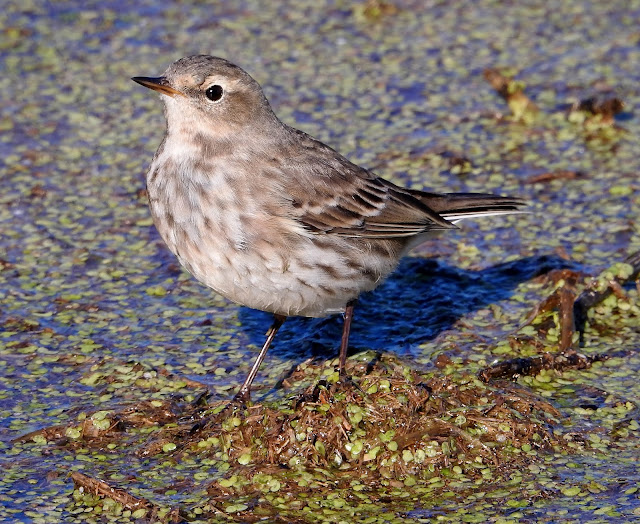
1-12-2021 EL PALMAR, VALENCIA - WATER PIPIT (Anthus spinoletta)


1-12-2021 MARJAL DE INTERIOR, ALBUFERA - CATTLE EGRET (Bubulcus ibis)


1-12-2021 MARJAL DE INTERIOR, ALBUFERA - LITTLE EGRET (Egretta garzetta)


1-12-2021 MARJAL DE INTERIOR, ALBUFERA - MEADOW PIPIT (Anthus pratensis)


1-12-2021 MARJAL DE INTERIOR, ALBUFERA - EUROPEAN STARLING (Sturnus vulgaris)


1-12-2021 RACO DE OLLA, VALENCIA - COMMON DARTER DRAGONFLY (FEMALE) (Sympetrum striolatum)


1-12-2021 EL PALMAR, VALENCIA - EUROPEAN ROBIN (Erithacus rubecula)


1-12-2021 MARJAL DE INTERIOR, ALBUFERA - NORTHERN LAPWING (Vanellus vanellus)


1-12-2021 LES PALMERES, VALENCIA - EUROPEAN STONECHAT (MALE) (Saxicola rubicola)


1-12-2021 SOLLANA, VALENCIA - EURASIAN KESTREL (Falco tinnunculus)


1-12-2021 MARJAL DE INTERIOR, ALBUFERA - EURASIAN KESTREL (Falco tinnunculus)